Search

Showing posts with label Beaches. Show all posts

August 26, 2023

Hot Dog (on a) Stick Returns to Santa Monica's Ocean Front Walk... A Bit Different

They thought that it would look the same. And from afar, it almost does.
 

But I'm sad to say, the replica of the original Hot Dog on a Stick stand by the Santa Monica Pier is not the same.

October 19, 2022

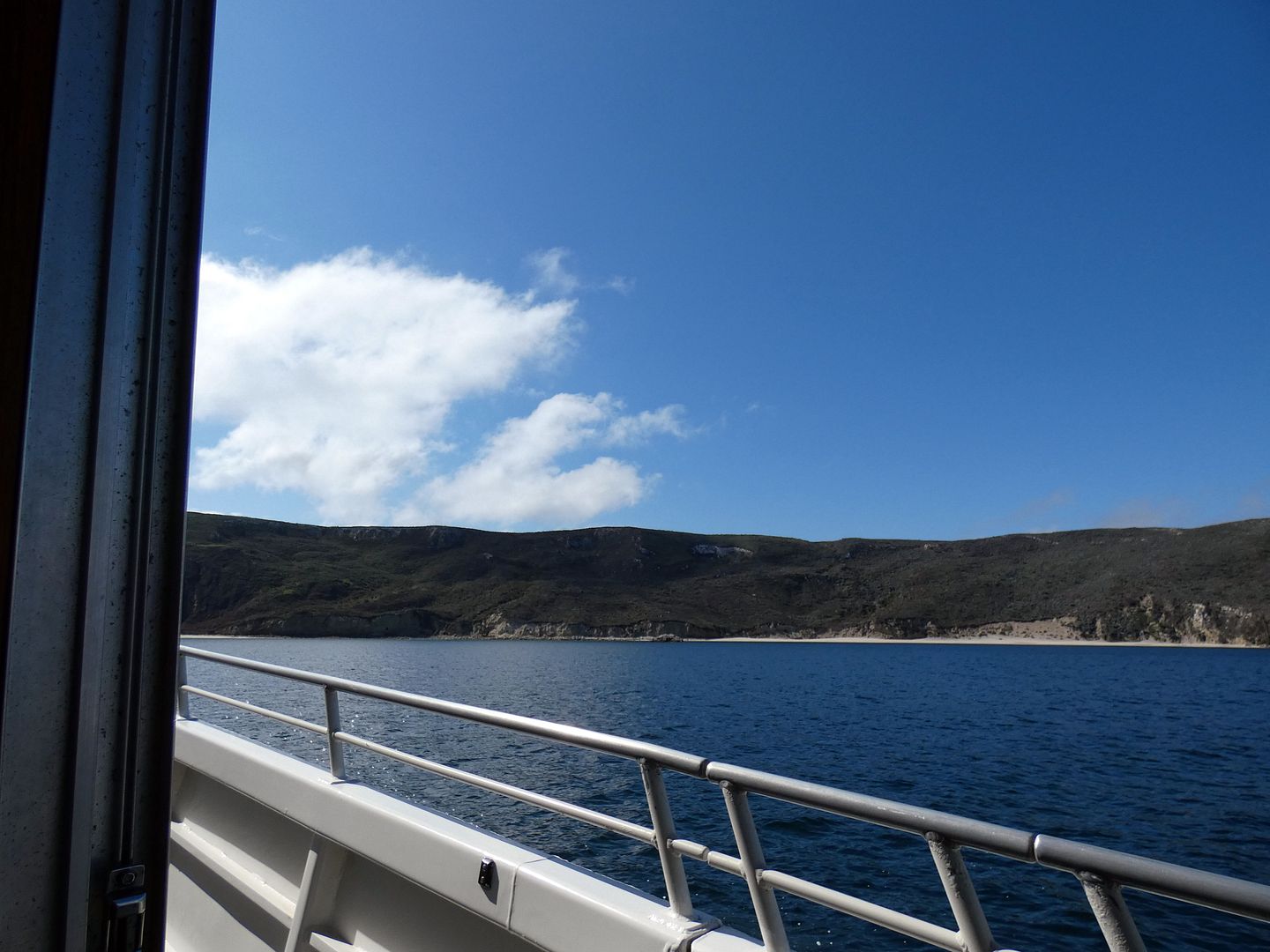
Photo Essay: Exploring the Navy's Explosive Island Across the Santa Barbara Channel

I'm a completionist. So of course I've been tracking how many of California's Channel Islands I've been to—and how many I can eventually get to. 

I've already been to Catalina, Santa Rosa, Anacapa, Santa Cruz, and San Nicolas. (Santa Barbara is closed until they can fix the anchorage, and San Clemente is off-limits as a Navy station.)


And as of last weekend, I've crossed yet another off my list: San Miguel. 

March 22, 2022

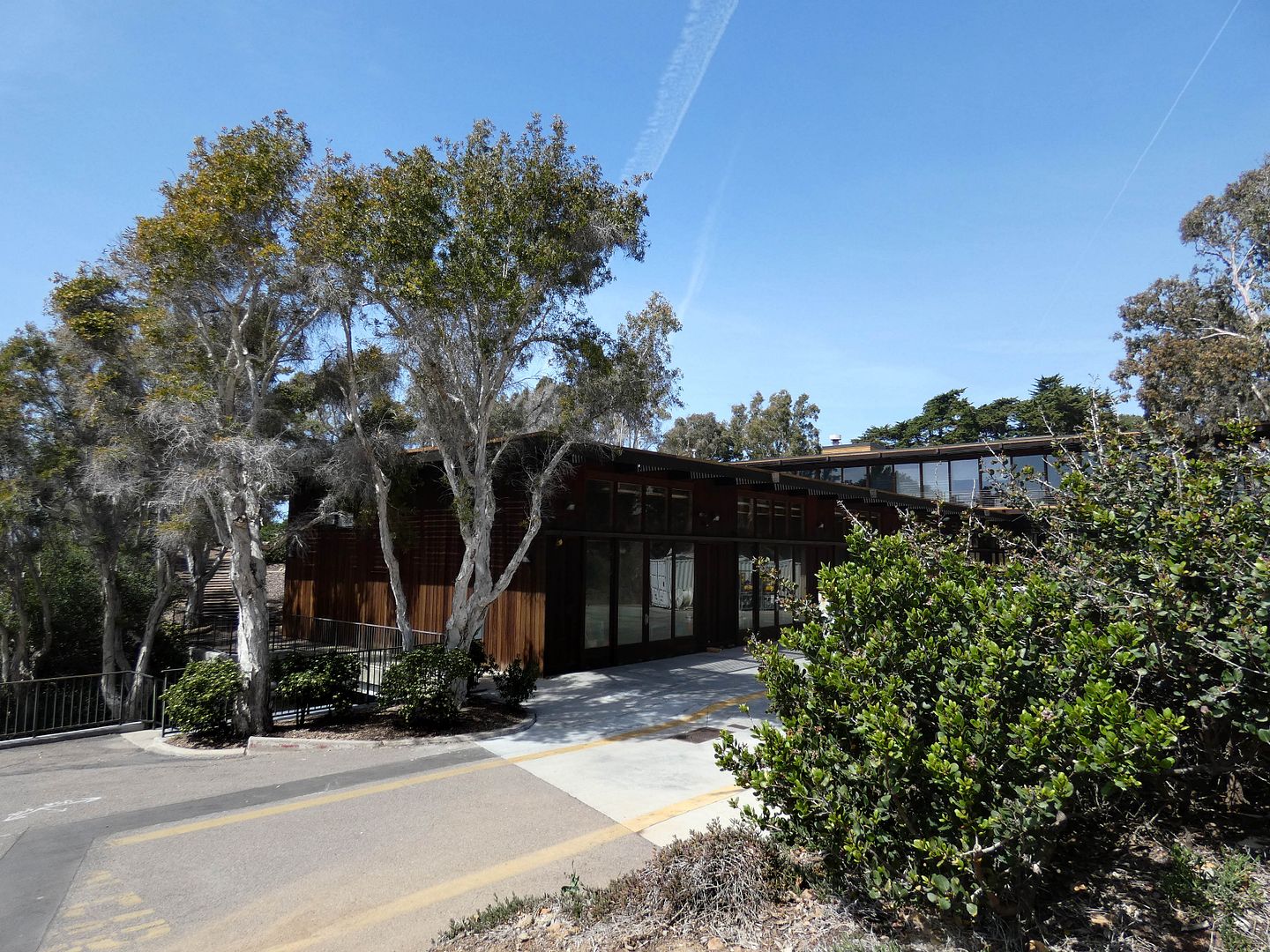
Photo Essay: The Mid-Century Science Lab Where Modern Oceanography Was Born

I've been attending San Diego Architectural Foundation's Open House San Diego for the last few years—even squeezing in a visit a little over a week before everything shut down in 2020. 

But this year was different—not because of the pandemic, but because my car has been sitting in the shop (essentially undrivable) since January 17. 

I've been getting around on foot and via public transportation (like a good former New Yorker). But that was going to put a cramp in my style somewhat for Open House San Diego. 

I knew I could take the Amtrak down to Santa Fe Depot no problem—and that the trolley could get me around to lots of places. But I wouldn't be able to cram very much into one day. 

So, I agonized over having to limit myself to just one general area—and having to choose among the dozens of sites (when normally I can cram at least four or five into a day). 


Instead of going for quantity, I went for exclusivity—and chose to keep my reservation to the sold-out tour of the Institute of Geophysics and Planetary Physics (IGPP) Munk Lab at the UC San Diego’s Scripps Institution of Oceanography in La Jolla, co-hosted by AIA San Diego. (Fortunately, I could get pretty close to it by taking the new Blue Line trolley extension to UCSD.)

March 16, 2022

R.I.P. The First-Ever Hot Dog On A Stick (A.K.A. The 'Hot Dog Stick' Shack)

[Last updated 1/1/24 9:09 PM PT—Hot Dog Stick was rebuilt and reopened in 2023. You can read my blog post about it here.]

In December 2021, the State of California approved the demolition of the first-ever location of the treasured Western U.S. fast food chain Hot Dog on a Stick—located near the original "Muscle Beach" by the Santa Monica Pier in Santa Monica—without much fanfare. 

 circa January 2021

August 19, 2021

Photo Essay: A Southern Sea Otter Safari in Monterey Bay

I don't remember how long ago it was when someone first told me about Elkhorn Slough as a destination for sea otters—only that it was sometime before I made it to the otter viewing spot in Morro Bay in 2019. 

Leave it to me to make smalltalk about otters with strangers. 

But when I was mapping out my trip to San Jose last weekend, I noticed that if I took the long way—hugging the coast instead of staying on an inland freeway—I could convince myself that this otter destination in Monterey Bay was on the way home.
   

August 17, 2021

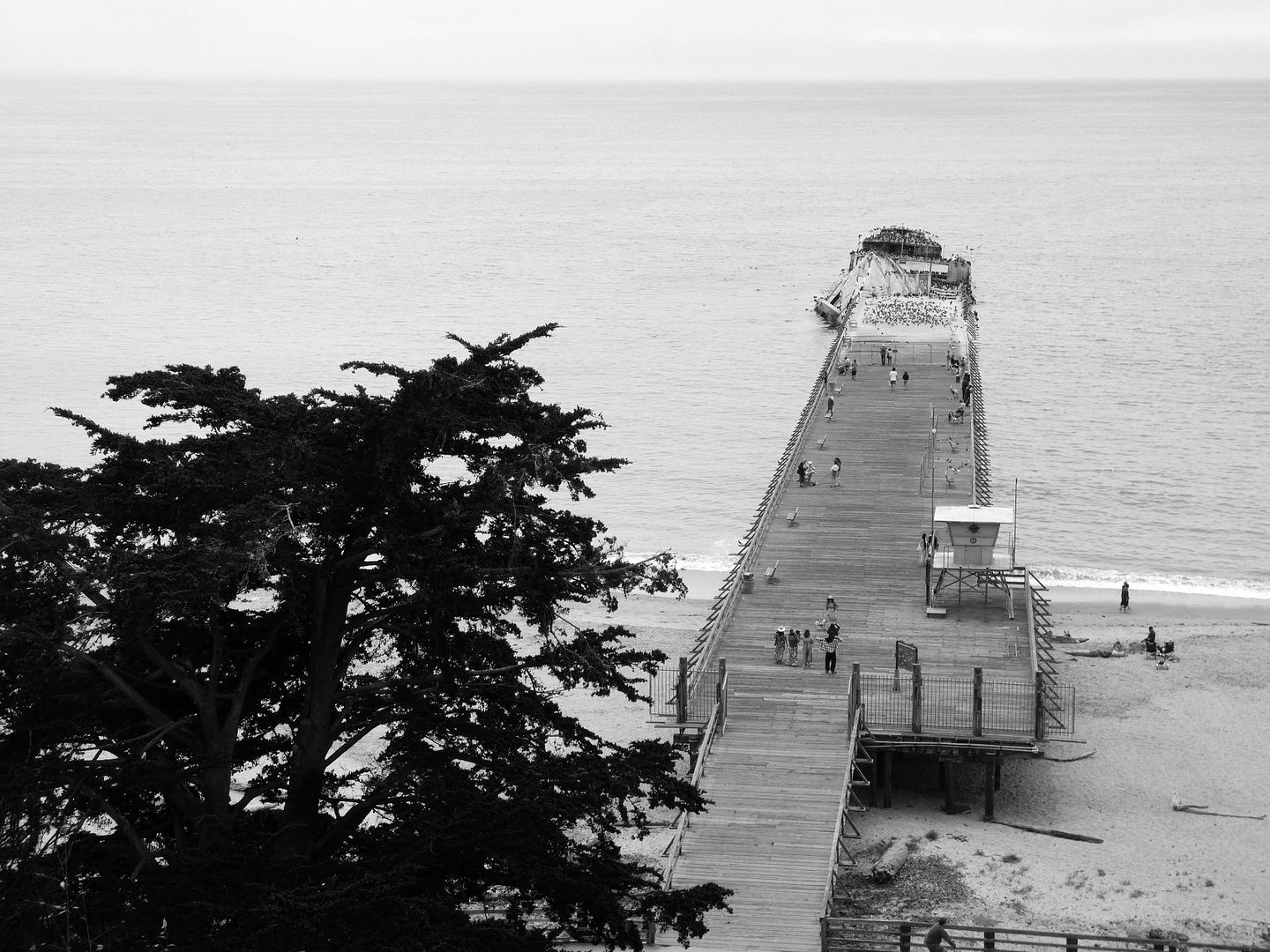
Photo Essay: S.S. Palo Alto, the Concrete Oil Tanker-Turned-Party Ship That's Being Overtaken by the Pacific Ocean

"The Cement Ship"—formerly known simply as "The Ship"—has become a symbol of the unincorporated town of Aptos, California (in Santa Cruz County) and its Seacliff State Beach in the 90+ years since it first arrived. 

It's actually a misnomer, because the ship isn't made of cement—but steel-reinforced concrete (a.k.a. ferroconcrete), which the WWI-era Emergency Fleet Corporation deemed necessary for a small handful of ships built for the war effort during a shortage of both steel and lumber circa 1917. 
      circa 1920, Oakland (Photo: Naval History and Heritage Command, Catalog No. NH 799, Public Domain)

Only problem was that the 420-foot oil tanker, built by the San Francisco Shipbuilding Company at the U.S. Naval Shipyard in Oakland, wasn't finished and ready to launch until 1919—and by then, the war was already over.

 
And now, 102 years later, that ship—the S.S. Palo Alto—is falling apart before our very eyes. 

June 29, 2021

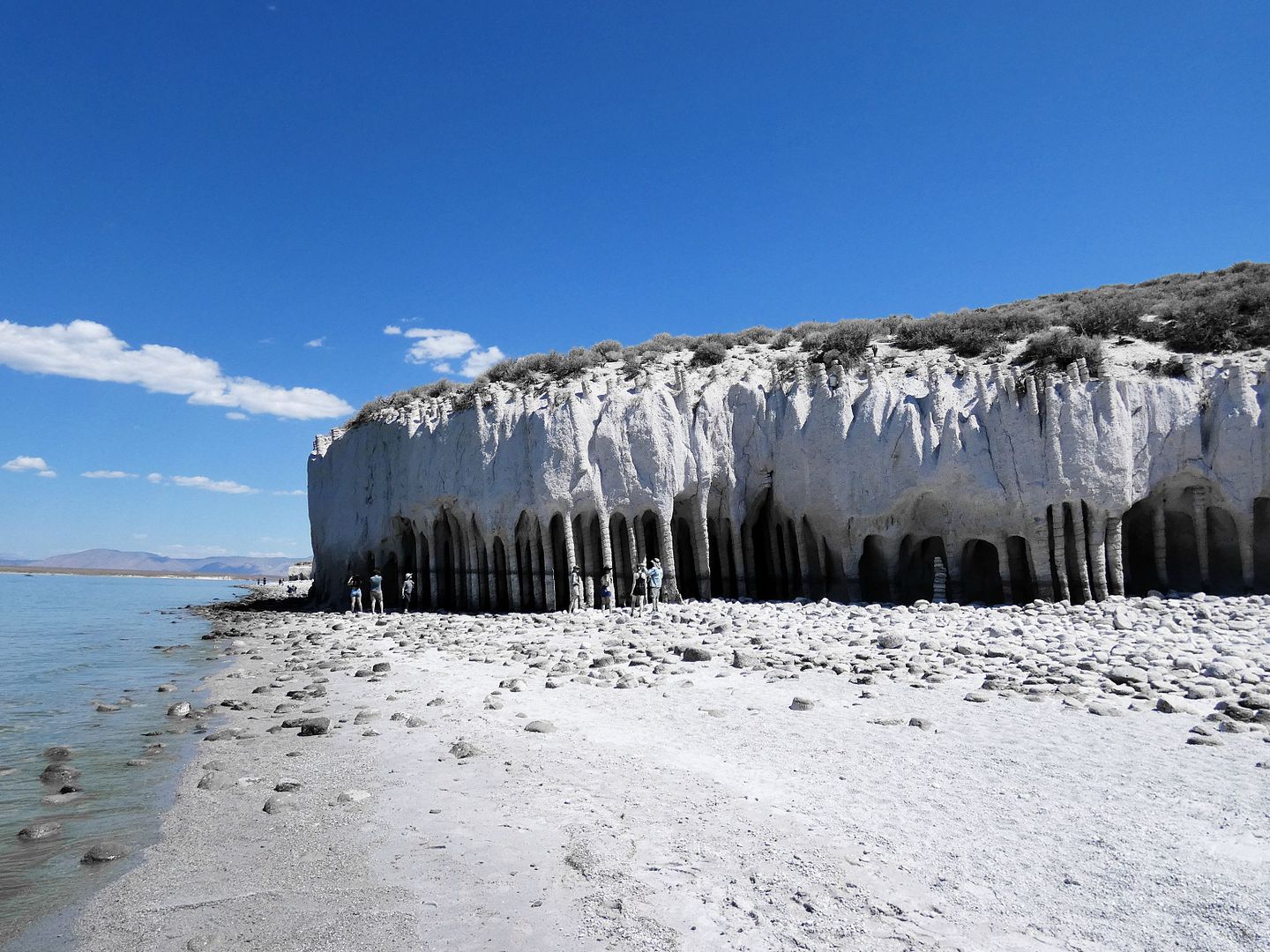
Photo Essay: Kayaking Across the Eastern Sierra 'Volcano Lake' That Baffled Scientists (Until 2015)

I've pretty much come to terms with the fact that there are some places on my Bucket List I'll never be able to cross off—maybe because I haven't got the means to get there, nor the will to keep trying. 

Or maybe some of those places will simply cease to exist before I get to them—from burning down, being torn down, or simply washing away. 

So, when a friend invited me on a trip up the 395 to visit the hard-to-reach and only seasonally visible Crowley Lake columns in Mono County, of course I said "yes"—and of course I prepared for abject failure. 


June 12, 2021

A Midnight Mating Party for California's Most Exhibitionistic Fish

For 10 years since moving to LA, I'd wanted to go check out a coastal wildlife phenomenon known as the "grunion run."

And for 10 years, I'd put it off because I didn't like the idea of hauling my cookies to the beach late at night to witness a group of small, sardine-sized fish (the California grunion, Leuresthes tenuis) that may or may show up.  

But no matter how much of a crapshoot it may be, I knew I'd never see this summertime spawning event if I didn't at least show up and try.


February 15, 2021

Photo Essay: The Plowed Ruins of a Private Malibu Enclave at Nicholas Canyon Beach (Updated for 2022)

[Last updated 7/9/22 3:32 PM PT—Architect Harry Gesner's death noted]

We were in search of some architectural treasures in Malibu—and my friend had read that the best way to get to them would be from Nicholas Canyon Beach. 
    
We both shrugged, neither one of us familiar with the county-run beach—or the other treasures we were about to find. 

January 26, 2021

Photo Essay: The Wonder of Bob Baker Marionette Theater's Window Displays at the Santa Monica Pier Carousel (Updated)

Last updated 3/1/21 9:24 PM PT—video embed from Bob Baker Day added at bottom.

Updated 1/31/21 7:39 PM PT—nighttime photos added at bottom. 

Because of the pandemic, I haven't been able to get inside the circa 1916 Looff's Hippodrome, the building that houses the Santa Monica Pier Carousel. 


In fact, it's been pretty hard just to get outside of it, with the Pier closed to the public on certain weekends and holidays to prevent overcrowding and infection-spreading.

    
But last week, I finally got to check out the "Windows of Wonderment" exhibit in the carousel building's windows—a retrospective of a handful of Bob Baker Marionette Theater's stringed spectaculars. 

January 10, 2021

Photo Essay: Tiptoeing Across Carpinteria's 'Black Gold' Beach

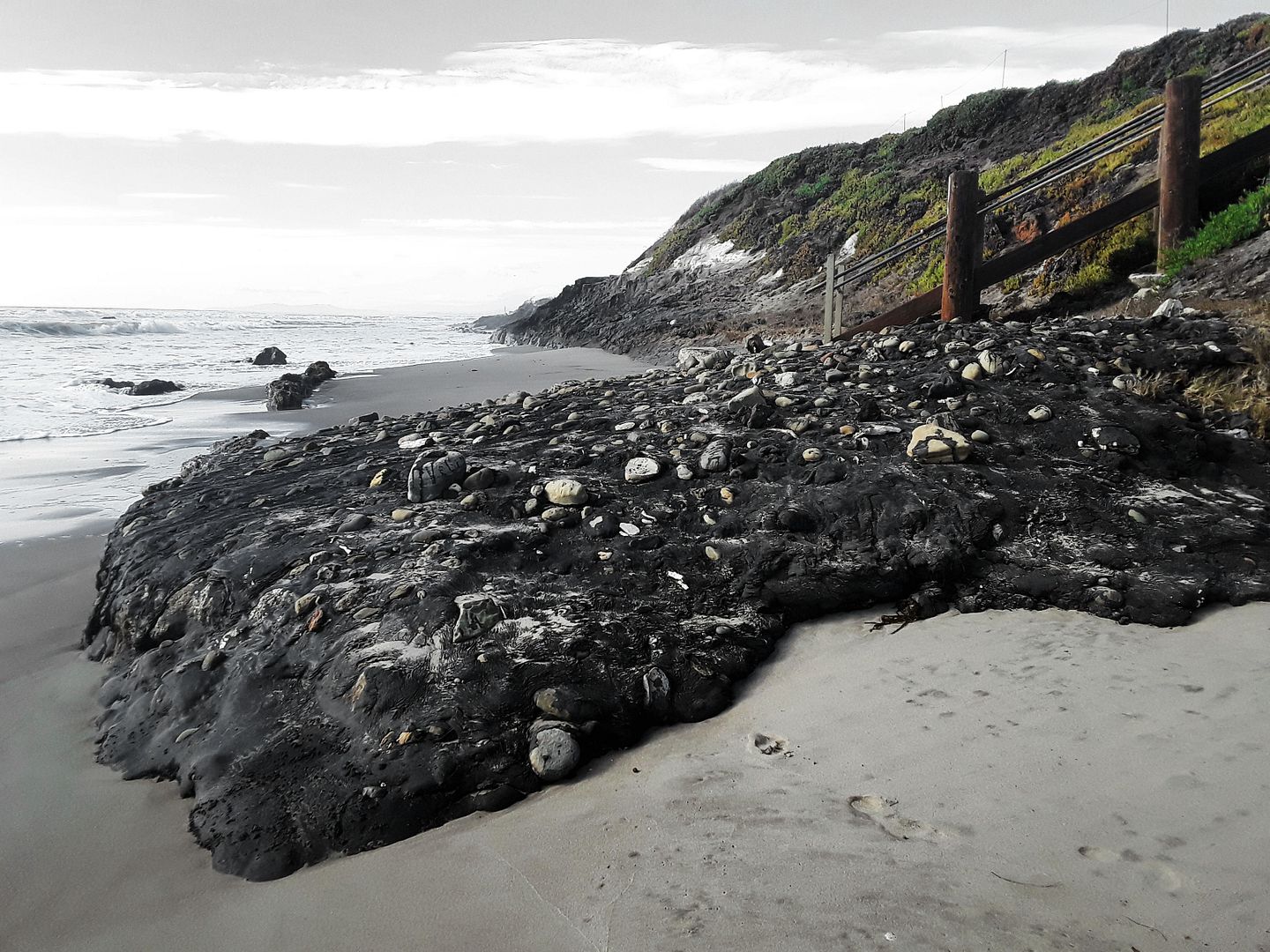
Unlike on Hawaii's black sand beaches, the black you'll find on certain SoCal beaches—especially at the southernmost section of Carpinteria State Beach, just south of Santa Barbara—isn't exactly exotic or romantic. 

December 27, 2020

Photo Essay: The 1920s-Era Treasures of Laguna Beach's Victoria Cove


California hasn't been known for being pillaged by pirates as much as, say, the Caribbean—but we still have Pirate's Cove Beach (in both Malibu and Corona del Mar), a Pirate's Lair in Disneyland, and the Pirates Dinner Adventure in Buena Park. 

But the Orange County town of Laguna Beach also has a "pirate tower," tucked away under the cliffs at Victoria Cove on Victoria Beach. 

And after knowing about it for a couple of years, I decided it was finally time to find it for myself. 

It was the day after Christmas and—having no other plans—I was fully prepared to lose my way or not even make it to the tower. A friend described it as a "walk" and not a "hike," but you never really know until you face it yourself. 

The biggest challenge, as with many parts of Southern California, was the parking. 

But after snaking my way through the narrow, winding streets above Victoria Beach, I finally snagged a spot on the other side of the PCH and set off on foot. 
     

I walked down Sunset Terrace to reach the public access staircase between 2703 and 2713 Victoria Drive—only to find that it was closed, with a sign posted redirecting me to Dumond Drive.

 
Of course, there had been signs posted on the PCH that public beach access would be closed until May 2021—but either I didn't believe it or I was certain that there'd be some other way to get down there. 

 
I'd even driven past that closed staircase and Dumond Drive while searching for a parking spot, but hadn't noticed anything but the lack of parking. 
 
 
So I double-backed up Victoria Drive and back to Dumond...


...where I descended an emergency vehicle access ramp...

 
...all the way down to the beach. 


I was nearly ready to quit as soon as I reached the sand, having no idea how much farther down the shoreline the pirate tower would be. 


What a pain!

 
And although I'd tried to time my visit to coincide with low tide, I was running late (as usual). 


The tide was already coming back in, which meant that I couldn't walk the beach to the tower. I'd have to climb the rocks, up and over the tide pools, directly along the bottom of the cliffs. 


The hassle I experienced was exactly what Senator William Edward Brown was trying to avoid when he had the 60-foot tower built in 1926 to enclose a staircase that led down to the beach from his Normandy-style Norman House (a.k.a. "La Tour," a name that means tower in French and that sometimes also refers to the tower itself). 
       

Senator Brown—who represented the 37th district of California, which is the greater part of Los Angeles—spent summers in Laguna Beach with his family and is also thought to have built a circular, concrete pool just adjacent to his property.


The former swimming pool's wall is now partially buried—even in the winter, when the tide erodes much of the beach away. 


And in the summertime, the pool sometimes still fills with ocean water (and swimmers). 


The tower was built with poured concrete atop a foundation made of ocean stones and capped by a cone-shaped spired covered in shingles.  
  

The Medieval-looking door is now locked. 


It's in the stones, however, where the secret to the tower's "pirate" nickname is revealed—because it's where its second owner, retired naval officer Harold Kendrick, would dress up in pirate cosplay and tuck away coins for the neighborhood children to find as "buried treasure."


It looks as though visitors continue to dig and chip away at the mortar, hoping to keep the current owner to the rule of "finders keepers."


Although you can't go inside the tower—as it's still privately owned, by the current owner of the house above it—it's still quite an unusual and fascinating landmark to go visit. 


As the 1981 Laguna Beach historic register states, the architecture of the tower is "closely interwoven with the natural precipitous quality of the cliffs."

The only problem with making it all the way down there?

I had to climb back up the way I'd come, with the incoming tide having advanced even further. But it was worth it, even just to dip my toes in the ocean once before the end of the year. 

Watch a video I produced, featuring the scenery at low tide, below:

 
Related Posts:

August 20, 2020

Starting Over Again at Ventura Botanical Gardens, Ravaged by Wildfire

It was one of those places I kind of knew about and had vaguely added to my list—but being located in the city of Ventura, I'm usually whizzing past it along the 101 on my way somewhere else (or on my way home from somewhere else).

And then the Ventura Botanical Gardens—located in Grant Park, on land donated by the Grant family over 100 years ago—closed for nearly a year after getting scorched in the devastating Thomas Fire at the end of 2017.

Nearly every plant perished. But the recovery efforts managed to much of the vegetation. And now, it's difficult to tell that it ever burned at all (with one exception, which I'll get to at the end of this post). 
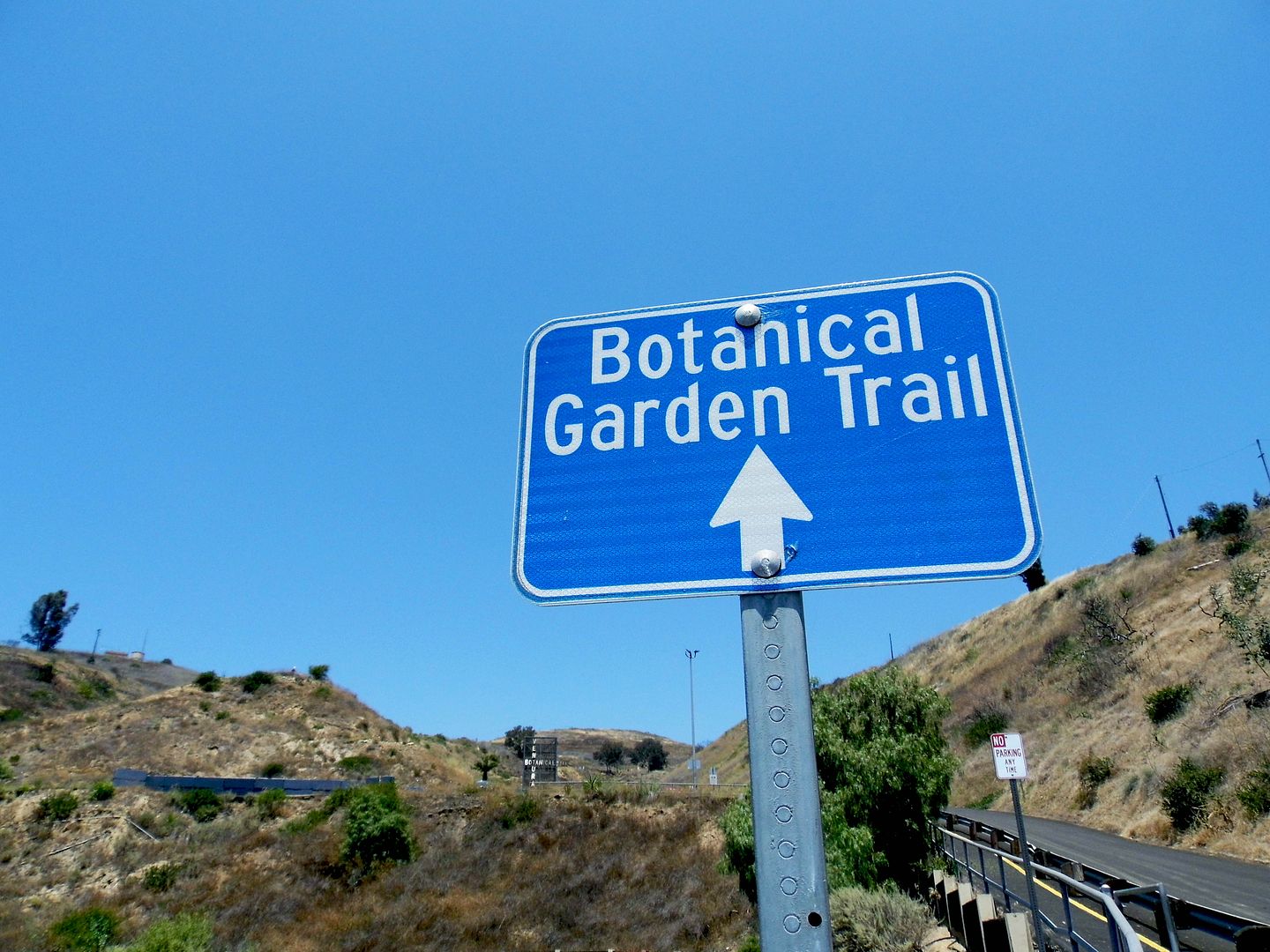


Located on city-owned land behind Ventura City Hall, the Ventura Botanical Gardens embraces the local Mediterranean climate by grouping its plantings by theme—California Natives, South African Cape, and Chilean gardens.
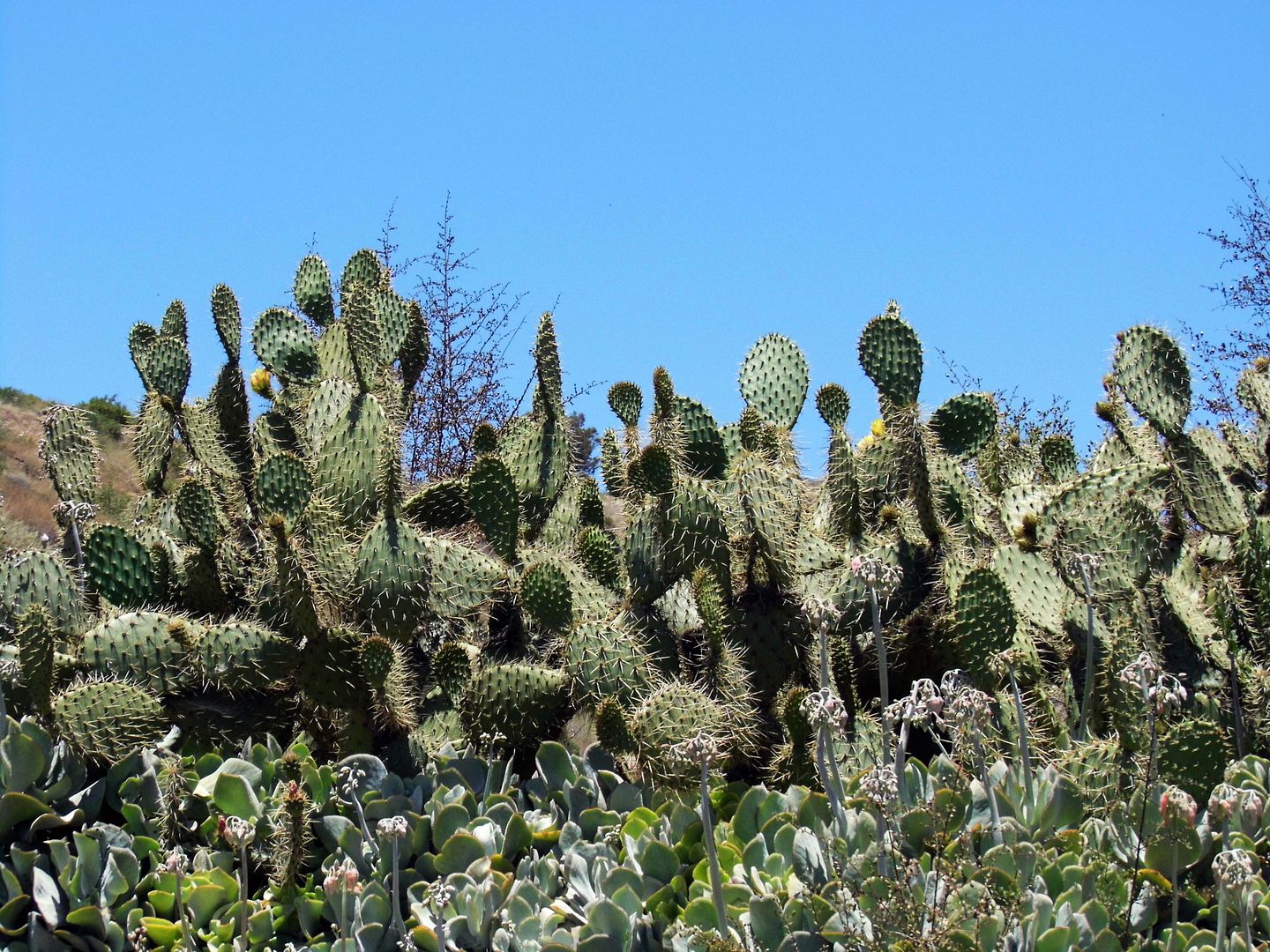


The lower portion—accessible from the parking lot—represents plant species from Chile, including representatives of 180 species of cacti as well as endemic and rare plants of that region.
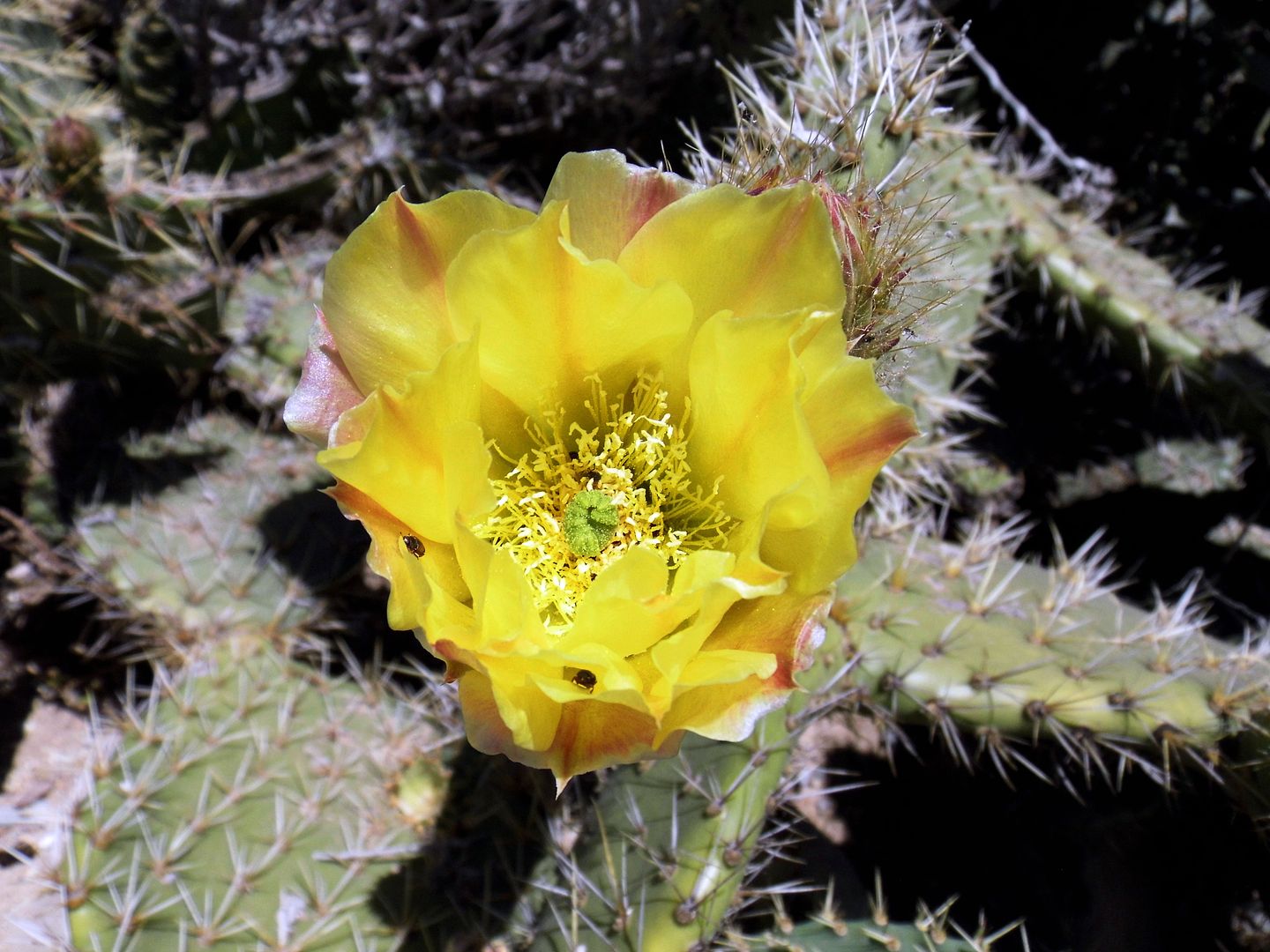


The Chilean matorral plant community is actually similar to Southern California chaparral, so it's not much of a stretch. The major difference is that Chilean flora have practically zero resistance to brushfires.
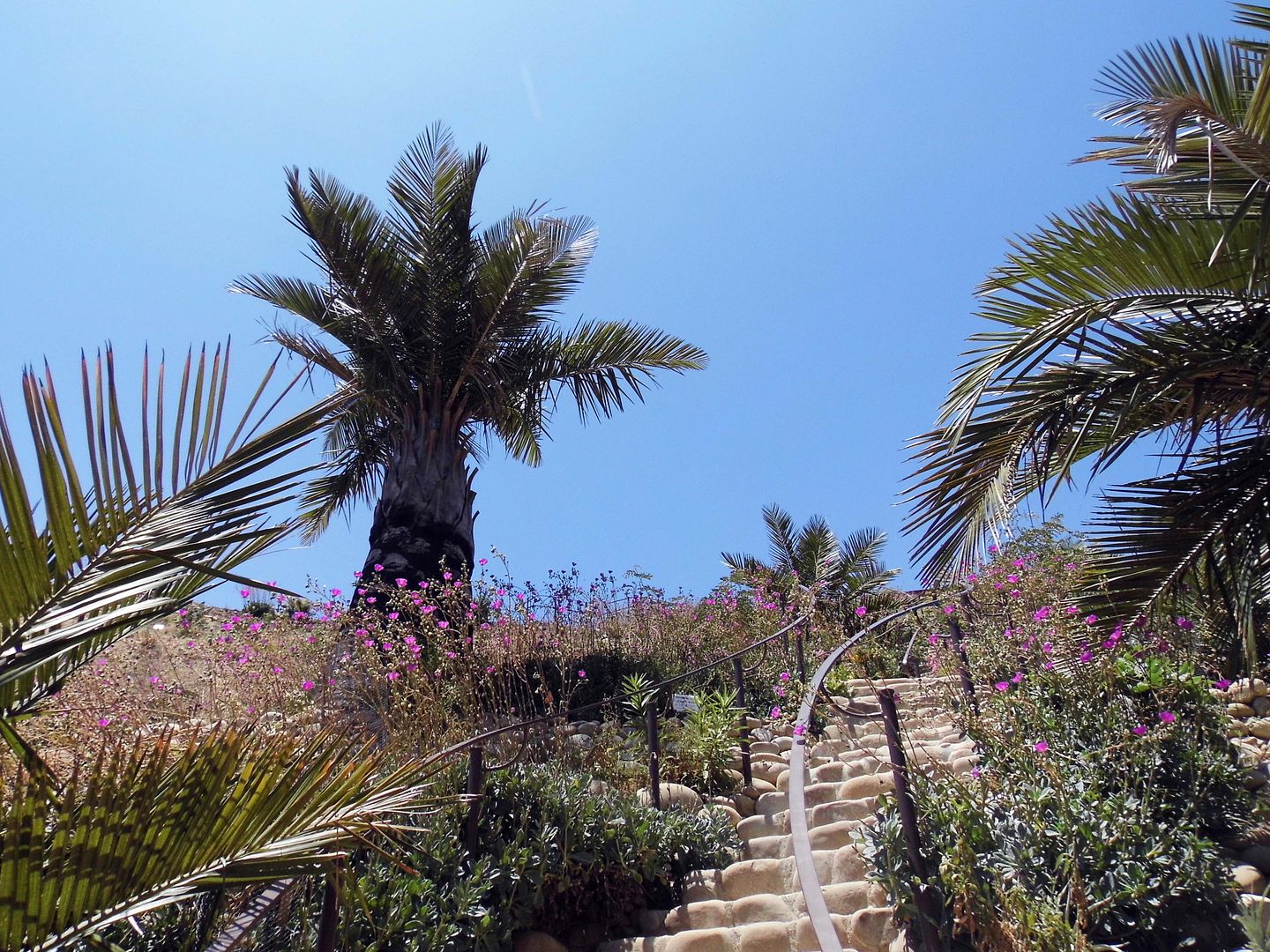


But considering how decimated the landscape was after the fire, it's incredibly lush now.
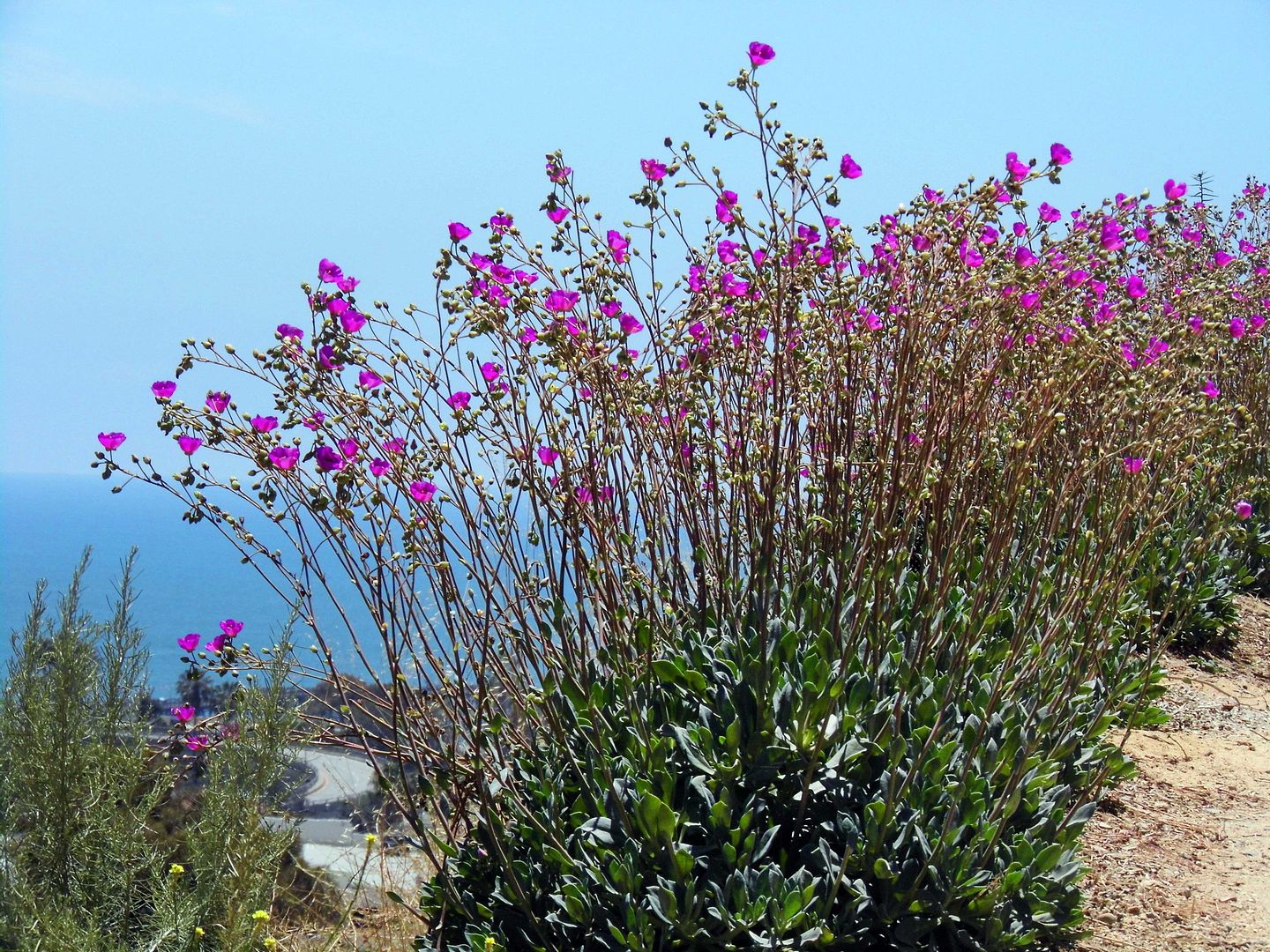


I embarked on the Demonstration Trail, starting at the bottom of the hill at the newly-built visitors center and passing through the new nursery area...
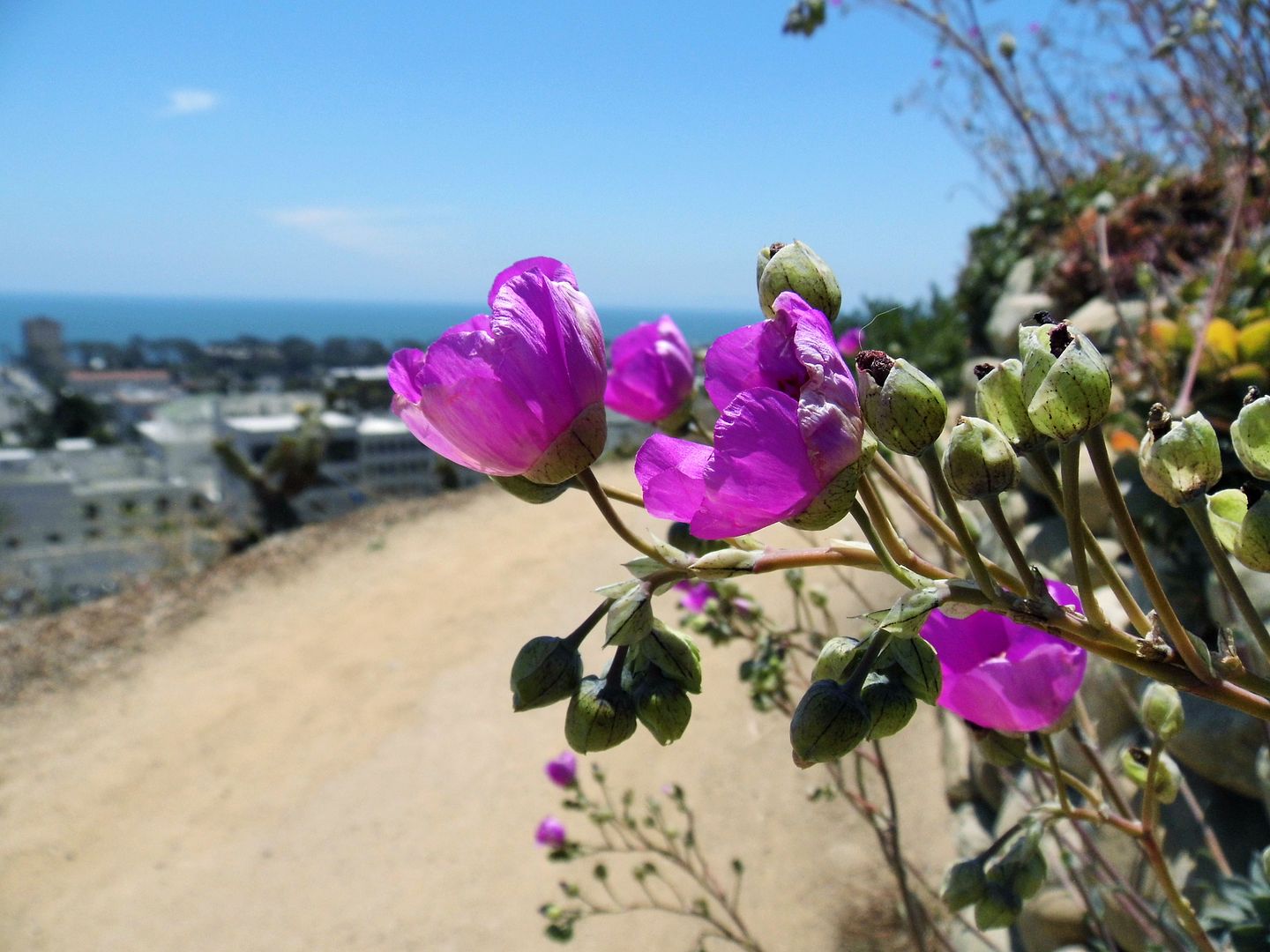


...climbing up stone stairs, past stretches of doquilla (a.k.a. Pata de Guanaco, Cistanthe grandiflora) that breached the trail boundaries...
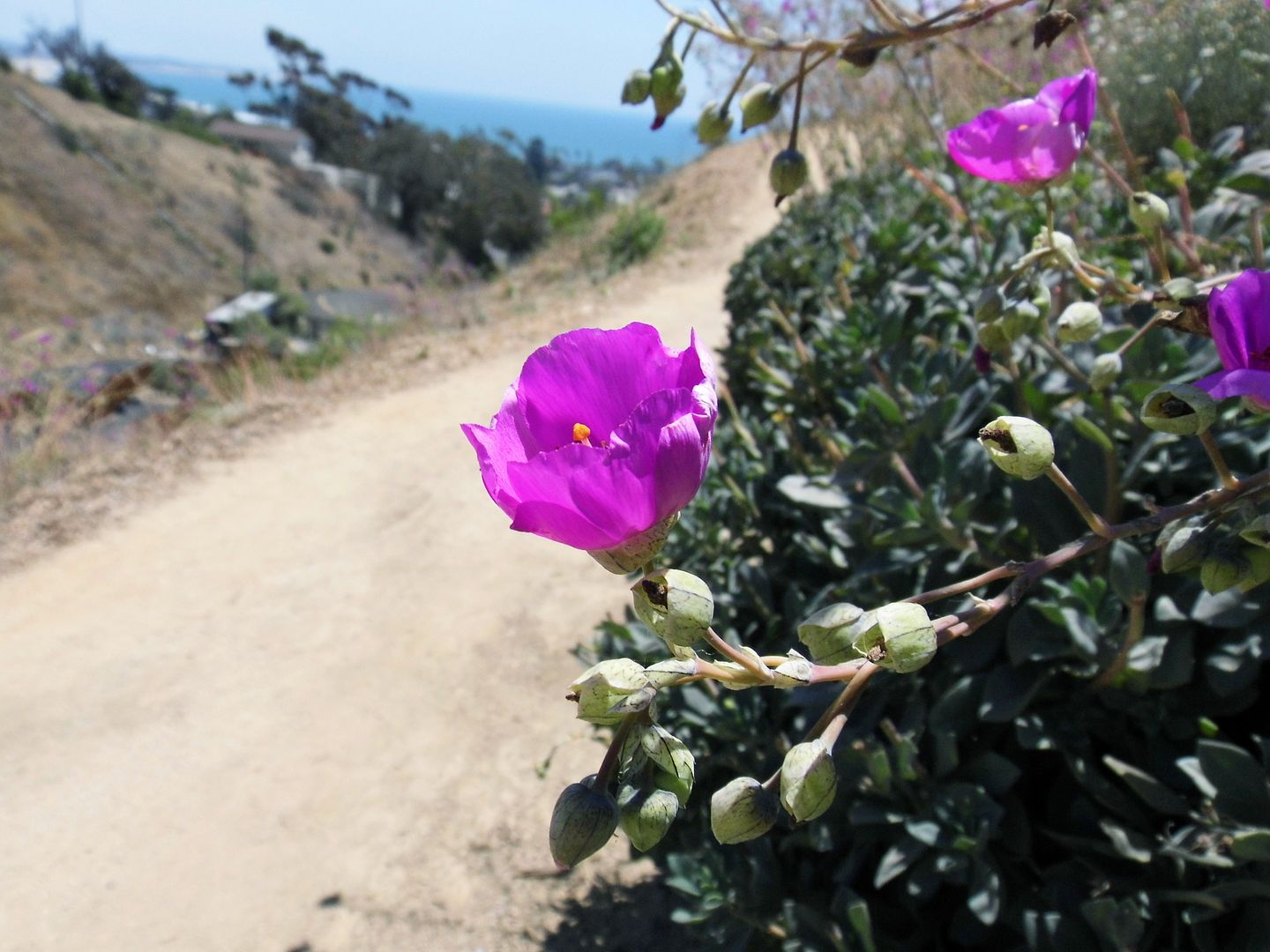


...and soaked up the sun as they ornamented the path upwards.
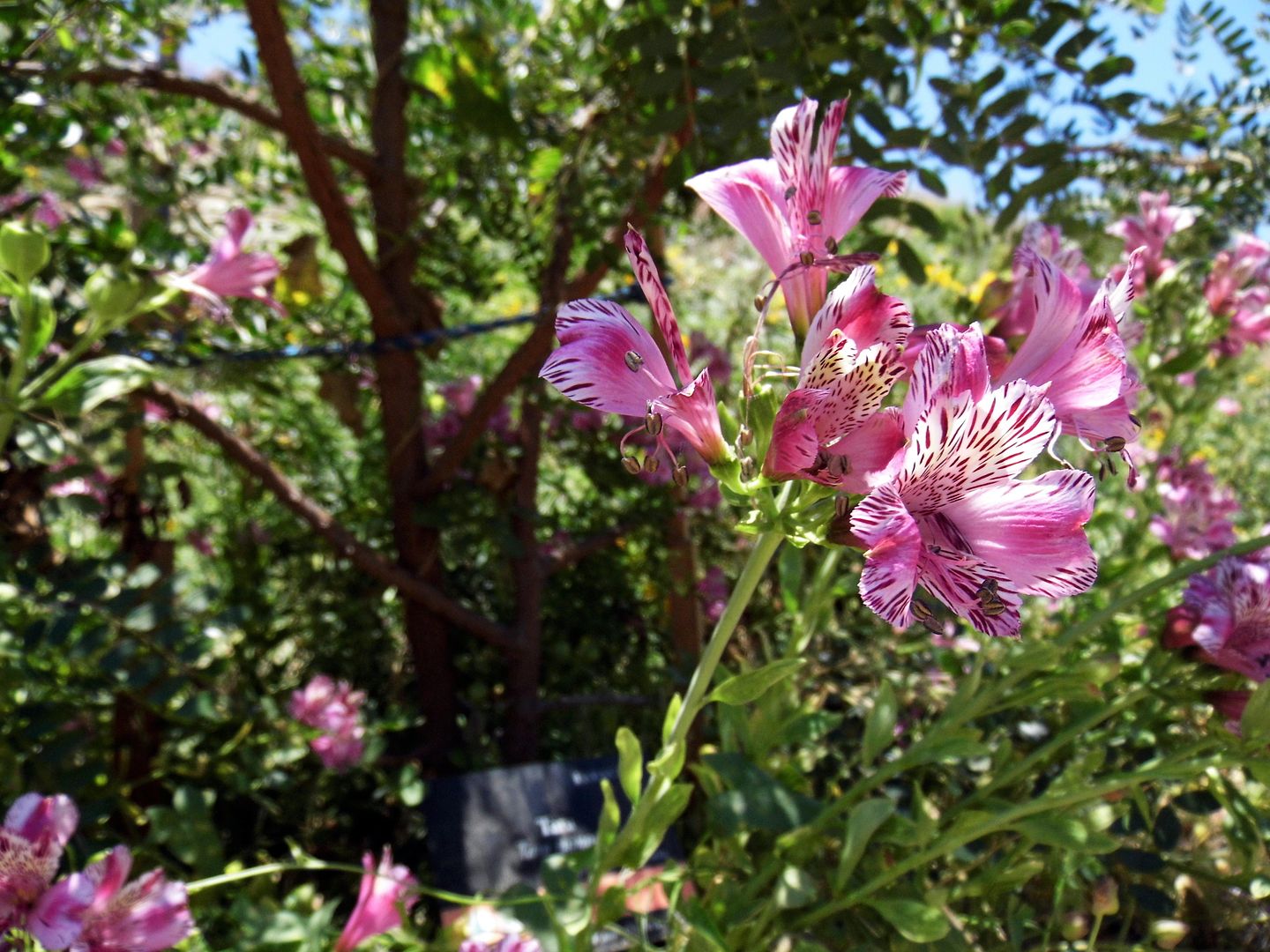


Although 6,000 or so plants have been replanted (with some additional ones actually surviving the fire)...
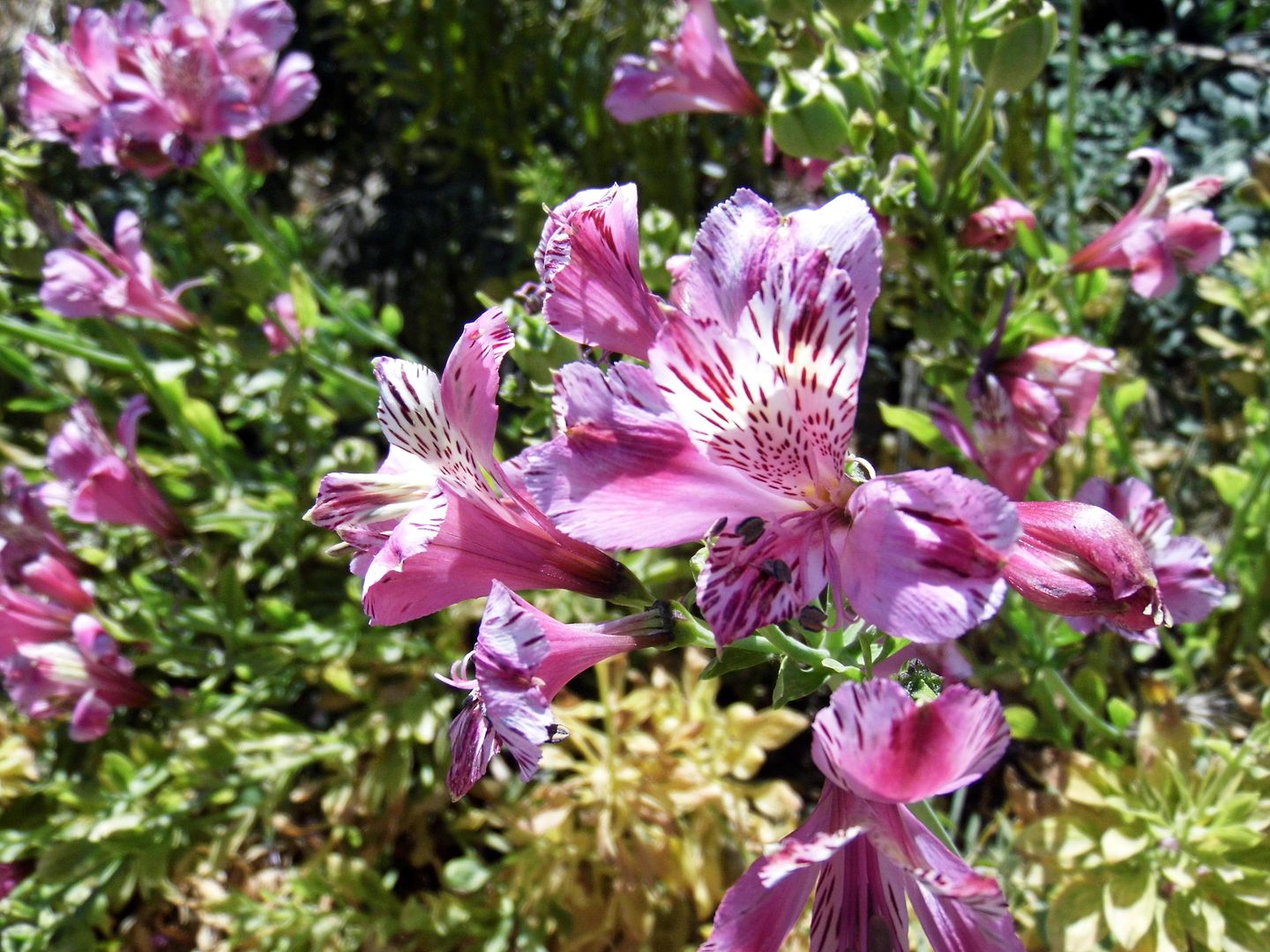


...the complete development of almost 107 acres won't be completed until 2050.
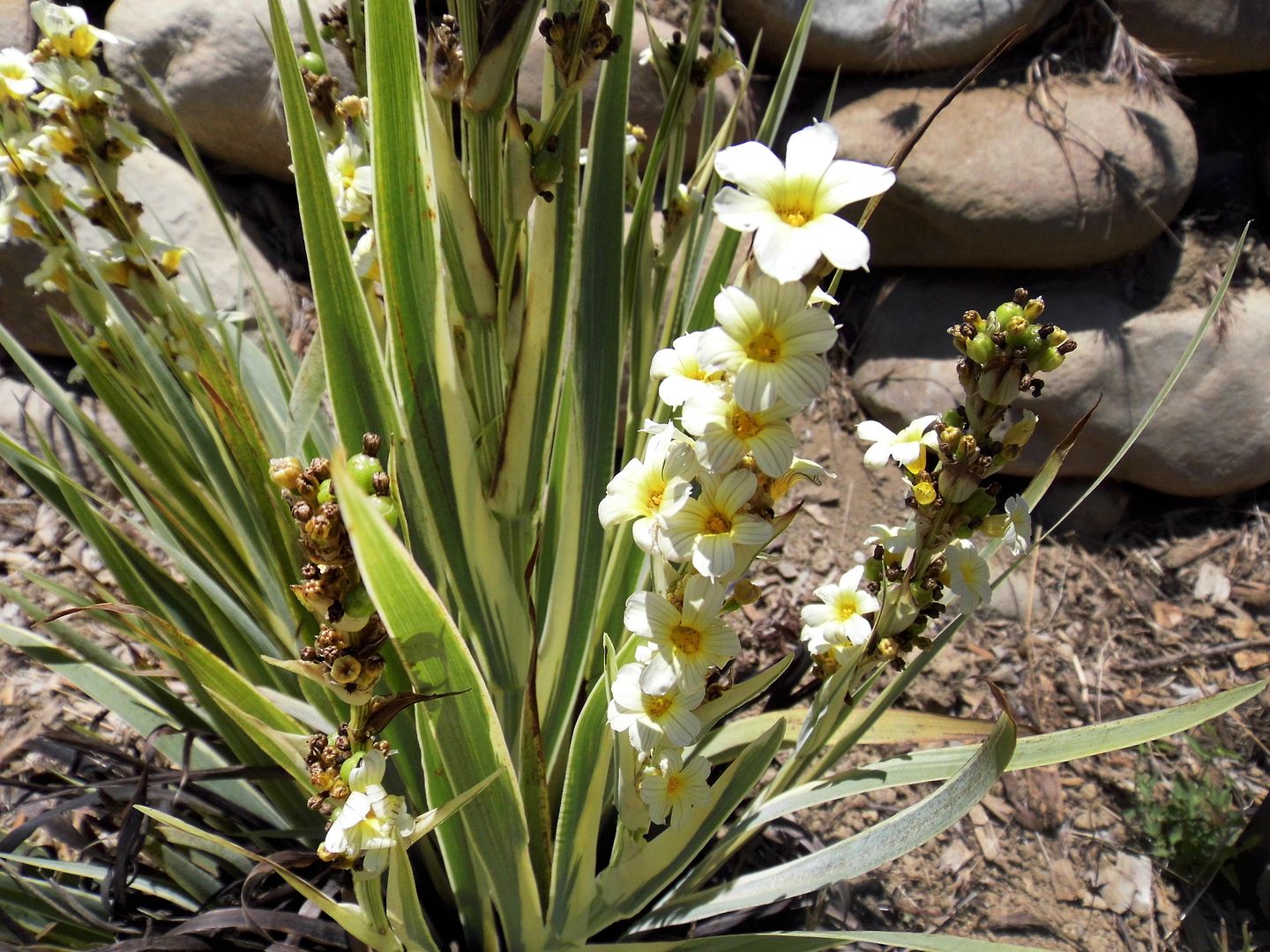


As much as there is to see in the lower gardens—like the perennial Chilean "Aunt May" (Sisyrinchium striatum)—there's even more to be added in the upper gardens.
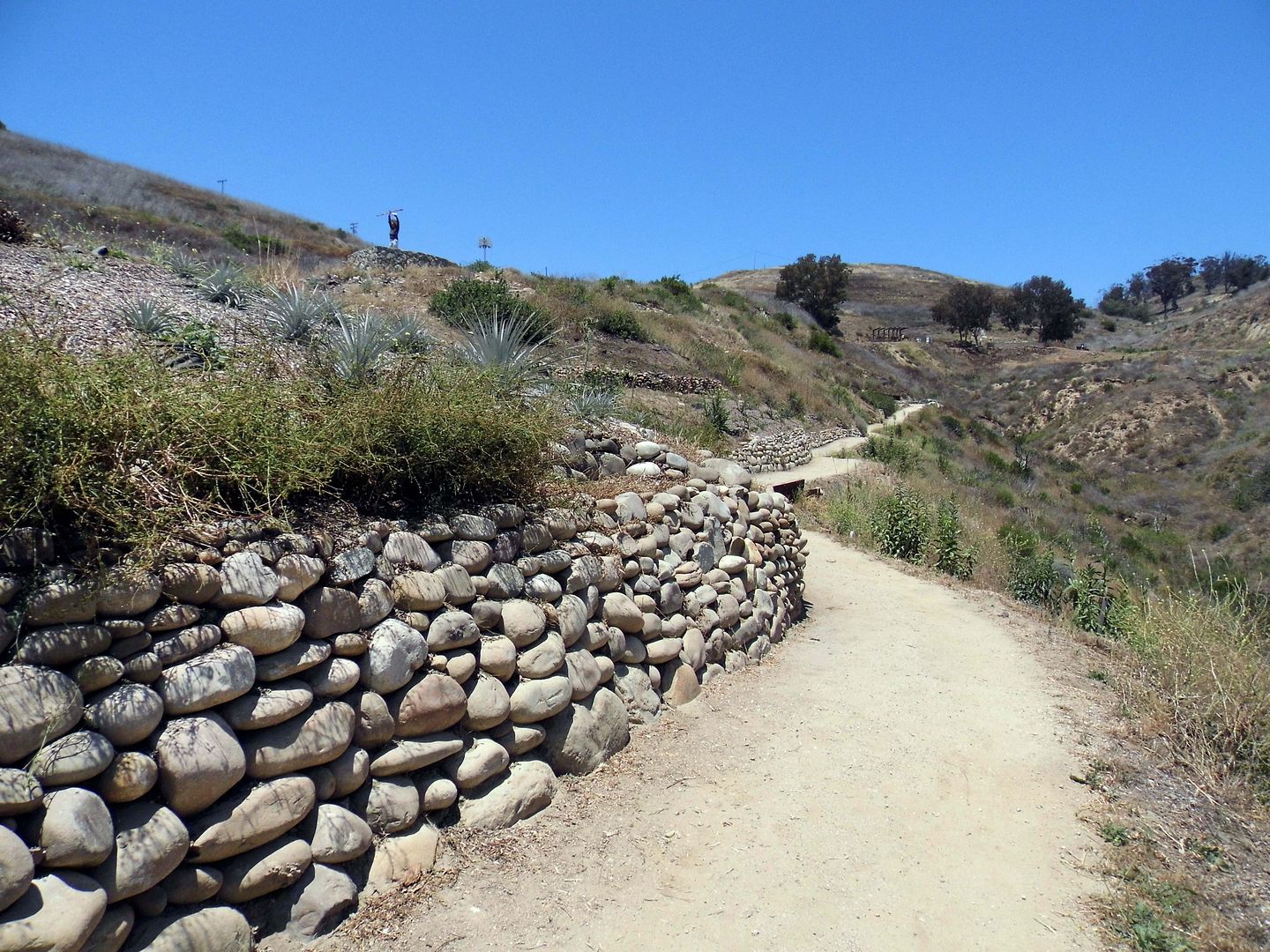


The inflorescences along the rock-lined walls began to fade as I gained elevation—but then again, it was summer. I barely expected to see any blooms with the temperatures so hot, even with the Pacific Ocean in view.
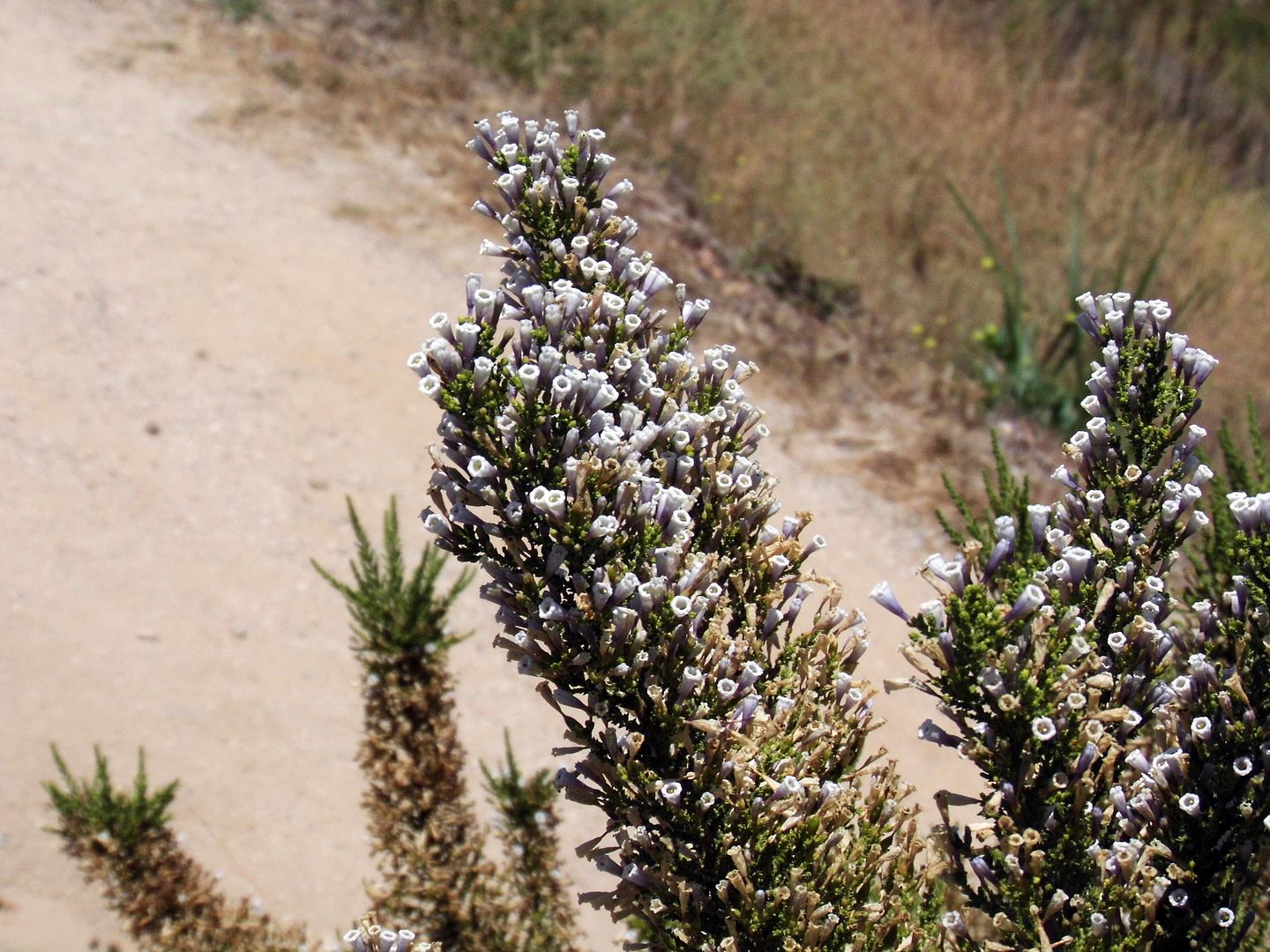


The gardens are a relatively new addition to the city of Ventura—first envisioned in 2005, with a lease for the land signed in 2011 and much of the trail work done in 2012.
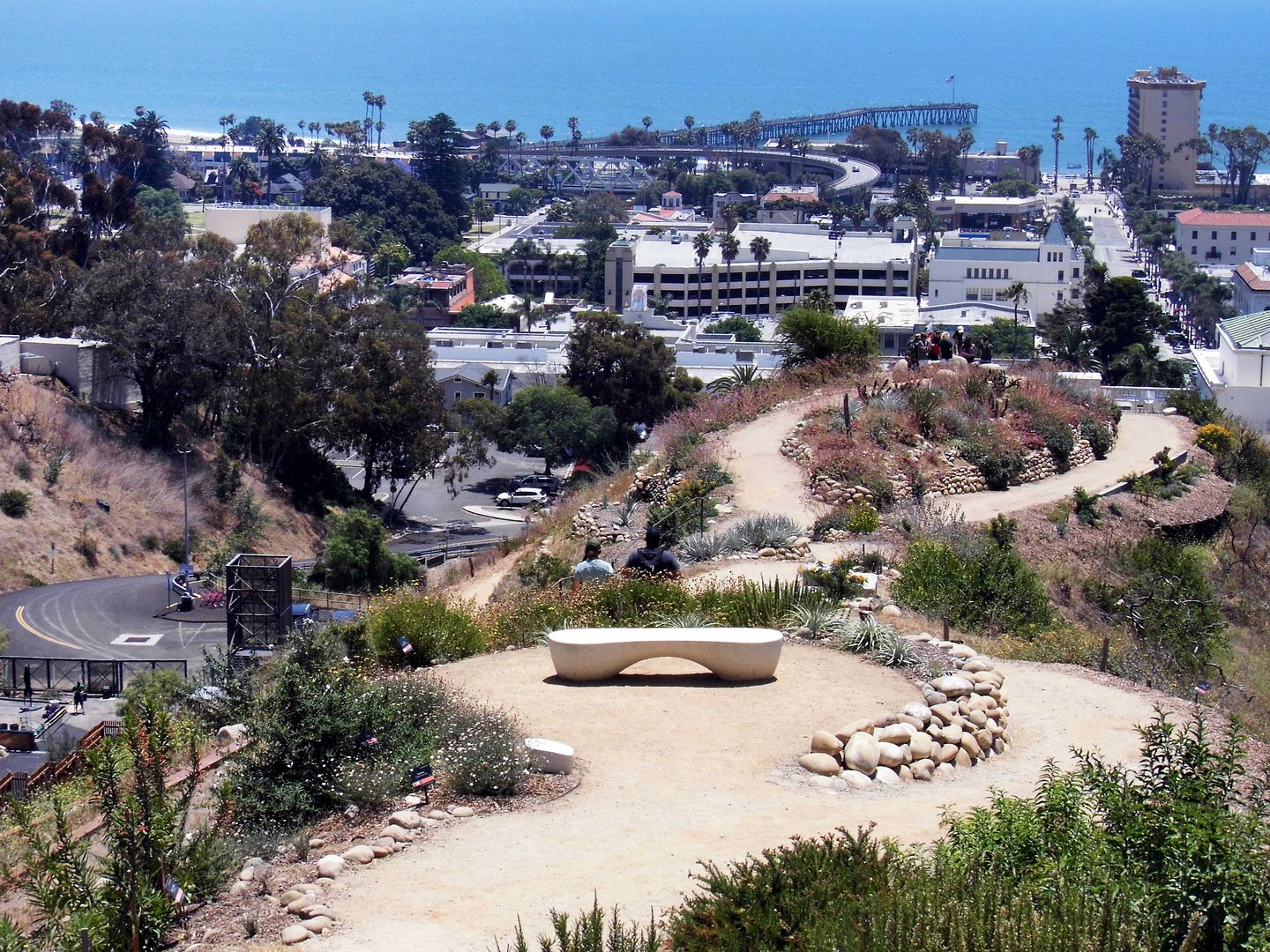


In fact, many of the plants that ended up getting charred (some, to death) in the Thomas Fire had only been planted maybe two or three years before—and in some cases, maybe less.
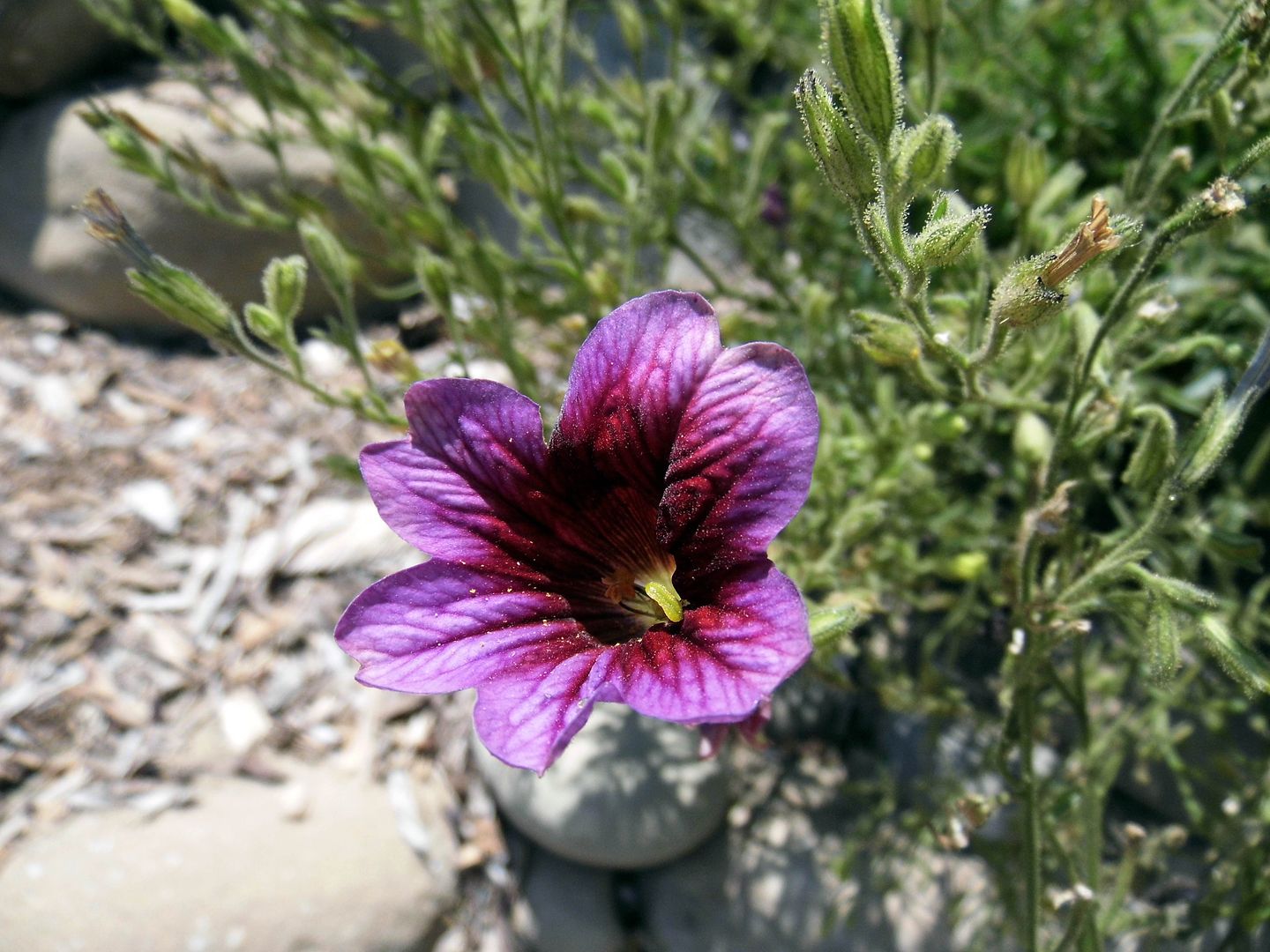


But fortunately, the non-profit that operates the gardens built it back better than before.
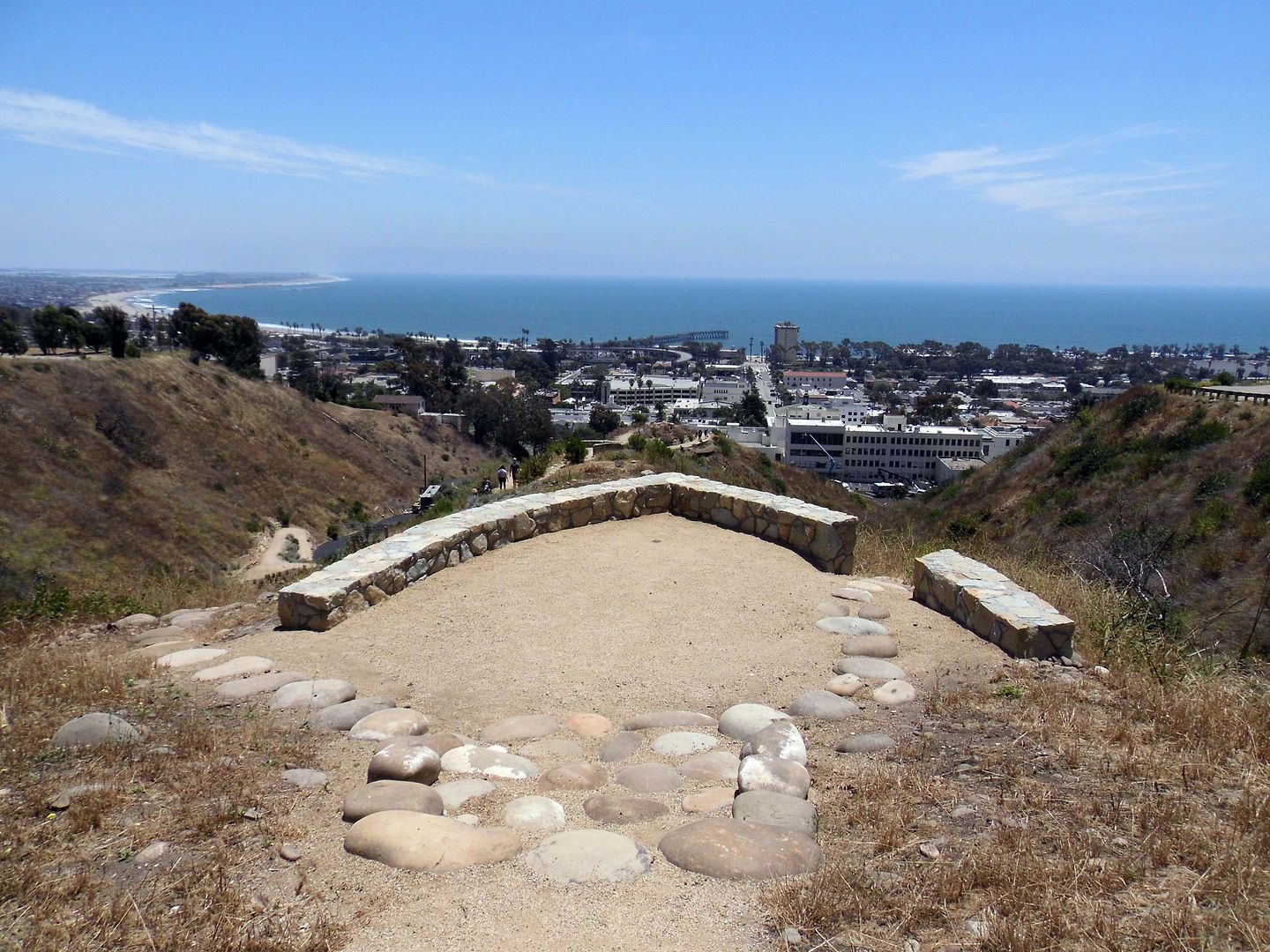


And when it's done, it'll encompass all five of the major Mediterranean climate zones of the world—enjoyed with multiple viewpoints and 360-degree vistas (with the Channel Islands in view on a clear day). 
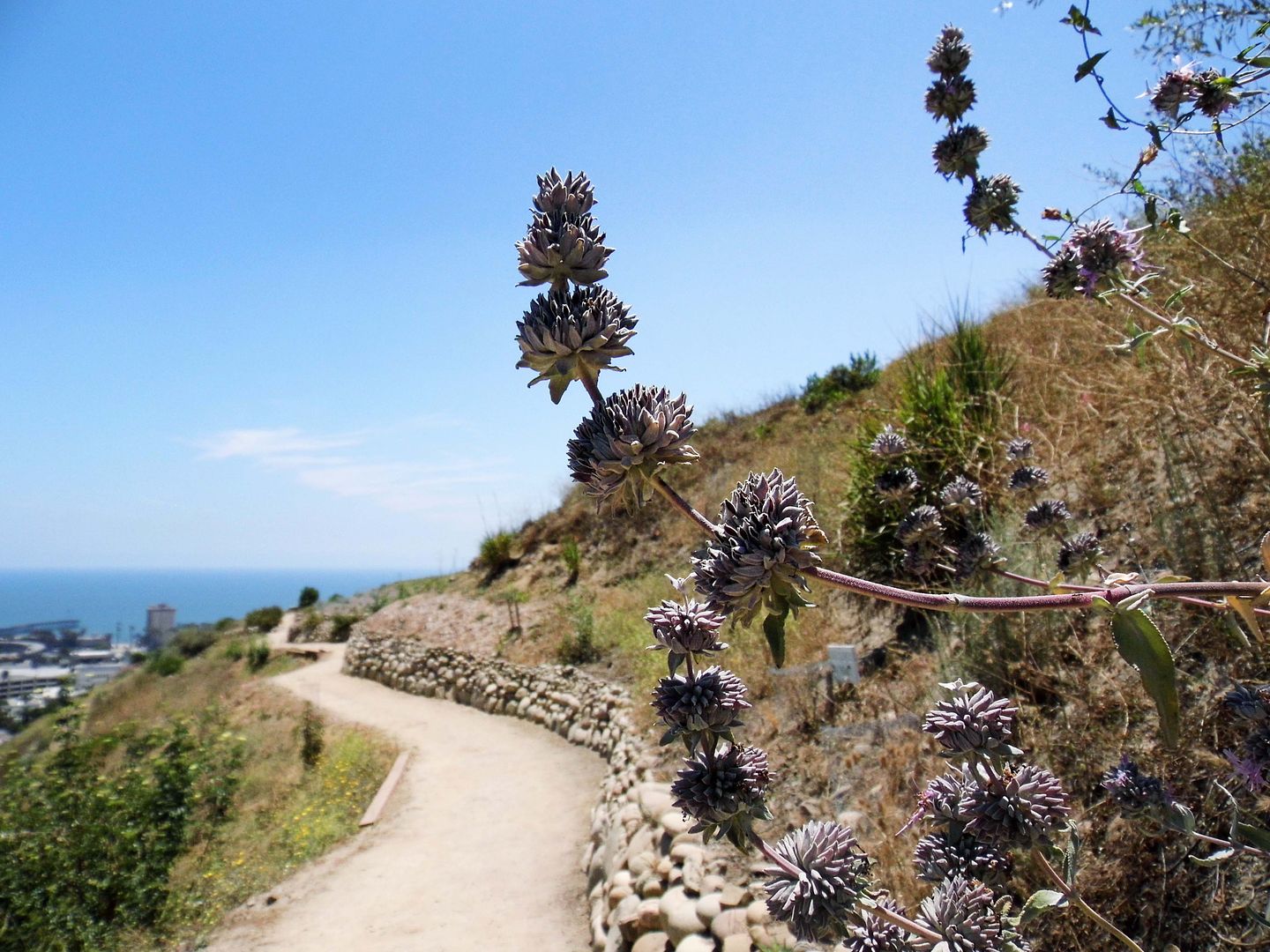


It's so steep that the Master Plan accounts for a funicular or gondola to help transport visitors from the bottom to the top (or from one vista point to another). No sign of anything like that yet.
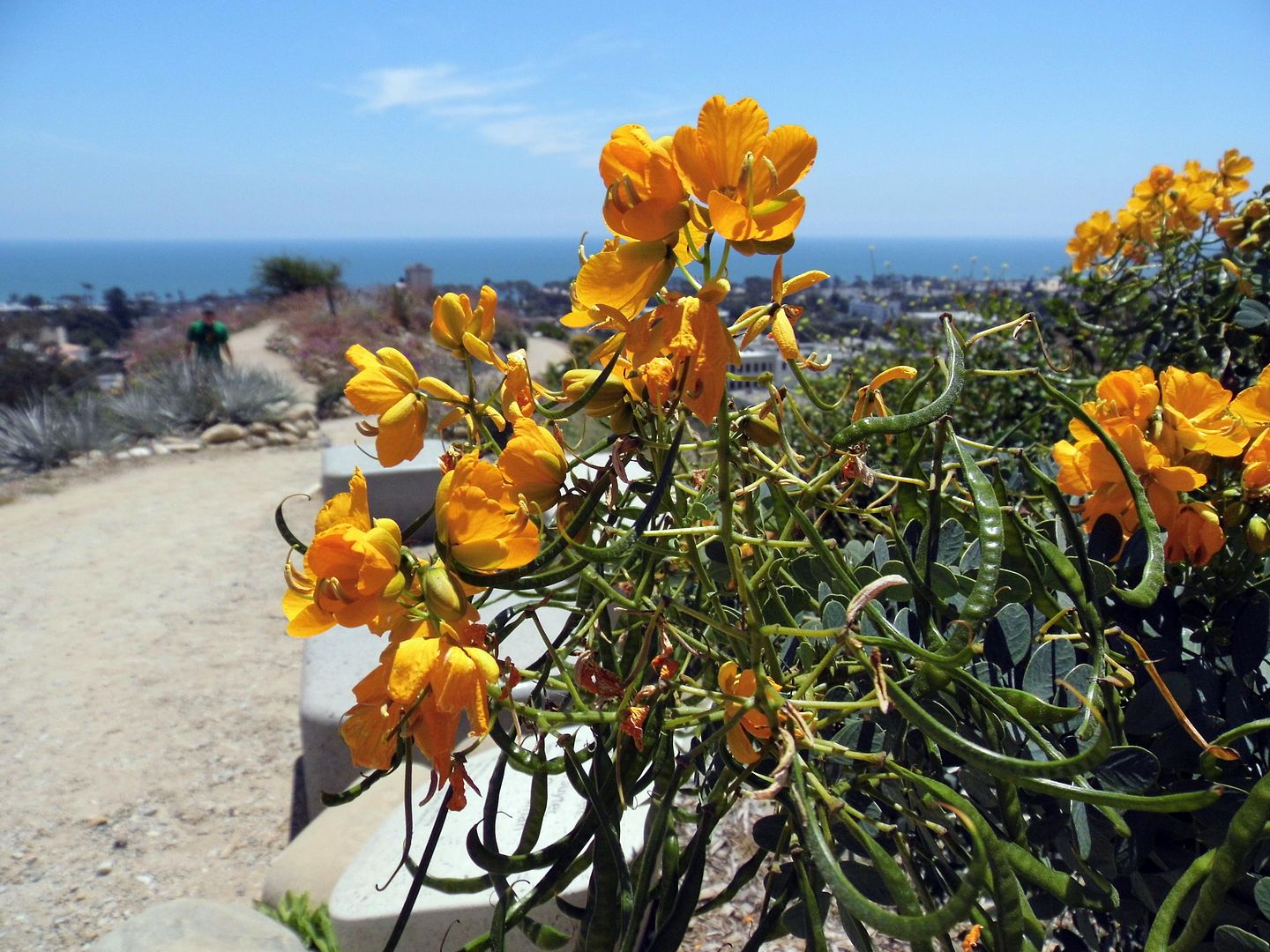


And maybe that's for the best—Grant Park has already transformed so much since its past uses in agricultural in the 18th century and as a grazing pasture in the 19th century.
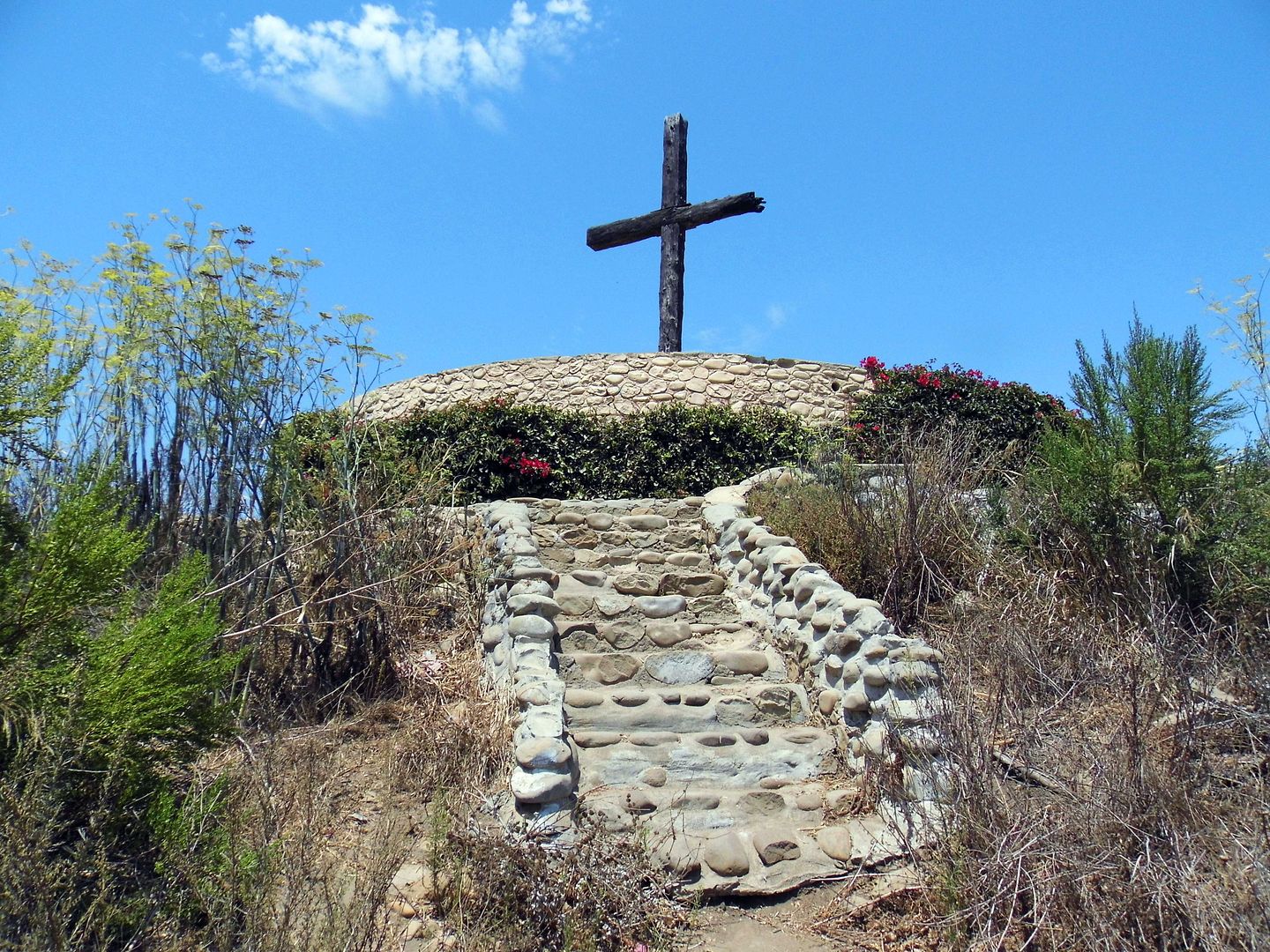


There's one tiny parcel of land within Grant Park—and pretty much surrounded by Ventura Botanical Gardens—that's separately owned but inextricably linked to the city of Ventura.
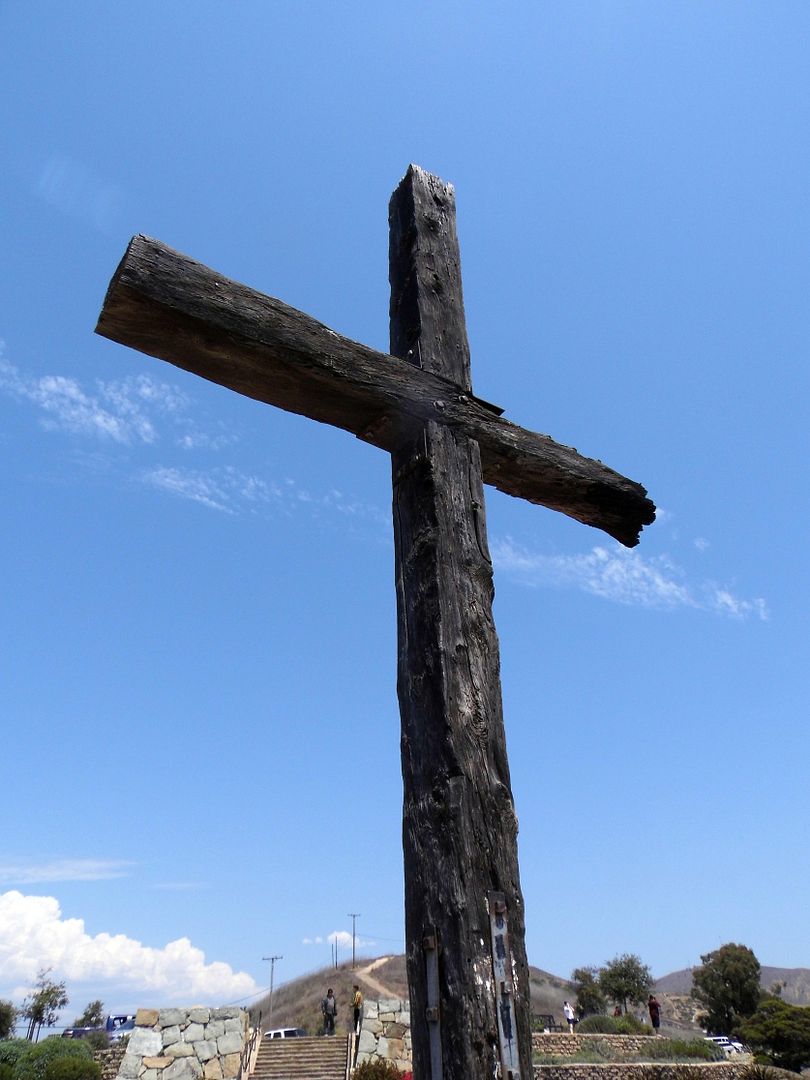


It's the spot on a hill called "La Loma de la Cruz" where legend has Franciscan friar Junípero Serra erecting his "Mission Cross" in 1782—the year he founded Mission San Buenaventura, his final California mission before his death in 1784.
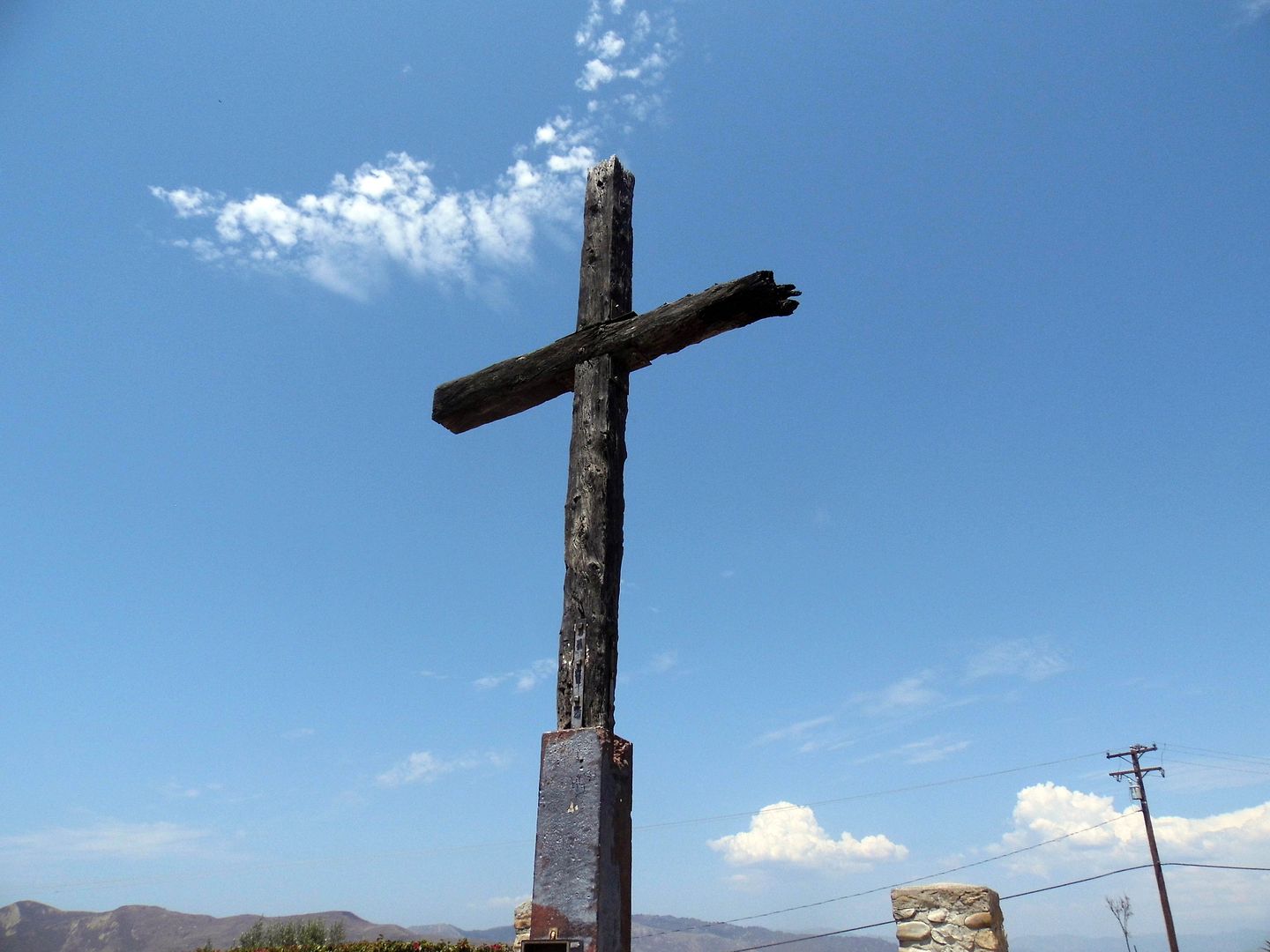


This 1-acre plot, known as Father Serra Park, has been owned by the Serra Cross Conservancy since 2003—the only way such a religious symbol could stay there while maintaining the separation of church and state.
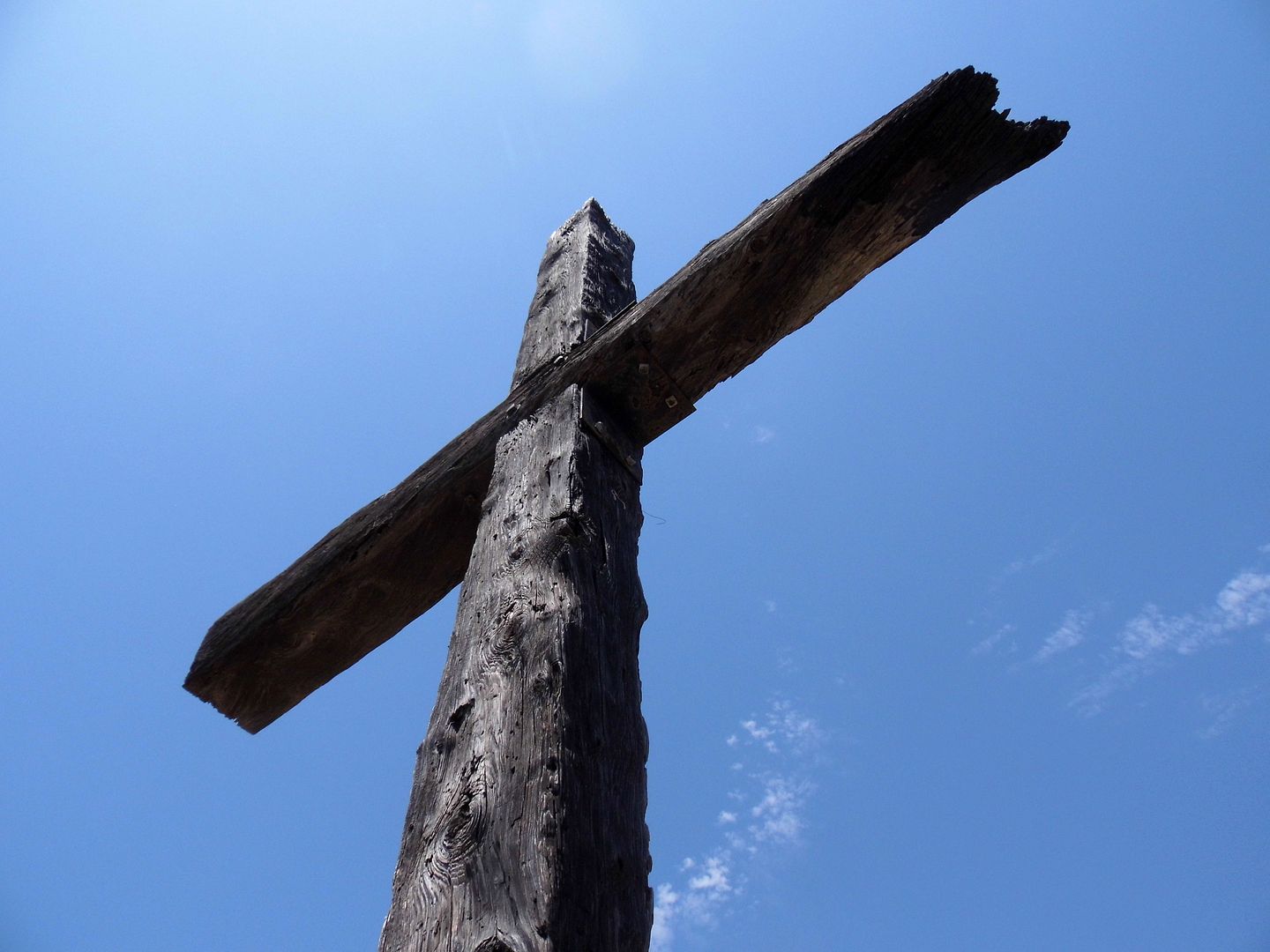


This isn't the original cross, of course—its predecessors having been taking down by fire and wind. This one dates back to 1941—and it's still holding on for dear life, despite having been licked by the flames of the Thomas Fire.
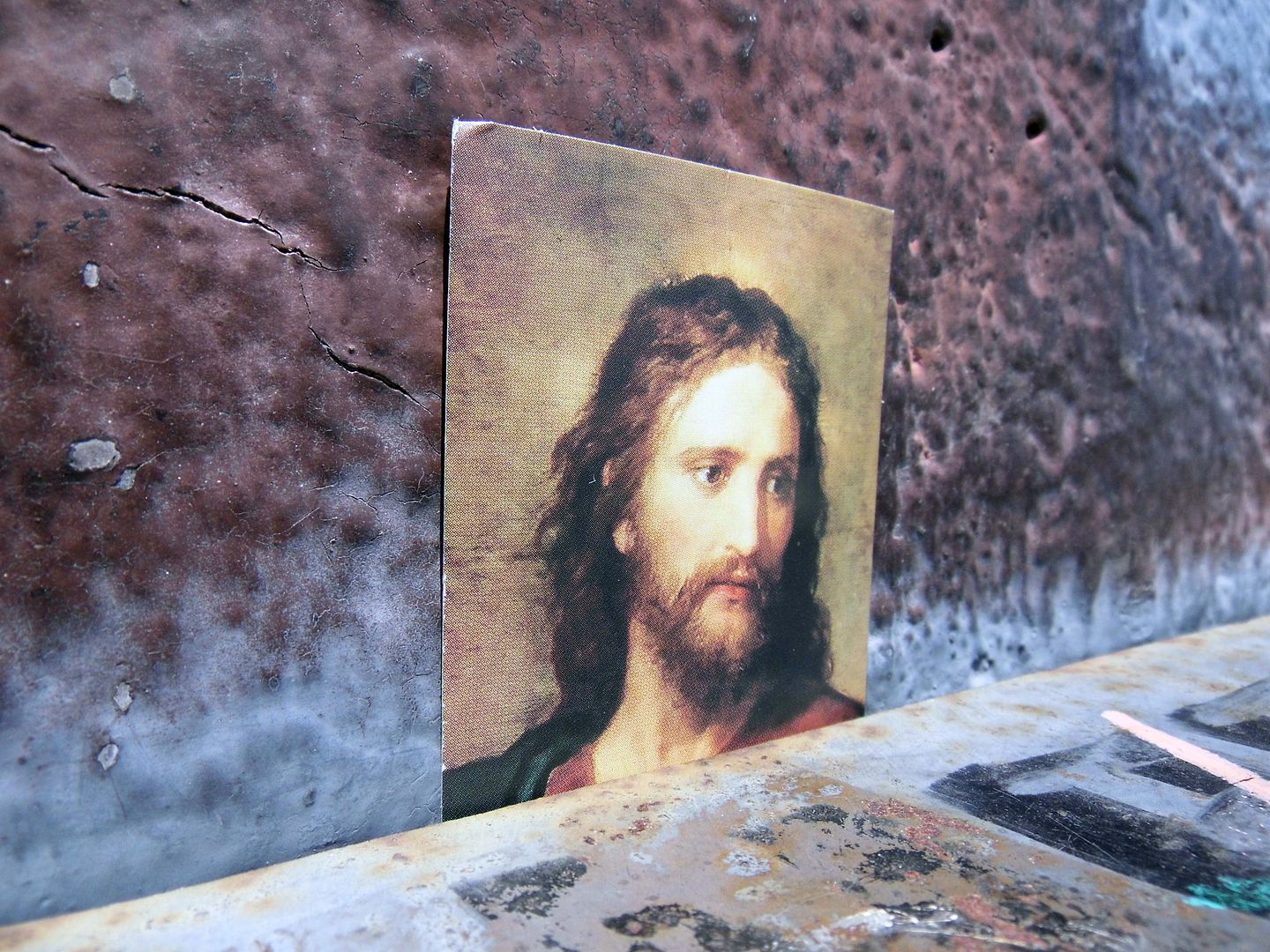


Serra Park is a popular destination for weddings—or really anyone who just wants to get a good look at the panorama and maybe say a few words to their higher power.

Maybe one day Serra Cross will burn down and no one will care enough to put it back up. Maybe the same holds true for the botanic garden—one day, when its usefulness goes out of vogue.

But for now, these are precious resources that are literally in the line of fire every single wildfire season. Better to go now than to wait for more tragedy to strike.

Related Posts:

Photo Essay: A Rock House of Plays, Poetry, and Ceramics (and The Cross That Overlooks It)