Search

Showing posts with label Planes. Show all posts

April 19, 2026

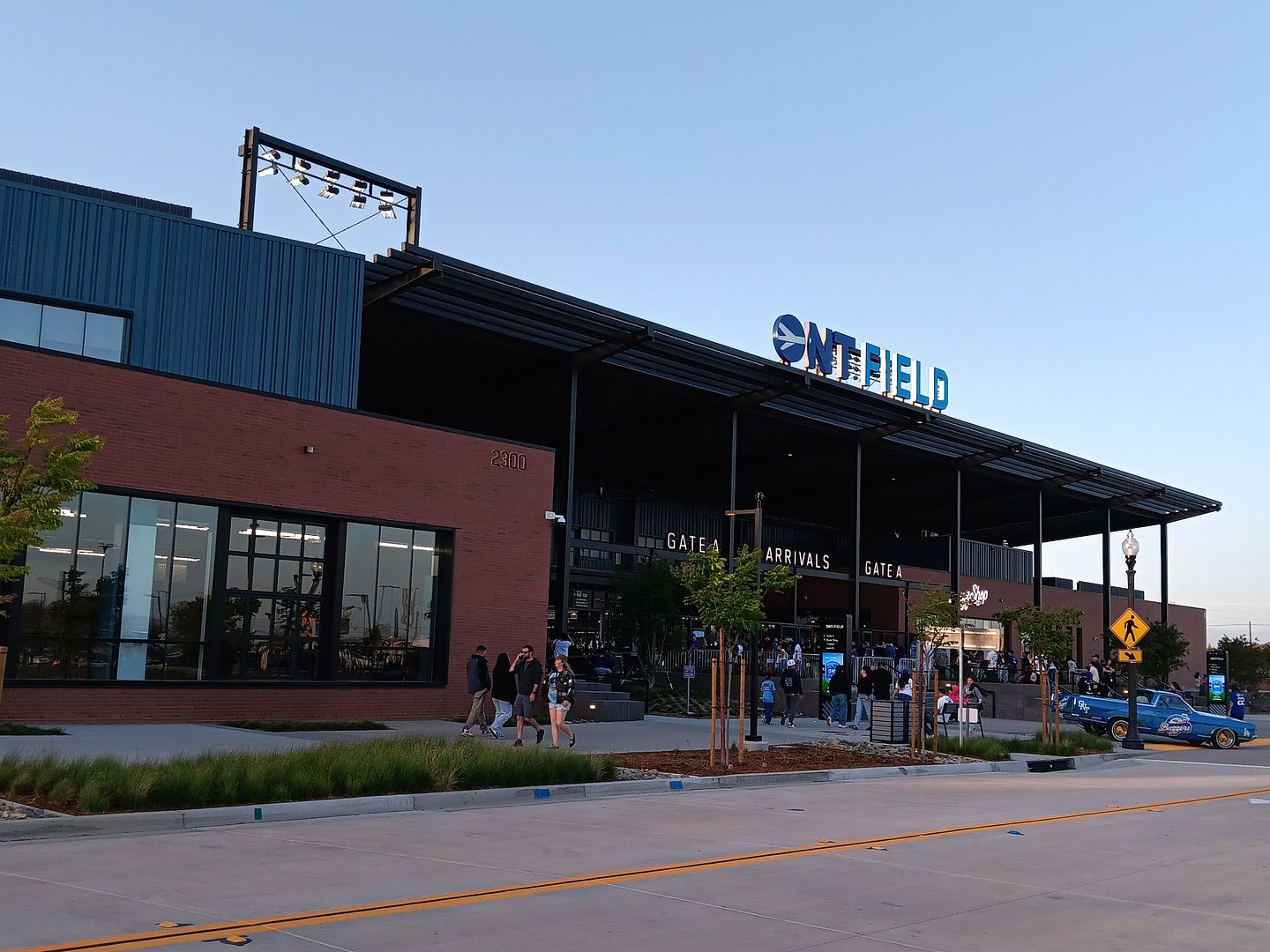
Photo Essay: Baseball Buzz Returns to Ontario, California With the Opening of ONT Field

Ontario Airport in California's Inland Empire has been staging a major comeback—and it may have launched its biggest flex yet.

I remember when the only way for me to fly JetBlue from New York City to the West Coast was from JFK to ONT or LGB (Long Beach)—and then JetBlue ceased operations out of ONT in 2008 and the mid-sized airport's business declined by nearly half. 

That was back when Los Angeles World Airports (LAWA) controlled ONT and didn't prioritize regional air transport. But then ownership of the Ontario airport transferred to the locally-focused Ontario International Airport Authority in 2016—and when JetBlue returned in 2018, that seemed to be a major sign of an upswing. 

By the end of 2019, the number of passengers passing through the airport rebounded to its 2008 numbers. And in the following years, ONT continued to break its own records, celebrate more milestones, and welcome more airlines to its runways and gates. 

 
Now, ONT holds the naming rights for the new baseball stadium in Ontario, called ONT Field. 

November 25, 2025

Photo Essay: The Life and Career of Elvis Presley, As Seen Through Graceland's Costume, Car, and Airplane Collections

It actually never really occurred to me that going to Graceland would mean more than just visiting the mansion that Elvis Presley lived in until his death in 1977. 

 
But actually there's more—a lot more—across the street, including the "Elvis: The Entertainer Career Museum."

March 07, 2025

Photo Essay: Barnstorming for Battery-Powered Flight at Santa Monica Airport

The first flight to circumnavigate the globe took off from and returned to an airport right here in the Los Angeles area: Clover Field, now known as Santa Monica Airport. 


February 11, 2025

Photo Essay: Crazy for Planes at Mojave Air & Space Port

I've long been fascinated with the Mojave Air & Space Port, the home of Virgin Galactic and just a stone's throw away from Edwards Air Force Base.

 
I've skulked around the airport a bit in the past, but I always wanted to go to its monthly "Plane Crazy" event, which would give a little closer access to the runway (and maybe get a better view of the airplane graveyard). I've had it on my calendar for years and years.

July 11, 2024

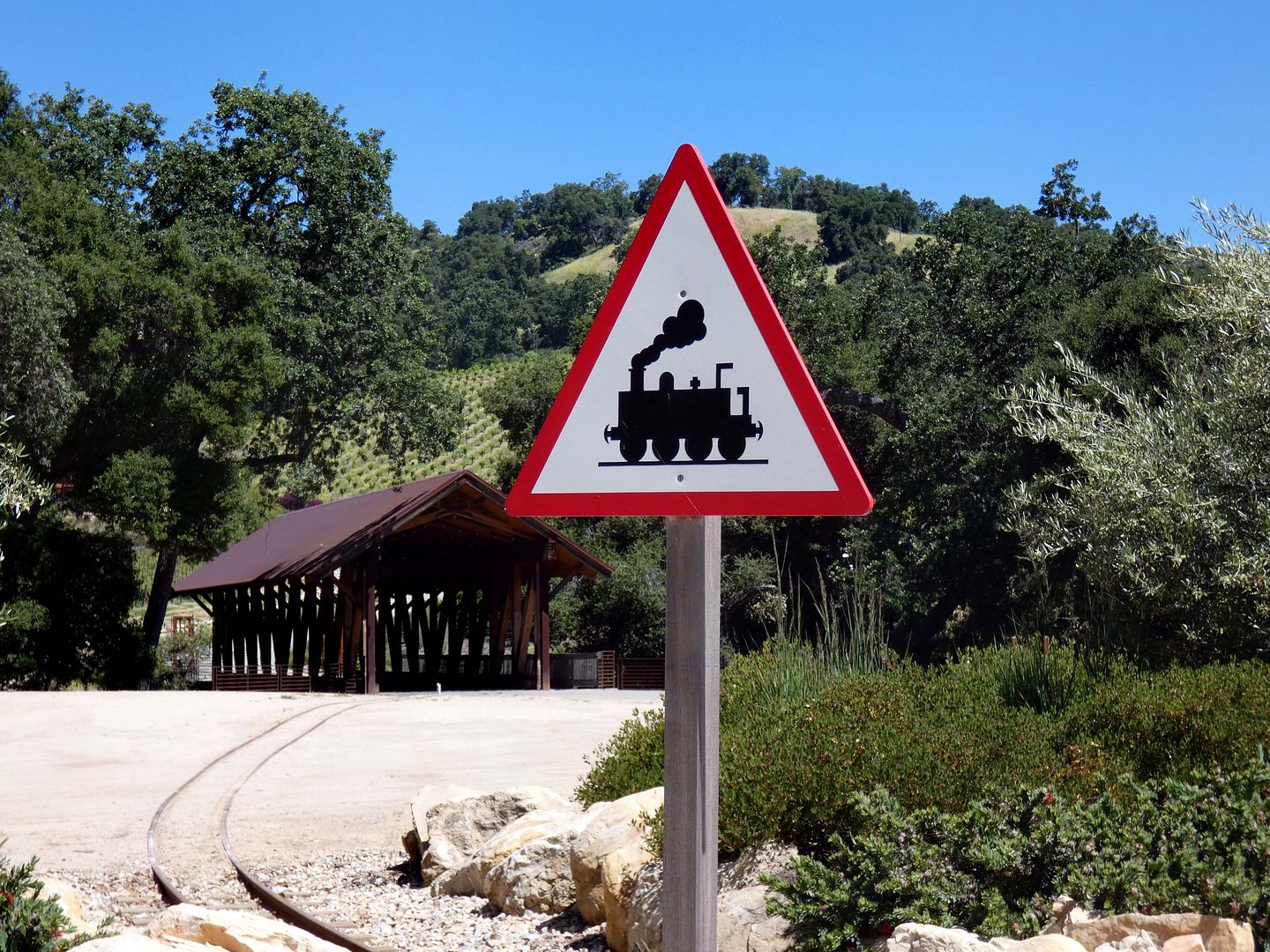
Photo Essay: Touring Halter Ranch Vineyard Estate on a Railroad of Replica Swiss Rolling Stock

Since I was already heading up to California's Central Coast on Memorial Day weekend to ride the original Disneyland passenger cars at Santa Margarita Ranch..
     
...I decided to make it a full-blown traincation by booking a train tour of the vineyard at Halter Ranch in Paso Robles. 

February 07, 2024

Photo Essay: Fueled By Jet Fumes and Fear of Missing Out at Ontario Airport

Many years ago, back when I was living in NYC, I got up at the crack of dawn one morning to go spectate as Edith ran a race on the runways of JFK Airport.
    
decommissioned Boeing 727

I wasn't a runner back then—and I'm still not—but I thought to myself, if I were to ever do a race, I think I'd like to do one on an airport runway. 
 

Well, my time came this past weekend, as I arrived to the National Guard Hangar at Ontario International Airport (ONT) in Southern California's Inland Empire for its "5K the Runway" event. 

December 20, 2022

Photo Essay: Nightflying the Skies In the D-Day Doll, a WWII-Era DC-3 Warbird

I typically prefer cars and trains to boats and planes—but I can't resist a good historic excursion on any of 'em.


So I was excited when my friend Charity texted me asking if I'd heard of or done the nighttime DC-3 flights over the city of Riverside, California offered during the Christmas season. My answer? No and no!

September 05, 2022

Photo Essay: The American Military Museum's Island of Tanks and Stockpile of Surplus Military Supplies

Not far from the former LA-14 Nike Missile Site (L) in South El Monte, just outside the boundaries of Whittier Narrows Recreation Area, there's a 7-acre parcel filled with antique military equipment. 

It's the American Military Museum, fondly nicknamed "Tankland."

Craig Michelson is its current curator (and collector), but it was his father—a former officer in WWII—who founded it six decades ago.


January 05, 2022

Photo Essay: Flying Through the Jet Age-Era TWA Terminal, On the Cusp of the Space Age

I've been long fascinated with the old TWA terminal at JFK Airport, out of commission since 2001 after decades of being too small to serve incoming or outgoing flights on jumbo jets. 

Designed by architect and industrial Eero Saarinen—as well-known for the "tulip chair" as for the St. Louis Gateway Arch—the 1962 Trans World Flight Center had fallen into disrepair by the time I got to visit it up close (and inside) in 2011, although it had been partially restored.

circa 2011

Over the last decade or so, I've watched how the defunct terminal of the defunct airline has been restored and even reincarnated as the TWA Hotel, connected to JetBlue Airways' Terminal 5. 

January 22, 2021

Livestream with the Adventurers' Club of Los Angeles: Treading the Offbeat Path in Deceivingly Familiar Territory

I couldn't believe my little world of adventure would be compelling enough for a club full of scuba divers, anthropologists, island hoppers, and treasure hunters. 

But this week, I had the honor of guesting on a livestream presentation hosted by the Adventurers' Club of Los Angeles. (Scroll to the bottom to watch the replay.) 

April 28, 2020

Photo Essay: A Close Encounter of the 'Jet Age' Kind at LAX

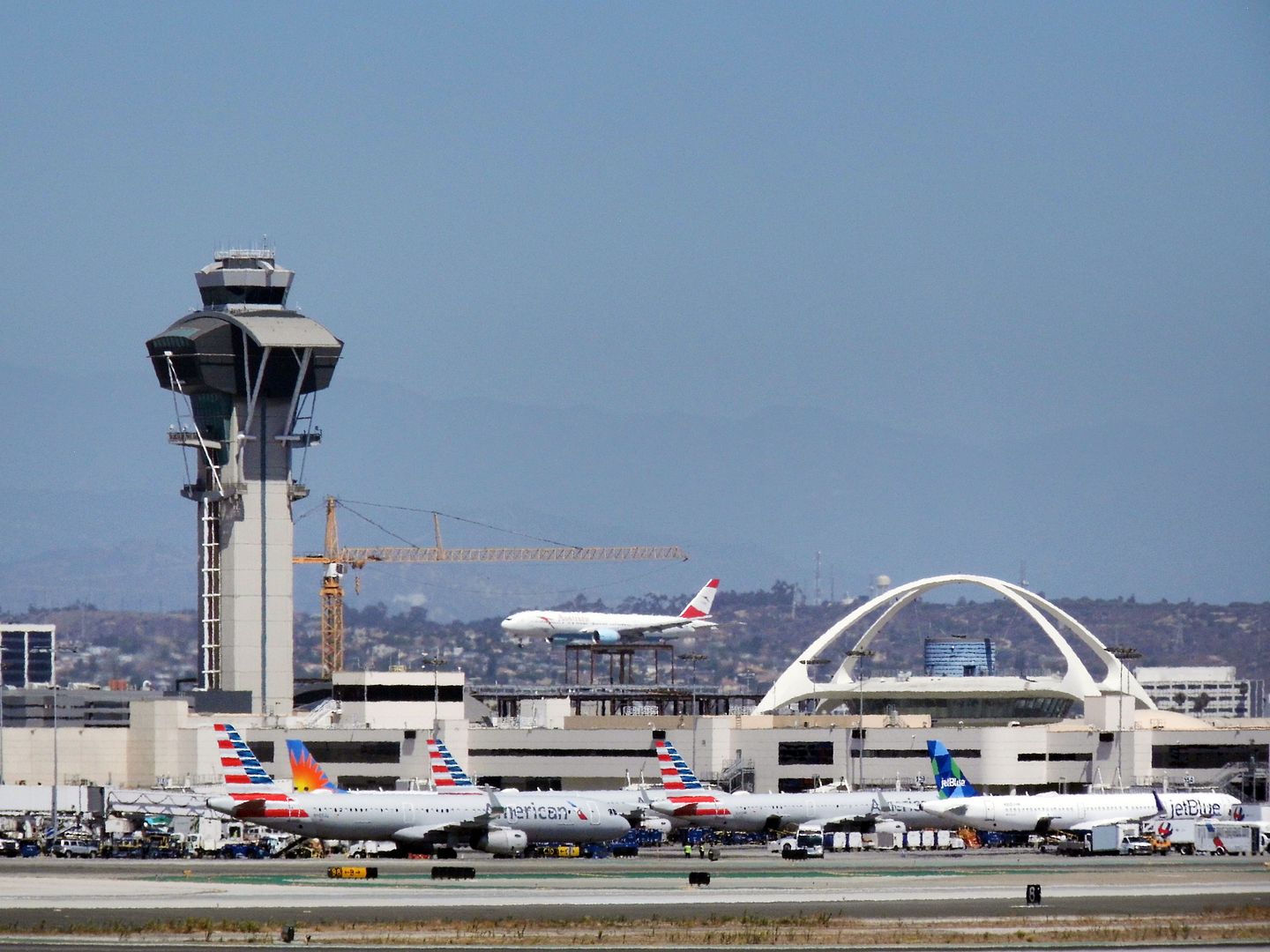
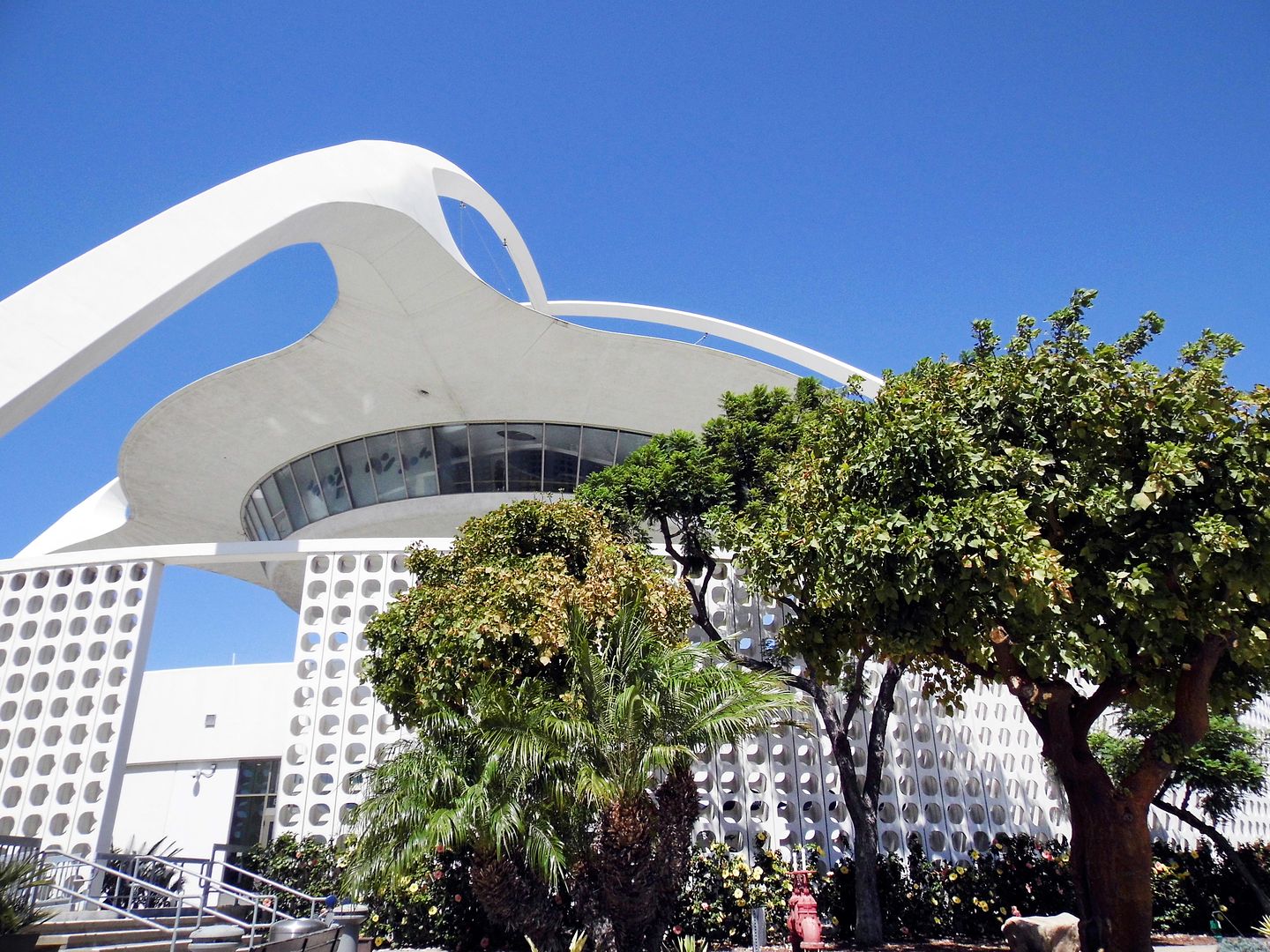
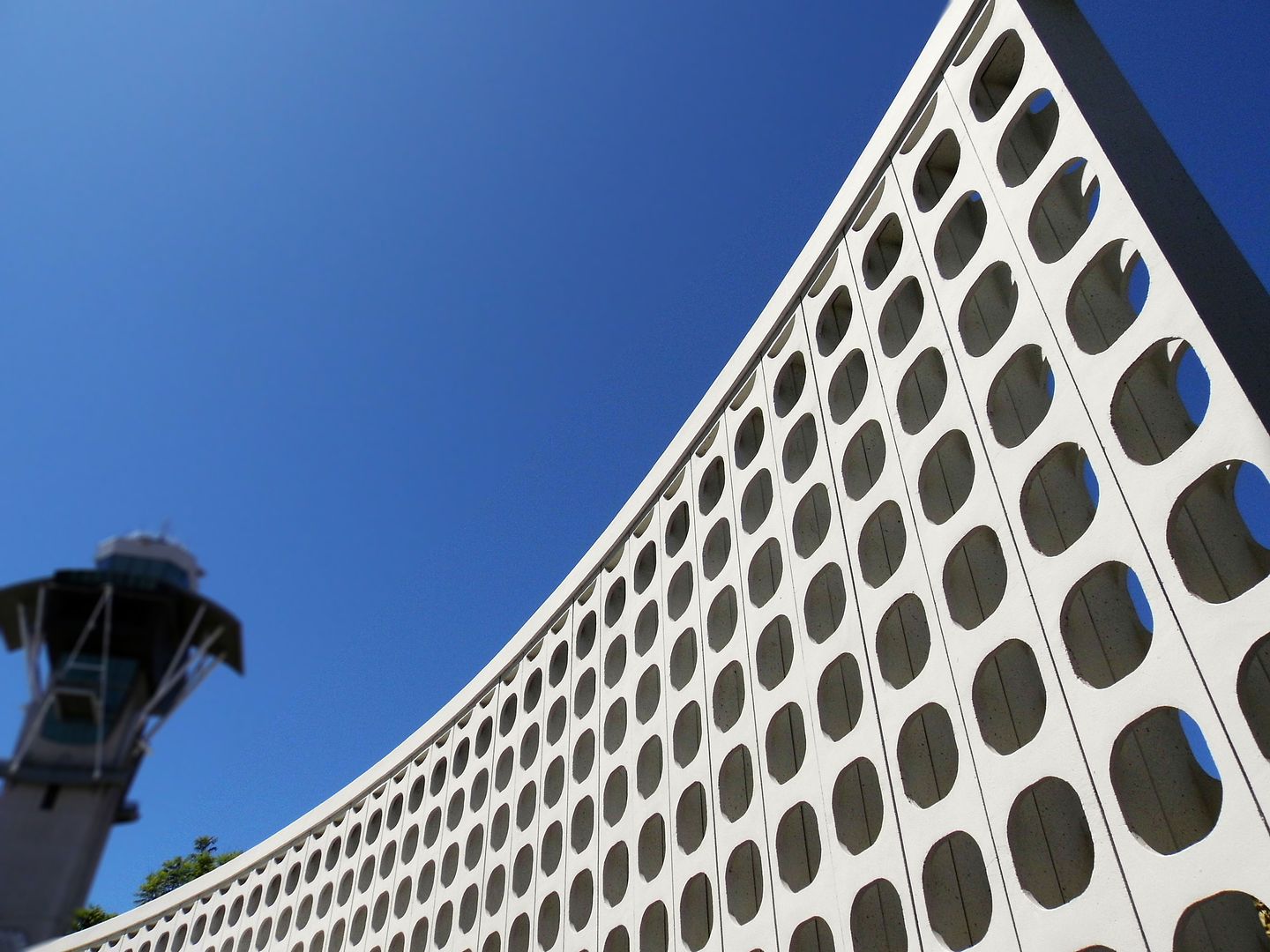
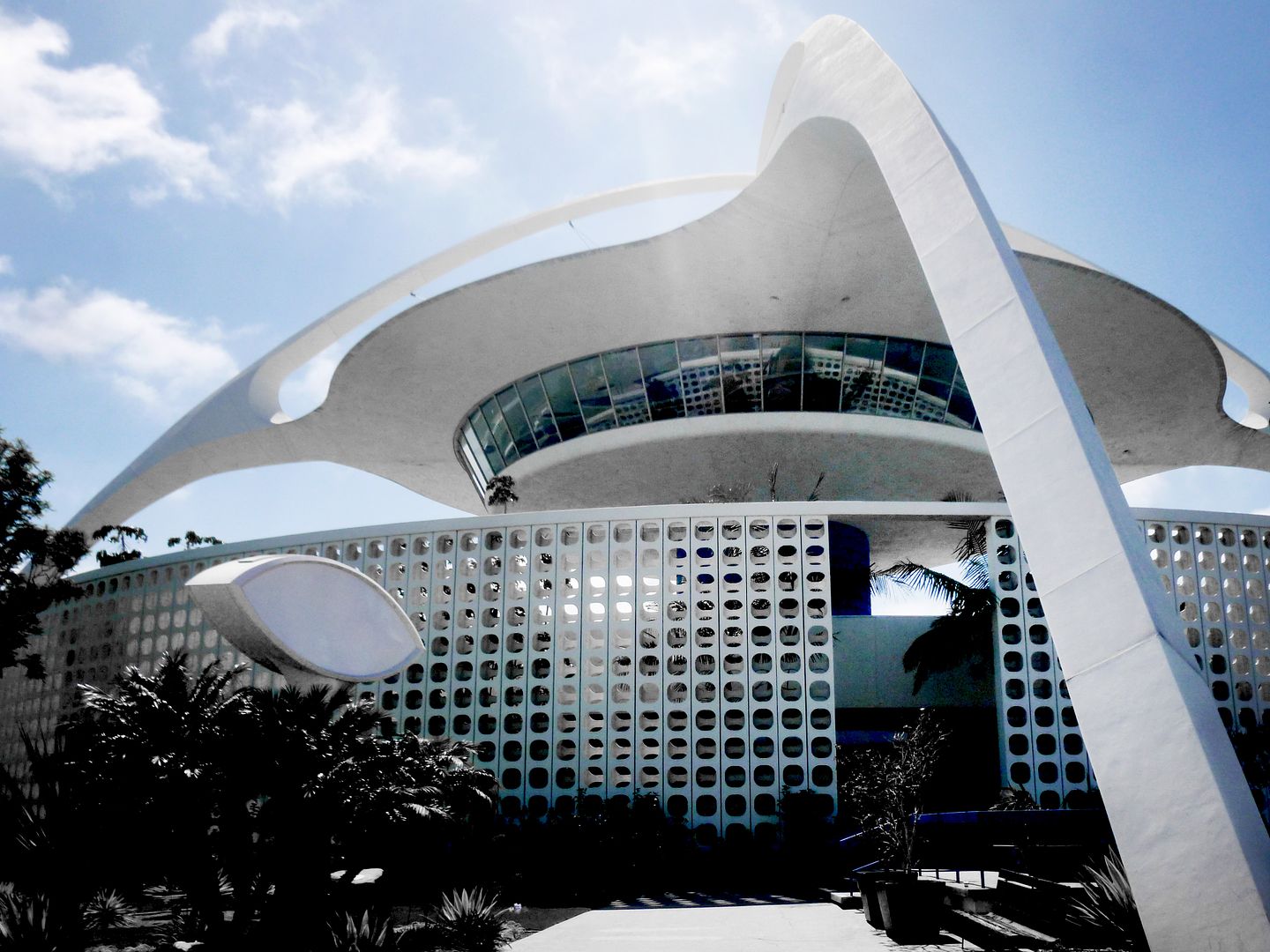
No matter which gate or terminal your airline directs your arriving flight to at LAX, there's something you're sure to see—the Theme Building.


circa 2019

It's at the center of it all at LAX—hovering like a space ship while all the rental car and hotel shuttles and taxis and rideshares encircle it on World Way, bobbing and weaving around the parking structures and the ill-marked exits that simply have you return to the airport instead of heading to your destination.


circa 2019

Situated on an island of sorts between West Way and East Way, the Theme Building is the kind of beacon—day or night—that makes you say "What the heck is that?" and then become obsessed with it. I don't think that's just me. I think it's pretty much everybody.


circa 2019

Completed in 1961 as a joint venture between architects Charles Luckman, William Pereira, Welton Becket, and Paul Revere Williams (though some say Williams has been given more credit than he deserves on this particular project), the "new terminal facilities" were dedicated by none other than Lyndon B. Johnson, the sitting Vice President of the United States at the time (and future POTUS 1963-9).


circa 2019

And the Theme Building was an essential part of the plan to bring LA's international airport into the "Jet Age" with state-of-the-art facilities and a futuristic, Googie vibe.


circa 2019

LAX had come a long way from its first iteration as Mines Field—a mere landing strip built in the late 1920s out of a clearing in the bean and barley fields of the former Mexican land grant, Rancho Aguaje de la Centinela.


circa 2019

And in keeping up with the new jet set, there was no telling what new heights this flight facility could reach.


circa 2019

Also known as the "Theme-and-Arch Building," the LAX spaceship (whose initial design is credited to draftsman James Langenheim of the Pereira-Luckman firm) ultimately became nothing more than a symbolic center of the airport—and not a functional one.


circa 2019

In fact, it's kind of hard to get to on foot, especially with luggage in tow. And there's not much reason to go there if you're not flying in or out of LAX.


circa 2019

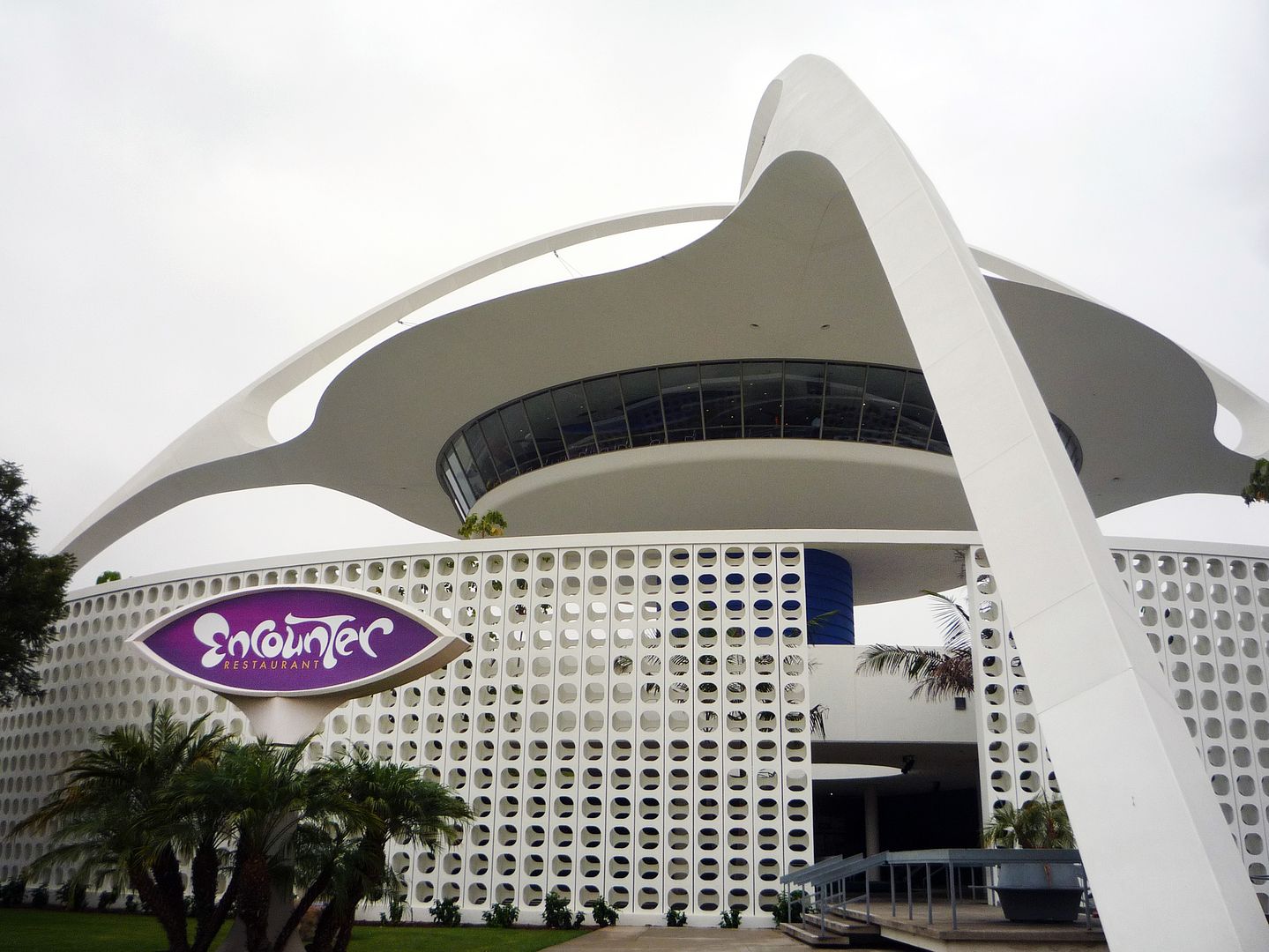
There used to be, however, an exception—the circular Encounter Restaurant and Bar.


circa 2019

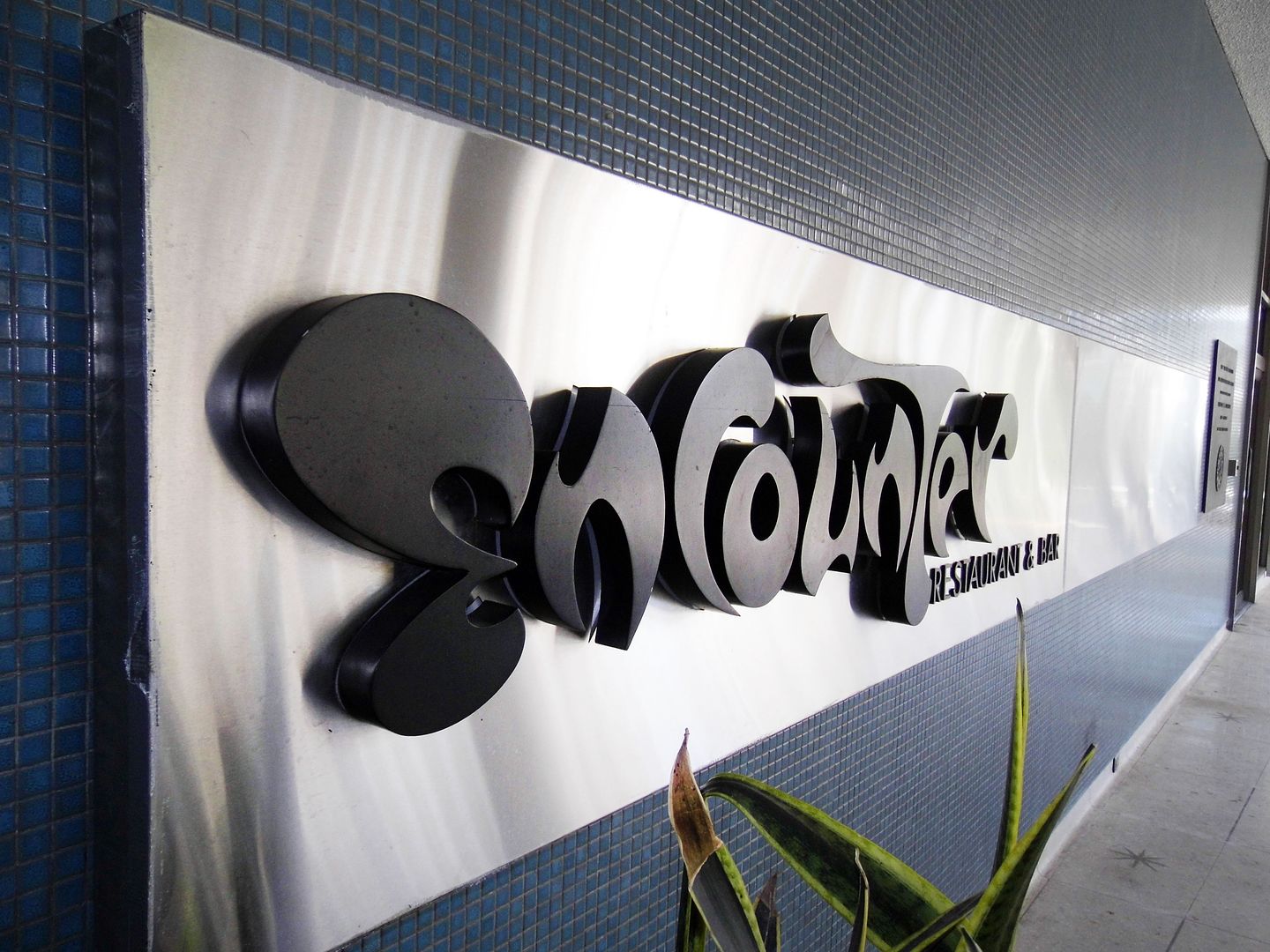
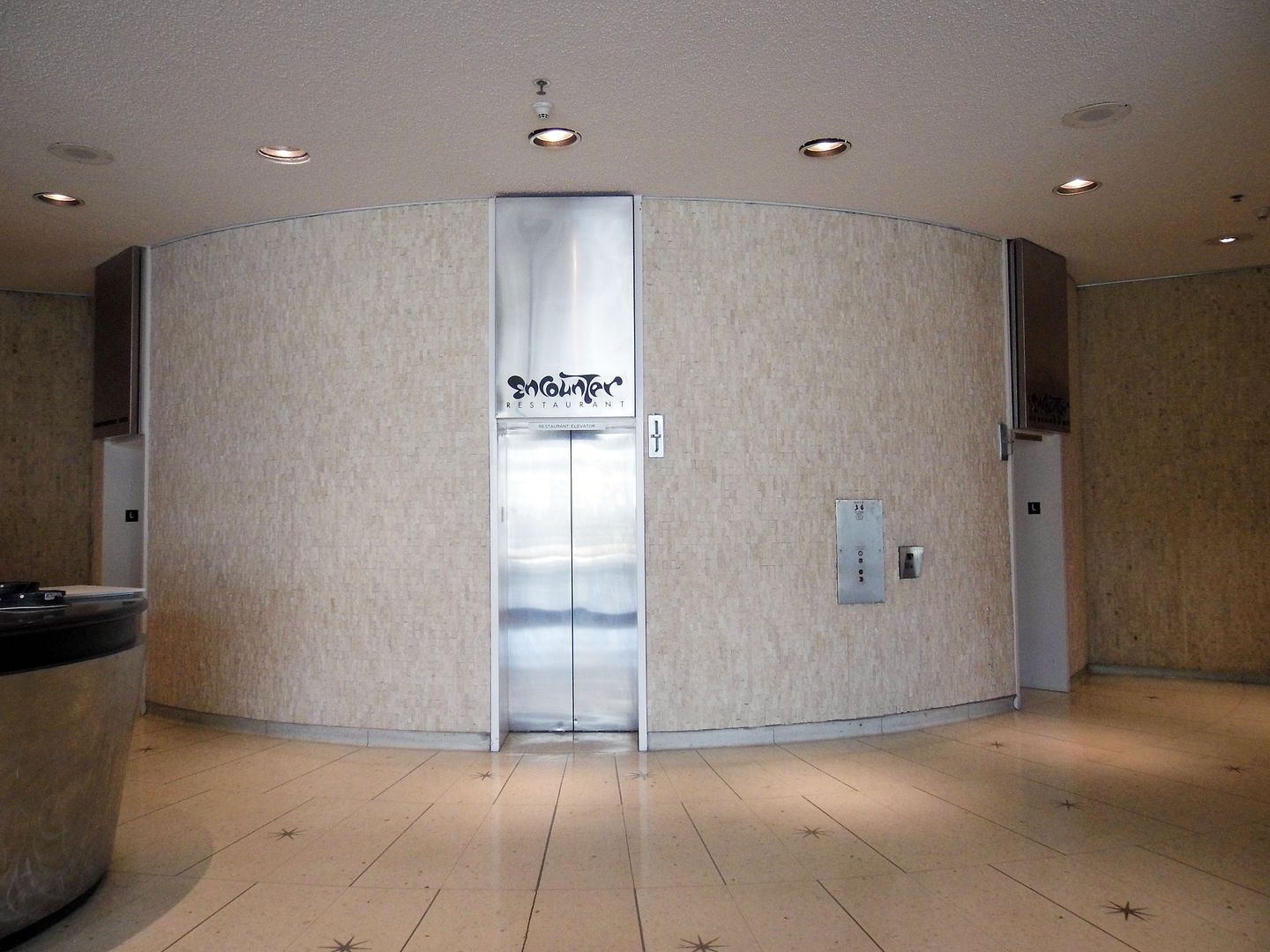
Encounter closed permanently in December 2013, but its signage persists on the tiled wall outside the (now locked) glass entry doors...


circa 2019

...and outside the elevator that would take you to the top while playing some Star Trek theme-inspired soundtrack (or a copycat version thereof, listen at the bottom of this post).


circa 2015

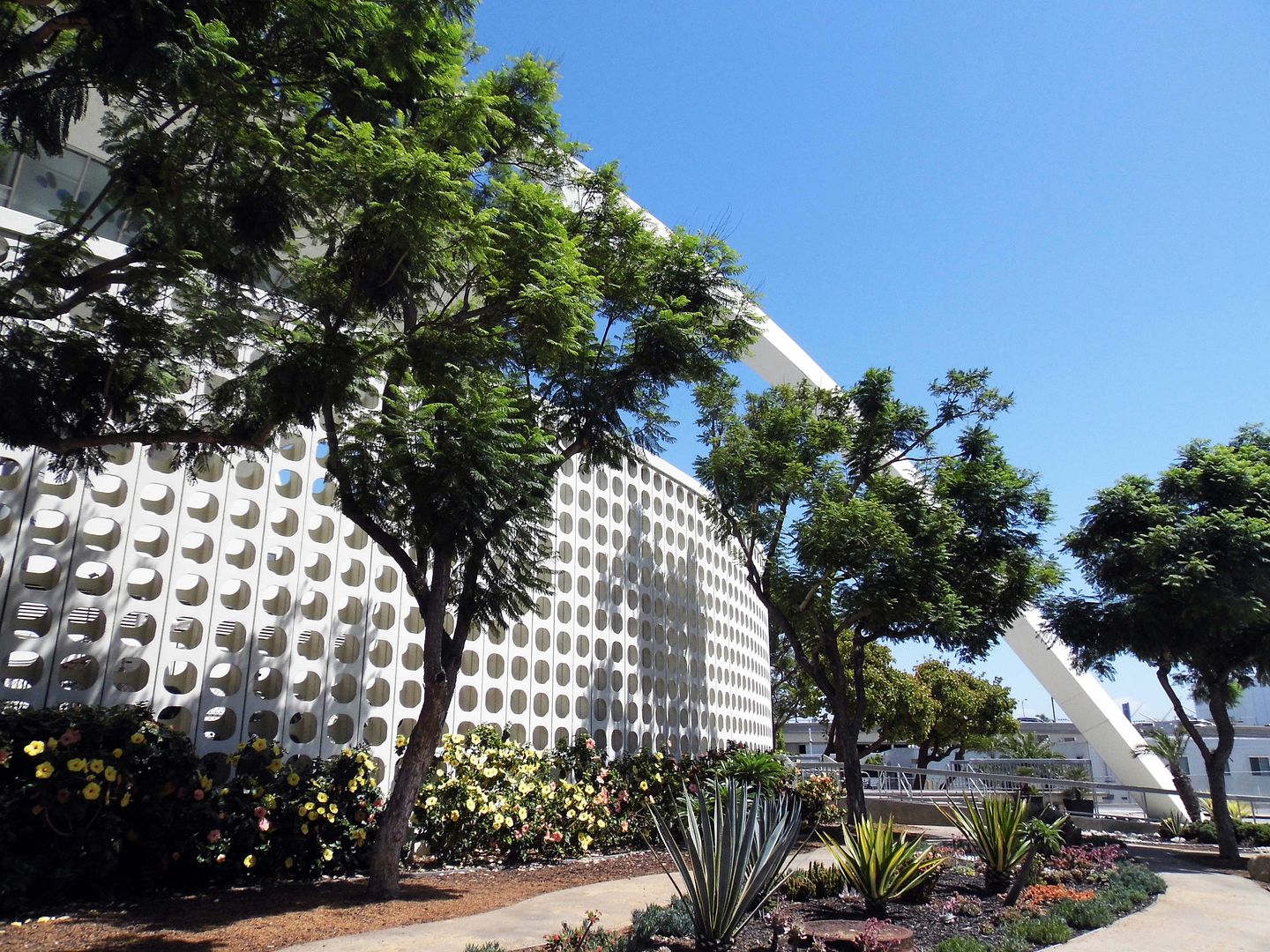
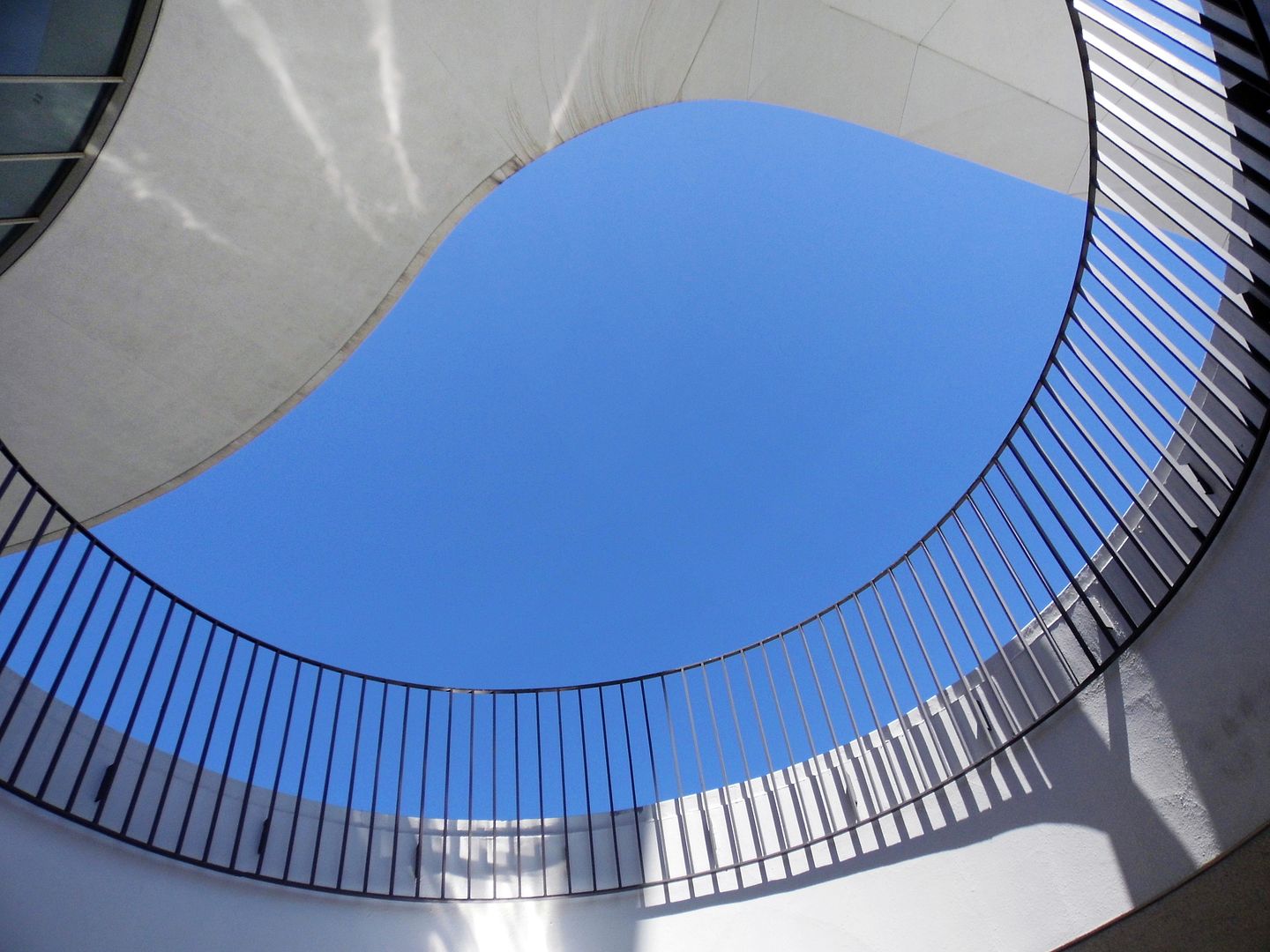
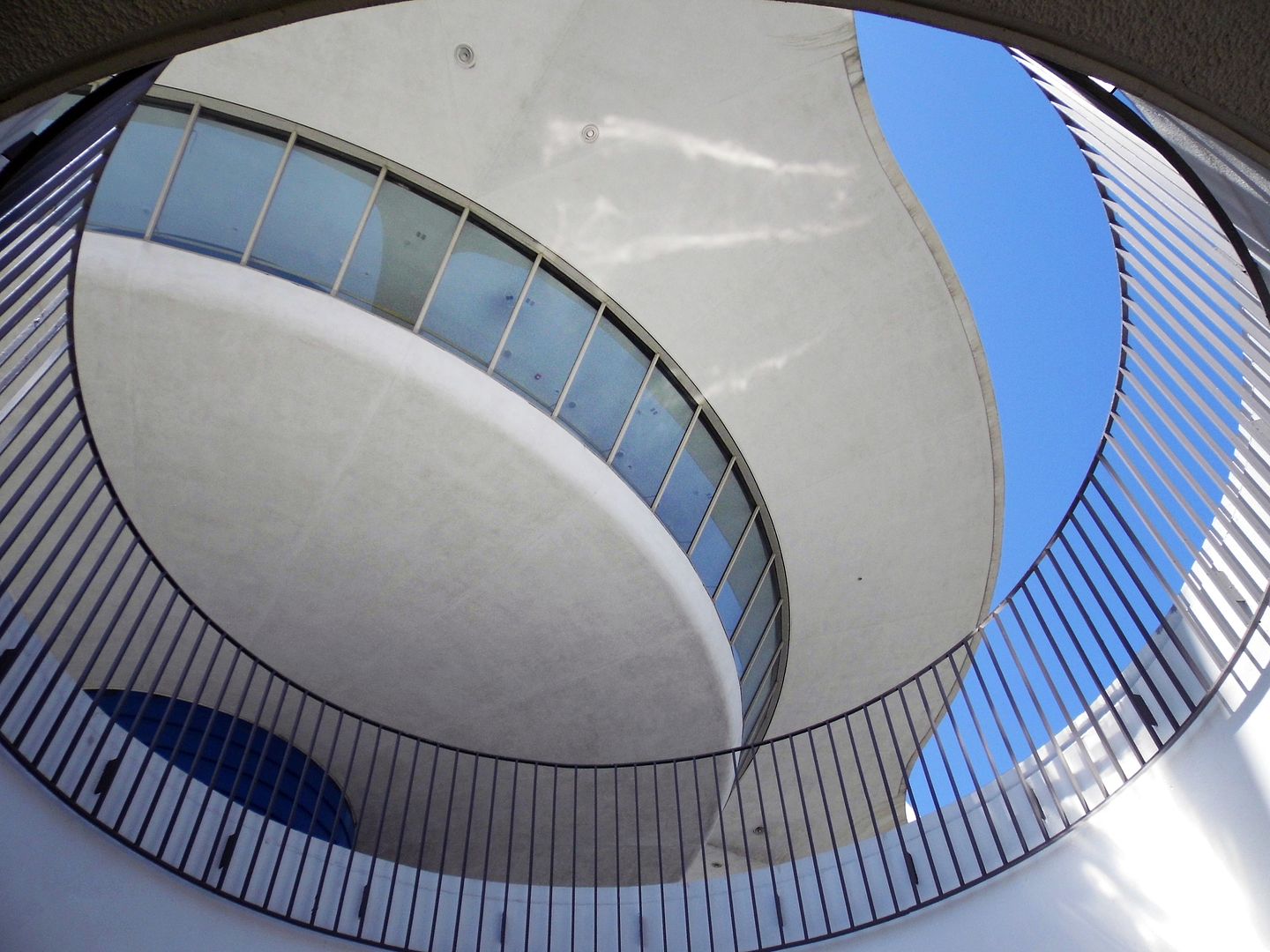
Standing under those stuccoed arches, encircling the flying saucer like the rings of Saturn, visiting is truly an "out of this world" experience.


circa 2010

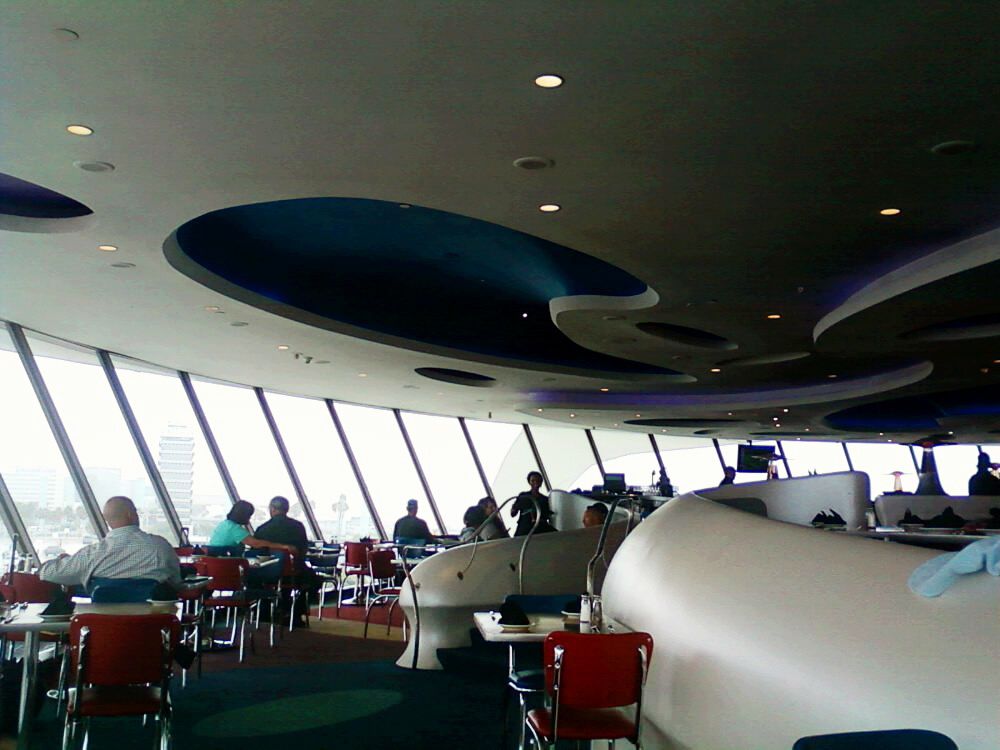
I had the foresight to go out of my way to get up in there back in October 2010. Although Encounter had originally opened in 1997, the building itself later needed renovations in 1999 and seismic retrofitting and other structural reinforcements in 2007. It didn't reopen until July 2010.


circa 2010

I was living in NYC at the time but had ramped up my West Coast visits in anticipation of moving here. And after flying back and forth so many times over the course of that year, I just had to visit that UFO-shaped restaurant suspended in the air.


circa 2010

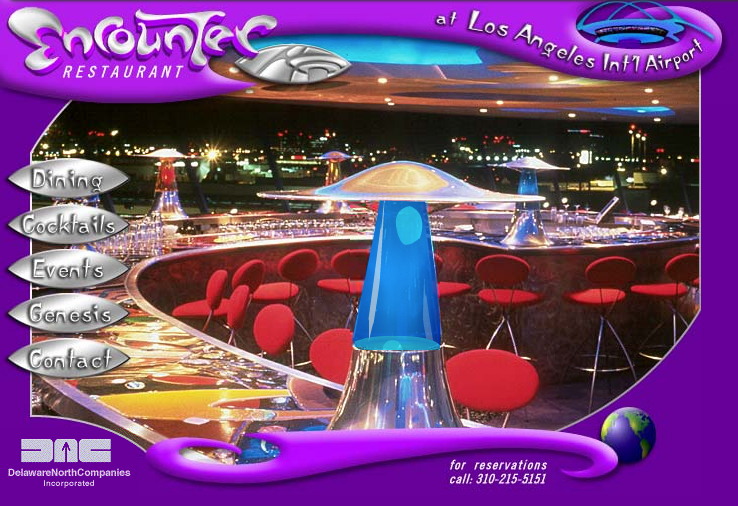
The Jetsons-like interior was accented by the spaceship's exterior lighting design—contributed by Michael Valentino of Disney Imagineering, circa 2000. The lava lamps on the crater-shaped bar were a bit much, as were the laser-beam bar guns and alien beer taps. And the themed menus—except the one for "junior space cadets"—offered cocktails like "The Black Hole" and the "Bossa Supernova."


circa 2010

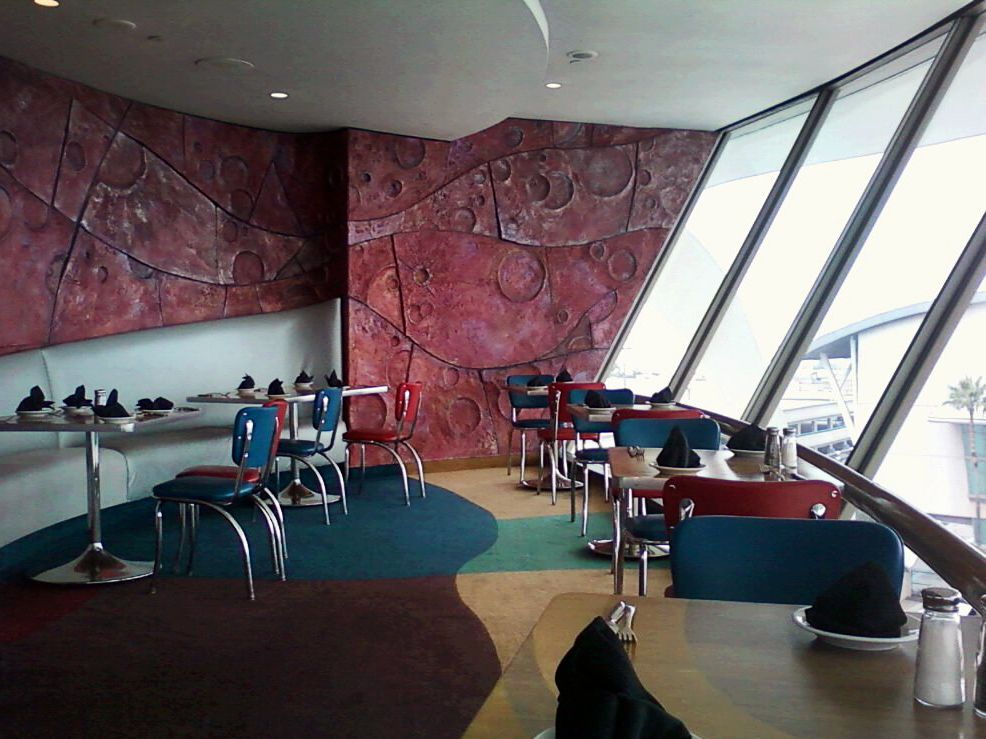
And at the time, I didn't appreciate that much of the spacey-chic I was witnessing was the work of other Disney imagineers, too—like Eddie Sotto (who designed the textured walls to look like the moon's surface) and Ellen Guevara (who worked with Sotto on the flowing carpet patterns).


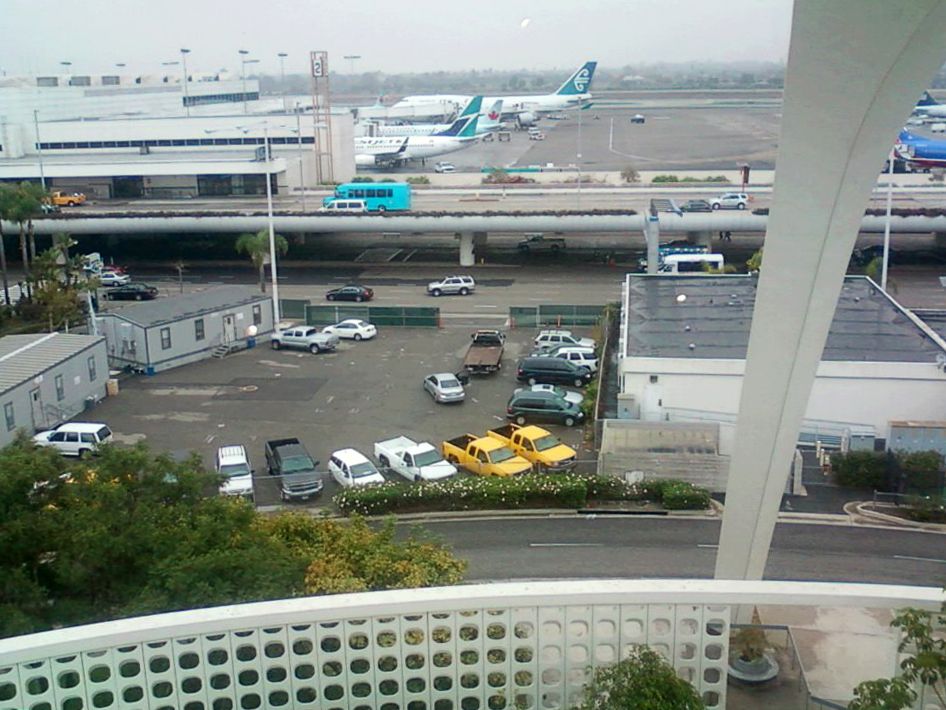
But oh, what I wouldn't give to ride that elevator again—and listen to that kooky sci-fi music—and get a good look at all the crazy design elements inside—and watch all the planes taking off and landing on the runways outside.


Encounter website circa 2007 (Screenshot via Internet Archive)

I did actually dine at Encounter one more time—that same year, in fact, when I'd returned to LA to interview for the job that ultimately moved me here. I was staying at a hotel near LAX and my future boss met me at the airport for dinner.

Considering the business nature of our meeting, I didn't get the chance to take any nighttime photos of the Theme Building or its restaurant. But to be honest, I was so obsessed with collecting new experiences from 2010 to 2014 that I didn't really feel the need to go back. I thought I'd been there and done that.

In fact, it didn't occur to me to go back to Encounter ever again—until it was too late.

Nothing has replaced the Encounter Restaurant in the Theme Building, although there's been talk of how it might be reimagined—especially with the success of the newly reopened (and preserved) TWA terminal at JFK. The observation deck is even closed. The only signs of life are the Bob Hope USO operations on the ground level.

So what could be next?

If I had endless amounts of money, I'd try to open a tiki bar there. I'd probably even keep the space theme. Outer space and underwater are strikingly similar sometimes.

Aesthetically, there's not a huge difference between the the bottom of the sea and the surface of the moon.

Related Posts:
Photo Essay: Retro Digestion in LA's Most Futuristic Restaurant Designs (Updated for 2019)
Photo Essay: The Triforium, A Disco Spaceship Gone Dark

March 09, 2020

Photo Essay: A Beacon of Banking That Got Reincarnated As a Hotel

Founded in 1889, the former San Diego Savings Bank got a new name in 1925, officially becoming San Diego Trust and Savings Bank.

In 1928, it was about to get a new home, too—its fourth in San Diego, and its most magnificent yet.

There had been just one obstacle to its construction. The Hotel Beacon was standing on the corner lot at 6th and Broadway, which SDSB had purchased in 1924.

So, the old hotel got demolished; the new 13-story bank headquarters got built as the tallest building in San Diego at the time. (It would hold that honor until 1960.)

The funny thing is, though the bank building is still there, it's no longer a financial institution—but a hotel!

It's now the Downtown/Civic Center Marriott Courtyard (and probably the nicest Marriott Courtyard anywhere).

What goes around, comes around, I guess.
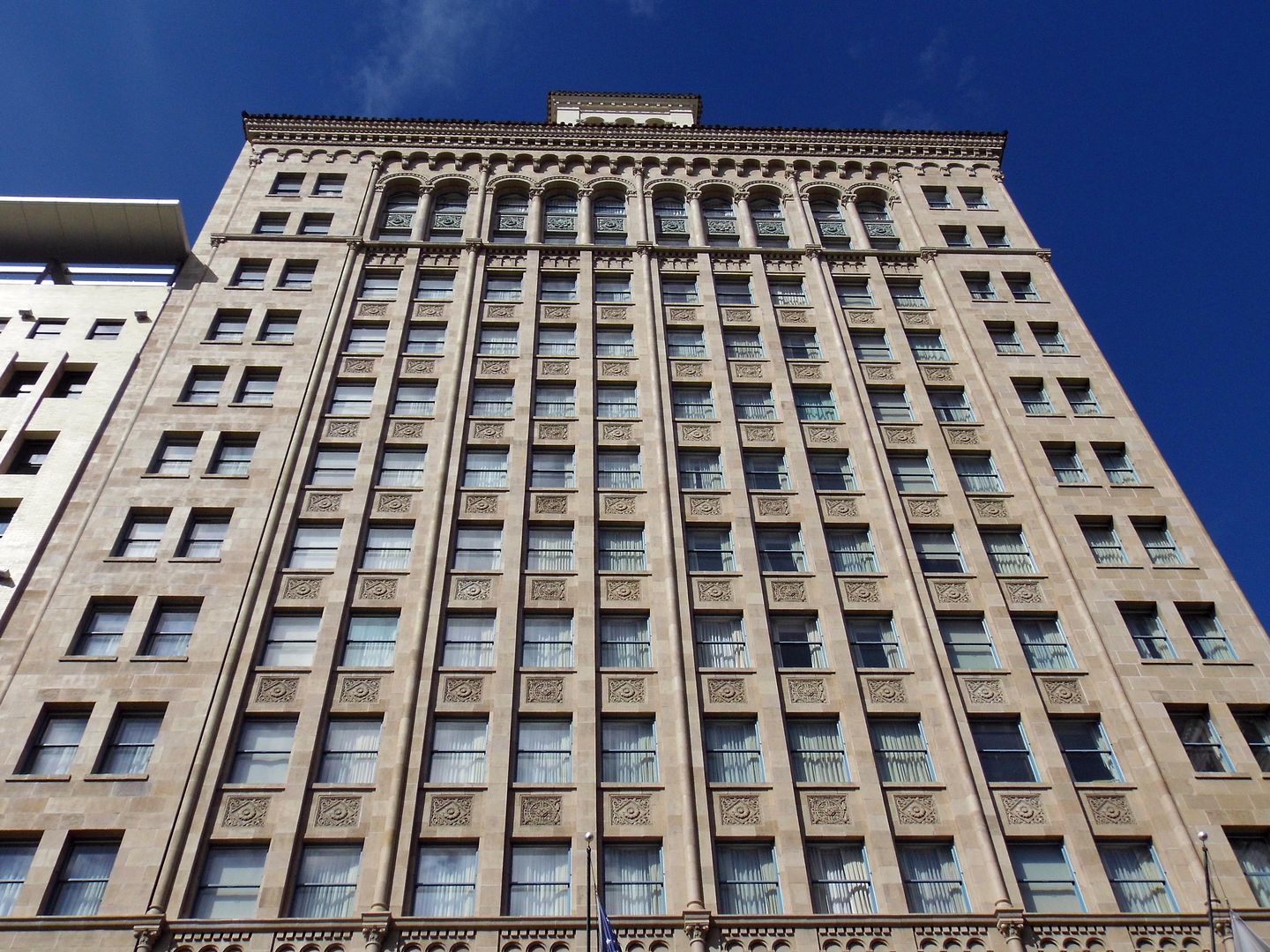


Built by William Simpson Construction Company at a cost of approximately $1.4 million, the San Diego Trust and Savings Bank building is one of only three banks ever designed by master architect William Templeton Johnson. Most would probably agree it was his best.
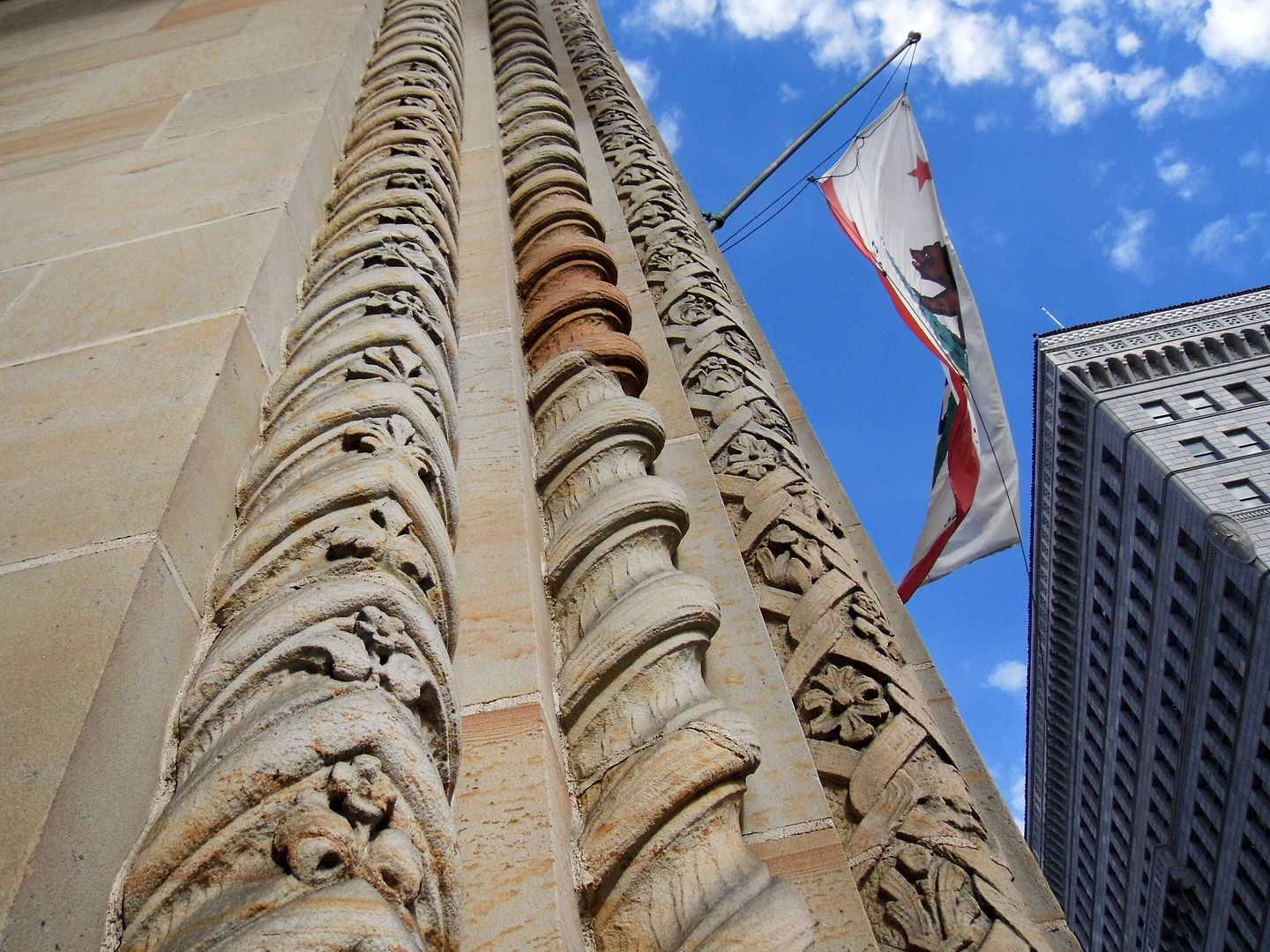


Its "bones" are made of steel reinforced concrete, but what you see on the outside is two stories of buff-colored sandstone quarried from Briar Hall in Ohio (perhaps its first exterior use on the West Coast)...
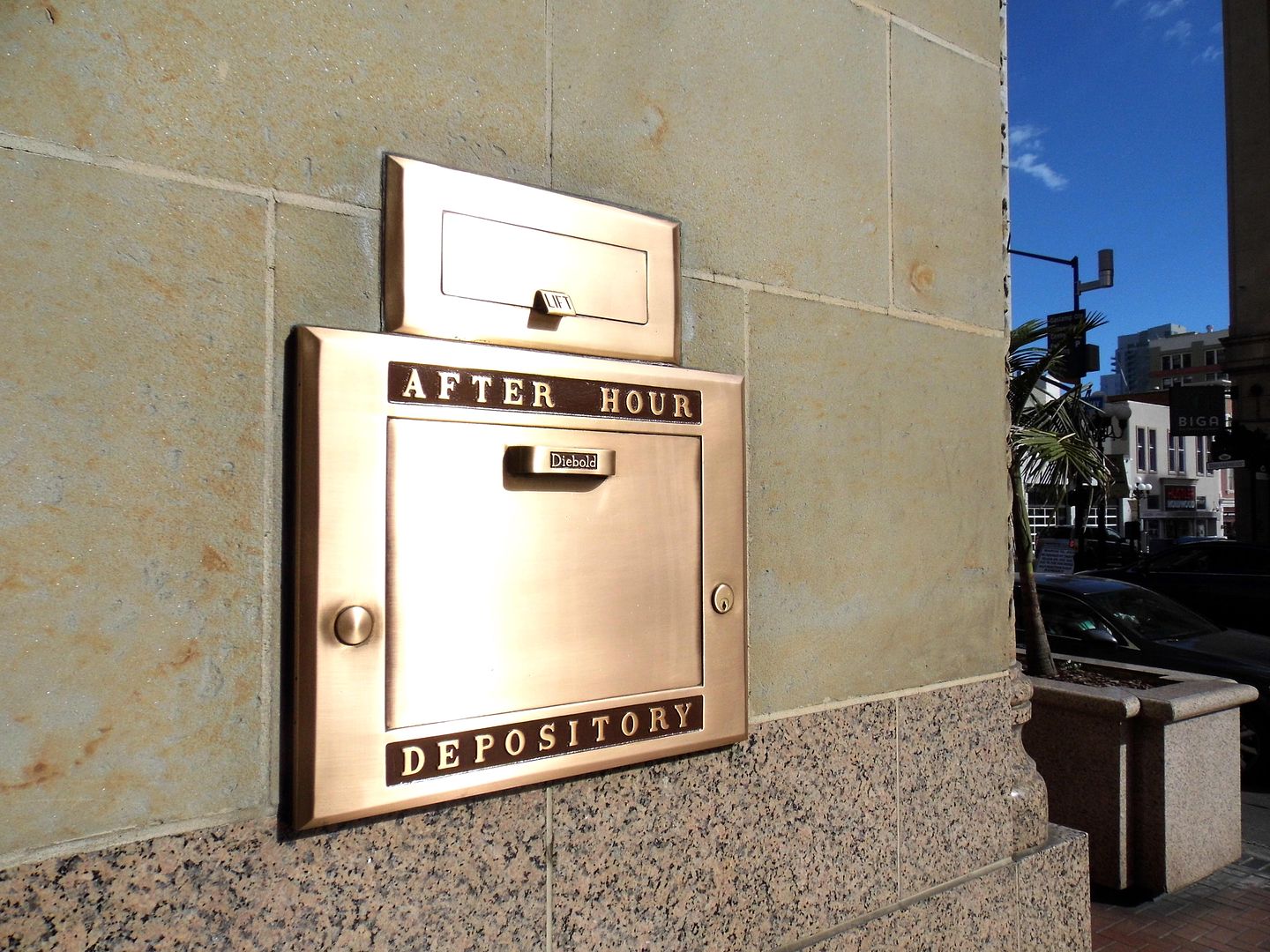


...perched atop a base of pink granite known as Scotch Rose.
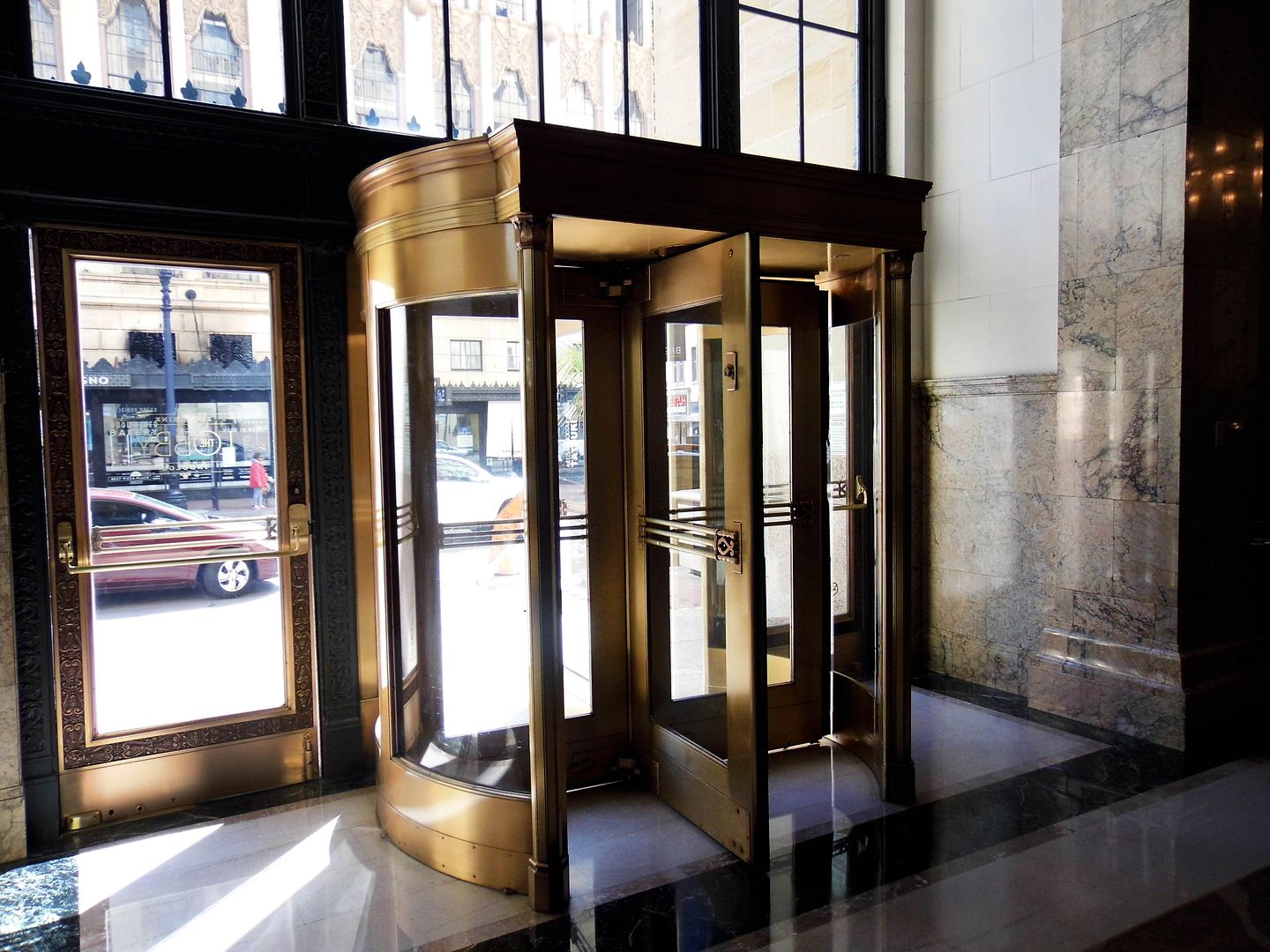


The experience of walking through the bronze revolving door of the main hotel entrance now is meant to be quite similar to when the building functioned as a bank.
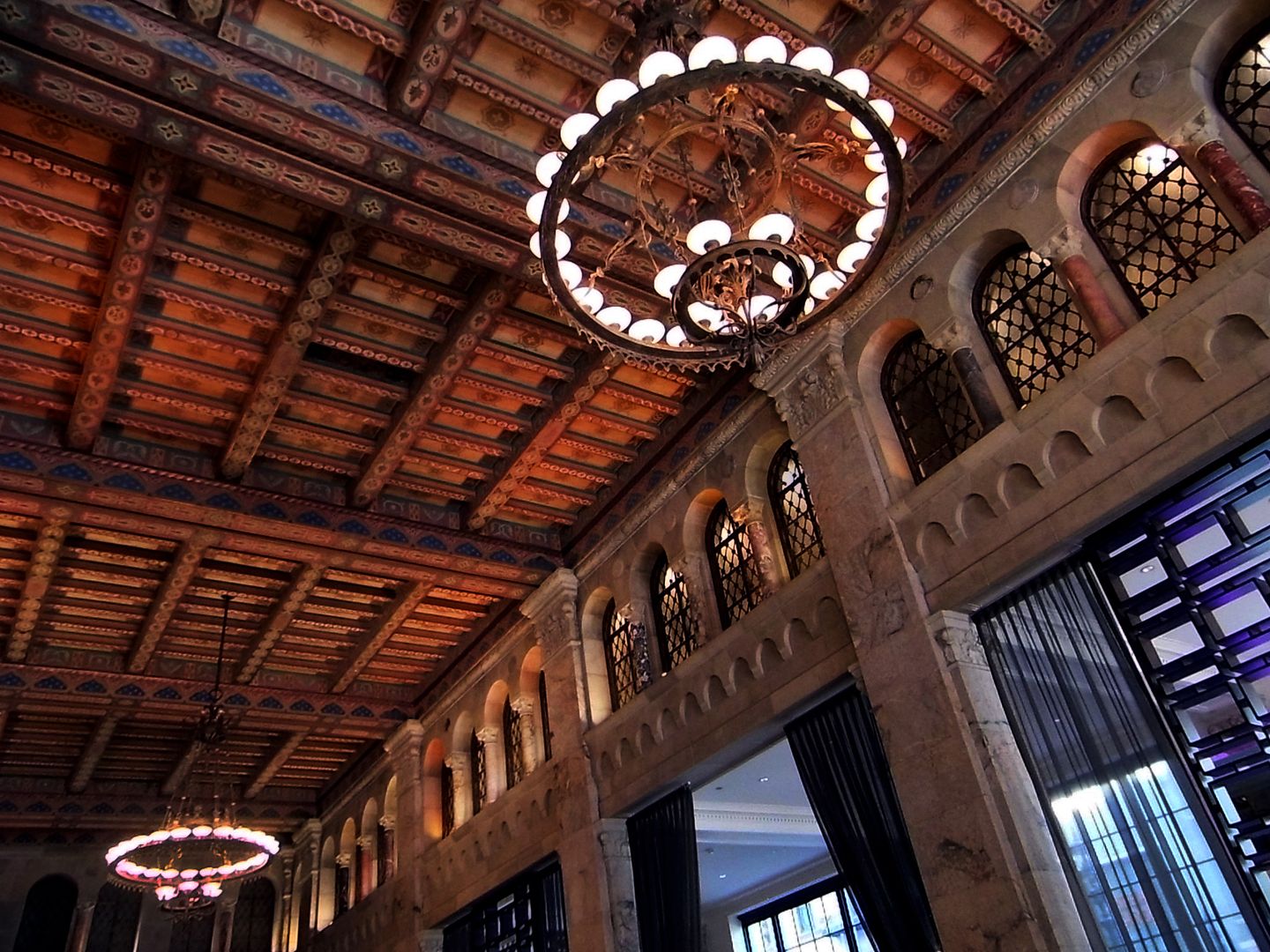


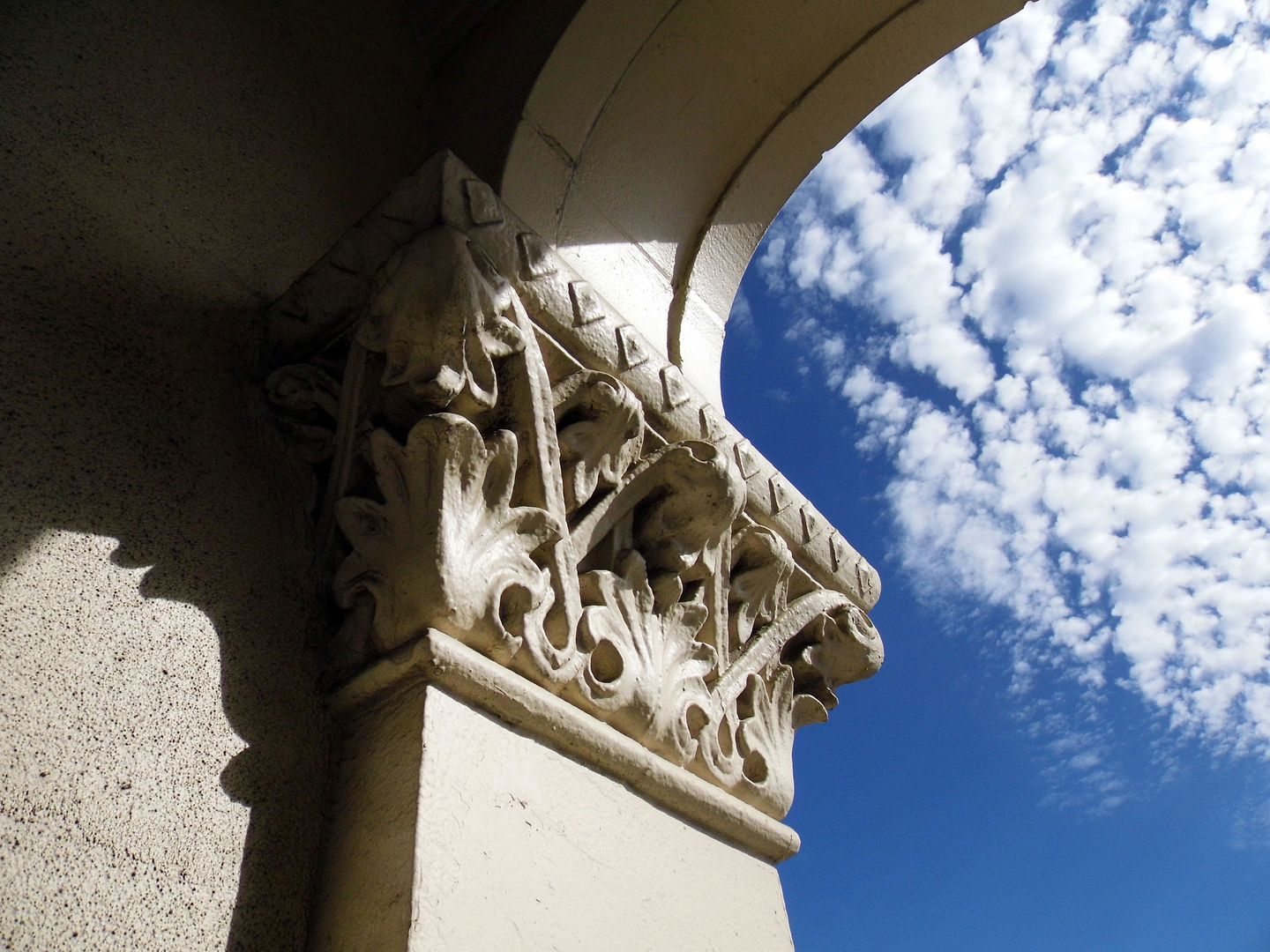
The Grand Lobby is largely intact from its former financial function—the circular antique chandeliers still hanging from the hand-painted, coffered plaster ceiling (rising 32 feet in height) and surrounded by 35 marble columns topped with Corinthian capitals. In all, 19 different types of marble were quarried from several Mediterranean countries as well as other sources around the world.
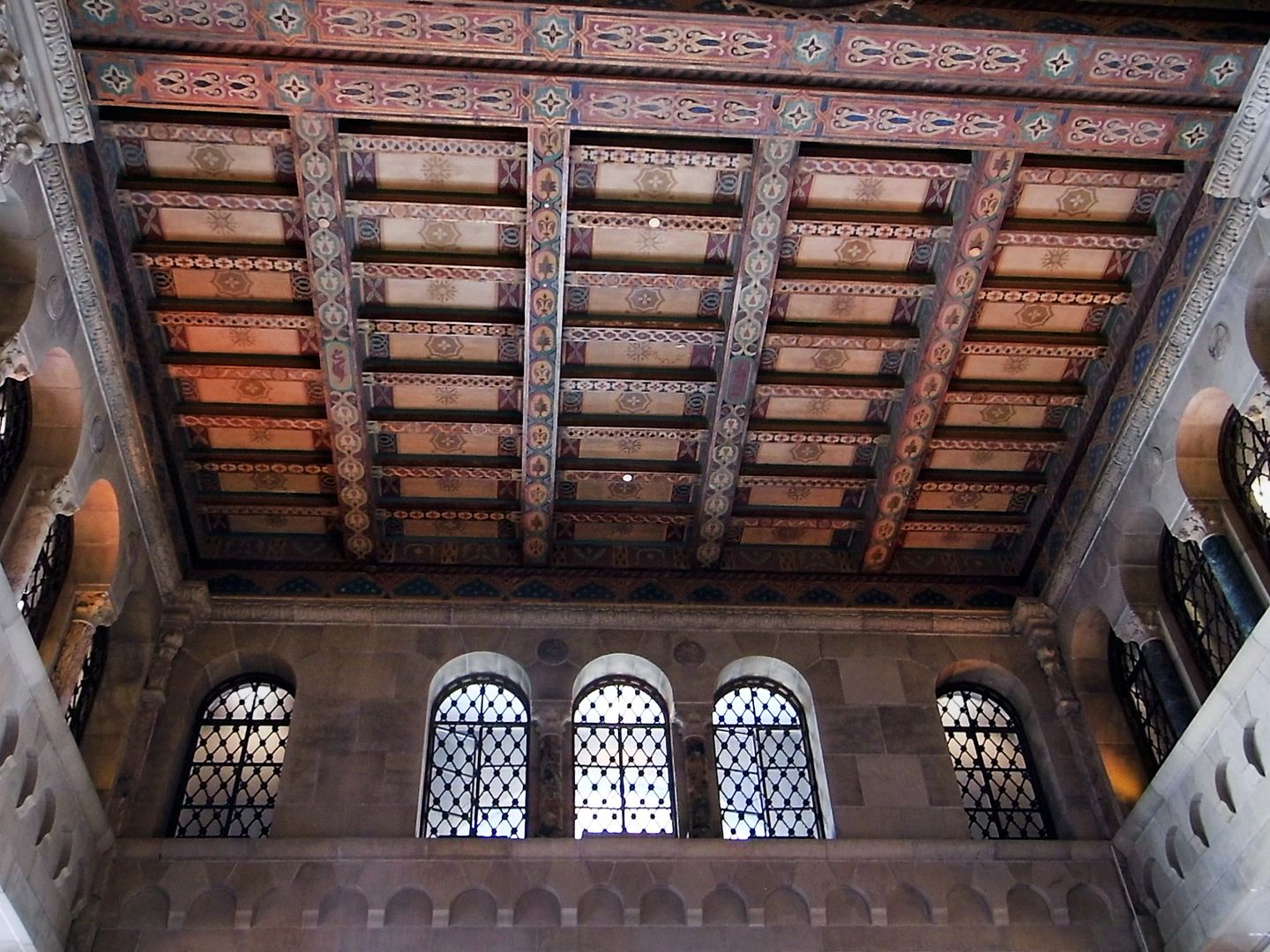


The lobby in particular evokes a medieval atmosphere, as it features all the ornamentation that came into fashion in the Middle Ages—clerestory windows behind iron grilles, grand arches, medallions, and such. Much of those arise out of the Italian Romanesque Revival/Italianate Renaissance Revival architectural style (the The San Diego Union called it "Lombard-Romanesque" at the time of its opening)—less common in commercial buildings like this one and more frequently found in churches.
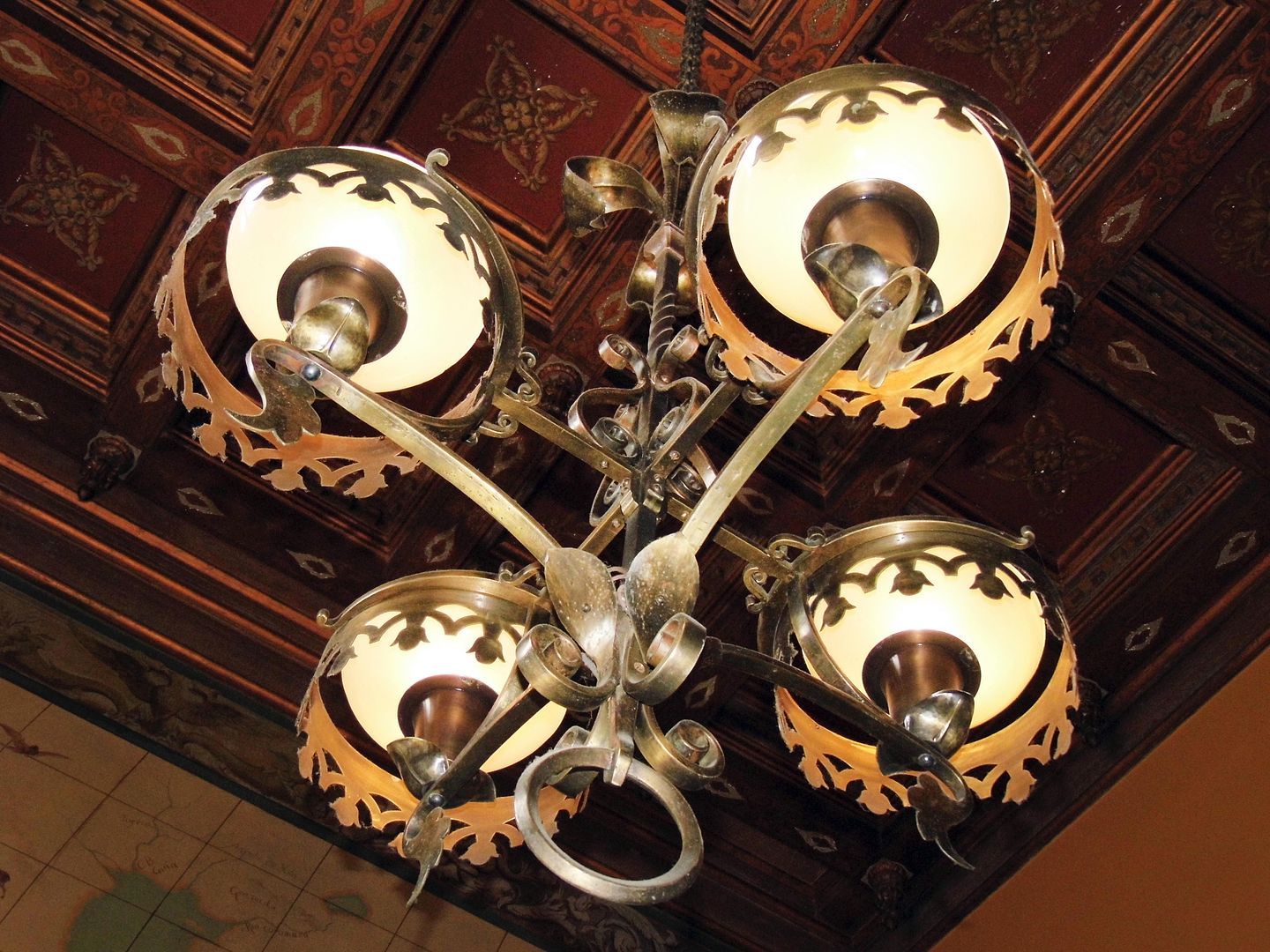


In addition to the banking services offered to the public (from the basement through the mezzanine levels), the building also housed offices in its upper stories...
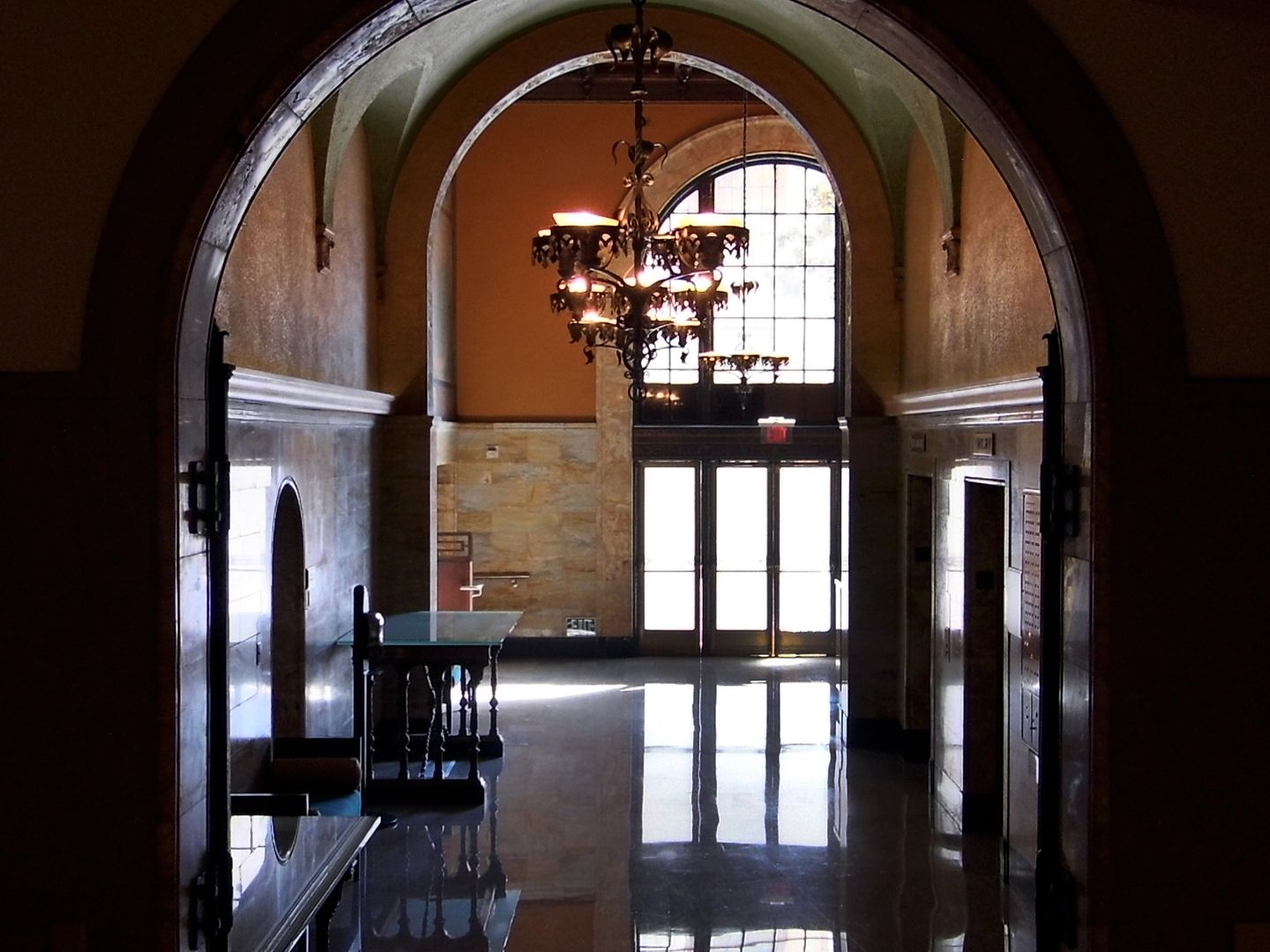


...and its original office building entrance is still there, just beyond the massive arches of the elevator lobby, the wall paneling of Italian marble, and the floor of Tennessee marble (from Gray Eagle Quarry).
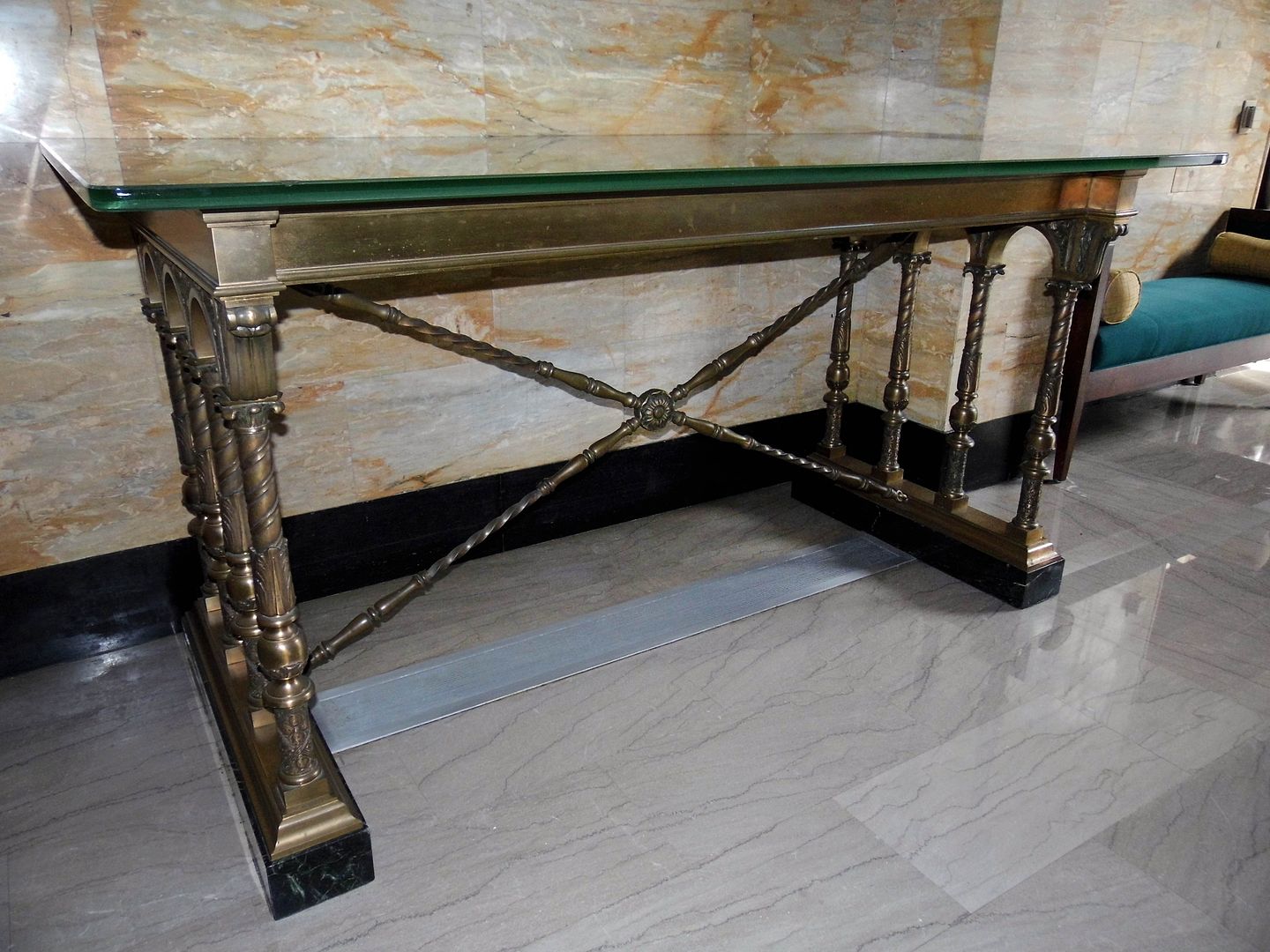


One of the original bank tables—once positioned near the teller cages for customers to fill out their paperwork and sign checks—has been relocated to the elevator lobby, with others sprinkled throughout the current hotel as well.
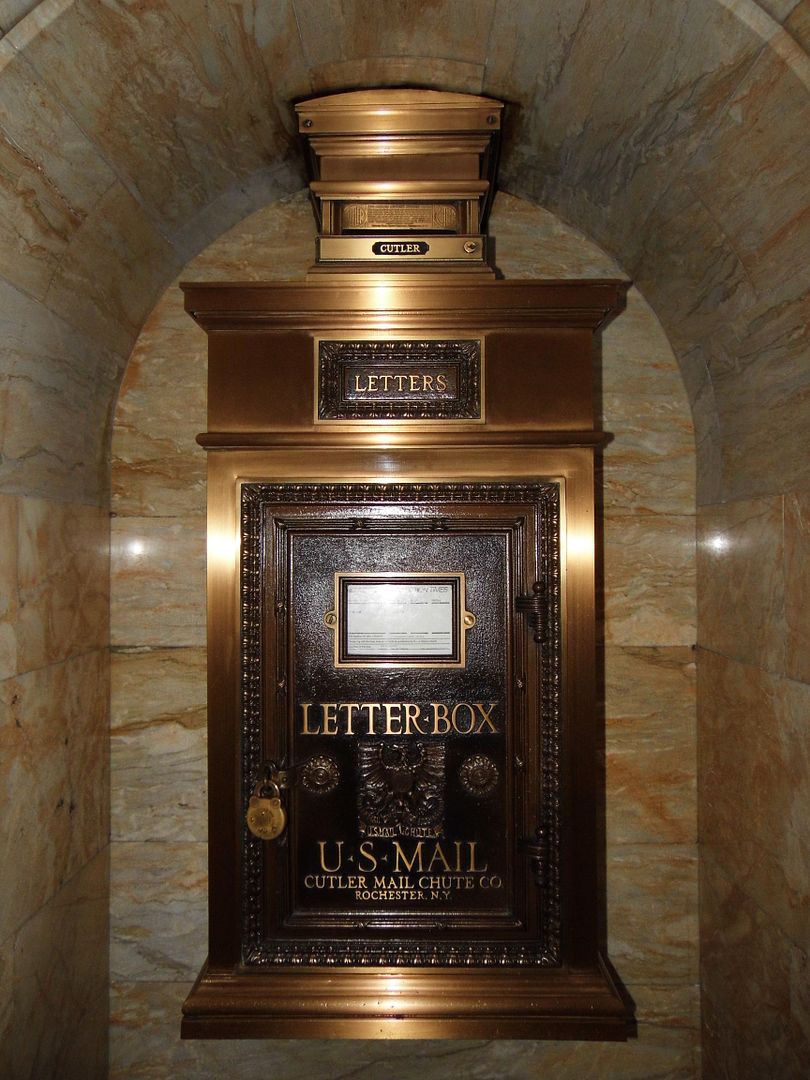


The original mail chute is still mounted in a recessed niche in the elevator lobby—and the post office still picks up the mail every afternoon at 1 p.m.
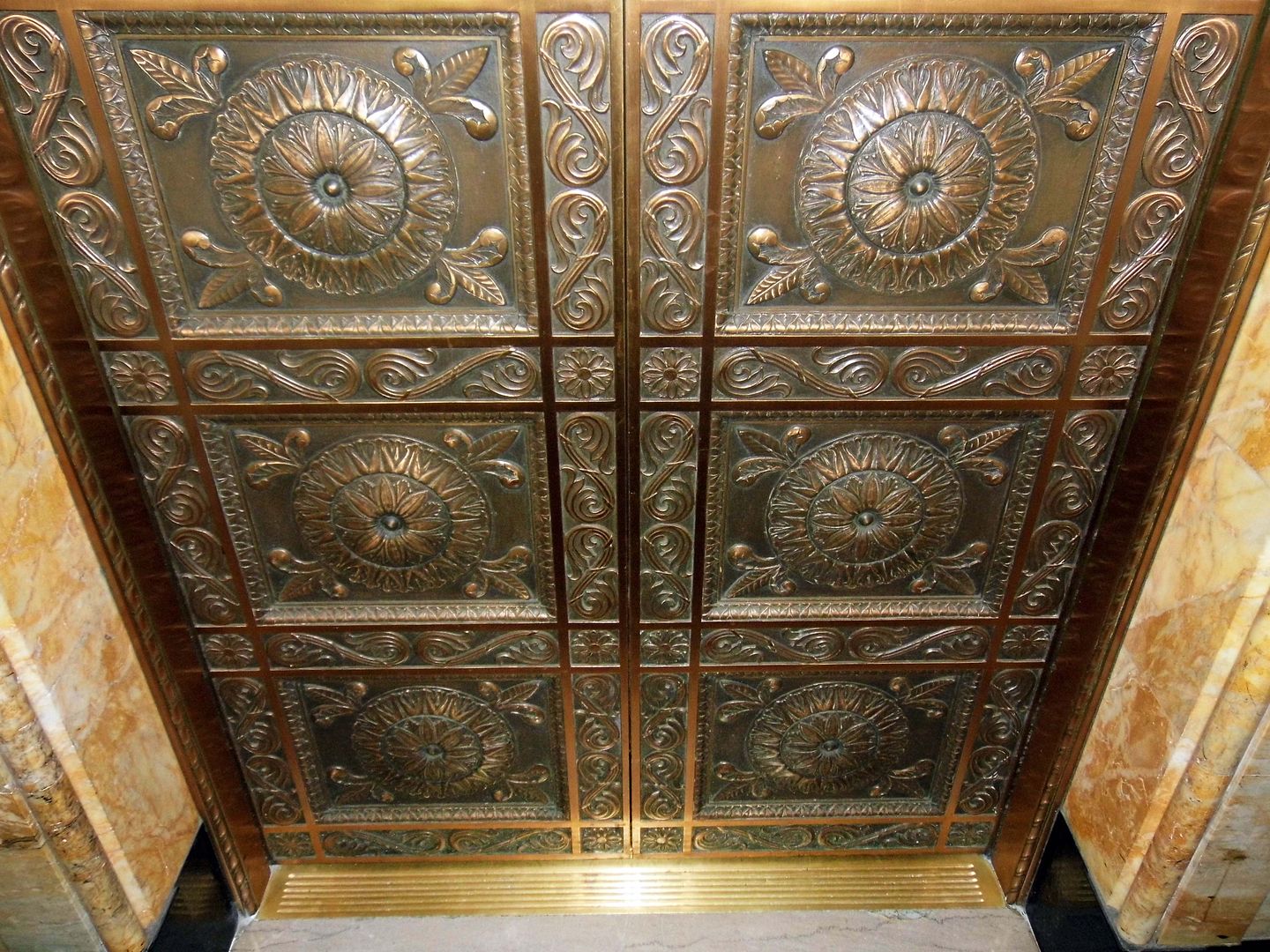


Behind sculptured bronze doors, hotel guests would find the most technologically advanced, high-speed elevators, which traveled at a maximum rate of 660 feet per minute—more than double most other buildings at the time.
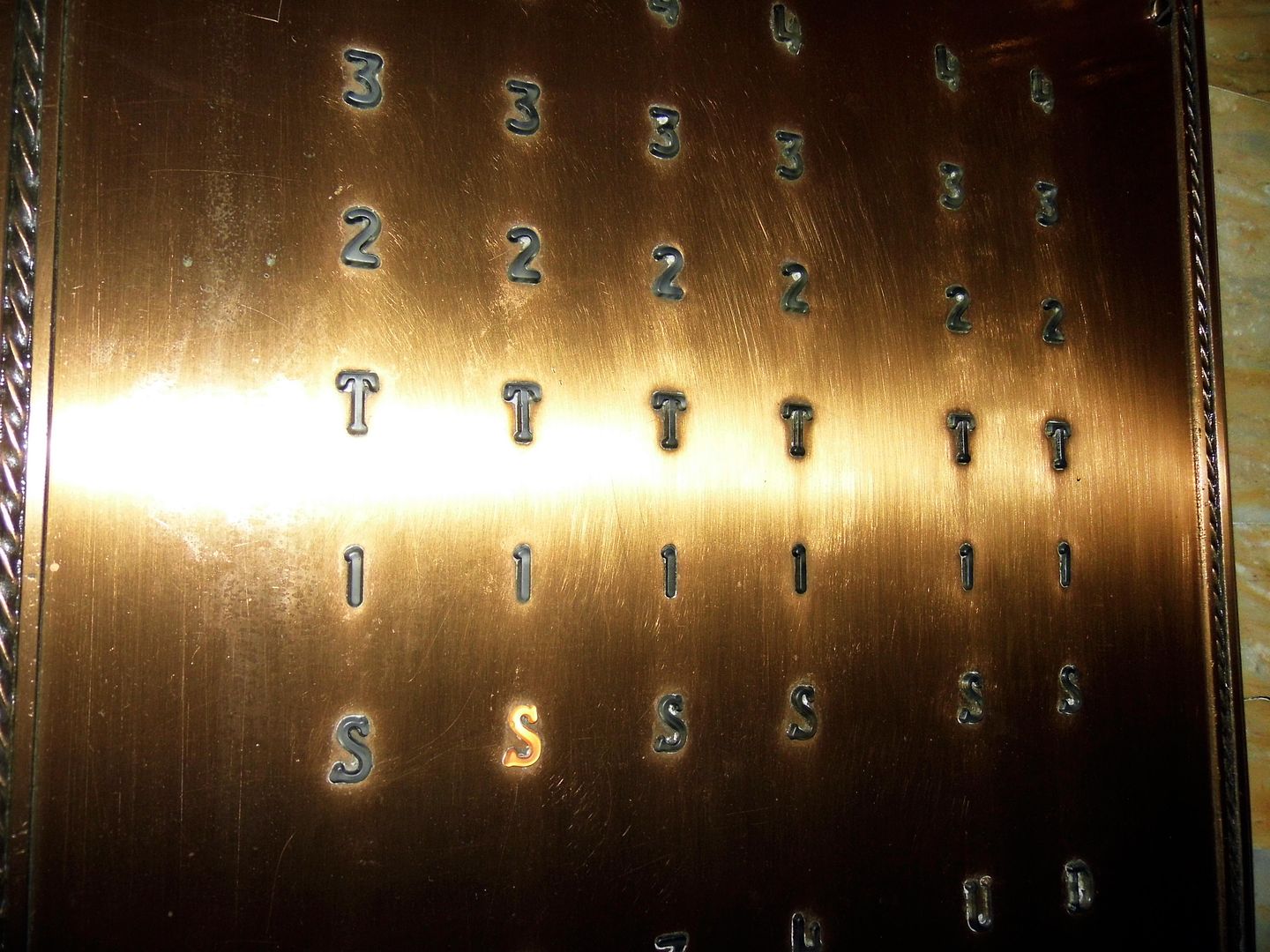


By comparison, the first-ever commercial passenger elevator (in NYC) took a full minute to climb just 40 feet.  Today's fastest elevator in the world (China's Rosewood Guangzhou, Guangzhou Chow Tai Fook Finance Centre) travels more than 4100 feet per minute. 
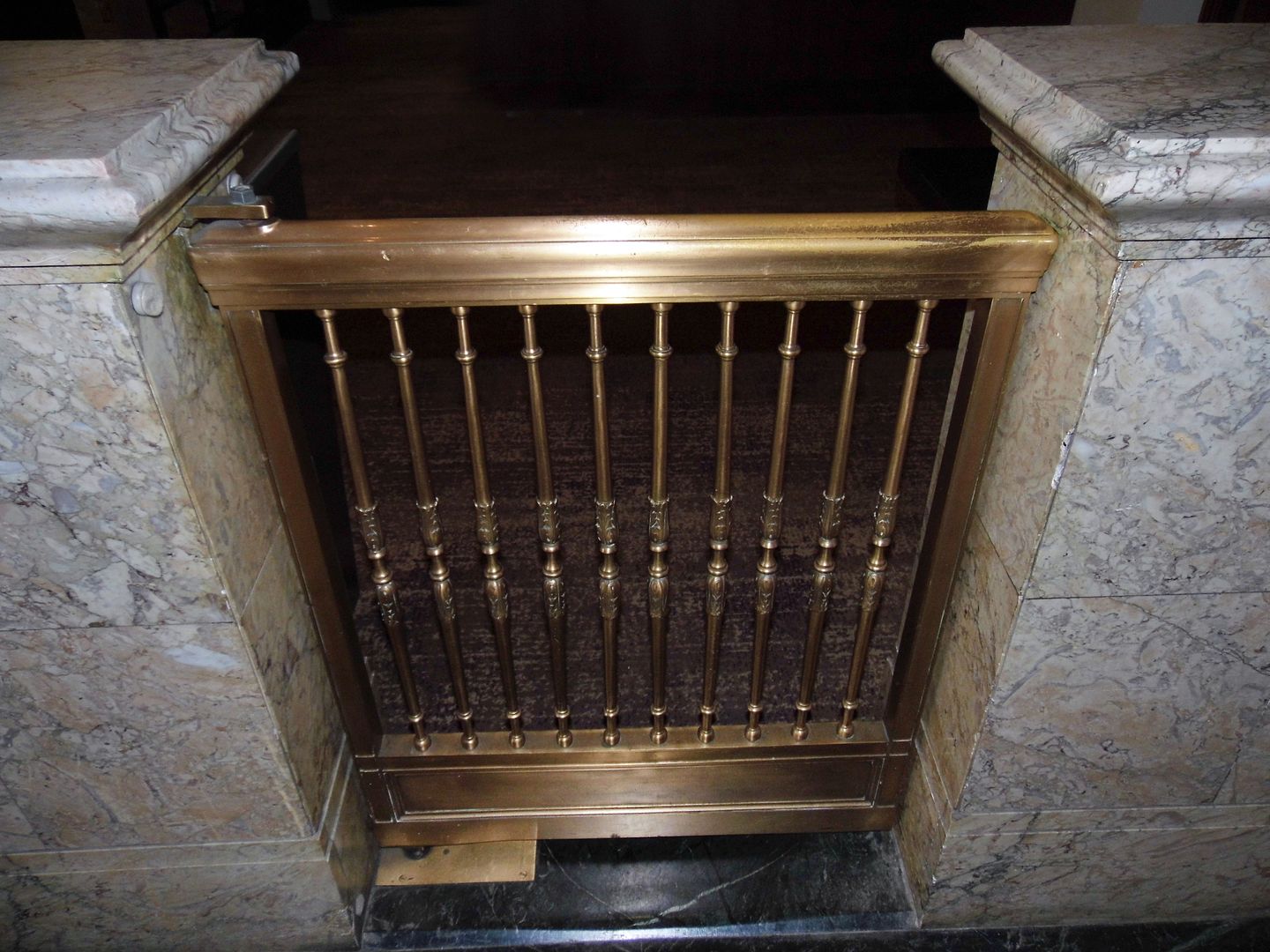


The heavy gates leading to the Bond and Investment Service and the one-on-one meeting area still swing—though now they only separate the public from the snacks for sale and a billiard table surrounded by framed, historic photos.
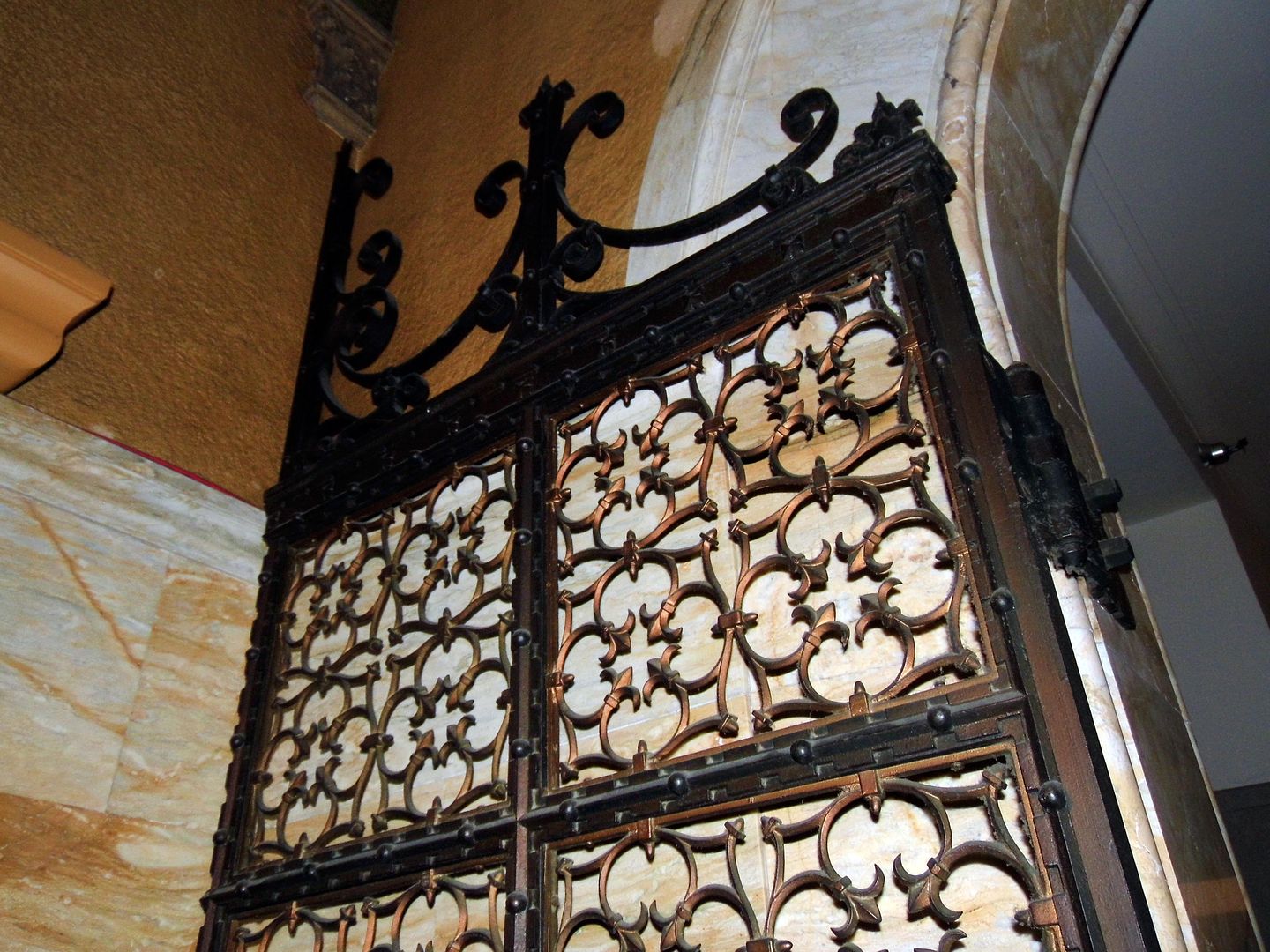


You can still walk down the stairs to the basement in search of the Safe Deposit Department...
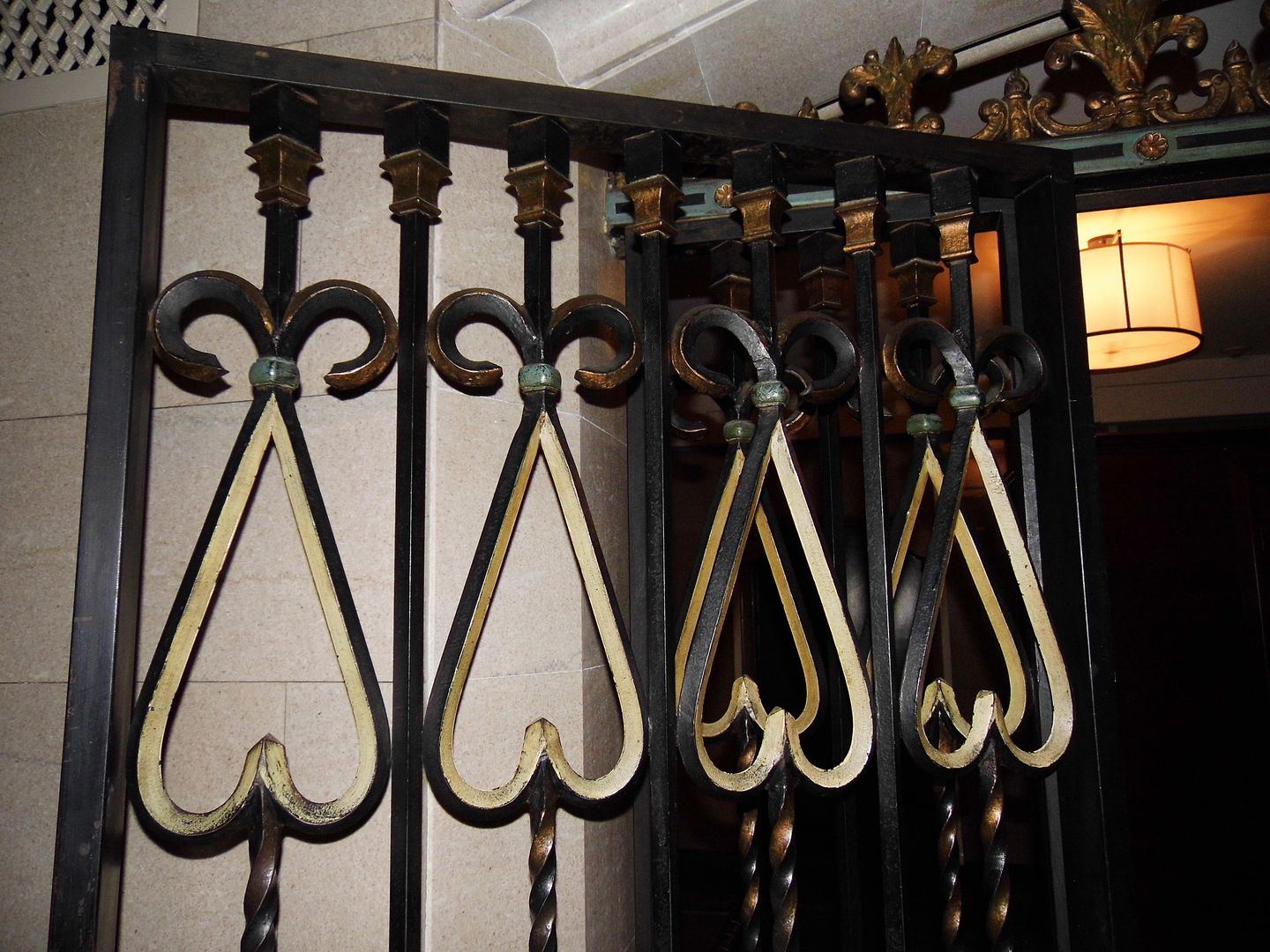


...but when you walk through the painted metal vault gates...
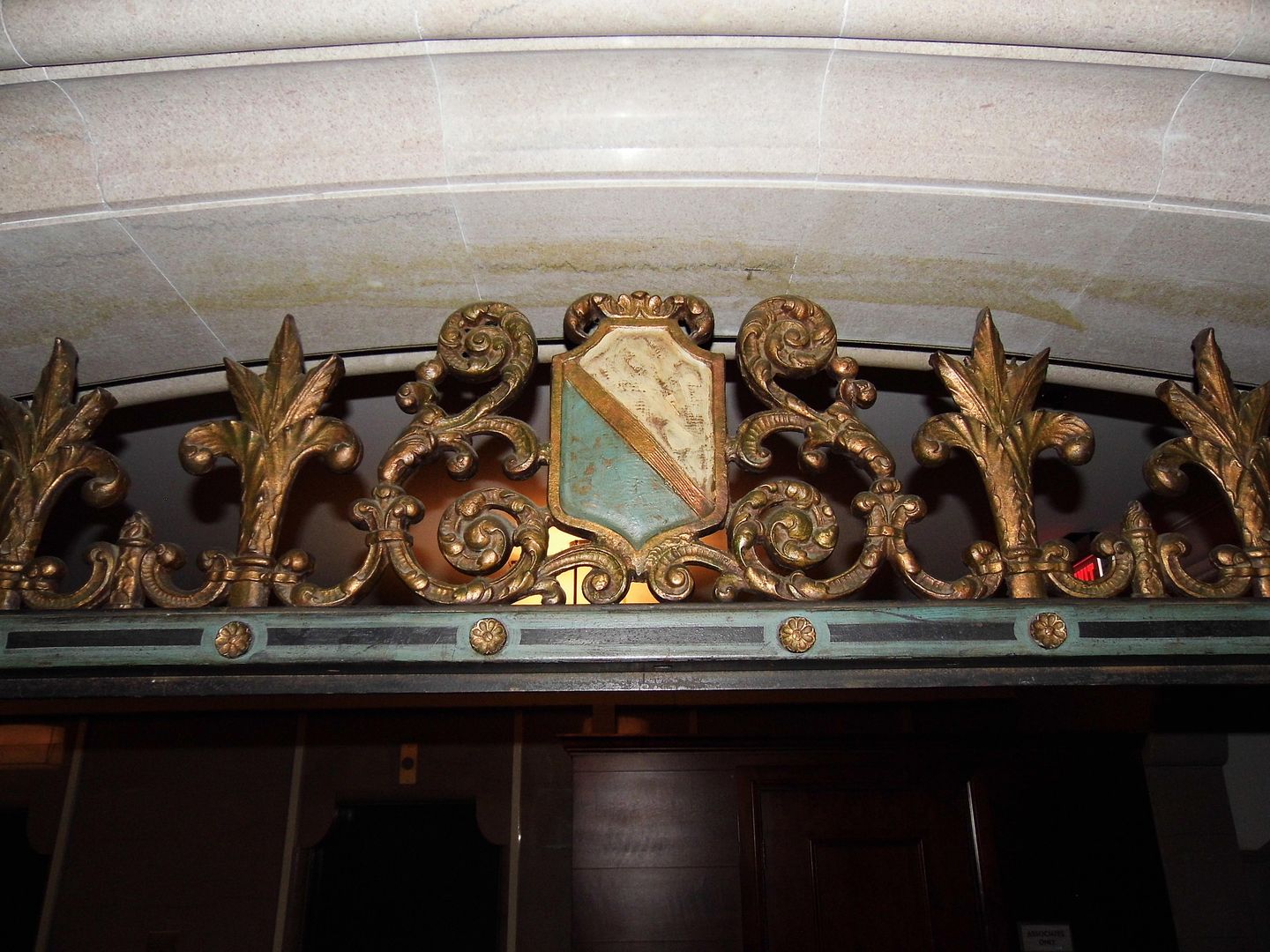


...which are no longer locked...
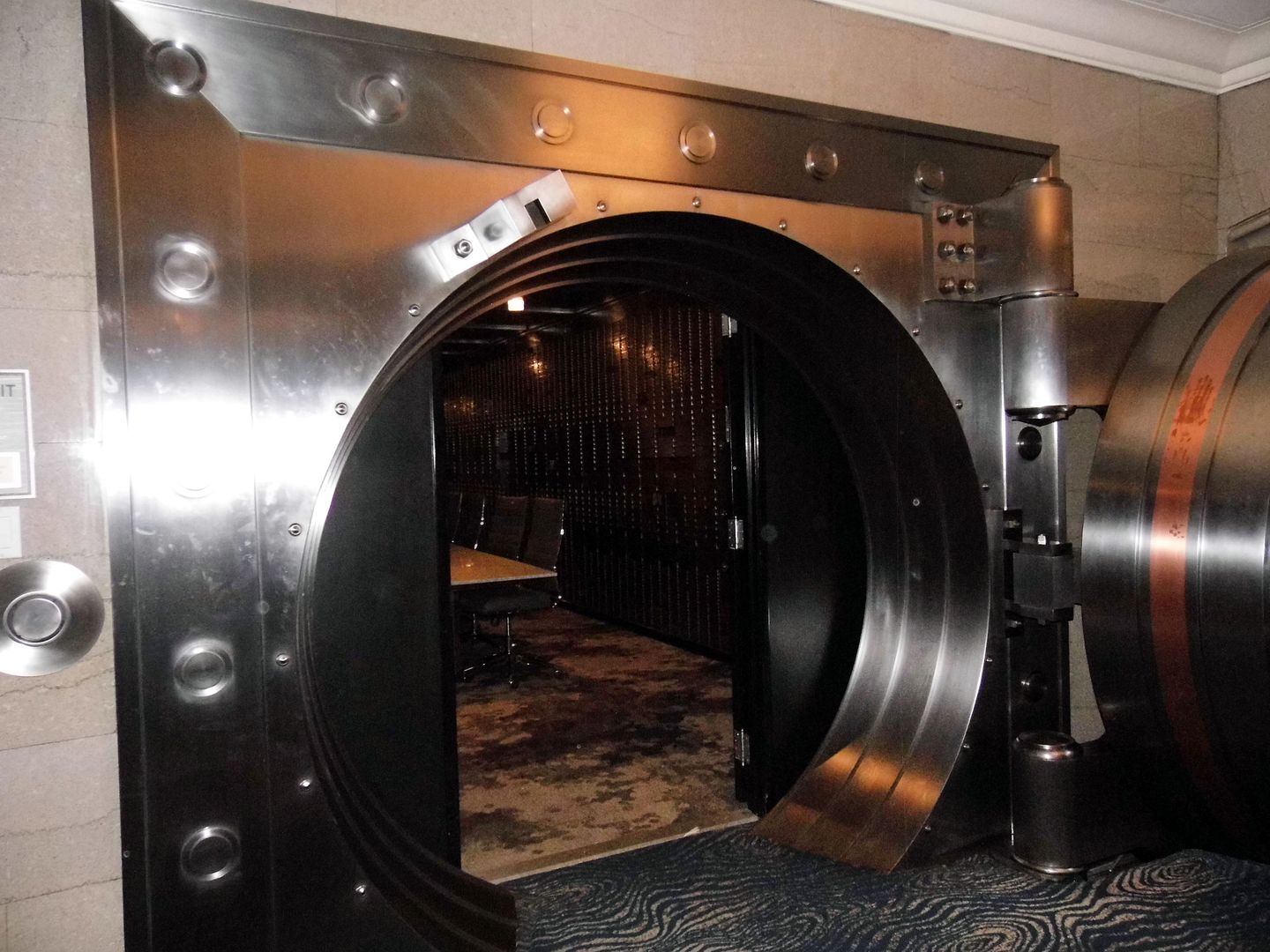


...you'll find the Safe Deposit Room...
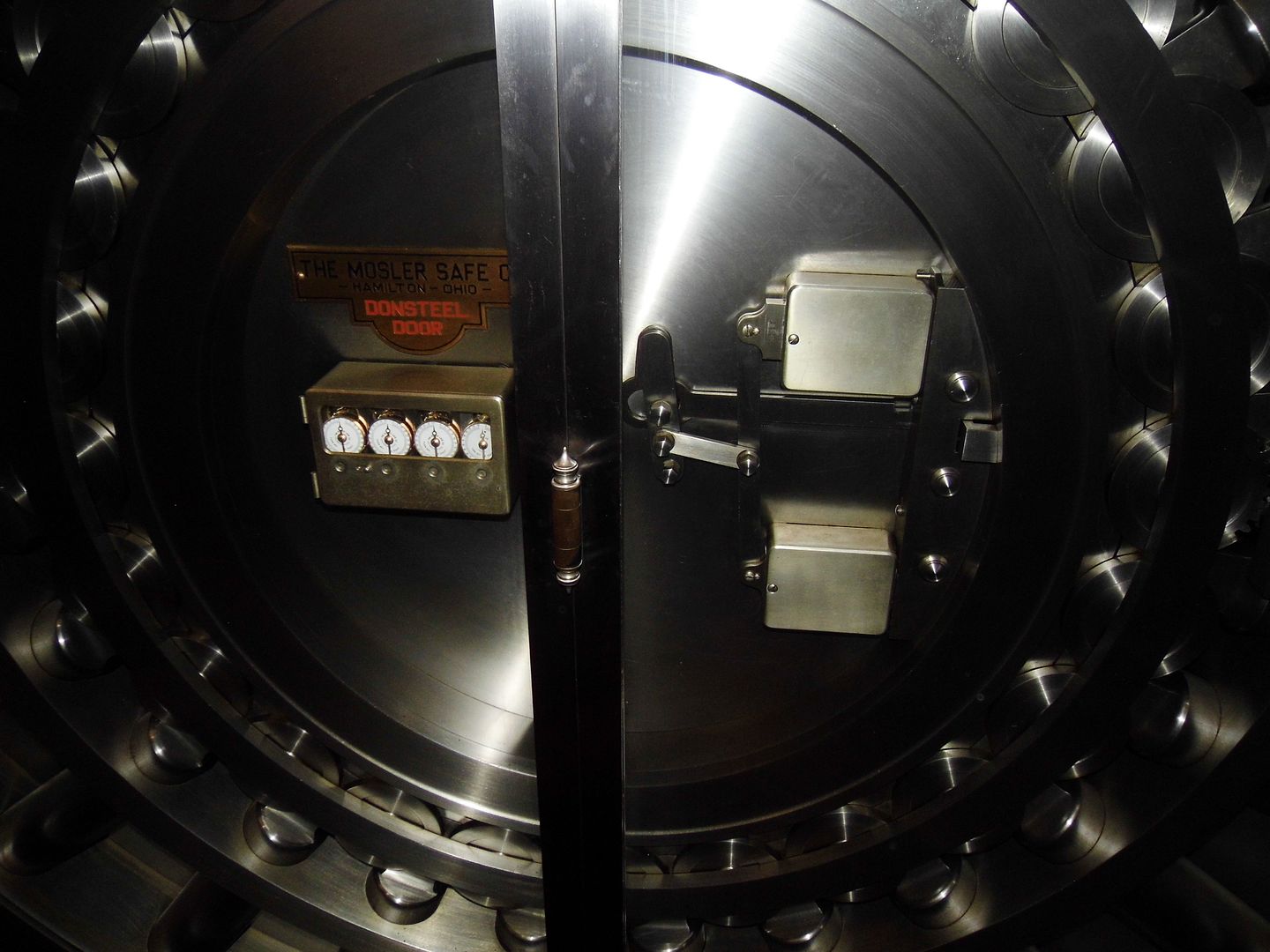


... its original 47,000 lb, stainless steel door (manufactured by the Mosler Safe Company of Ohio, which also provided secure storage for Fort Knox) permanently in the "open" position.
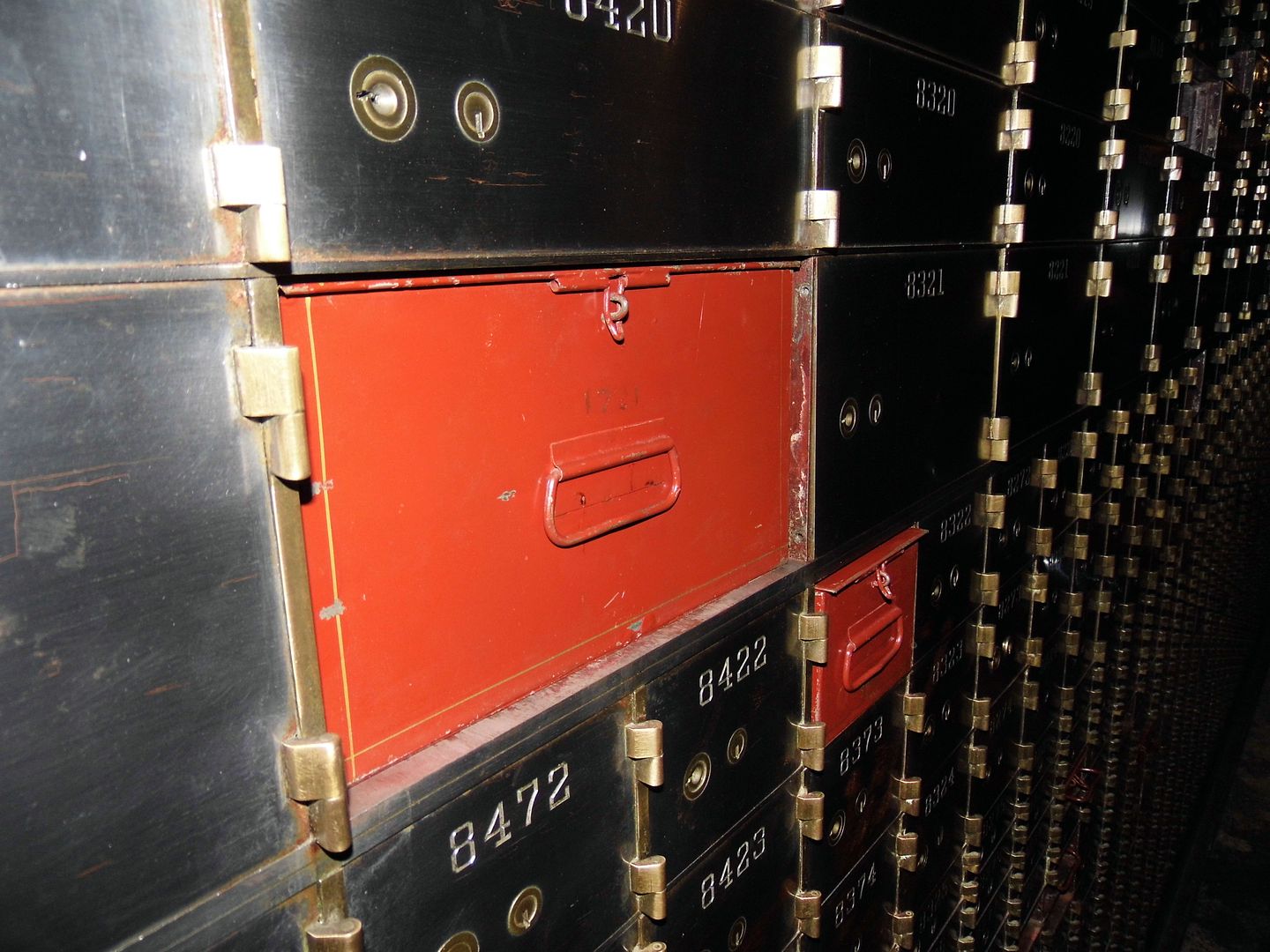


Inside, the safe deposit boxes are empty, but you can still pull them out like the drawers of a cabinet of curiosities, hoping to find something secret, special, or valuable inside.


Although the bank catered to customers of all economic status (including children, who could open an account with a starting deposit of 10 cents), the safe deposit boxes attracted some pretty big-ticket valuables that shouldn't be flashed around out in the open.
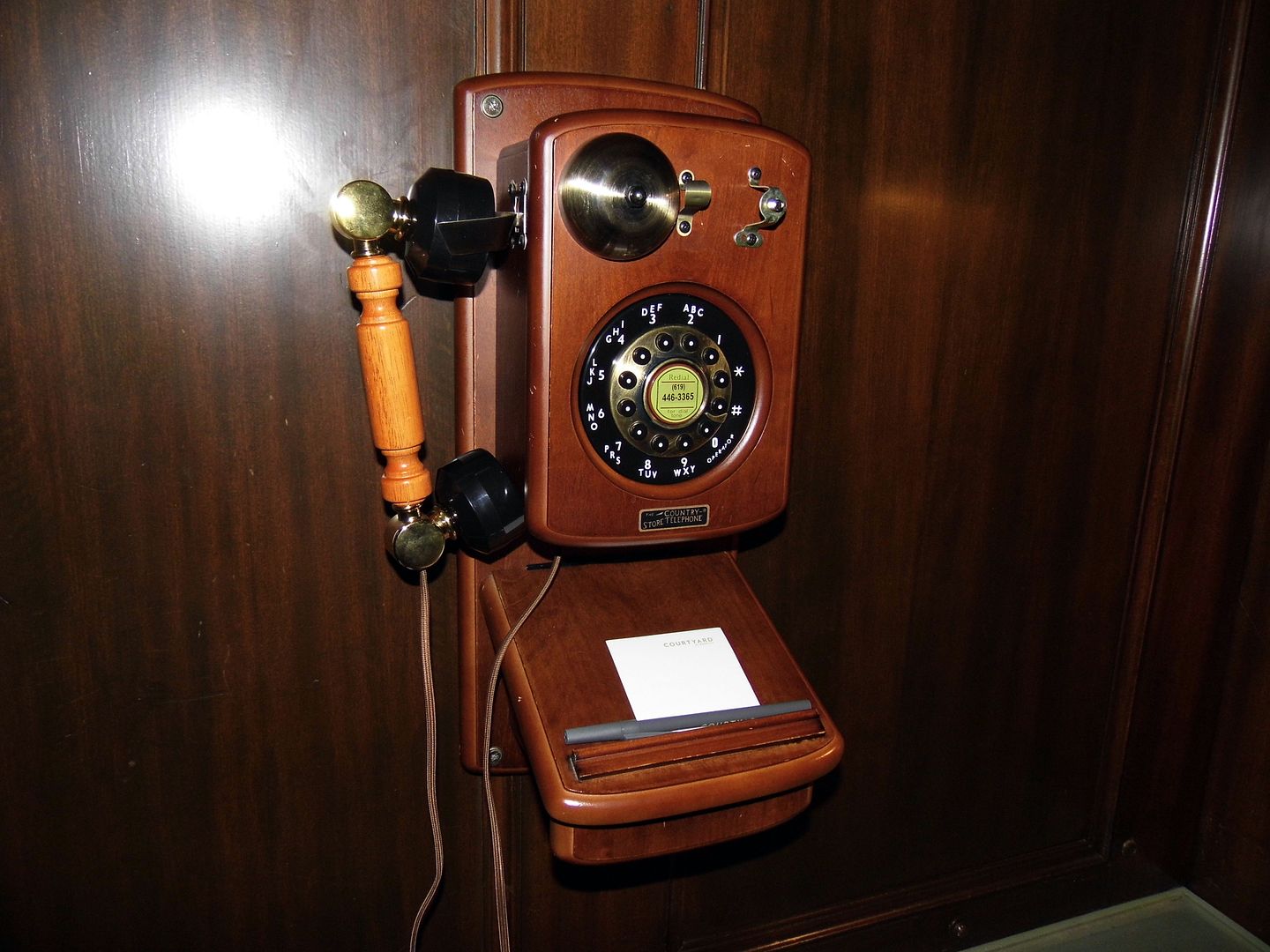


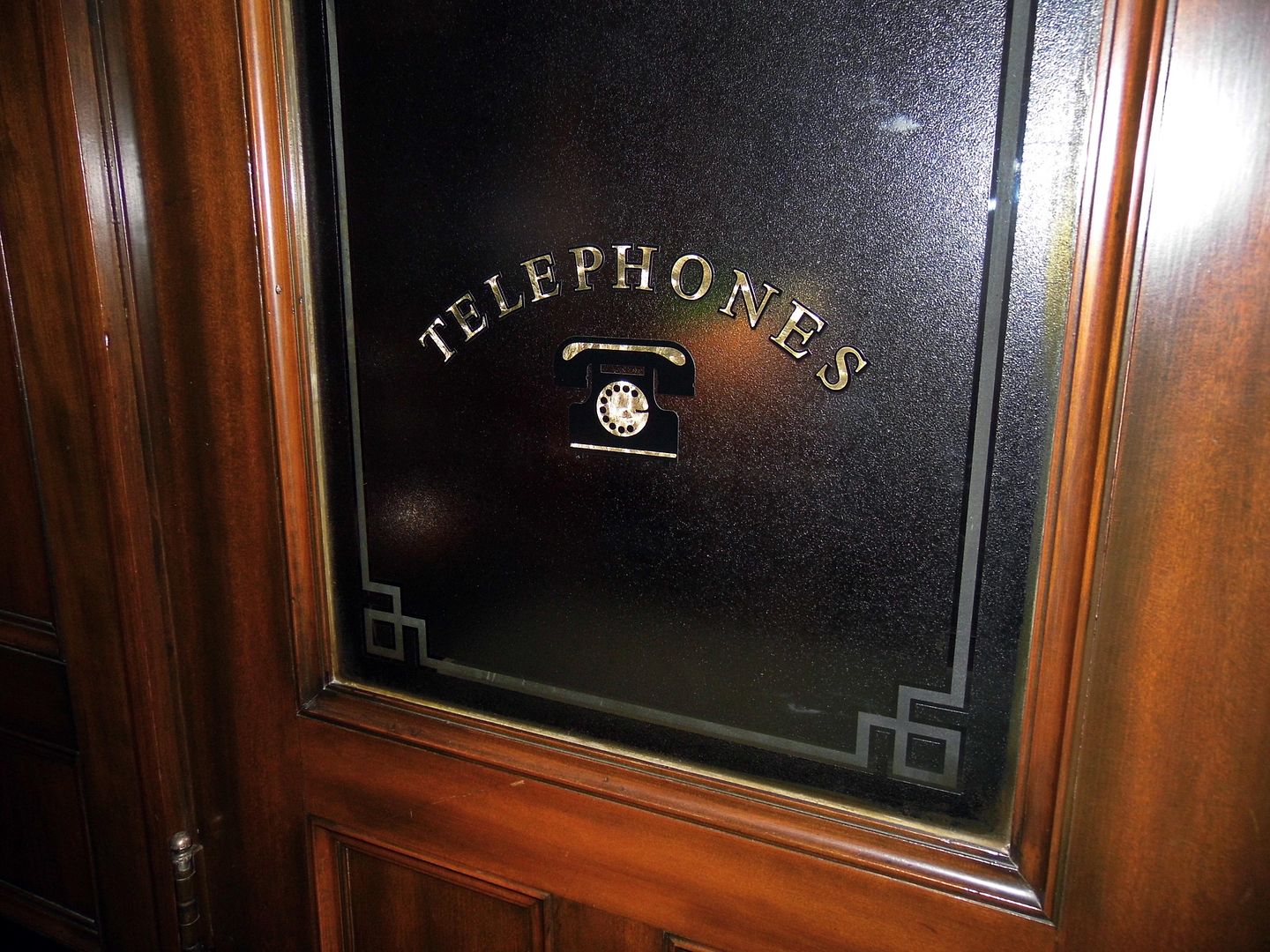
Their respective owners would be ushered into tiny offices outfitted with telephones to do their business in private. The three booths are still there—but the old style phones are now push-button, and lifting the receiver directs you to the front desk.
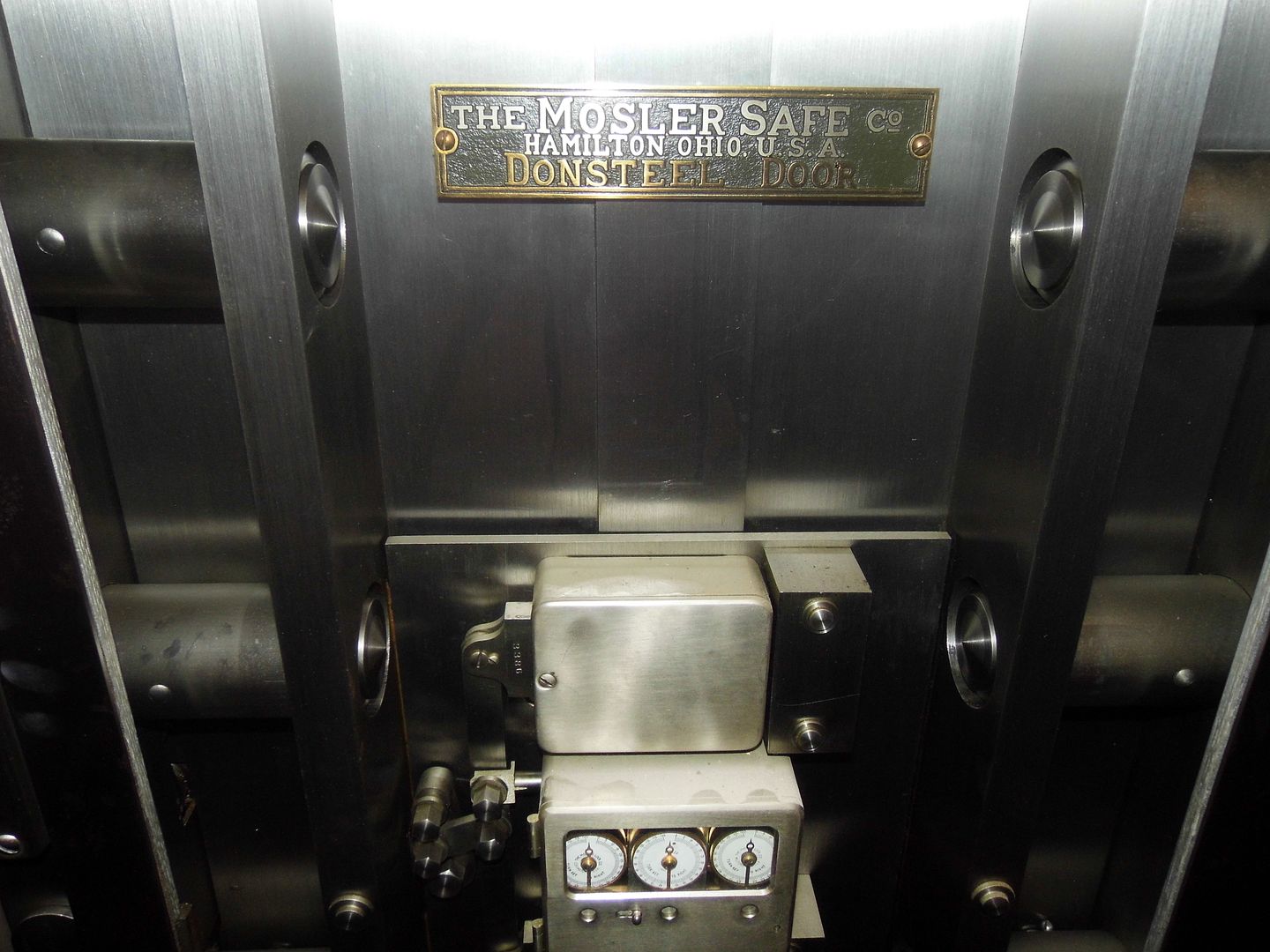


The bank theme continues in the Vault Meeting Room...
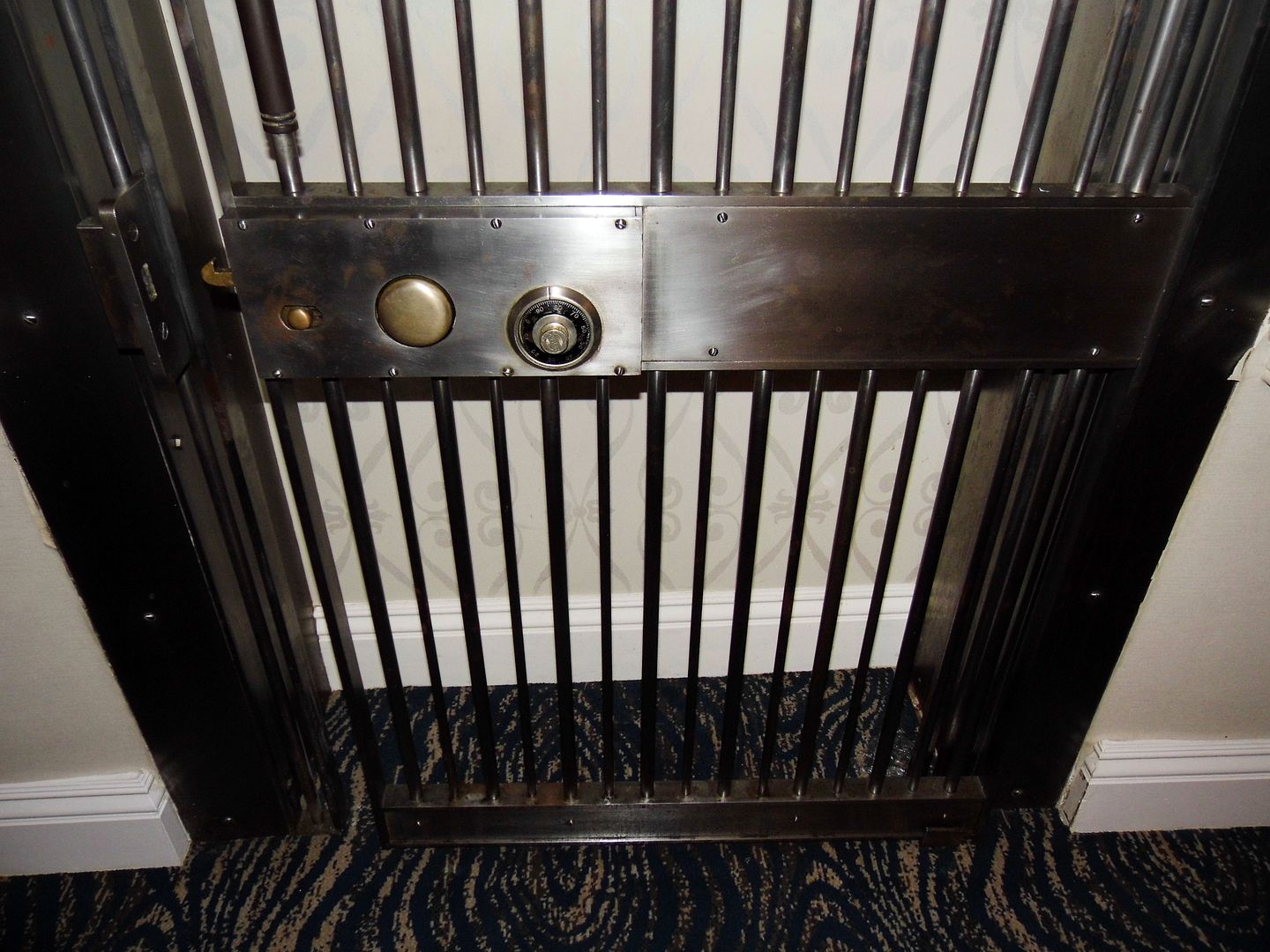


...though the "Donsteel" security doors on display are just for show.
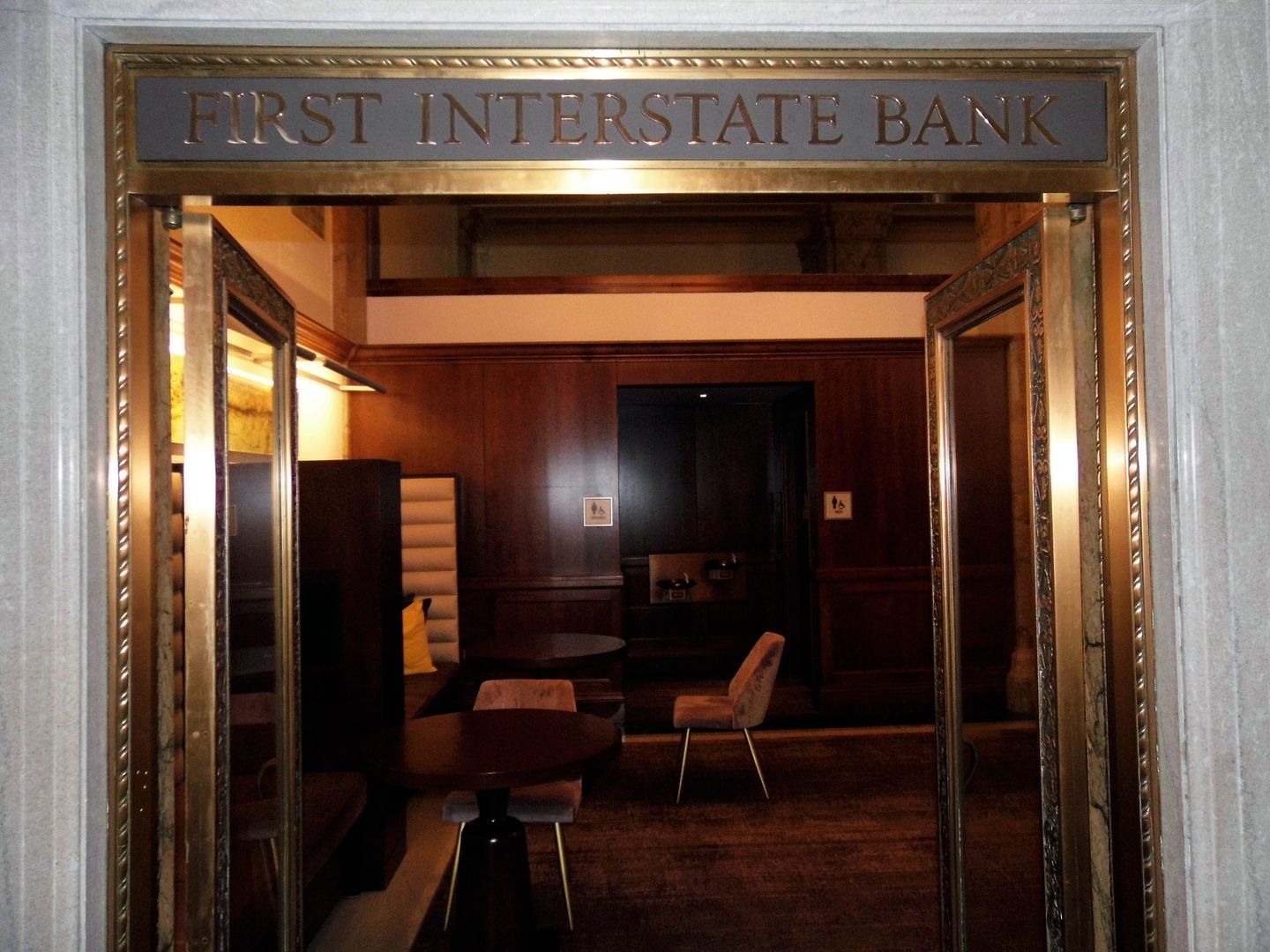


San Diego Trust and Savings Bank managed to stay a family business—run by descendants of the bank's co-founder and first president Joseph Weller Sefton, Sr.—until 1994, when the Sefton family decided to get out of banking and sold all 53 branches to the LA-based First Interstate Bank, which was later acquired by Wells Fargo. In 1996, Wells Fargo unloaded several of its San Diego properties and closed up shop on SDTSB.
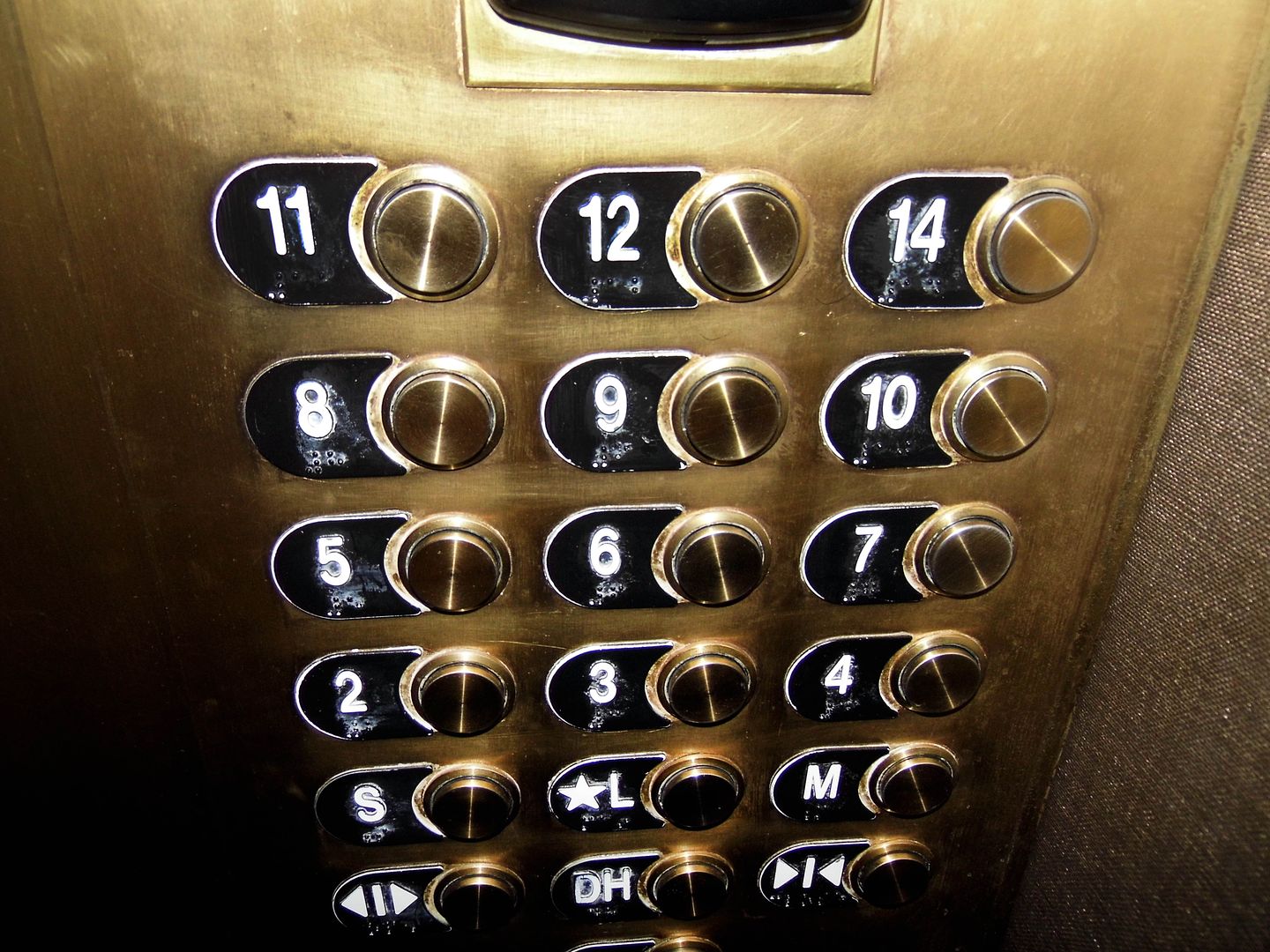


In its heyday, the bank owned the entire building and occupied most of it—with the exception of the 7th floor's FBI offices and holding cells! (Note how the elevator eliminates the 13th floor, which was rechristened the 14th floor.)
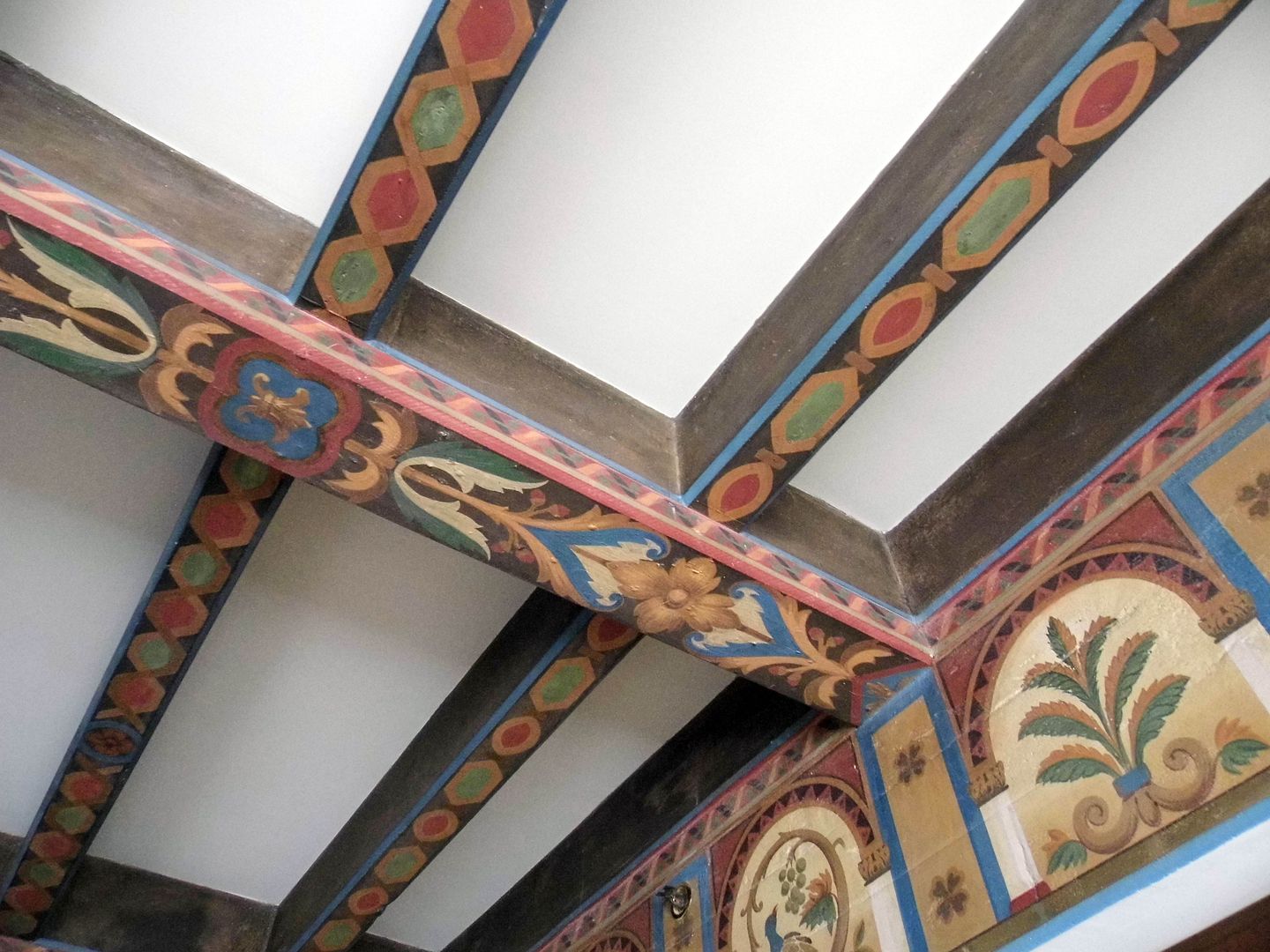


A shooting gallery (for lady tellers to practice their aim in case of a bank robbery) shared the top floor with architect William Templeton Johnson, who occupied a 1,000-square-foot office until 1954. The space is now used as the hotel's Presidential Suite, its master bedroom located in Johnson's former library (decorated with the same kind of hand-painted ceiling as in the Grand Lobby).
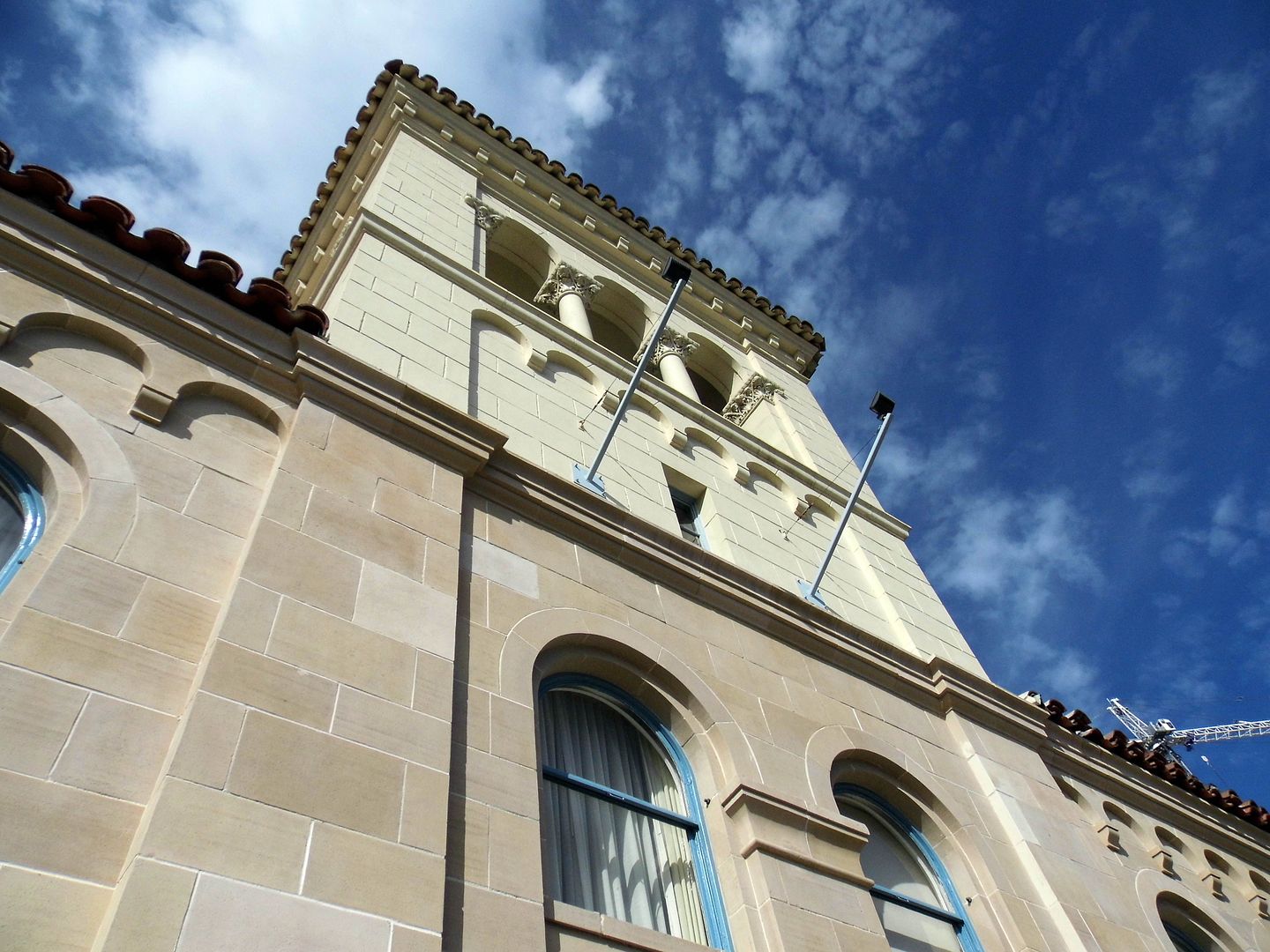


Exit onto the patio outside the Presidential Suite, and the view reveals yet another level, above the 14th floor.
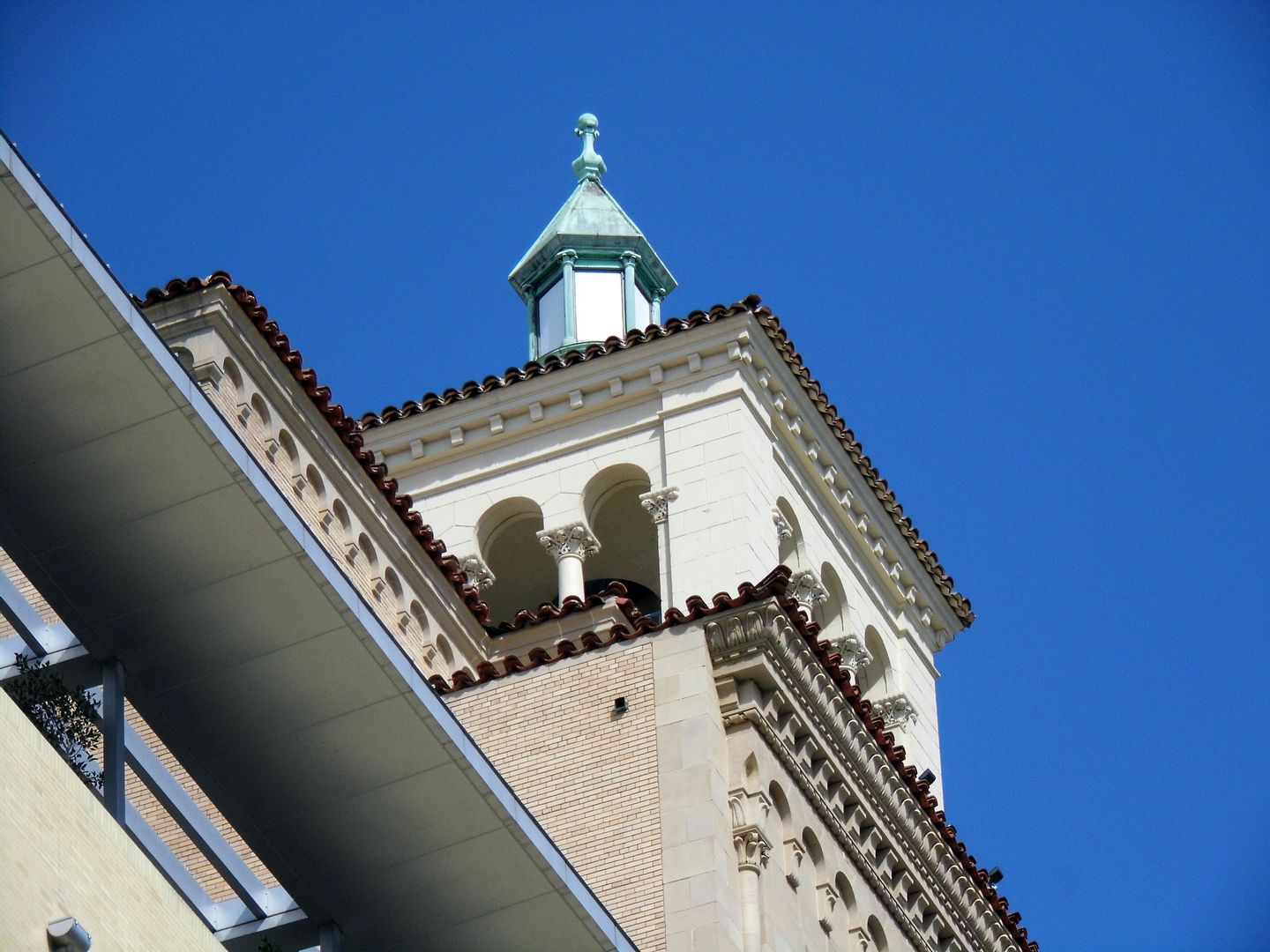


It's the copper-domed cupola, a.k.a. the "Lantern," which housed San Diego's first aviation beacon—243 feet above where the Hotel Beacon once stood. This was a really biug deal for San Diego, which had become known as "The Air Capital of the West" in World War I.
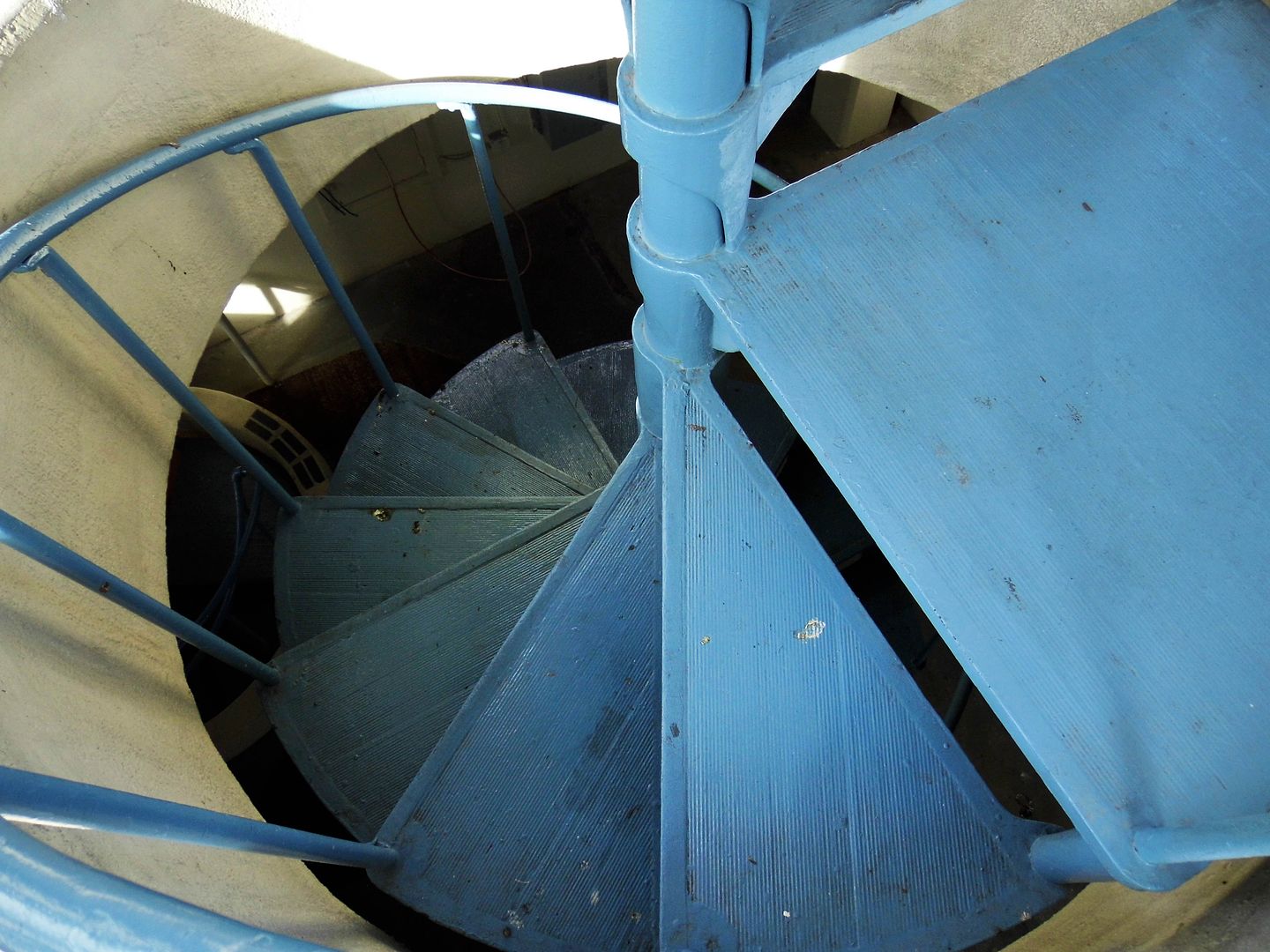


Appropriately, the "Father of San Diego Aviation" Major T.C. Macaulay dedicated the beacon, and pioneering aviator Eddie Stinson first switched it on. Visible for more than 25 miles, it revolved from dusk till dawn to guide aviators and navigators trying aim their planes toward the airport—but only during its first five years.


They'd also light the beacon when a ship was coming into the Port of San Diego—not only to help it avoid getting wrecked but to also notify local laborers that jobs were opening up.
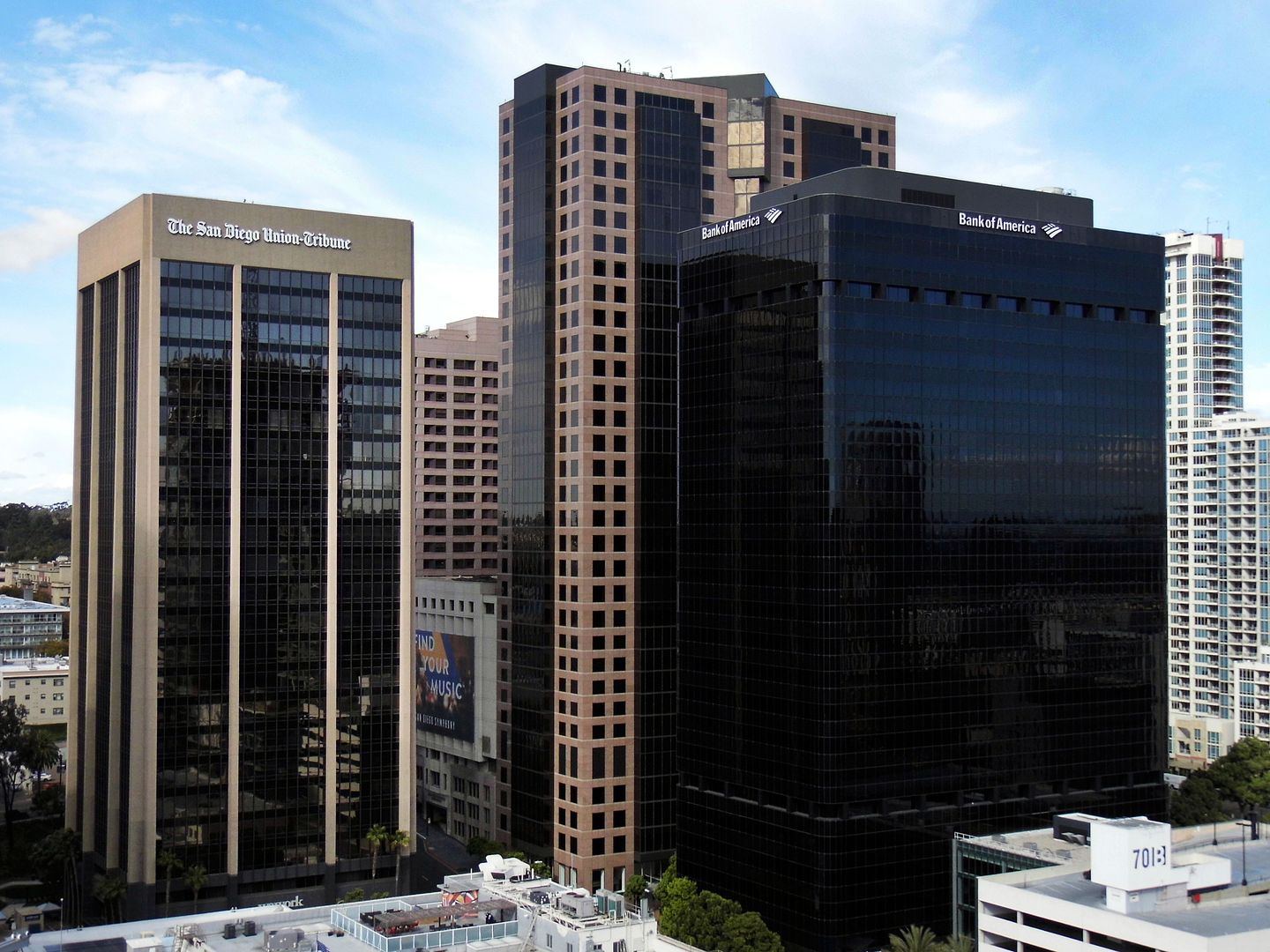


Today, the cupola still provides one of the best panoramic views of Downtown San Diego—certainly the best I've seen. Unfortunately, you can't just go up there on your own.

But ask a bellman to give you a tour, and he'll gladly oblige.

When the new San Diego Trust and Savings Bank building opened in 1928, it was the year before the stock market crash that kicked off the Great Depression. But the bank was steadfast.

The bank's second president, M.T. Gilmore, assured its customers that "the present situation is not nearly so perturbing as a more restricted view might suggest"—recalling that in the nearly 40 years since its founding, they'd already experienced five periods of "panic," two wars, and mixed periods of revival and recession.

"This, too, will pass" were the words that continued to carry San Diego Trust and Savings Bank through the next 66 years until the later generation decided to throw in the towel.

Fortunately, the doors on the bank didn't close forever—because it reopened as a hotel in 1999, preserving and reusing a large majority of original elements for the building's new purpose.

Related Posts:
Breathing New Life Into the Eyesores of Downtown LA