Search

May 24, 2020

Photo Essay: The 'House of the Future' Built for an Underappreciated Disney Legend

Last September, I saw that a house credited to architect John Lautner was on the market—and my compulsion for completionism set in.

Maybe I'm just tiding myself over until I can finally get into the Chemosphere, the biggest carrot of them all (and probably the hardest to get into), or any of the other Lautners on my Bucket List, for that matter.

I wasn't familiar with the namesake of the "Ub Iwerks House of the Future" in Sherman Oaks, built in 1958. Lautner was enough of a draw for me.

But it turns out that I should've known about the Kansas City-born Ubbe Eert Iwwerks, whose name of Dutch ancestry had been shortened to Ub Iwerks after he moved to Hollywood to join forces with none other than Walt Disney.

And the story of the house is much more about Iwerks and Disney than about Lautner.

Before they separately relocated to LA, the two Kansas City natives had already worked together at the Pesman-Rubin Commercial Art Studio in Kansas City and at their short-lived company, Iwwerks-Disney Commercial Artists.

Turns out the Missouri metropolis didn't have much of a demand for advertising art and such in the year 1920.

But in Hollywood circa 1927, Walt and Ub were able to create Oswald the Lucky Rabbit—a popular animated character that gave them steady work until they were swindled out of working with him and denied any ownership stake in him.

If it weren't for Oswald, though, there would've never been a Mickey Mouse. Walt and Ub dusted themselves off and started anew, this time ensuring their equity in their own creations.

Drawing Mickey Mouse—and animating him in multiple cartoons, as the so-called "hand behind the mouse"—led Ub to pioneer technical inventions in filmmaking, particularly in combining live action with animation.

His work on Song of the South in 1948 earned him an Academy Award in Technical Achievement in 1960; his special effects for Hitchcock's The Birds in 1963 earned him an Oscar nomination, though not a win. His contributions to Mary Poppins (1964)—the merry-go-round scene and the dancing penguins—are probably the most memorable scenes out of the whole movie.

But in 1958, while he was getting ready to build his dream house, his focus had shifted to Disneyland in Anaheim and its "Tomorrowland" attraction.

Futurism was on his mind—so it's no surprise that Ub commissioned his "House of the Future" to be designed by the hand behind "Googie's" coffee shop and, two years later, the Hollywood Hills spaceship known as the Chemosphere.

But while John Lautner started on the "House of the Future" for Ub and his wife Mildred, he didn't complete it. After butting heads with the Iwerks, Lautner handed the project off to a new lead architect from his practice—the Taliesin West-trained Jim Charlton.

Ub died in 1971, and Mildred—now widowed—continued to live in the house until her death in 1990, after which it was deeded to their sons Don and David.

Lautner was supposed to do some work on it in 1994, but he died before he could complete his original vision.

In total, five architects worked on the Iwerks house from its inception to its last major renovation, by Tracy Stone in 1999.
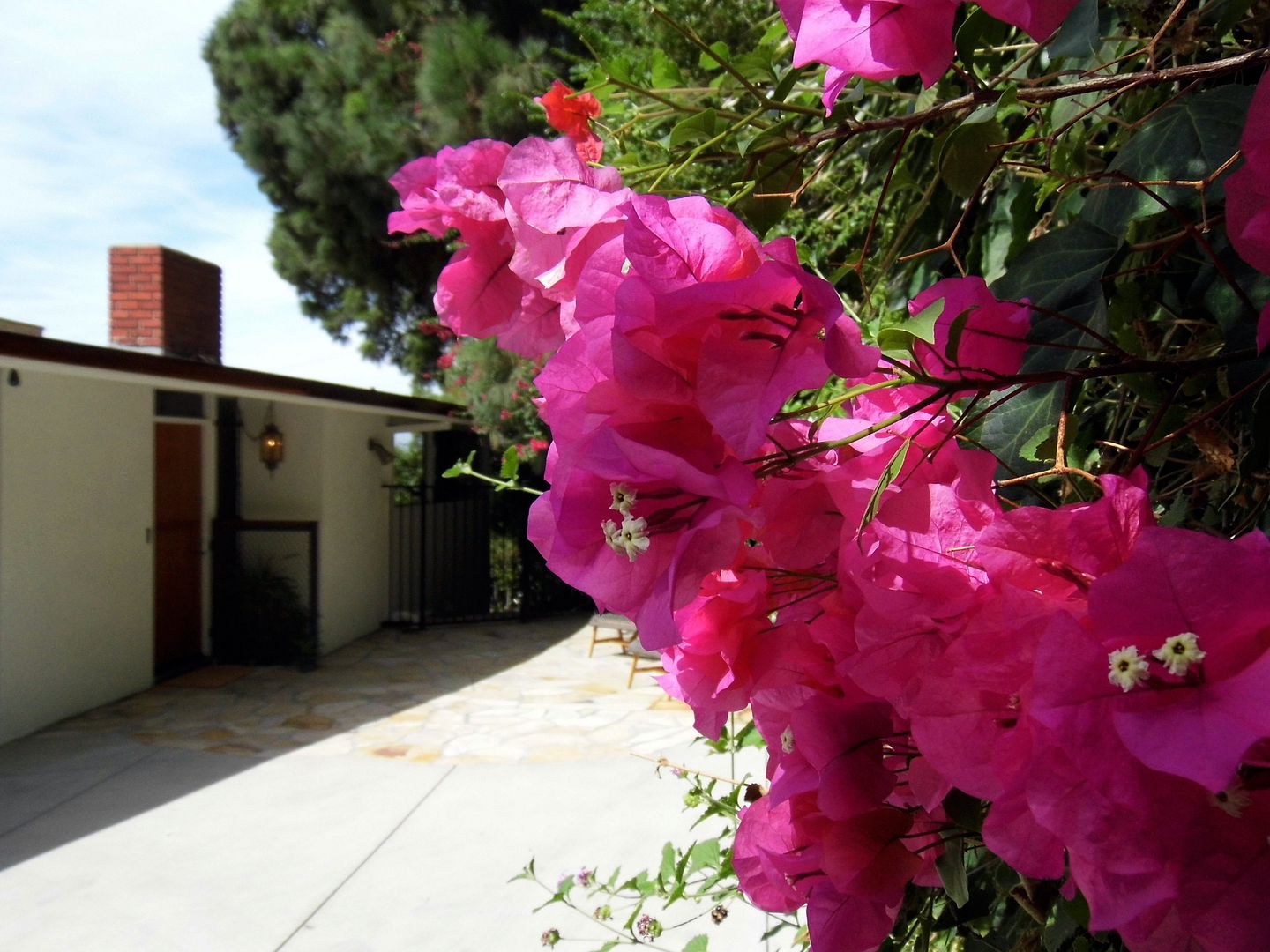


Occupying 3,132 square feet on a 10,800 square-foot lot, the house has been described as "football-shaped" (at least by the LA Times)...
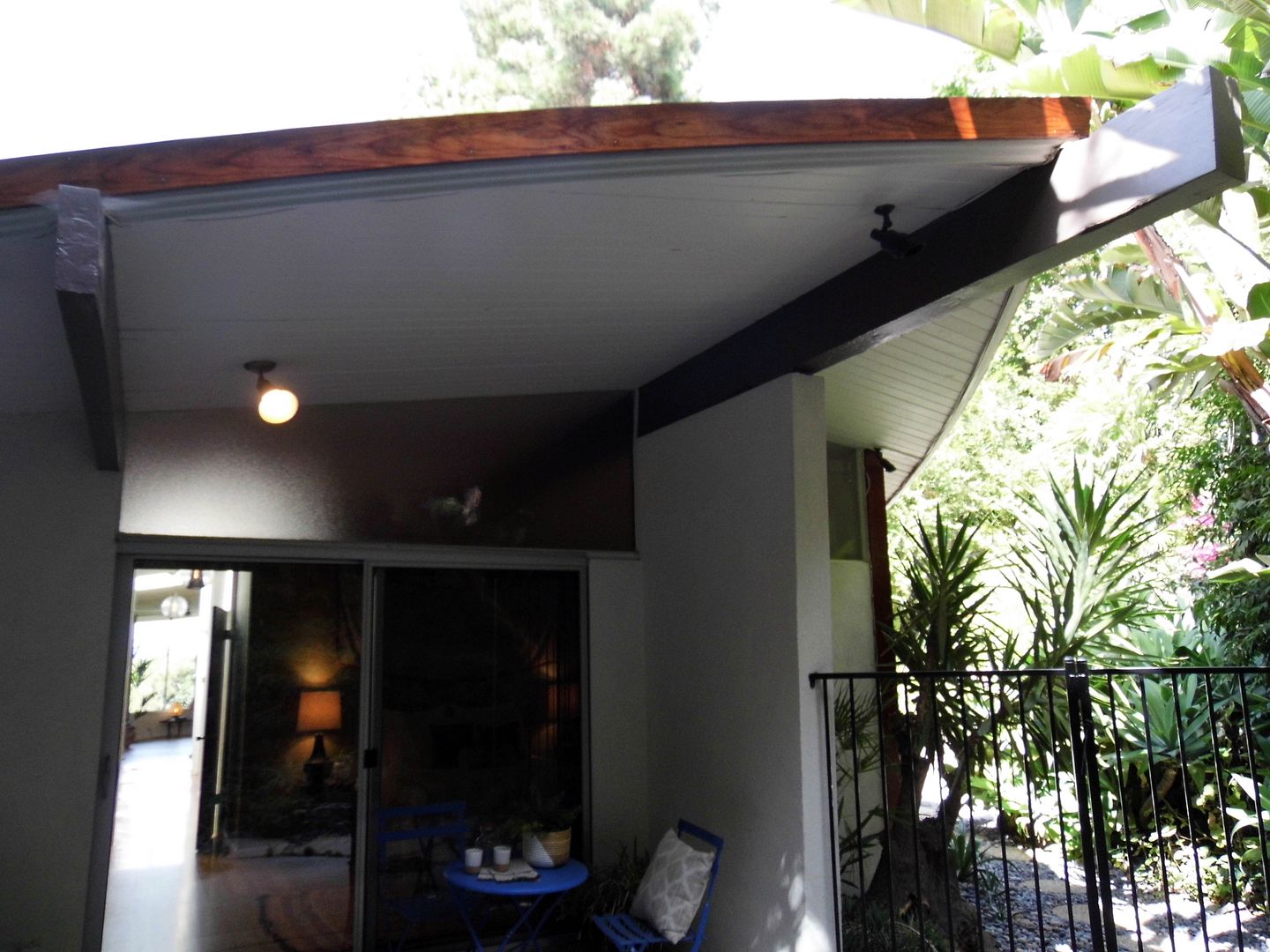


...but it reminds me more of a boat.
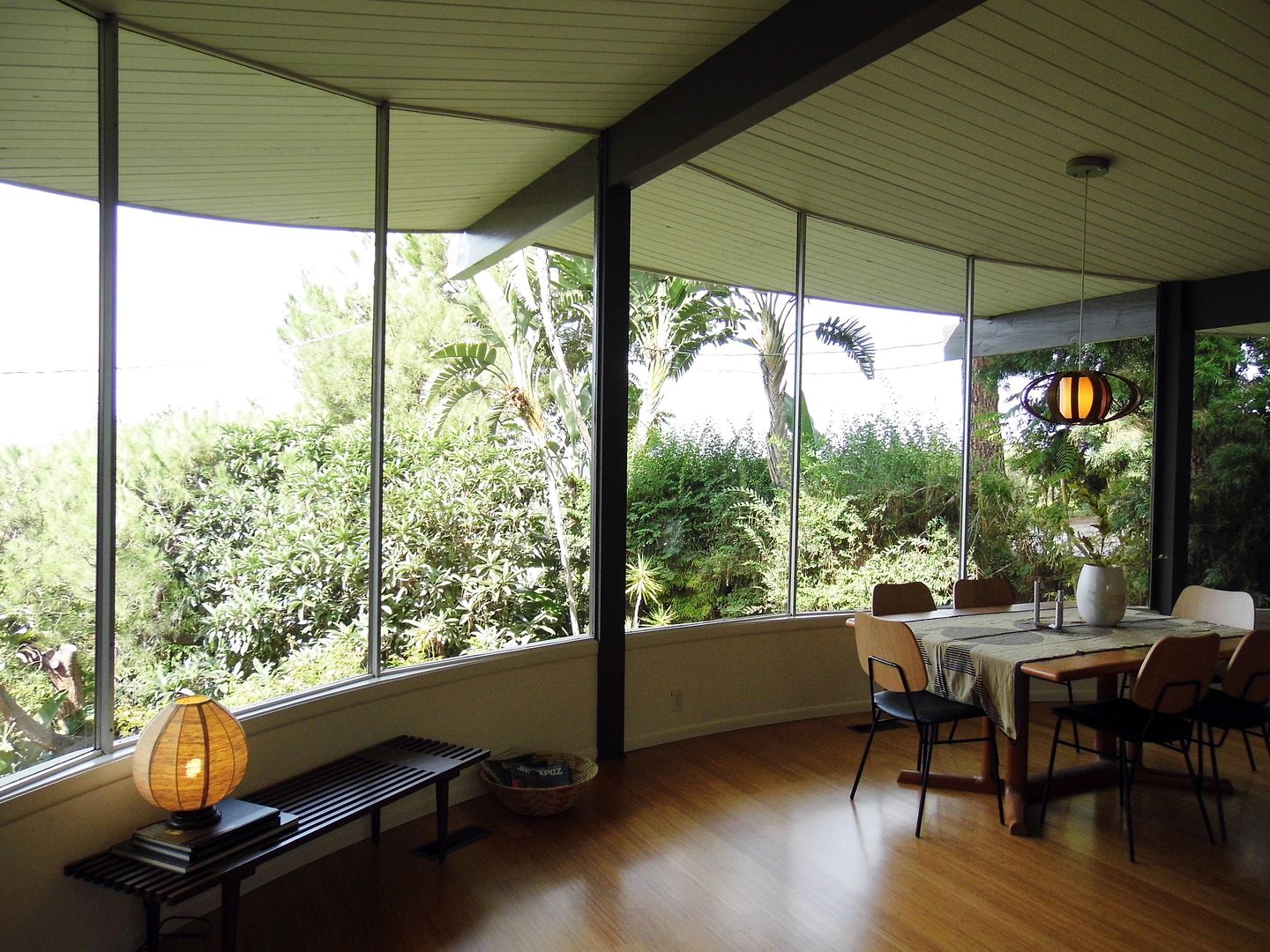


At least, a boat seems more appropriate—given it housed the man who helped create the animated "talkie" Steamboat Willie, starring Mickey Mouse in his first feature, in 1928.
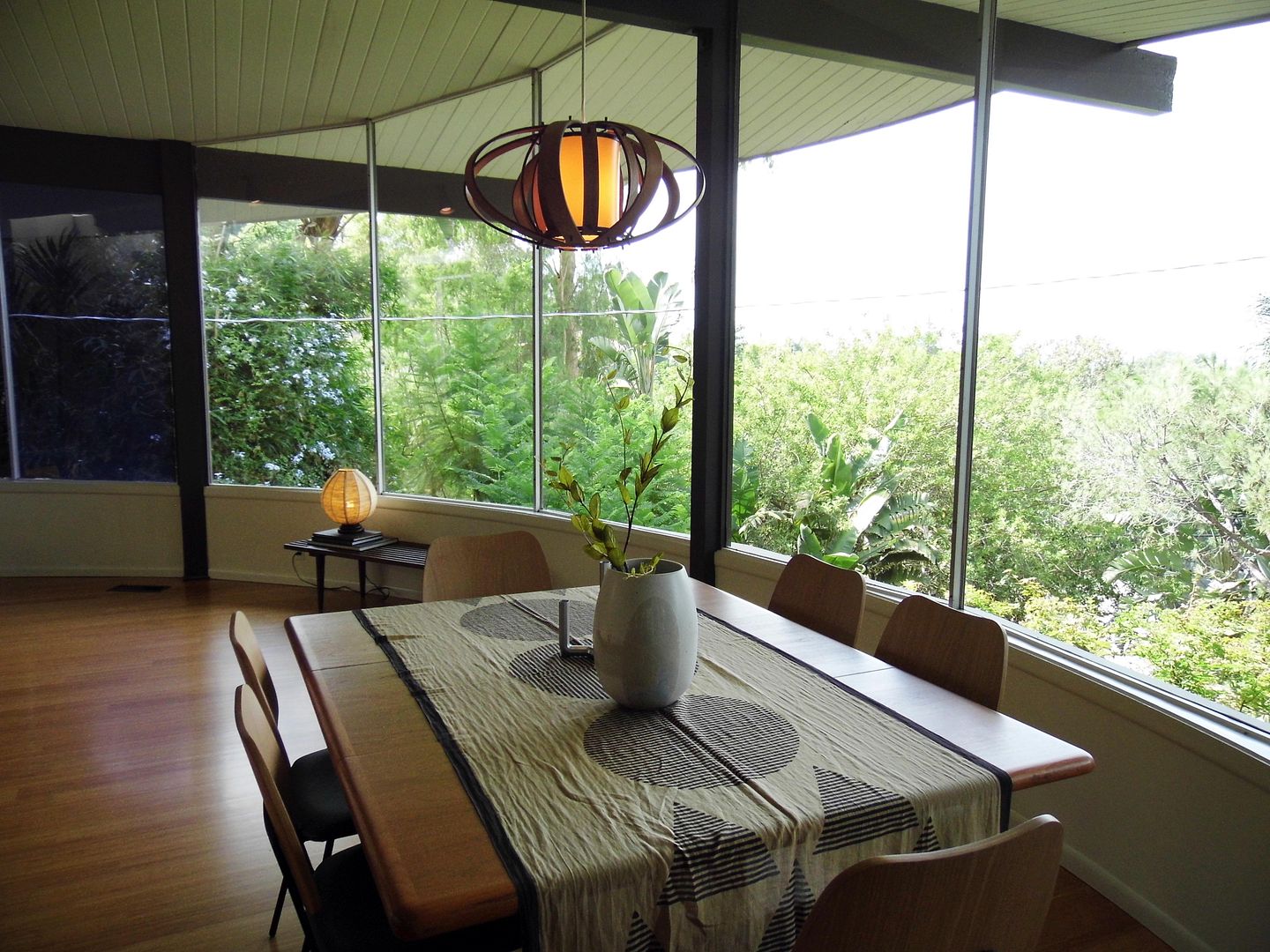


The wall of windows gives those who are inside the feeling of being in an aquarium—perhaps not looking into a tank but out from one.
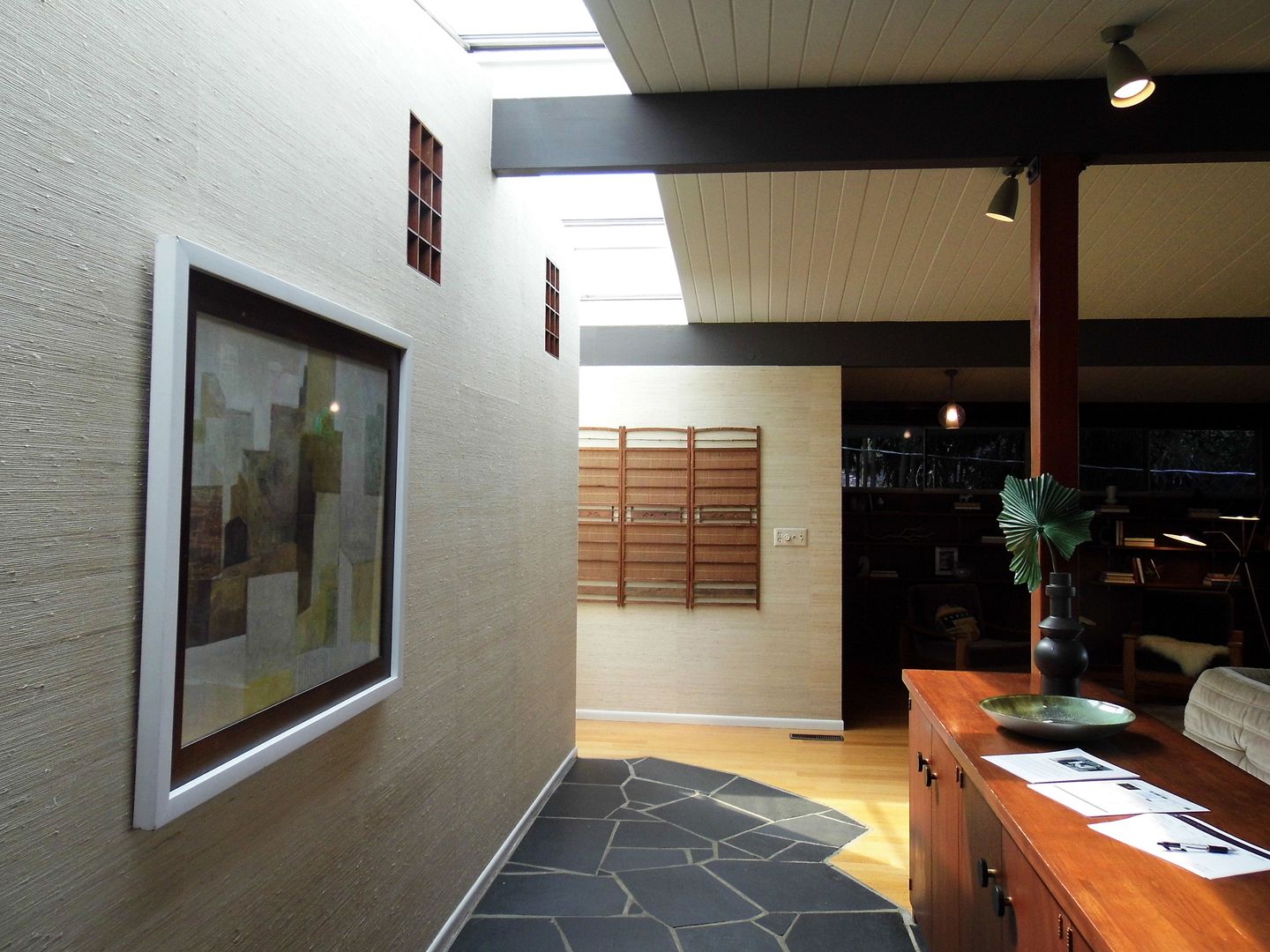


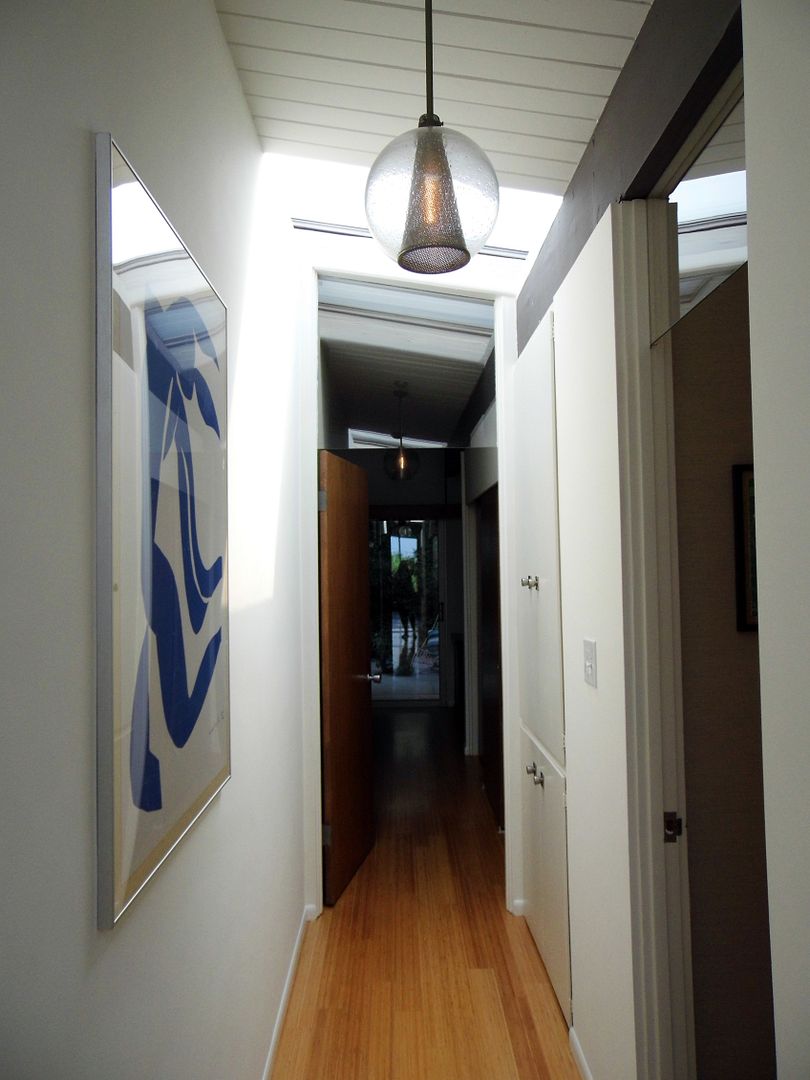
Skylights up above also illuminate the bamboo wood flooring underfoot...
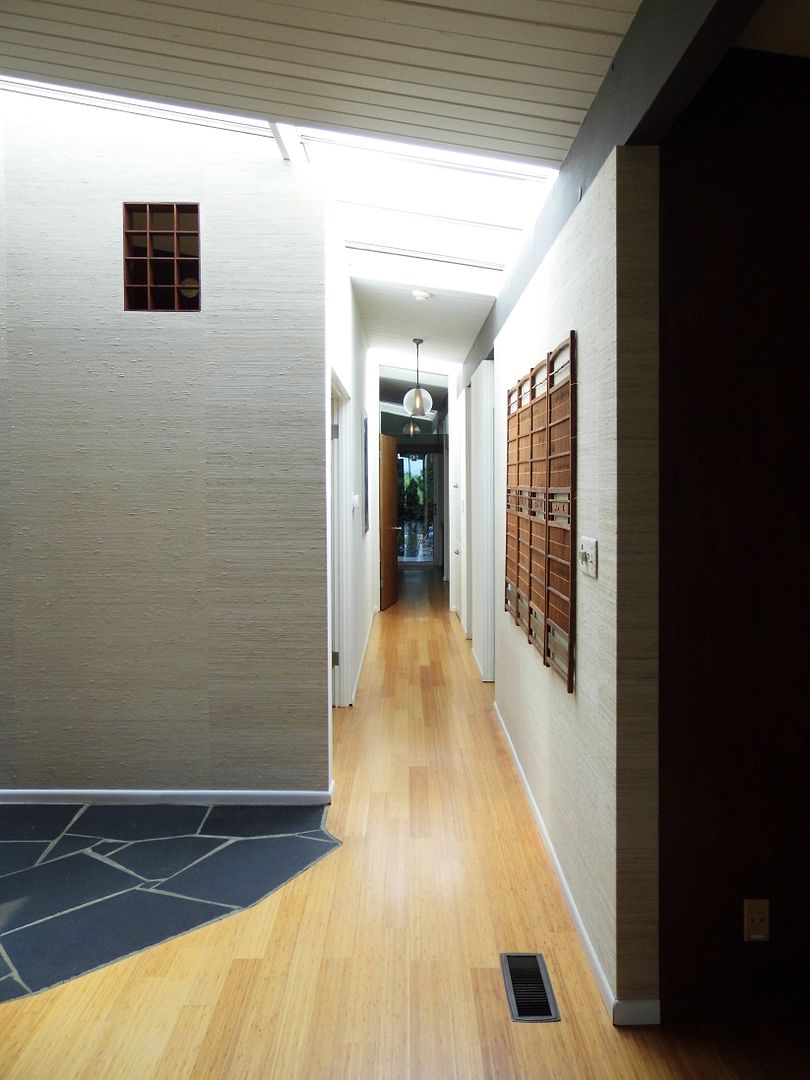
 

...as you walk down a hallway under original lighting fixtures that have been miraculously preserved in situ...
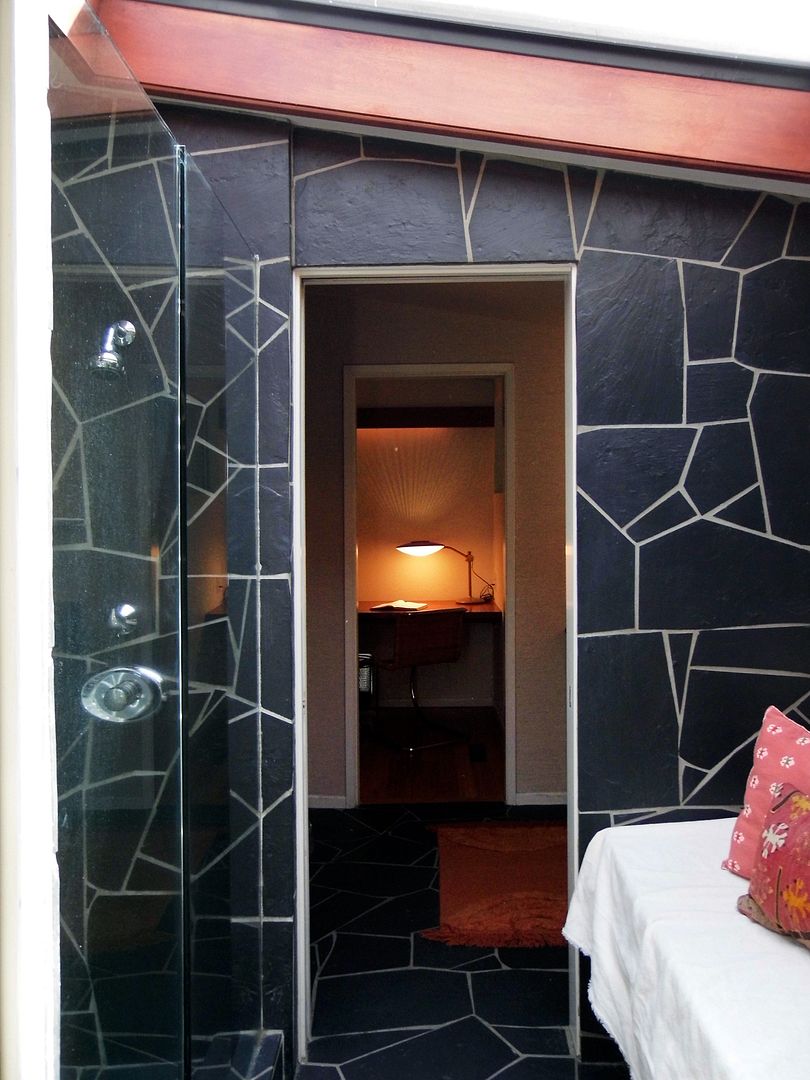


...perhaps on your way to shower al fresco in one of the house's three bathrooms.
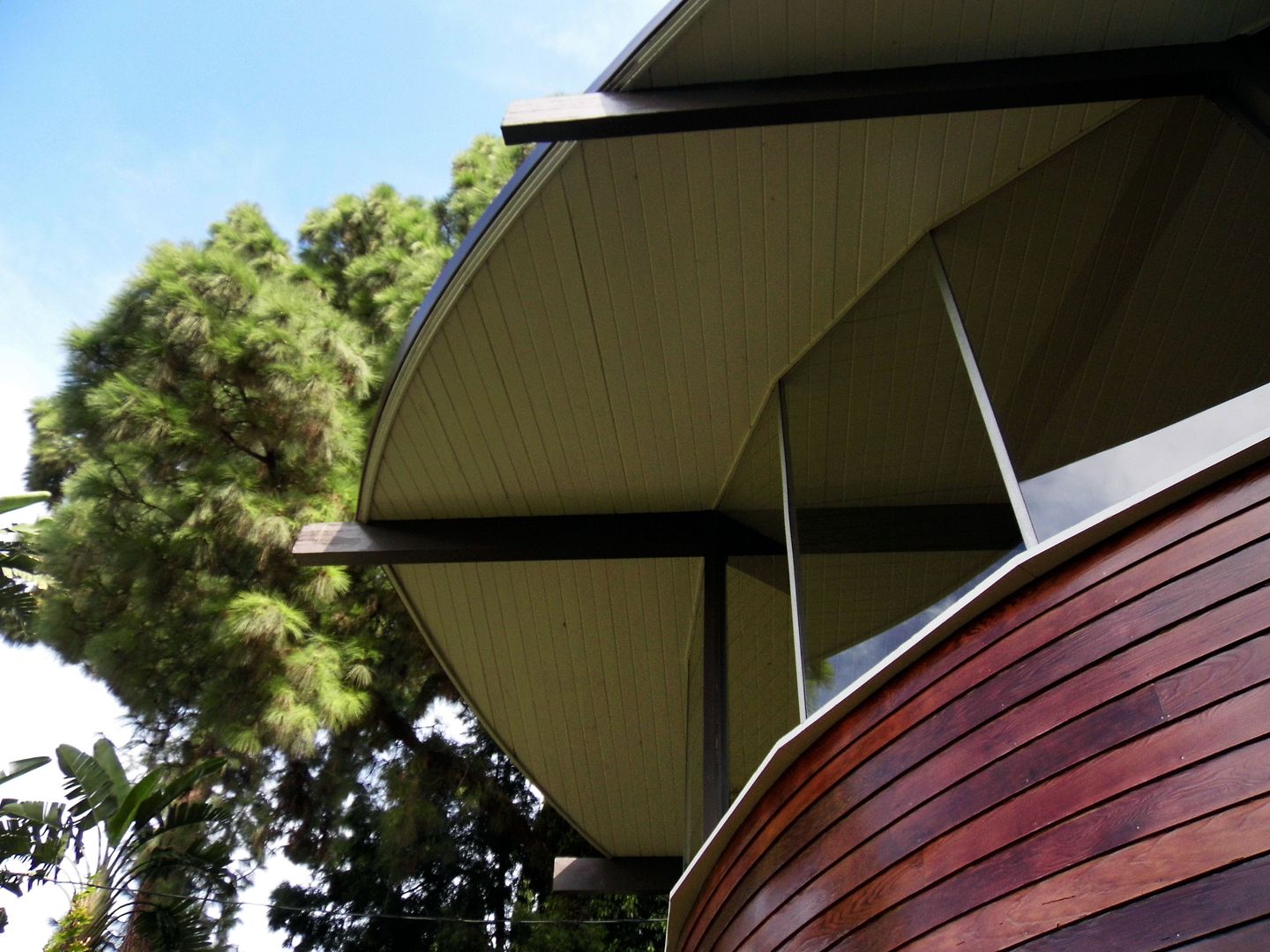


The "ground" floor is actually the upper level...
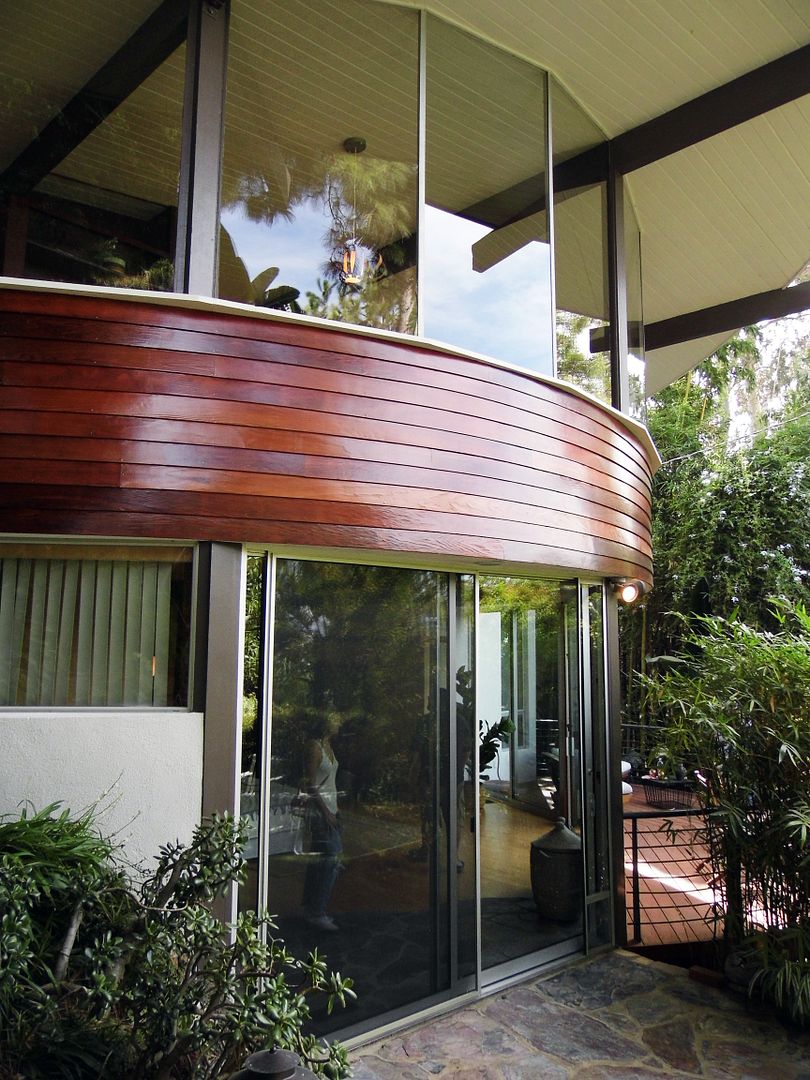


...and it's the downstairs that was built out over 20 years ago...
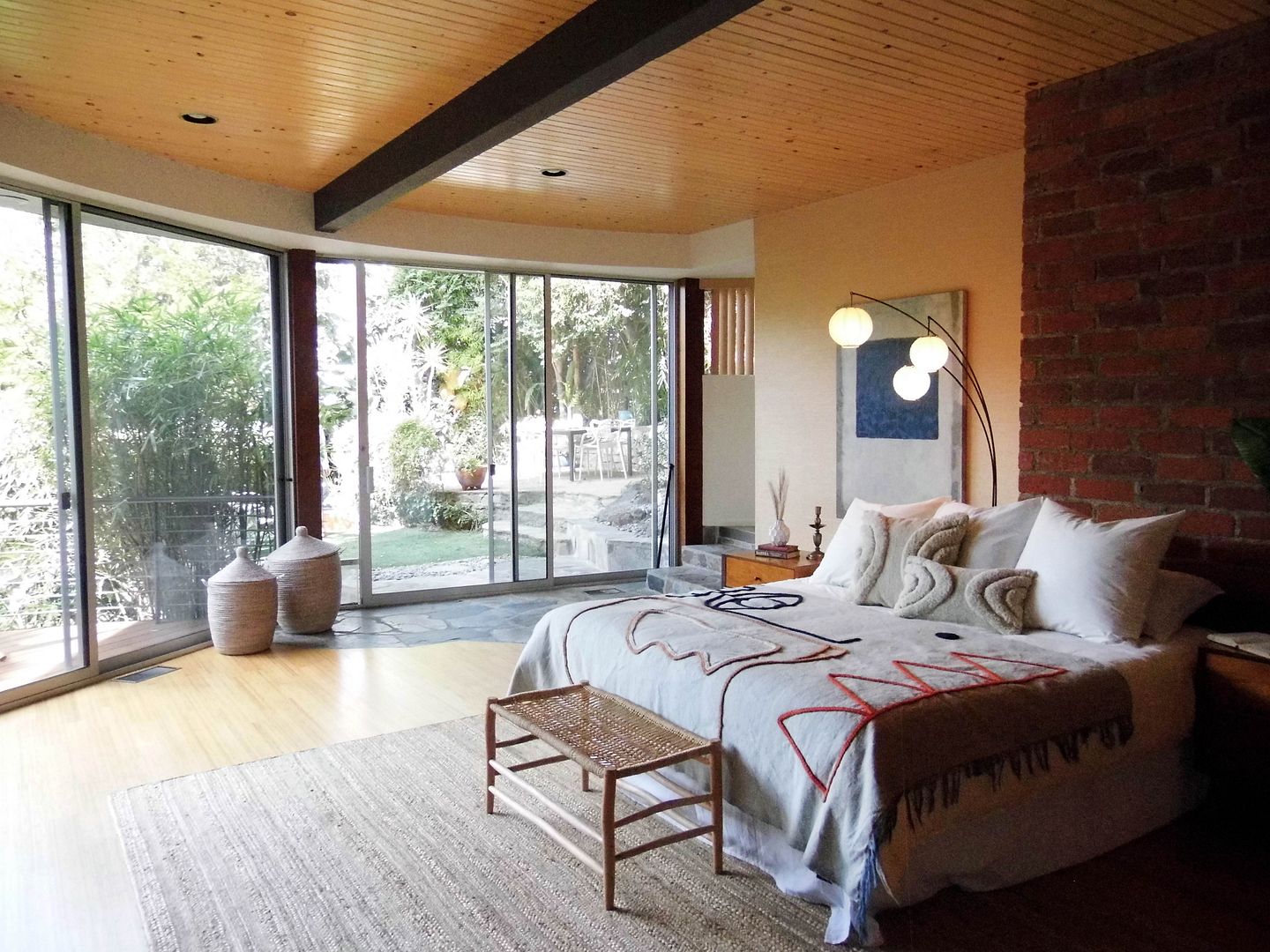


...now with a master bedroom suite, one of three total bedrooms in the house.
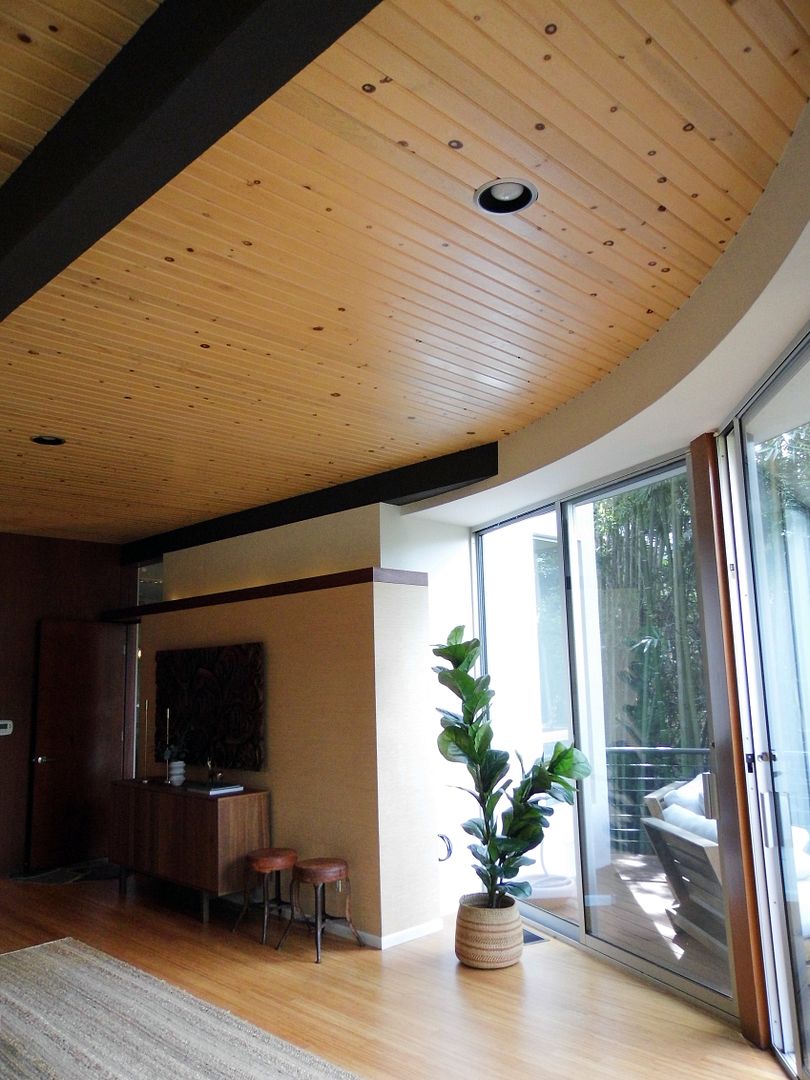


It didn't take long for the Ub Iwerks house to sell to a new owner, who'll hopefully become a good steward of this historic, Modernist home.

Located at the end of a long, curved driveway—and perched on a hillside, enveloped by old-growth landscaping—it's a lovely and private escape from rush-hour traffic on the 101 and the round-the-clock hubbub of Ventura Boulevard, from brunch to last call.

The Ub Iwerks House of the Future is a private residence and not open to the public. Please don't disturb the occupants!

Related Posts:
Photo Essay: Walt Disney's Snow White-Era Family Home

May 17, 2020

Depression-Era and Mid-Century Ceramics for a New Millennium at Bauer Pottery (Updated for 2024—Relocated)

[Last updated 12/28/24 11:36 PM PT—Bauer Pottery has reopened in Frogtown at 1767 Blake Avenue.]

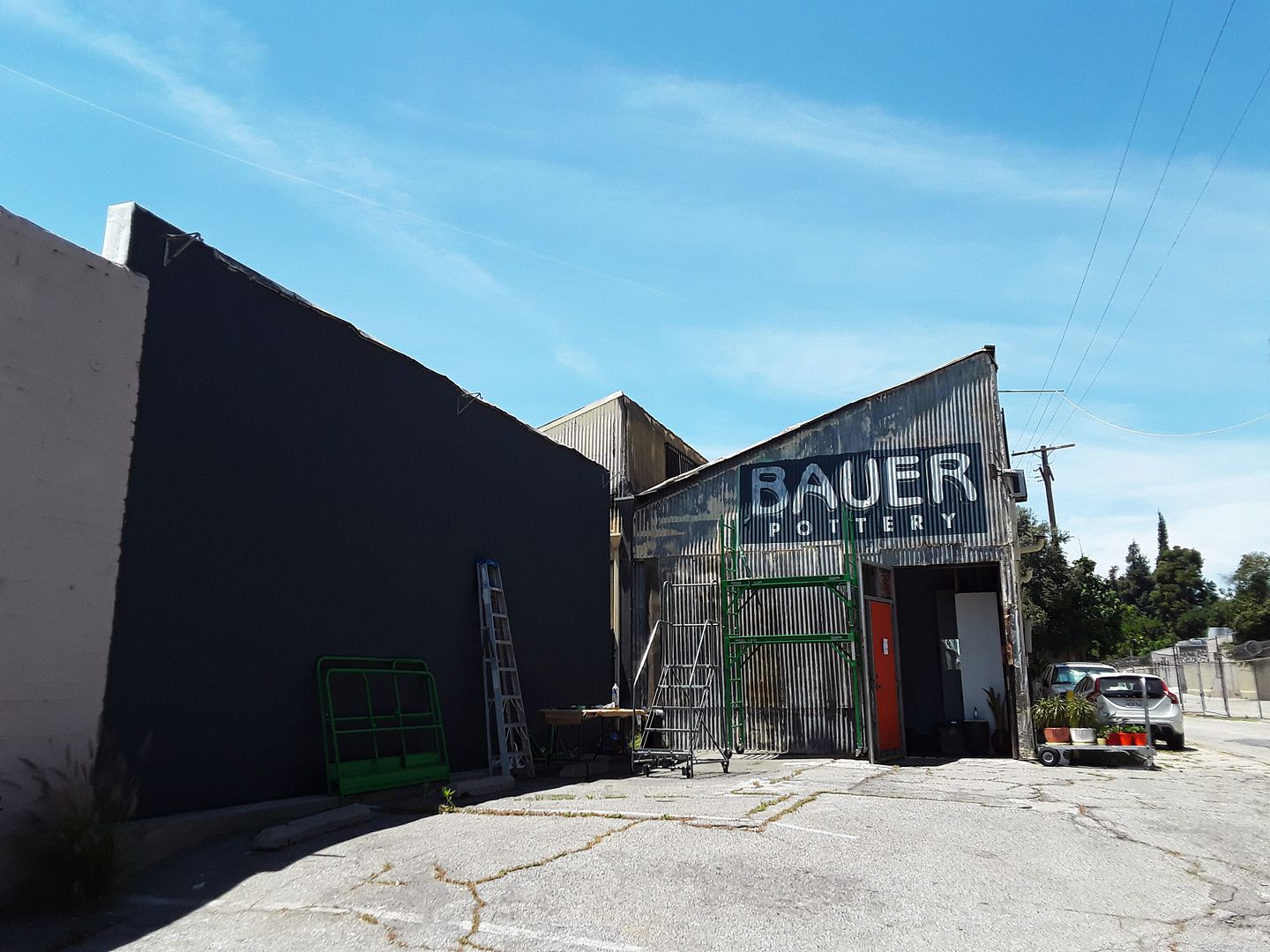
[Updated 2/7/24 11:31 AM PT—Bauer Pottery lost its lease on its historic showroom location and closed in September 2023. Its factory in Highland, CA remains open, and it's working on relocating to a new showroom in the Los Angeles River-adjacent neighborhood of Frogtown.]

It was three years ago that I first got to Bauer Pottery's showroom by RSVPing to The Los Angeles Pottery Show's opening reception—an event I may not have had any business being at.

But it was my way to get into an LA ceramics institution—that has irregular open hours that I could never seem to coordinate with my own erratic schedule.

Three years later, I jumped at the chance to revisit Bauer's showroom to pick up an order, in a time when errands are precious and (physically distant) human contact is priceless.


You see, I've been spending my time and my money during the coronavirus pandemic trying to support local businesses from afar. If I can't buy tickets to events or run up a tab at my favorite restaurants and bars, I'll buy souvenirs or doo-dads or knick-knacks that might help keep them afloat.


Bauer Pottery got its start in Kentucky right before the turn of the last century, but it famously operated out of Los Angeles from 1909 (in Lincoln Heights) to 1962—introducing California Colored Pottery around the same time as Gladding McBean's Franciscanware and Homer Laughlin's Fiestaware.


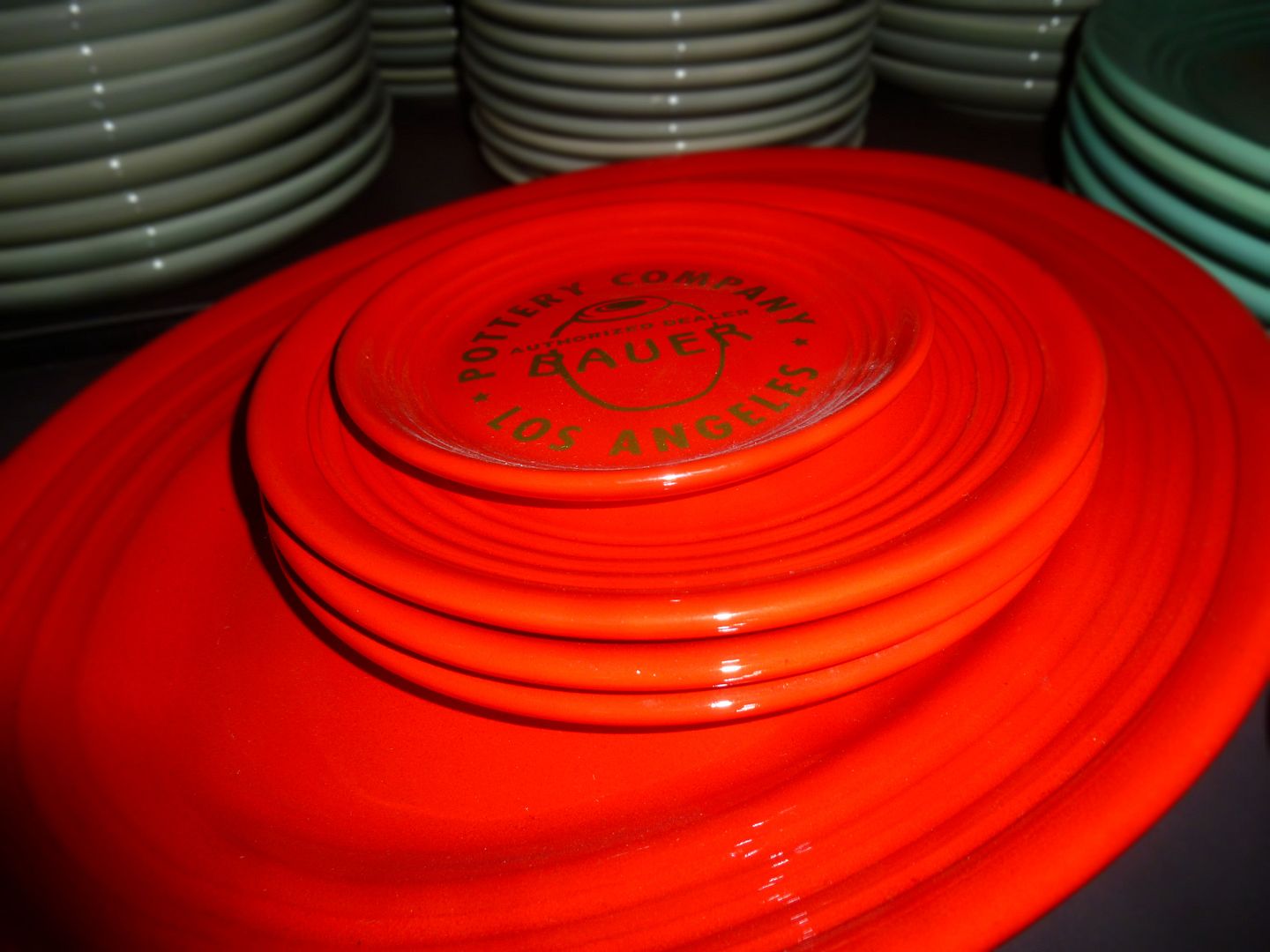
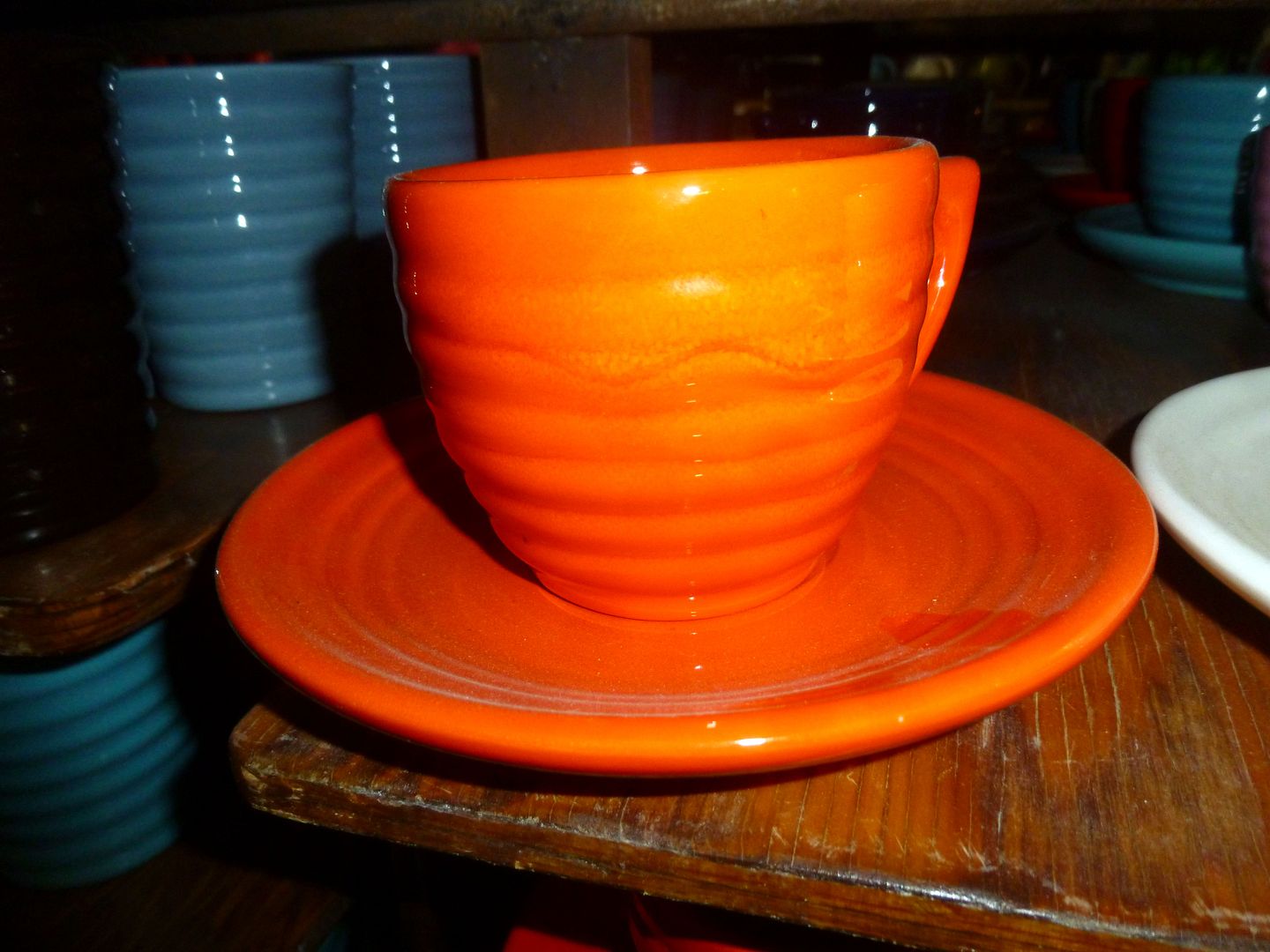
During the Depression Era and the American West post-WWII, Bauer became synonymous with "Ringware," named after rings of circles along the perimeter of its bowls, plates, and mugs.


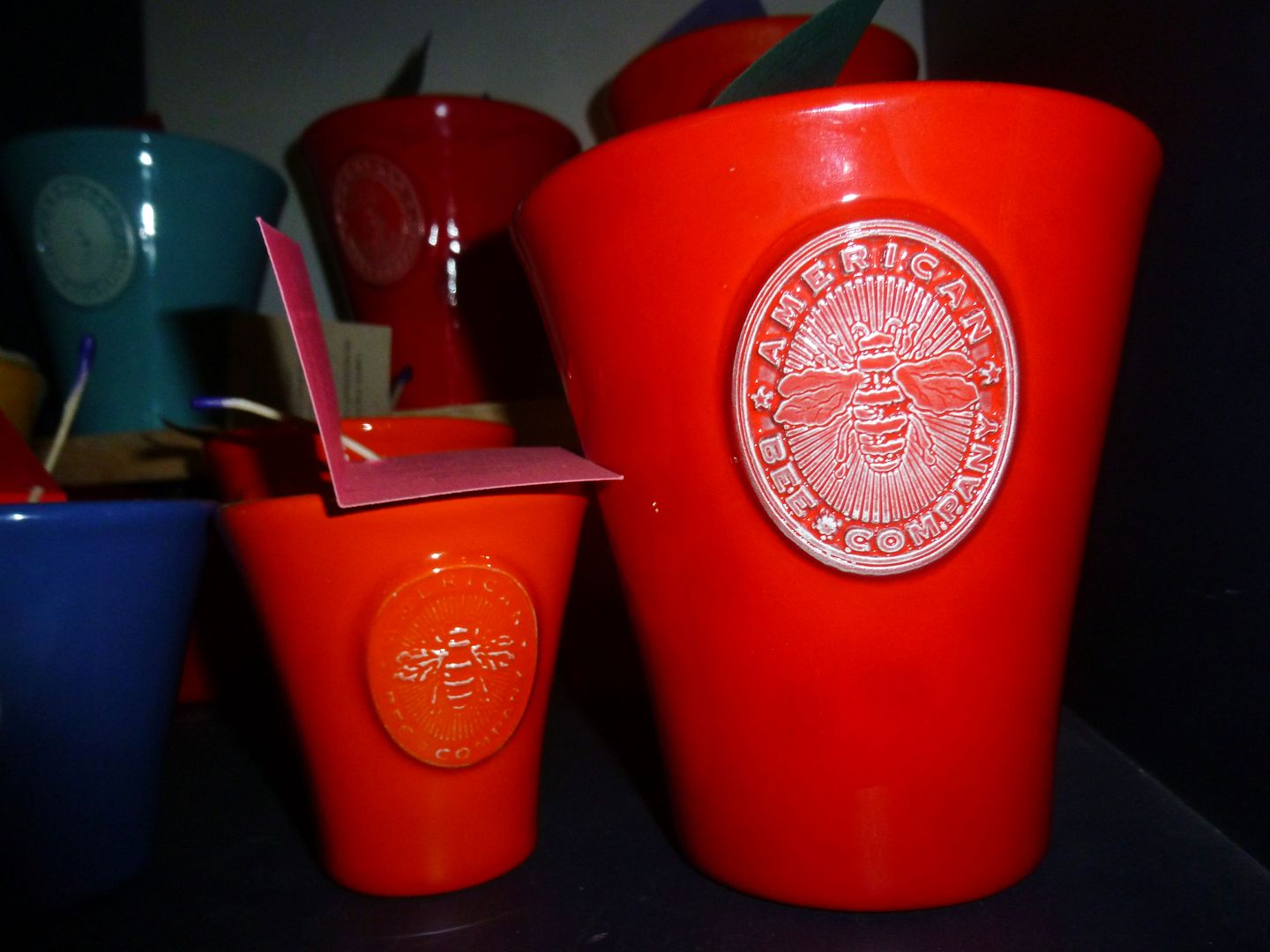
The pottery line spent nearly four decades dormant until collector Janek Boniecki re-registered the trademark before the new millennium and revived the brand in 2000. He'd already been using vintage Bauer designs and color palettes to inspire his line of ceramic-potted candles as part of his American Bee Company.


At the time, original Bauer molds had been lost to the ravages of time. So Boniecki did his best to reverse-engineer the designs based on samples he already had or could acquire.


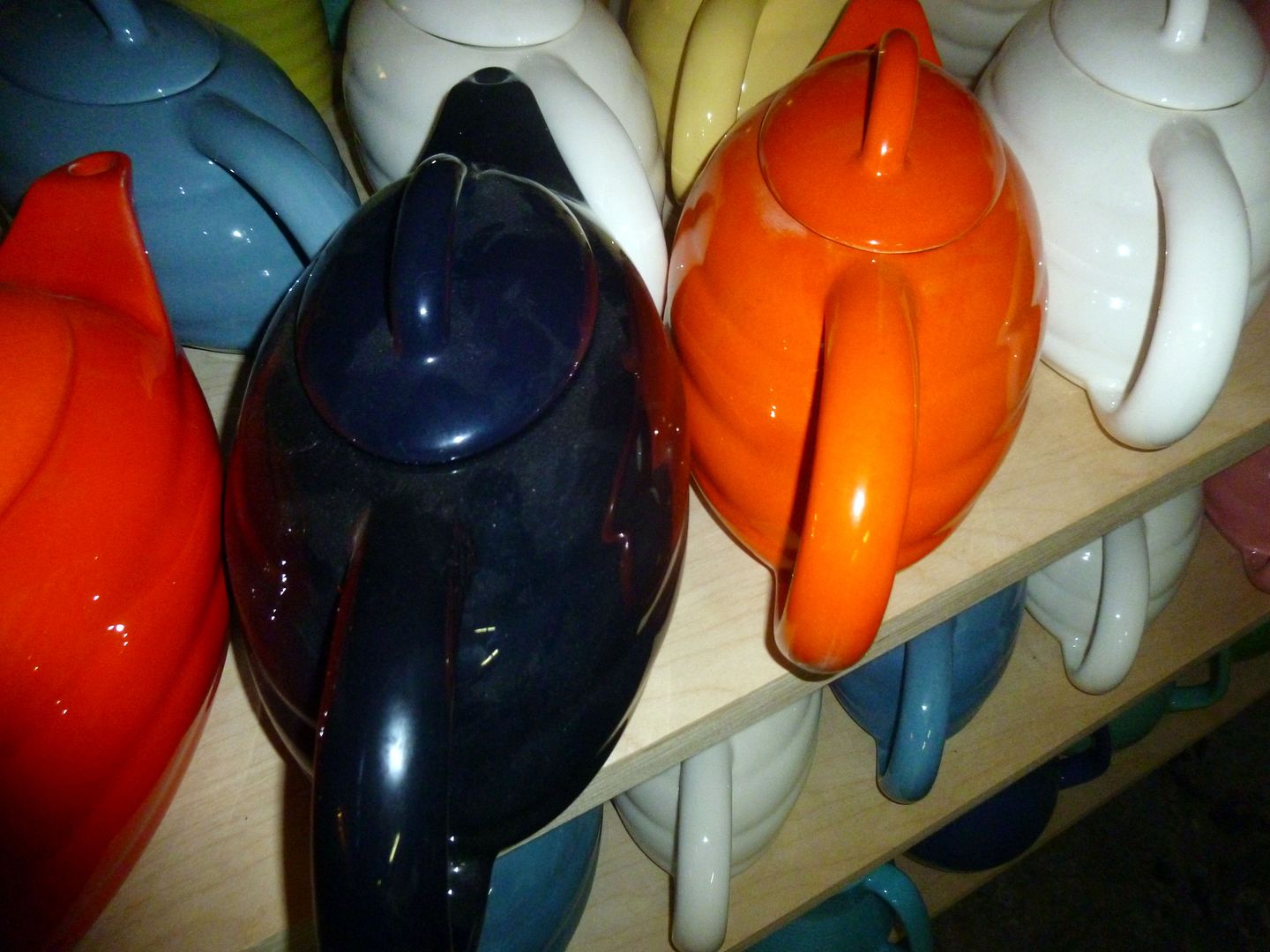
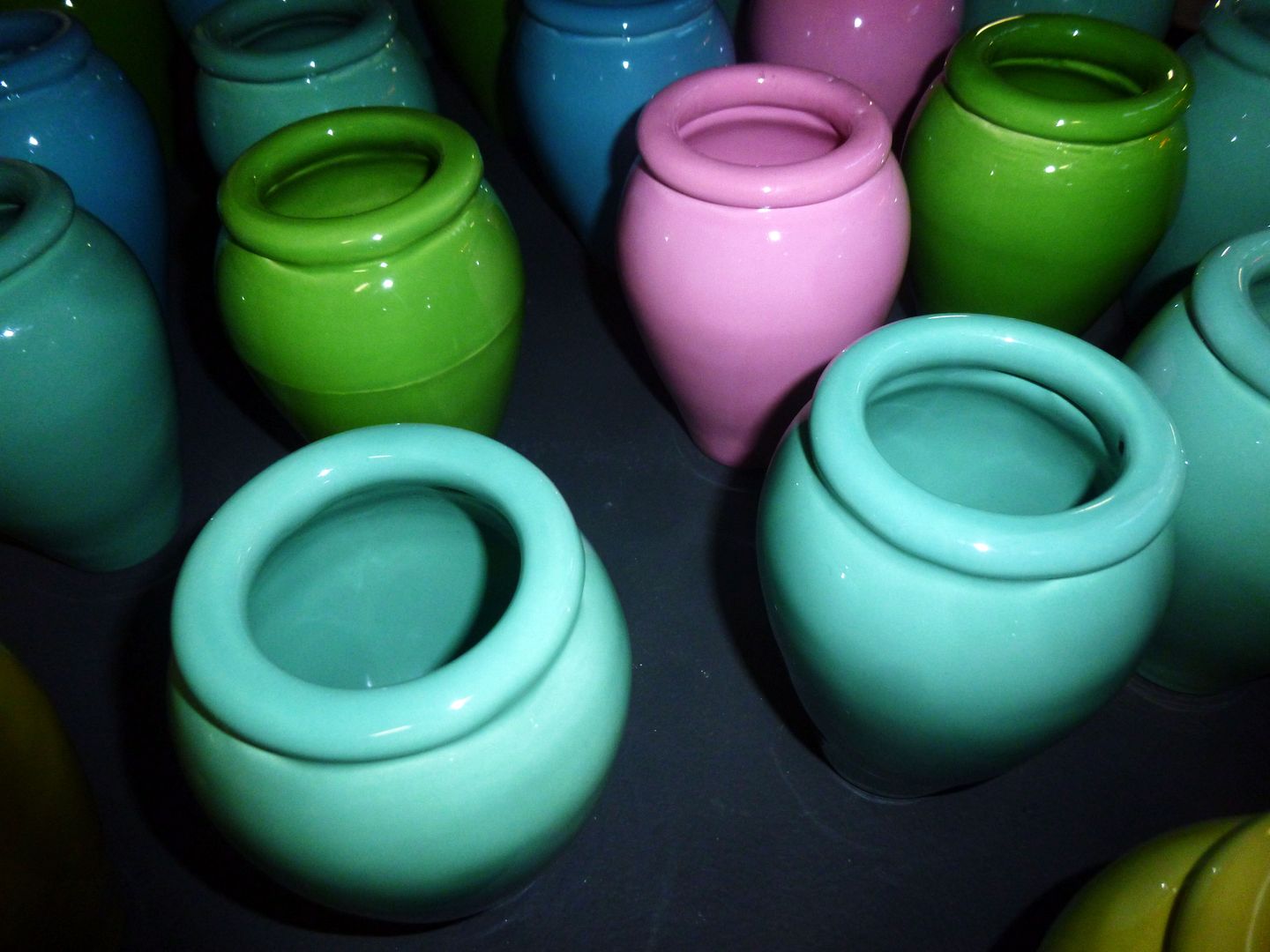
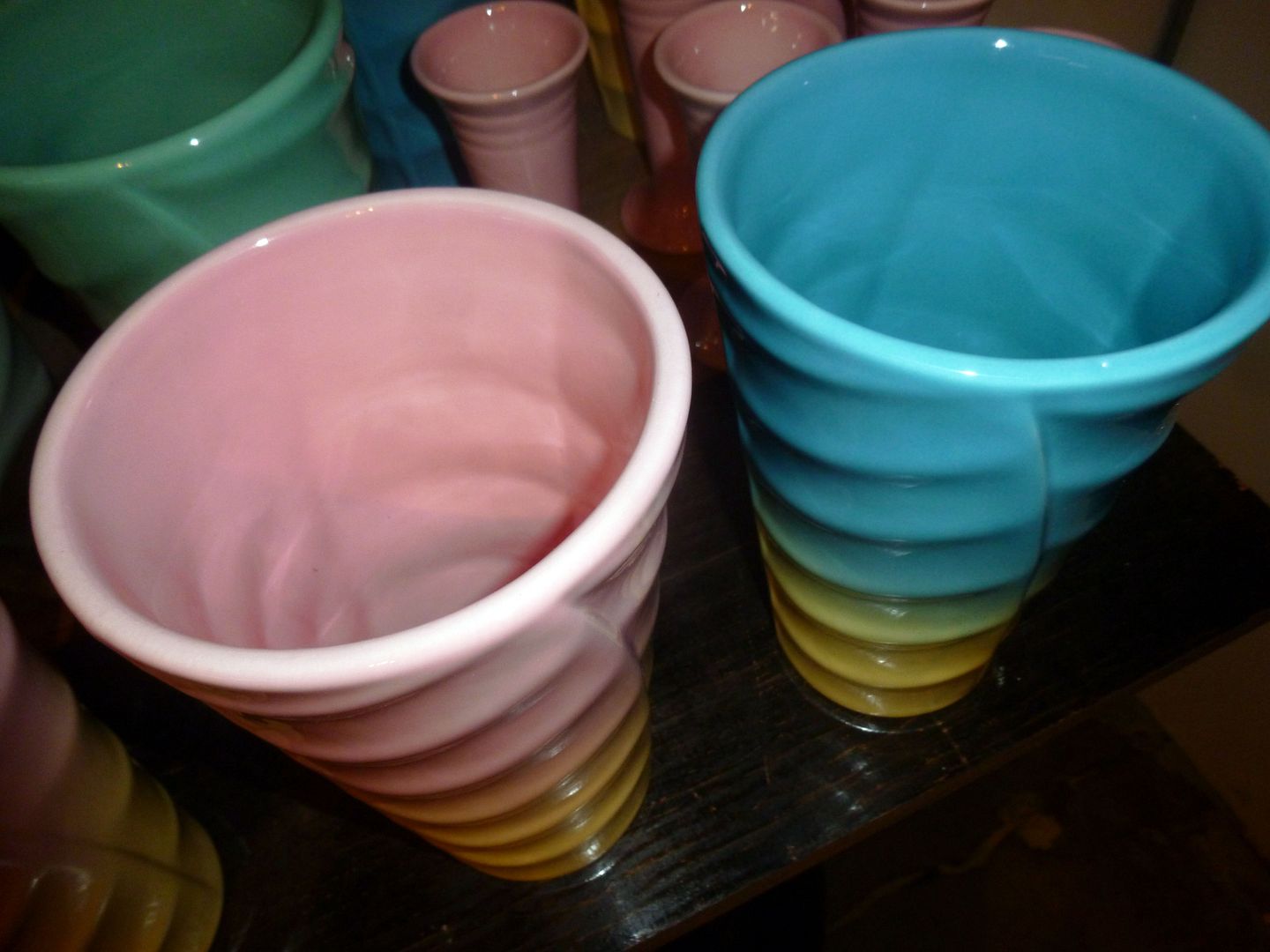
Now the Bauer line of ceramics touts pitchers...


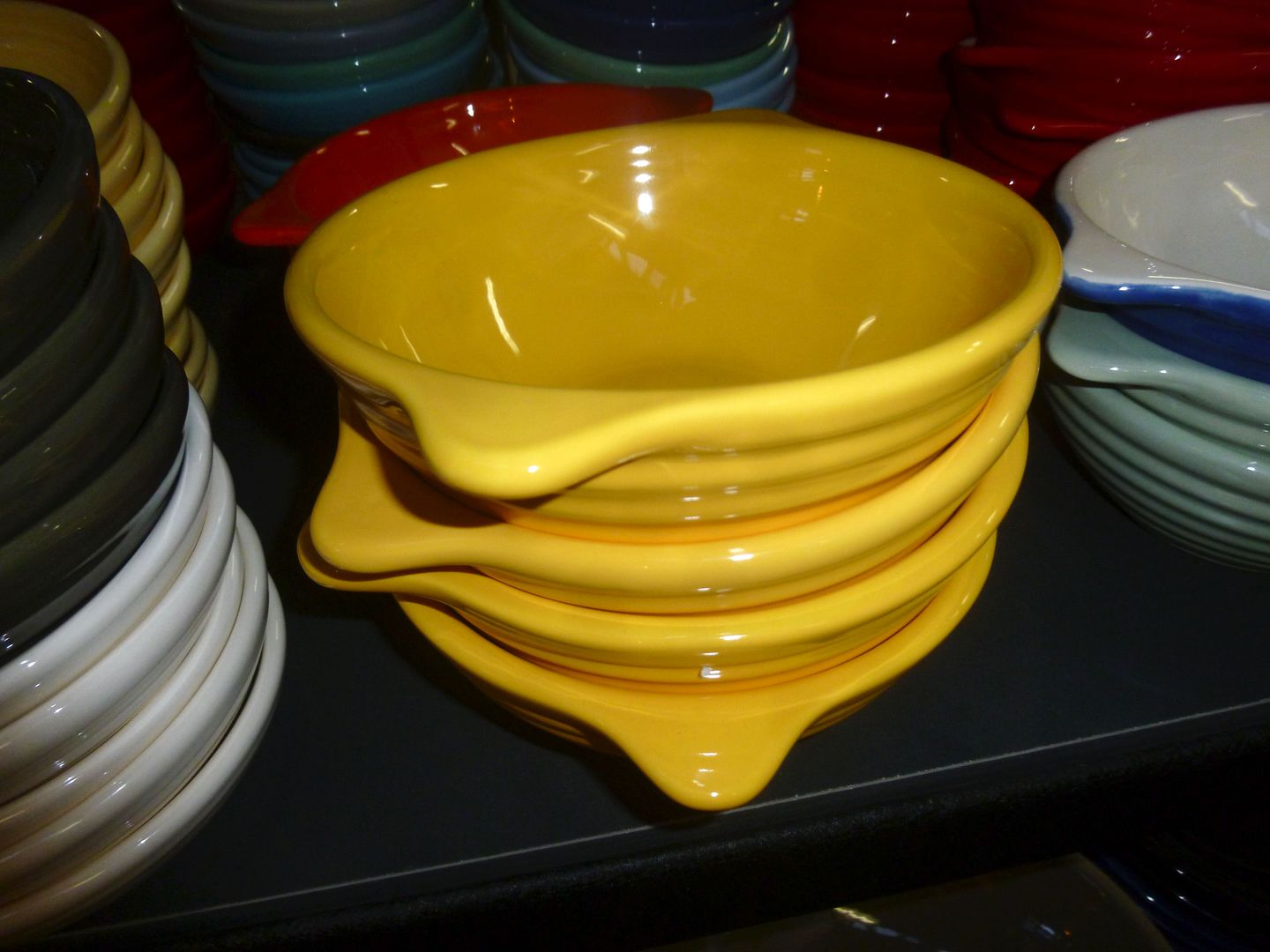
...bowls...


...and vases for both home and garden.


Many of them come in those classic colors people remember from the last century, like Bauer Orange, Bauer Yellow, Federal Blue, and Turquoise (but lead-free versions of them, of course).


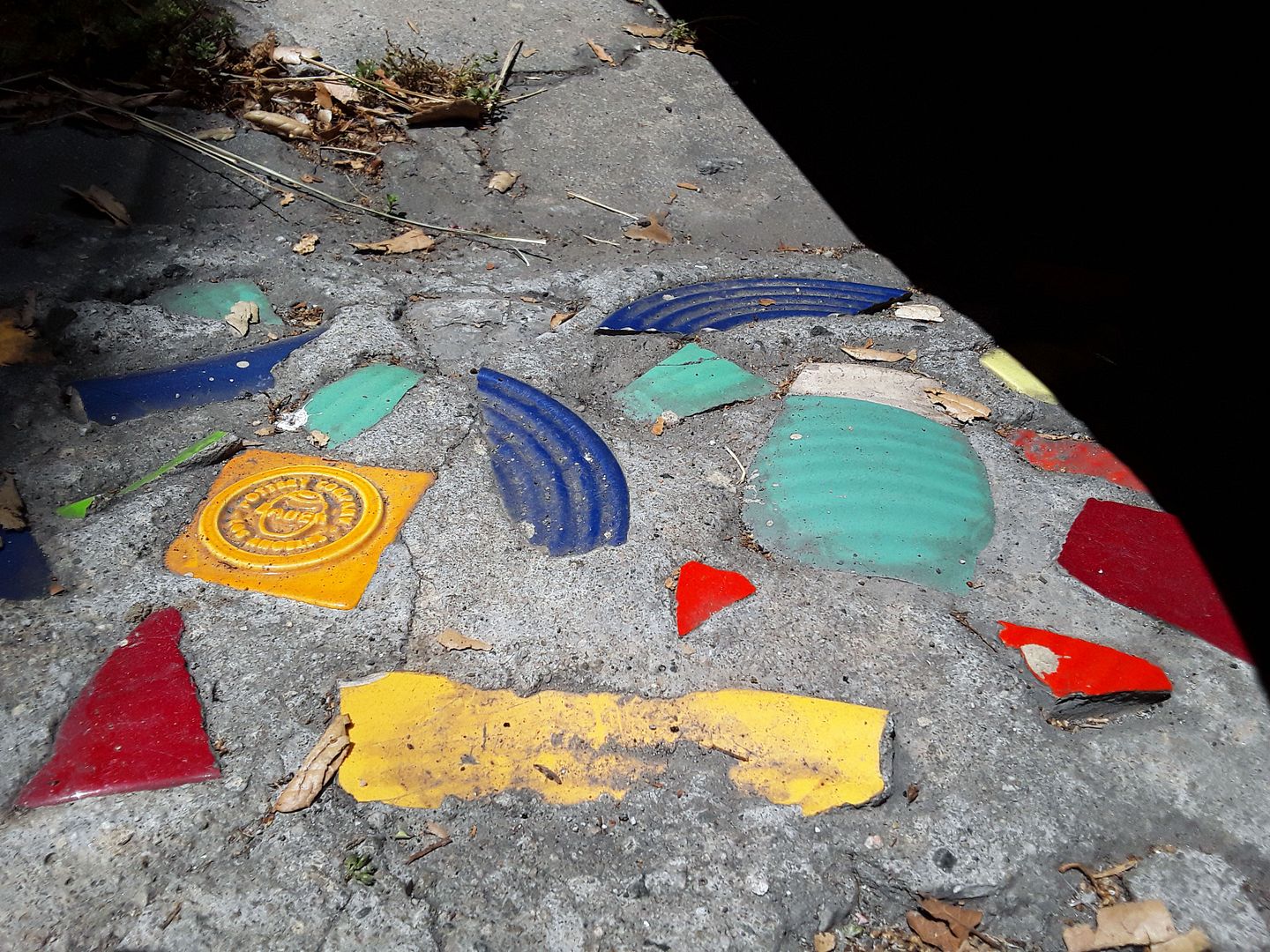
Some unscrupulous sellers on the secondhand market represented the reproductions as originals to would-be collectors, so the year "2000" was added to many of the new editions to avoid any confusion. (You can also tell the difference because all original Bauer Pottery stamps at the bottom of products were impressed, not raised the way some of the new ones are.)


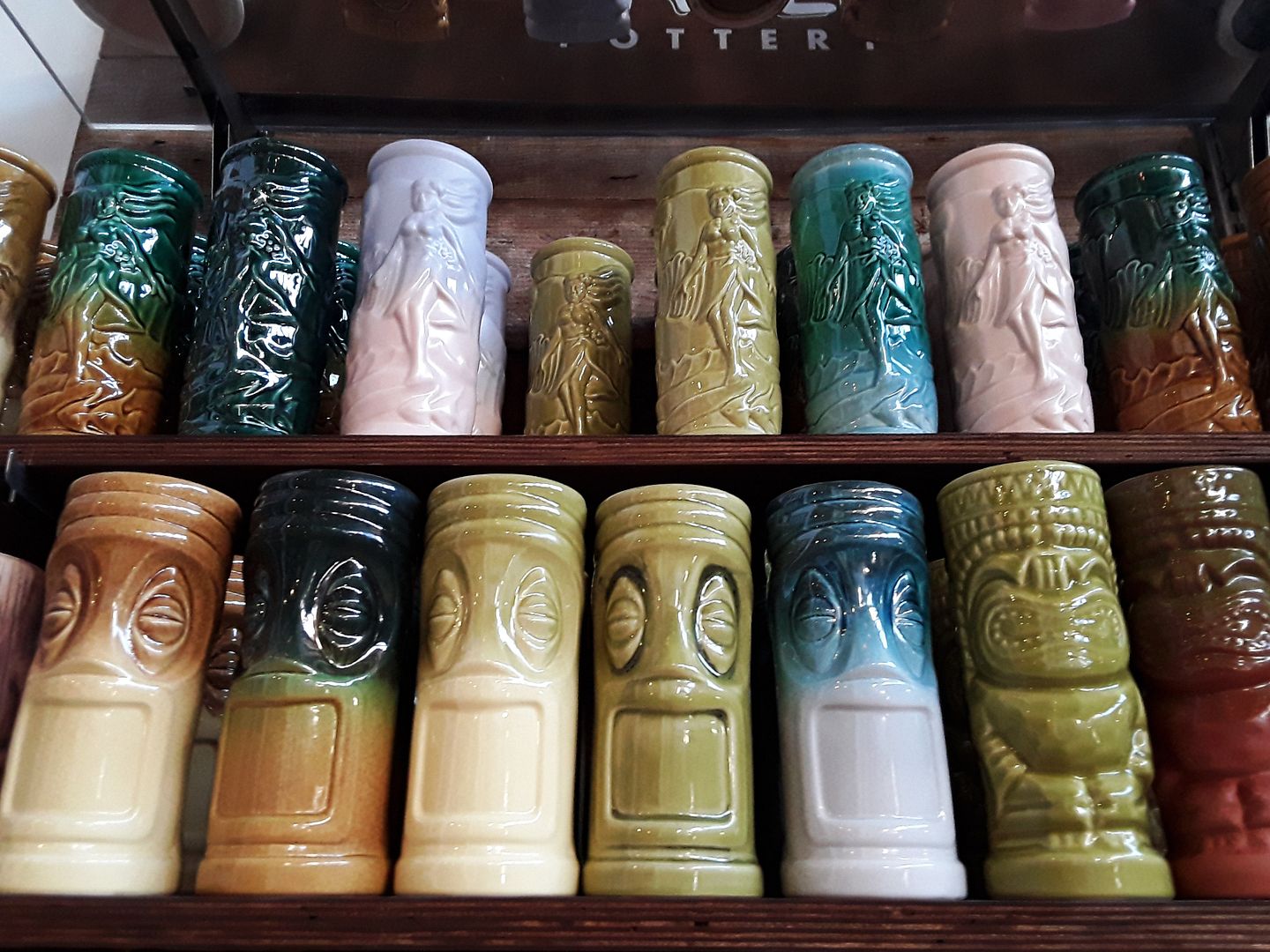
One of the newest developments to come out of Bauer is a line of tiki-themed wares, which debuted at the end of 2017—some of which are collaborations with tiki artist Squid (including the "Terror Tiki," which is now part of my personal collection) and others reproductions of classic tiki mugs (like "The Island Chief" by Spurlin Ceramics, which supplied it to L.A.'s Islander Restaurant for their "Husband Killer" cocktail).


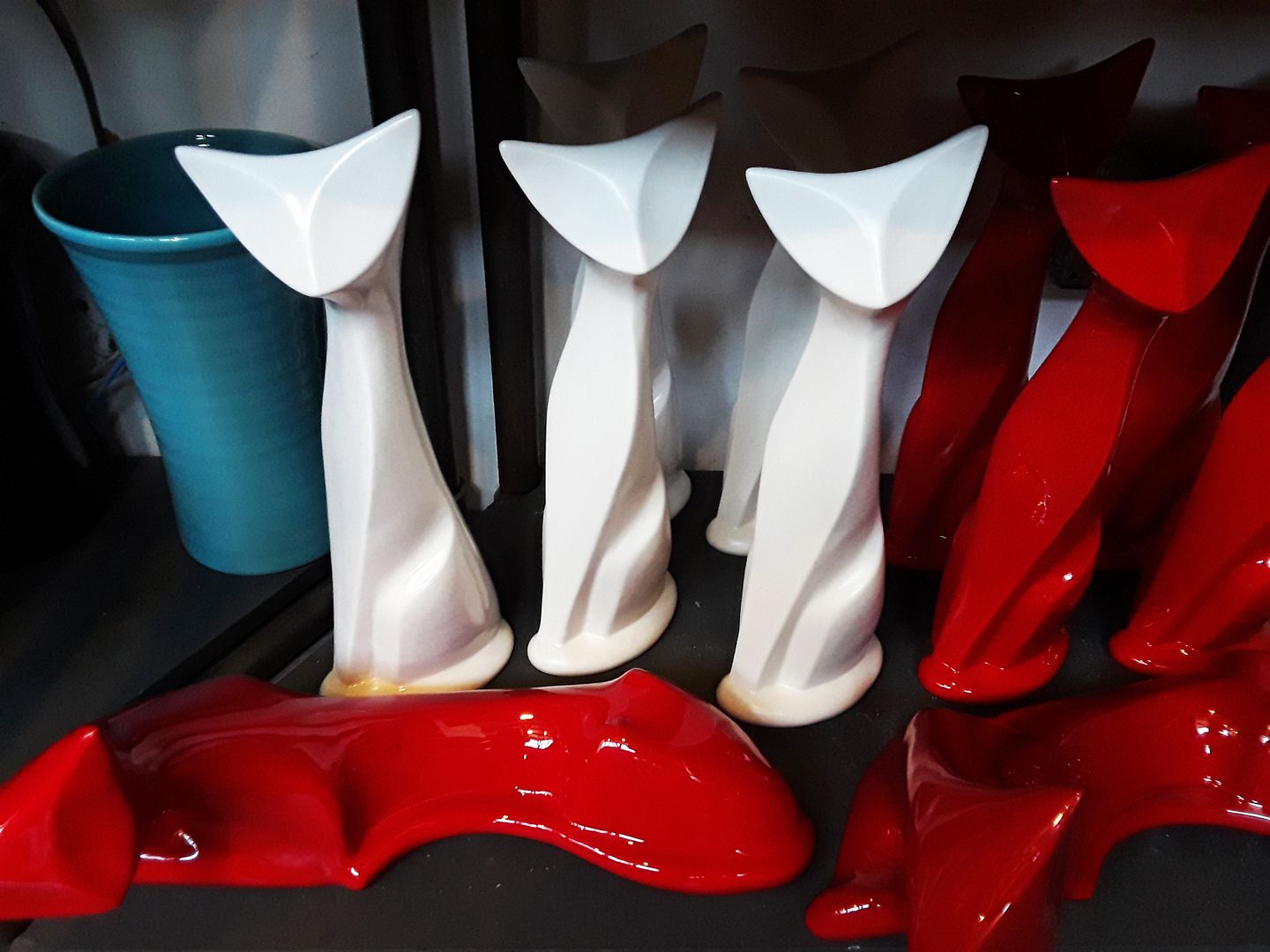
Also a little bit tiki, a little bit Mid-Century Modern is a reproduction of cat statues, cast from the original circa 1960 molds (or perhaps a year or two later) by Brayton Laguna Pottery in Laguna Beach (1927-1968).

So, even though all the original Bauer molds were destroyed sometime after the dissolution of the company, there are plenty of other abandoned ceramic molds out there, waiting to be given new life.

The current LA-area showroom for Bauer in Atwater Village is open certain Fridays and weekend days throughout the year (though only for curbside pickup of online orders from their website for right now).

Unfortunately, Bauer's 40,000-square-foot factory in Highland, CA near San Bernardino—a former fruit packing plant that purchased in 2007—isn't open to the general public for tours.

Yet.

I'm always holding out hope. Maybe I'll find my way into some future event hosted there like I originally did with the showroom.

Related Posts:
R.I.P. Robert Winter, LA Architecture's "Bungalow Bob" (1924-2019)
A Theme Park Legend Emerges From Behind the Tiki Mask

May 15, 2020

Photo Essay: A Slice of Colonial Spain In the Ever-Modernizing Downtown of San Diego

When the Balboa Theatre replaced the Gould Hotel at 4th and E in San Diego's Gaslamp Quarter, it was the Southern California city's first big downtown movie theatre.

And when the city government condemned it, evicted its current operator, and then purchased it in 1986, it became San Diego's longest-running empty stage at the time—closed for business for over 20 years.

That was four years before the nearby California Theatre shuttered in 1990. Now, that stage has been empty for 30 years—and all signs point to it never reopening again.

Fortunately, the Balboa found a way somehow to reopen on January 19, 2008, after a 3.5-year, $26.5-million renovation.

Under the hood, restoration architects Westlake, Reed and Leskowsky replaced all utilities with new and seismically retrofitted he entire structure, adding disabled access.


Photo: Bernard Gagnon via Wikimedia Commons (CC BY-SA)

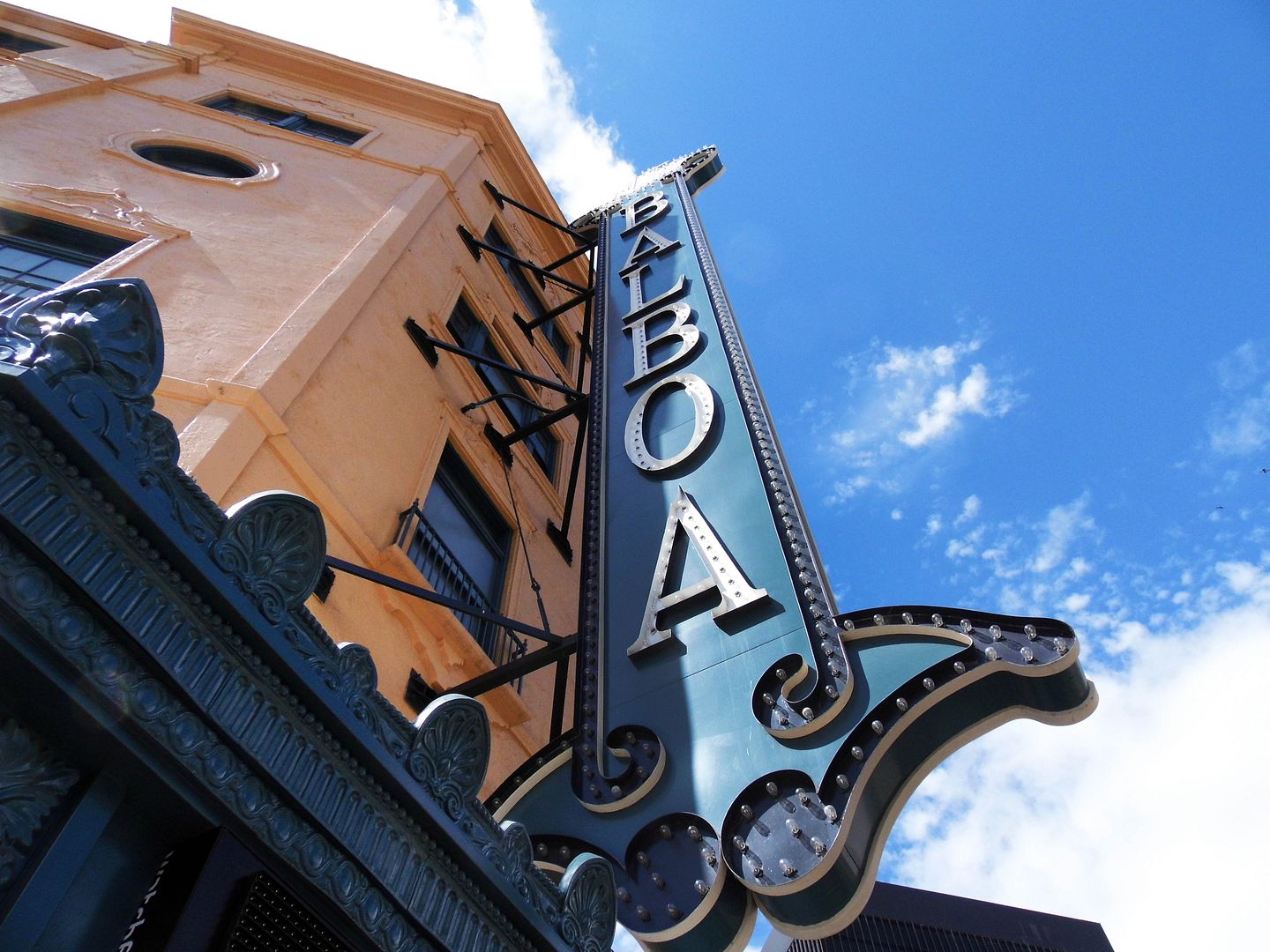
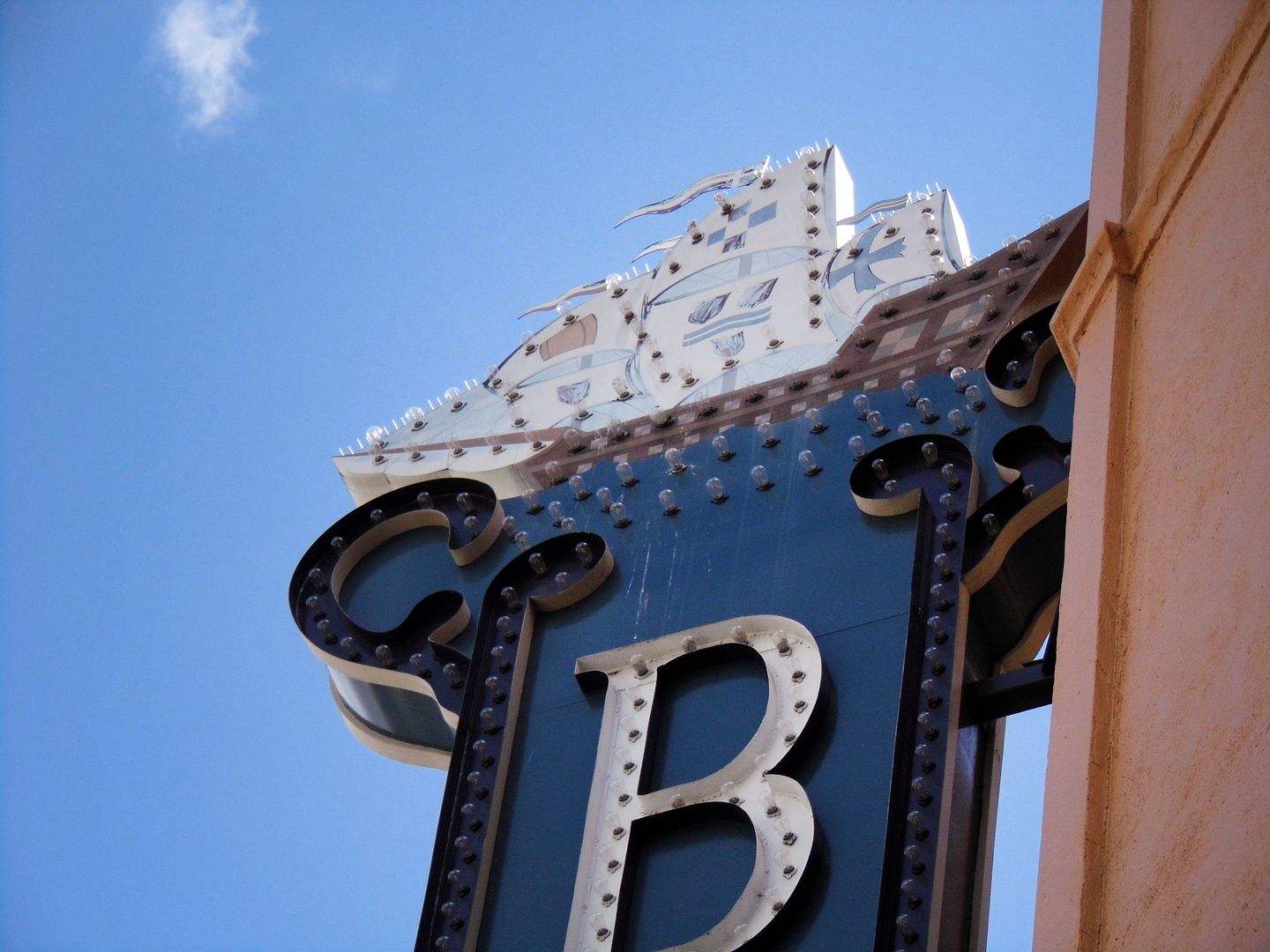
Outside, a historically accurate pumpkin-esque tone covers up the white of its non-historic exterior paint job. A replica hangs were the original marquee went missing sometime in the 1930s, though it's since been converted for digital display. The blade sign was faithfully reproduced according to the specs of the original.


Originally designed in the Spanish Colonial Revival Style by architect (and former "stage man") William H. Wheeler and built by building contractor C. L. Wurster of Wurster Construction Company, the Balboa Theatre building's 4th Avenue side featured six ground-floor retail storefronts, with the floors above housing 34 offices.


Reportedly completed at a cost of $800,000, the theatre opened on March 28, 1924 as both a vaudeville stage (with acts like the brother-sister duo Fanchon and Marco) and a movie house. Its initial owner Robert Ernest ("Bob") Hicks—a former Colorado newspaperman and San Diego Union editor—had been involved in exhibiting movies in San Diego since 1910 or so.


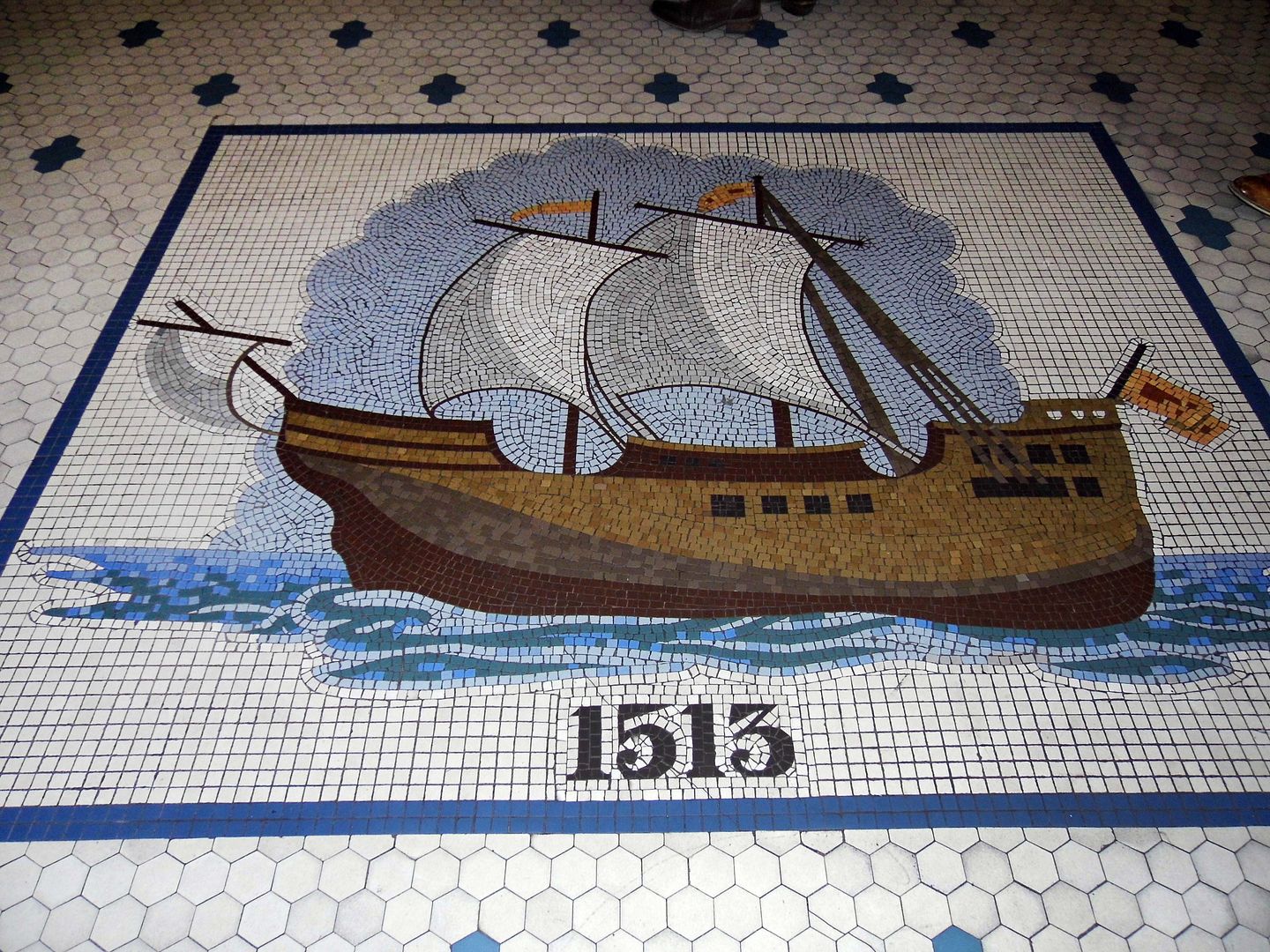
The theatre gets its name from Vasco Núñez de Balboa, first European explorer to reach the Pacific Ocean. His sailing ship is depicted on the exterior blade sign as well as on the historic mosaic tile floor in the entry rotunda.


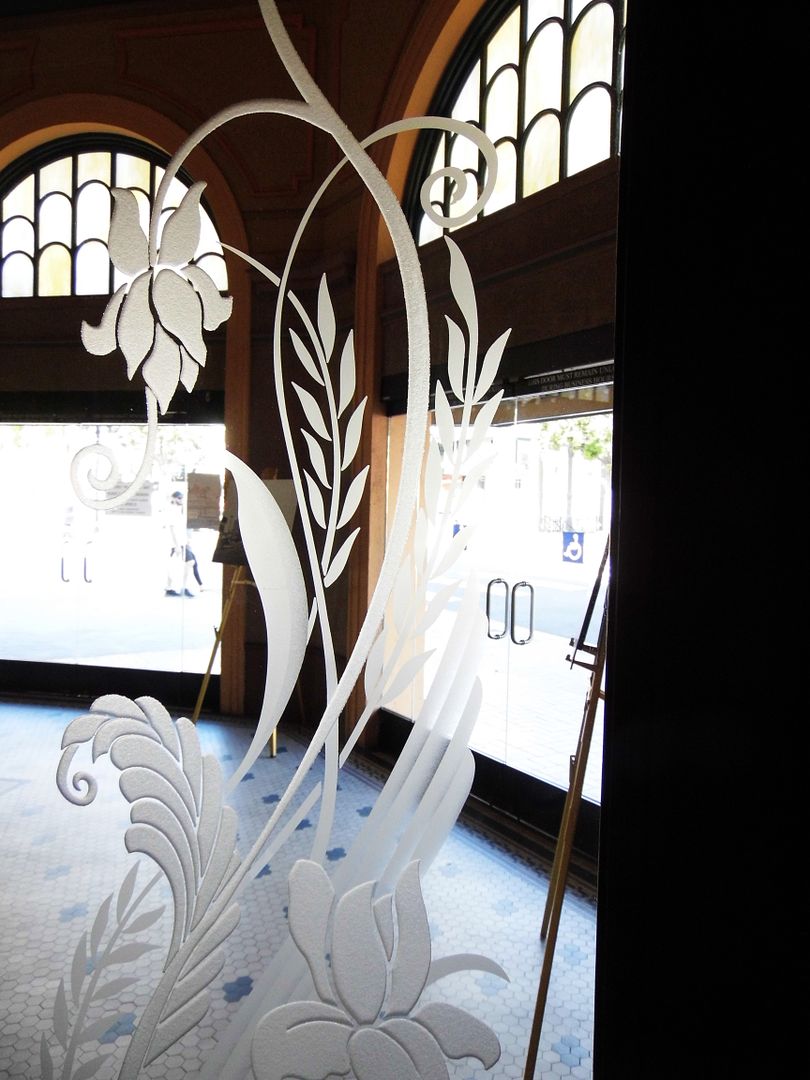
While the theatre sat in limbo waiting for its fate to be determined, its foyer was actually open air—exposing it to all sorts of elements. The restoration enclosed it with new exterior doors and restored the deeply etched glass doors that bring guests into the lobby.


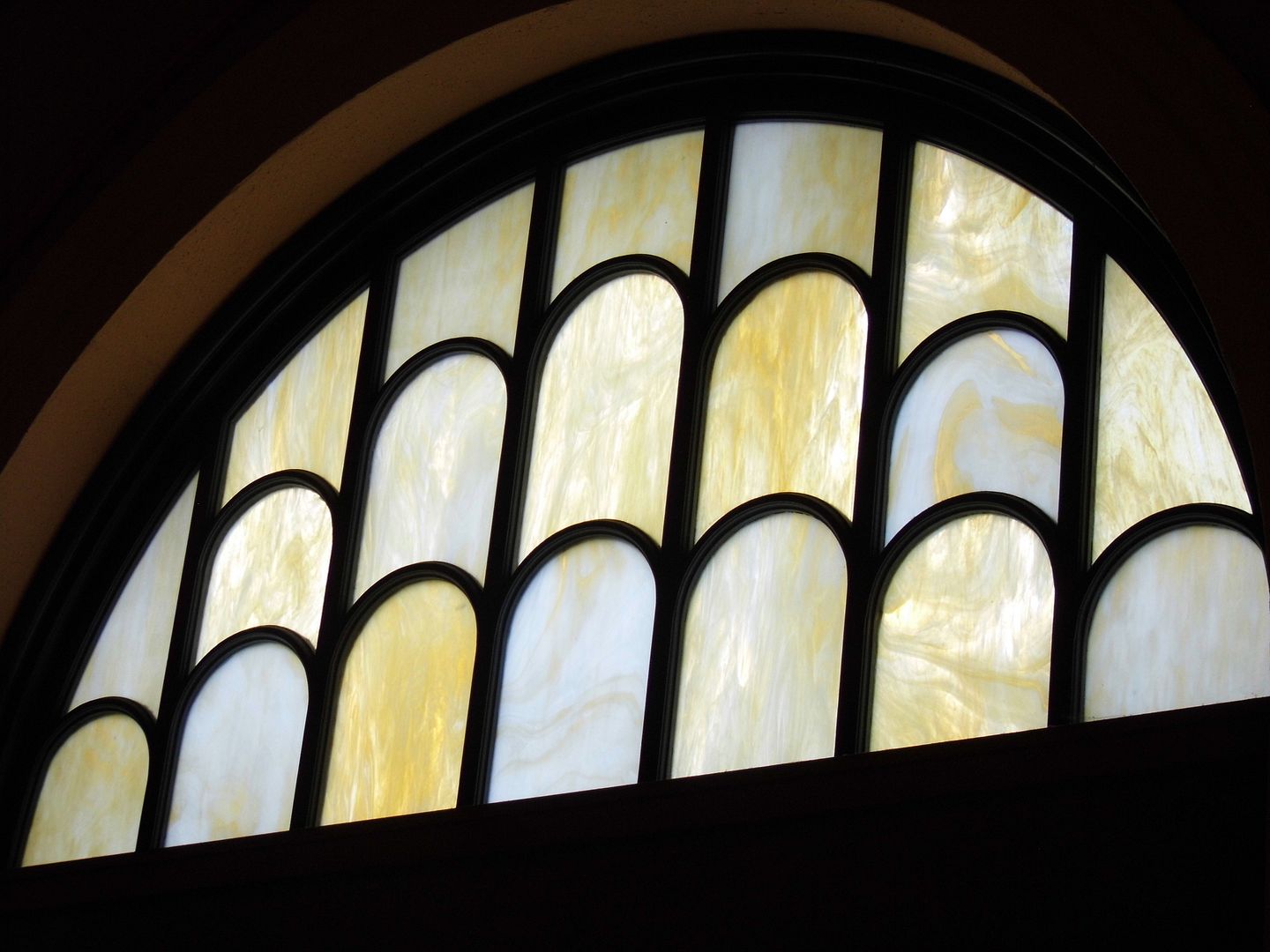
The historic clerestory windows facing the street above the marquee had suffered some damage, too—so they were also replaced by replicas.


In 1930, the theatre's programming of silent films accompanied by orchestra and organ gave way to "talkies" with the new involvement of Fox West Coast Theatres—which later remodeled the Balboa Theatre into the Teatro Balboa cinema, screening Spanish-language films ("todo en español," like El Dios del Mar from 1930) starring primarily Mexican talent (like Ramón Pereda). Just a few years later, the Navy commandeered the upstairs offices to house its bachelor sailors waiting to ship out during WWII.


In 1959, the Balboa almost met the same fate of the hotel that once occupied that same corner—demolition. This time, the plan was to flatten the theatre to make way for a parking lot. But it was saved when San Diego's Russo family bought the building for around $100,000 and ran it as a action movie house (with a hotel upstairs) until 1976, when they leased it out to another operator. It was threatened again in 1983, with a proposed conversion into an art museum/arts center.


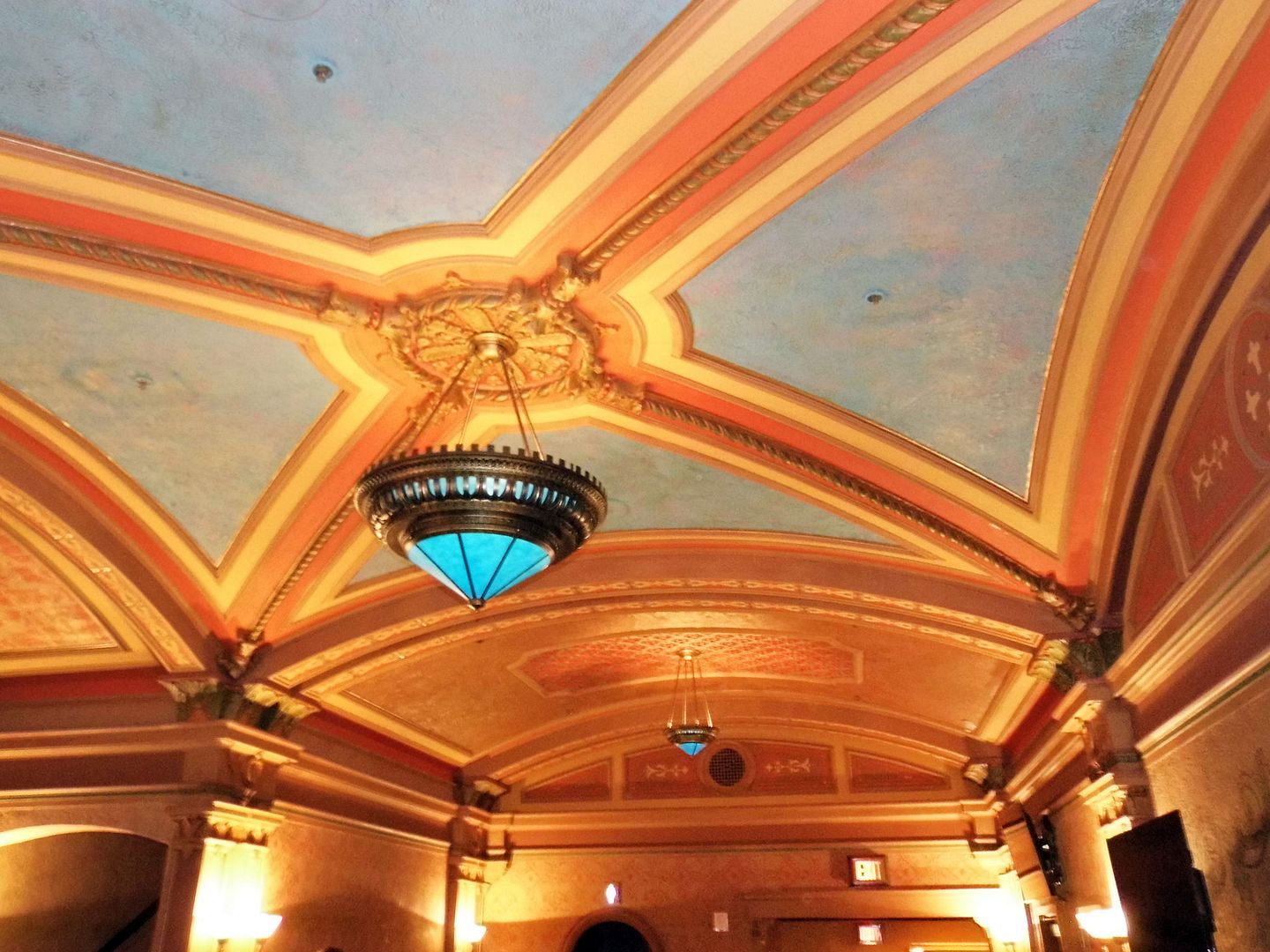
It's kind of amazing that after all that, the Balboa was able to reopen as a theatre—now promarily a performing arts stage. Audiences are now greeted by ornamental plaster in the second floor "Salon" lobby that's been restored by New York's Evergreene Studios, which sculpted new molds and cast new plaster elements to replace what had deteriorated or been lost.


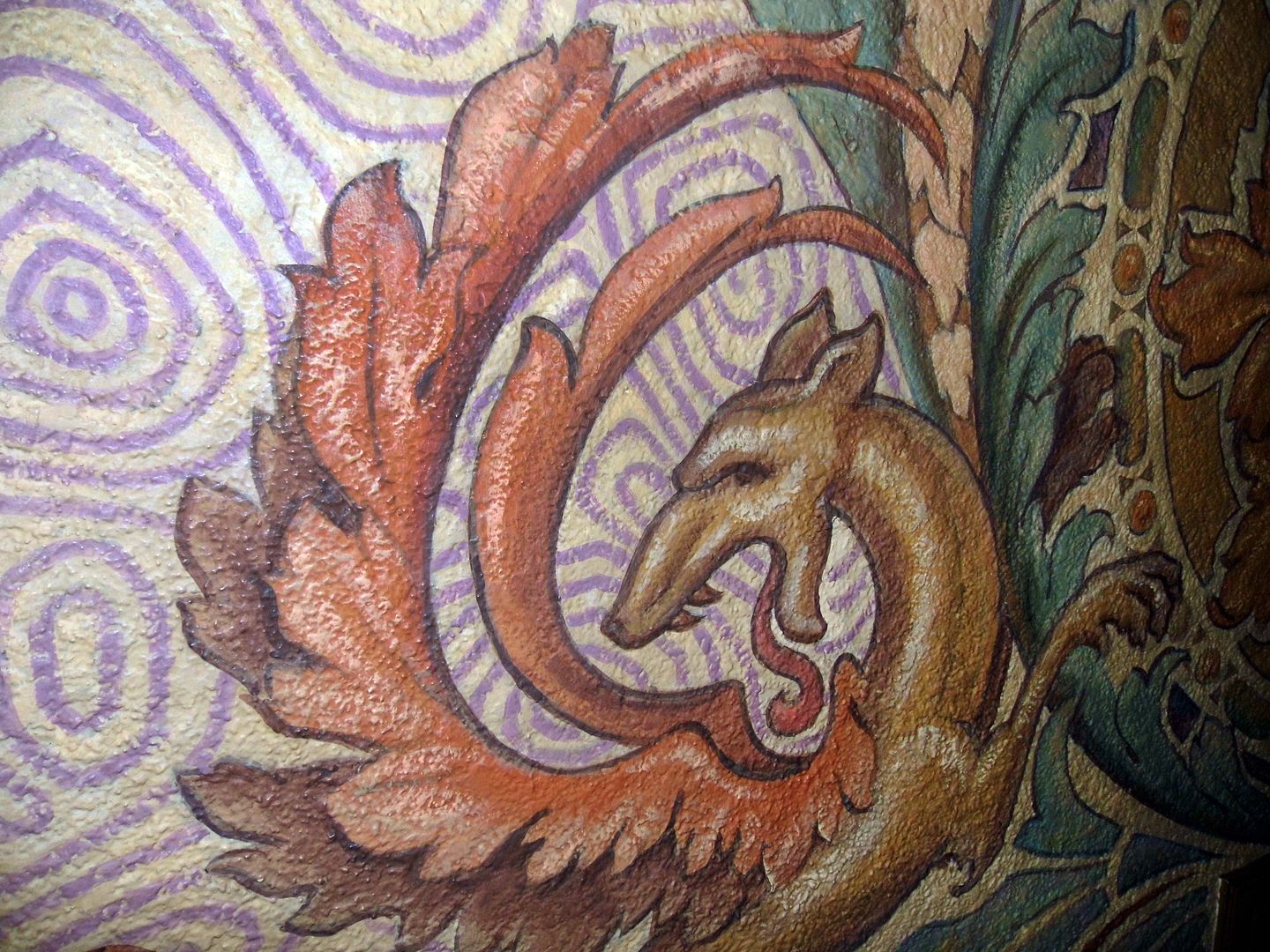
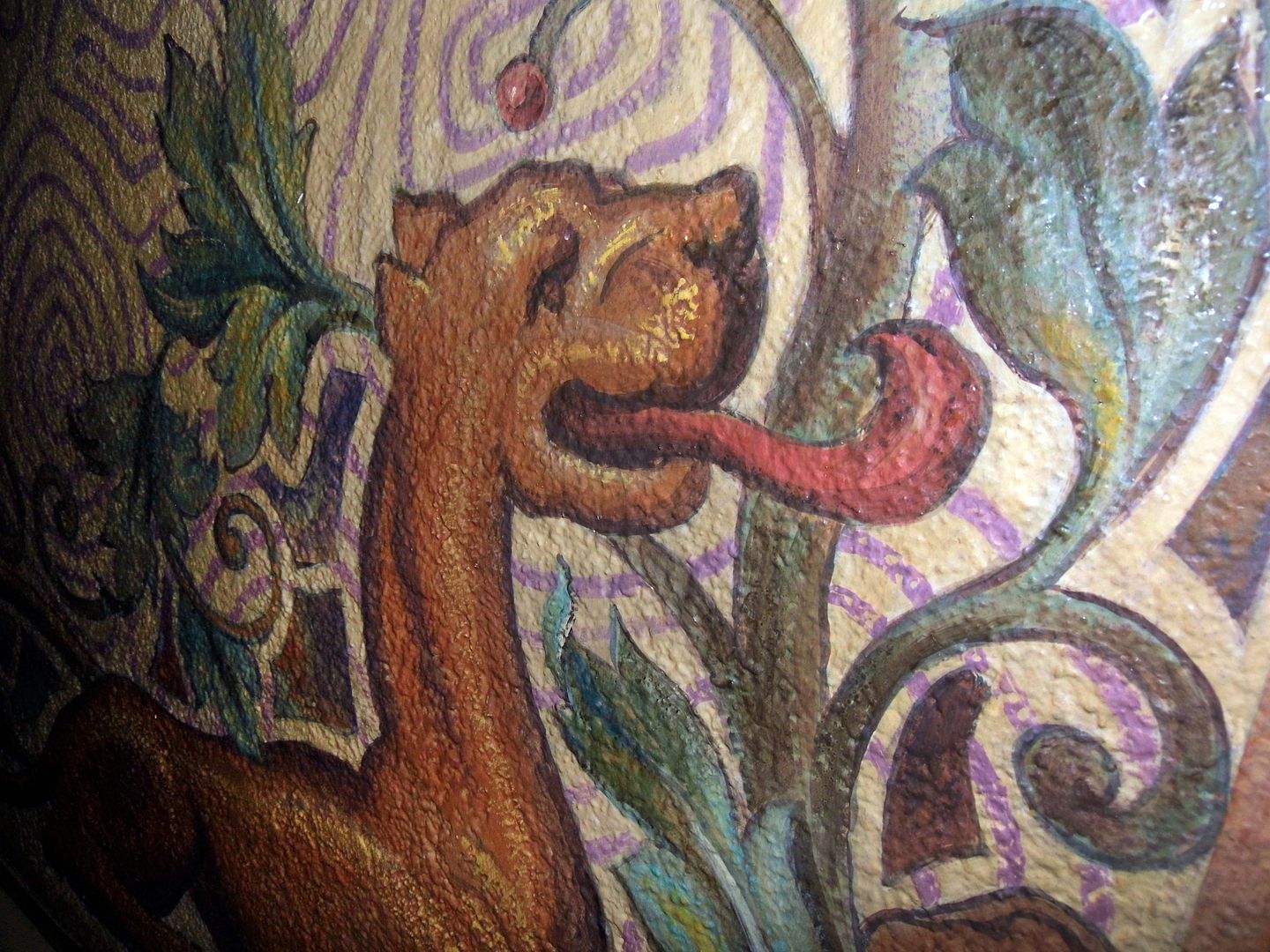
The original murals by Heinsbergen Decorating Company on both sides of the salon had been painted over, so in order to return the walls to their original designs...


...Evergreene recreated stencils from a single 1924 photograph and established the color palette from paint scrapings.


Inside the auditorium, the gilded historic appearance of the original bronze powder paint had lost its luster, having tarnished to a dark brown. In its paint restoration efforts, Evergreene recreated original color schemes using a bronze powder paint that supposedly won't tarnish.


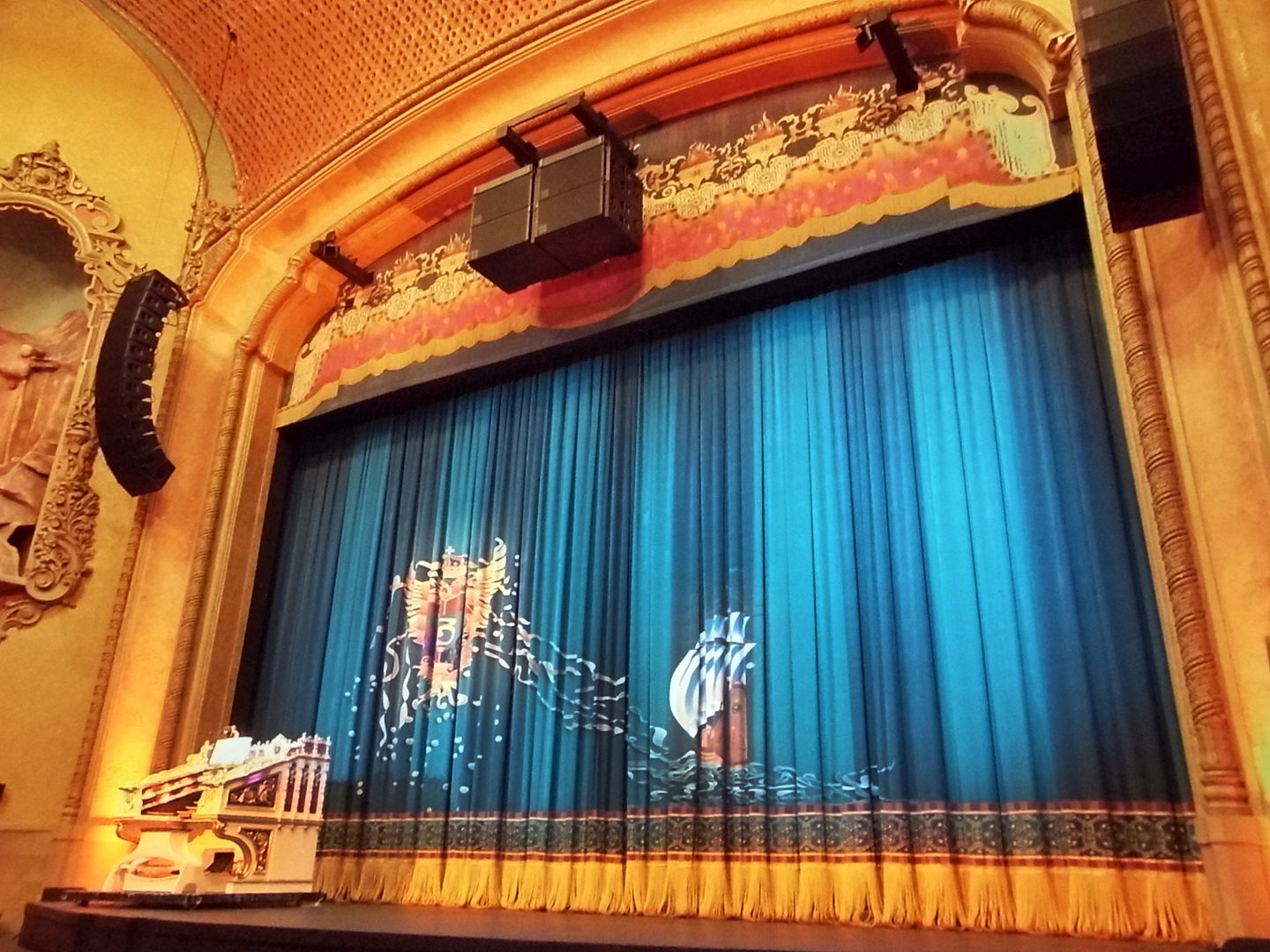
The Balboa's Spanish "ship" theme continues on the stage, where the curtain's design features the Balboa family coat of arms and a 16th-century Spanish caravel. On either side of the proscenium, real water trickles down ornamental mountains set inside 28-foot-tall grottos—at first a functional feature, as the water helped cool the audience, but now just decorative.


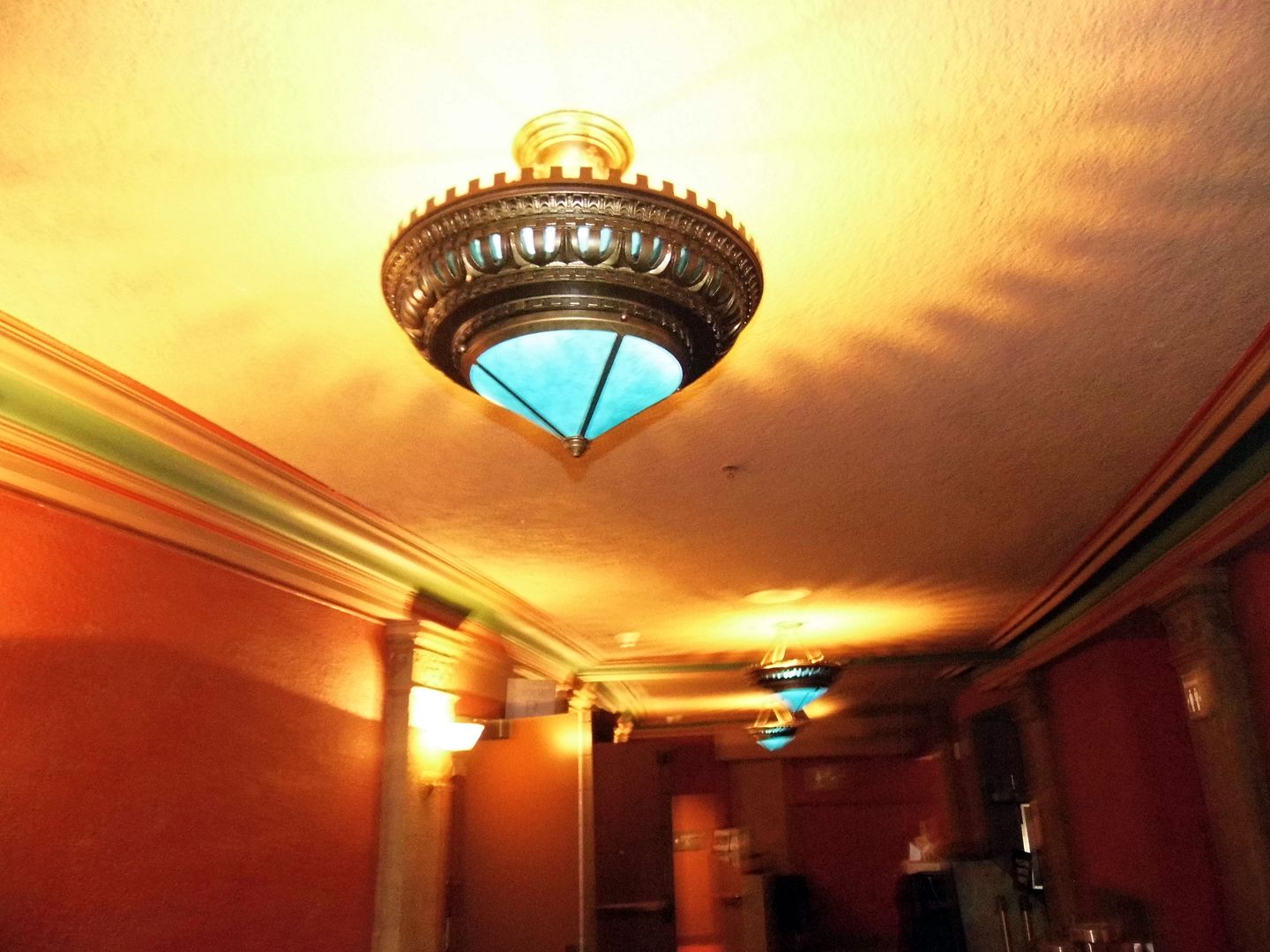
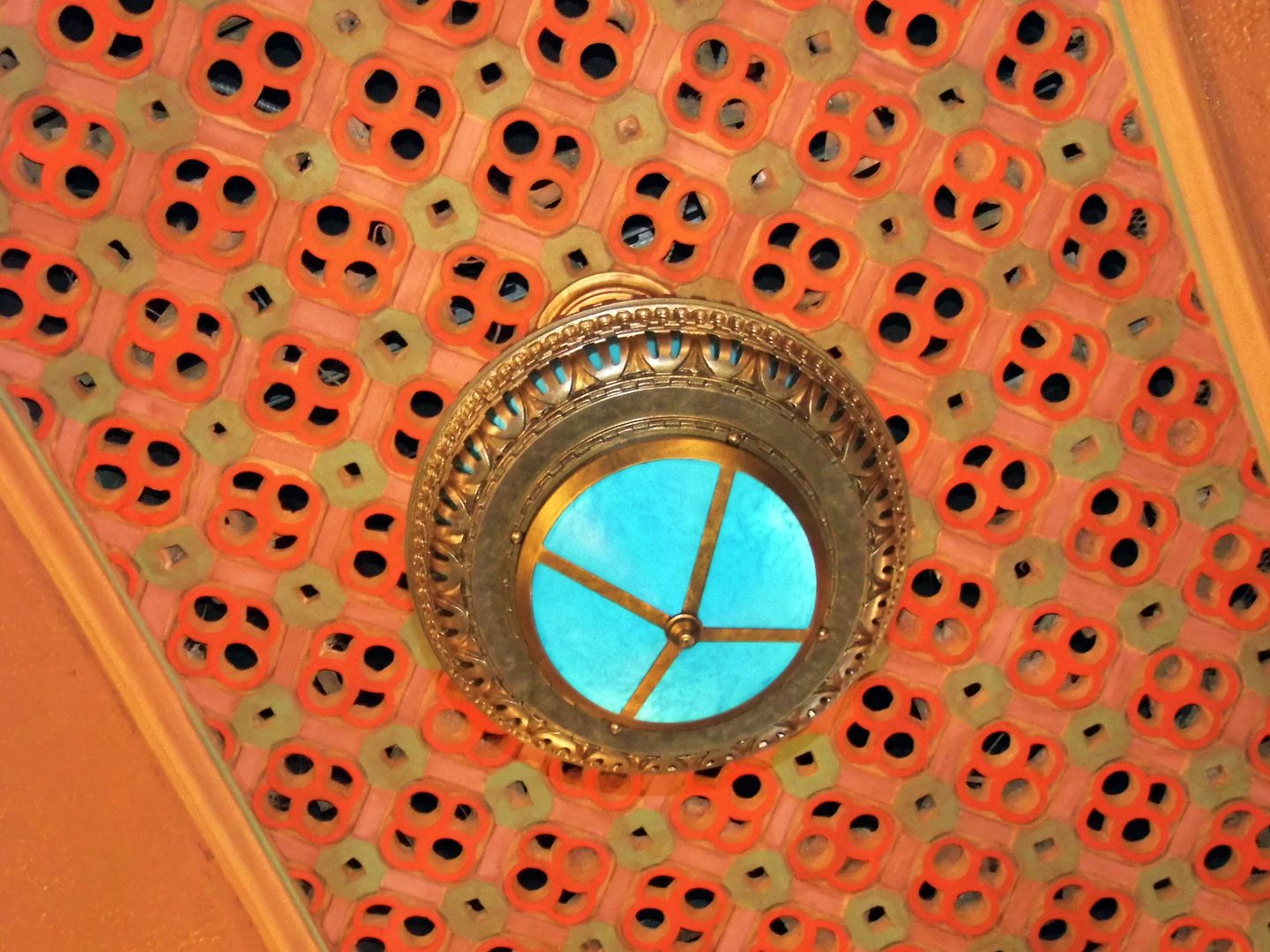
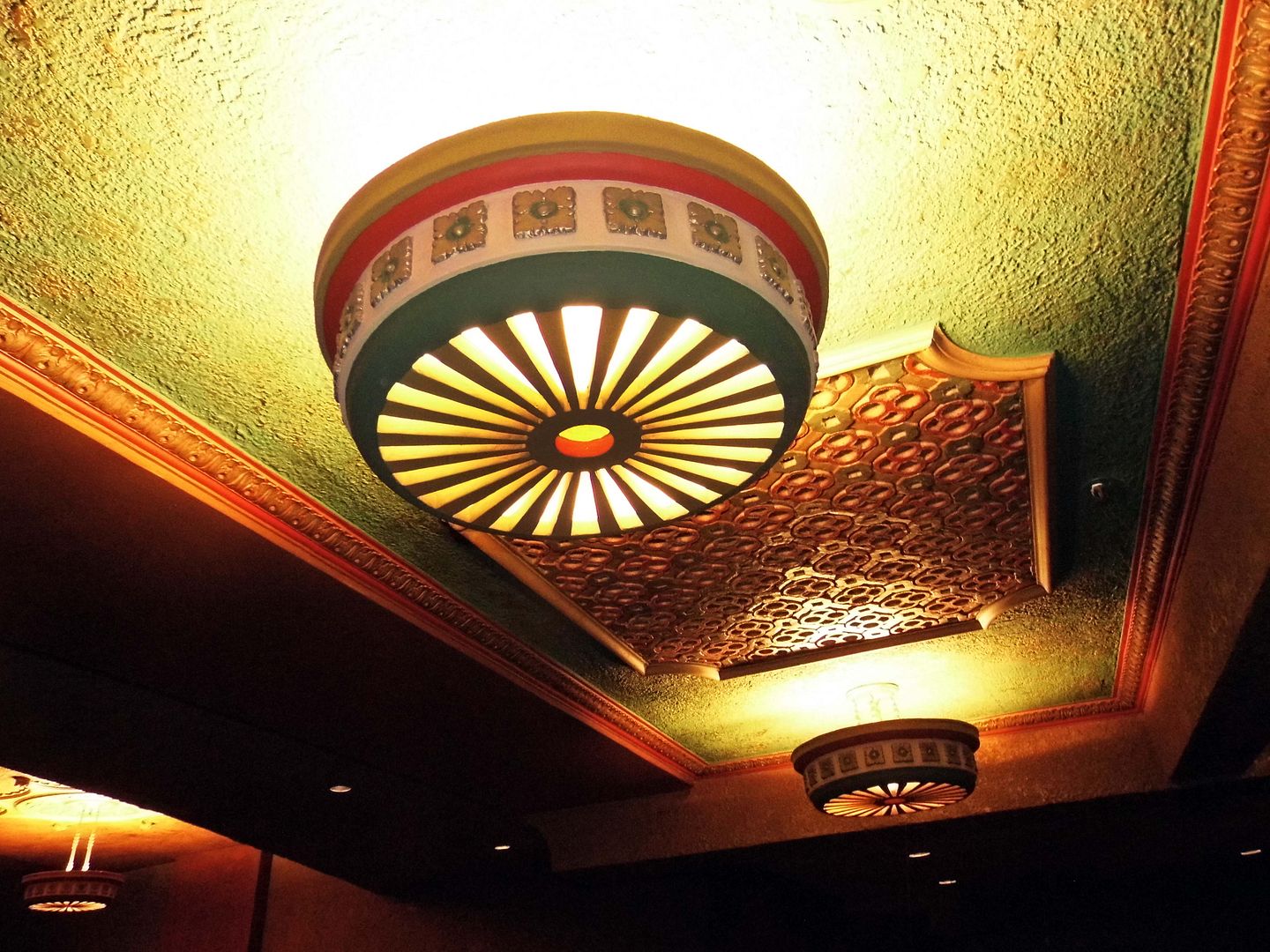
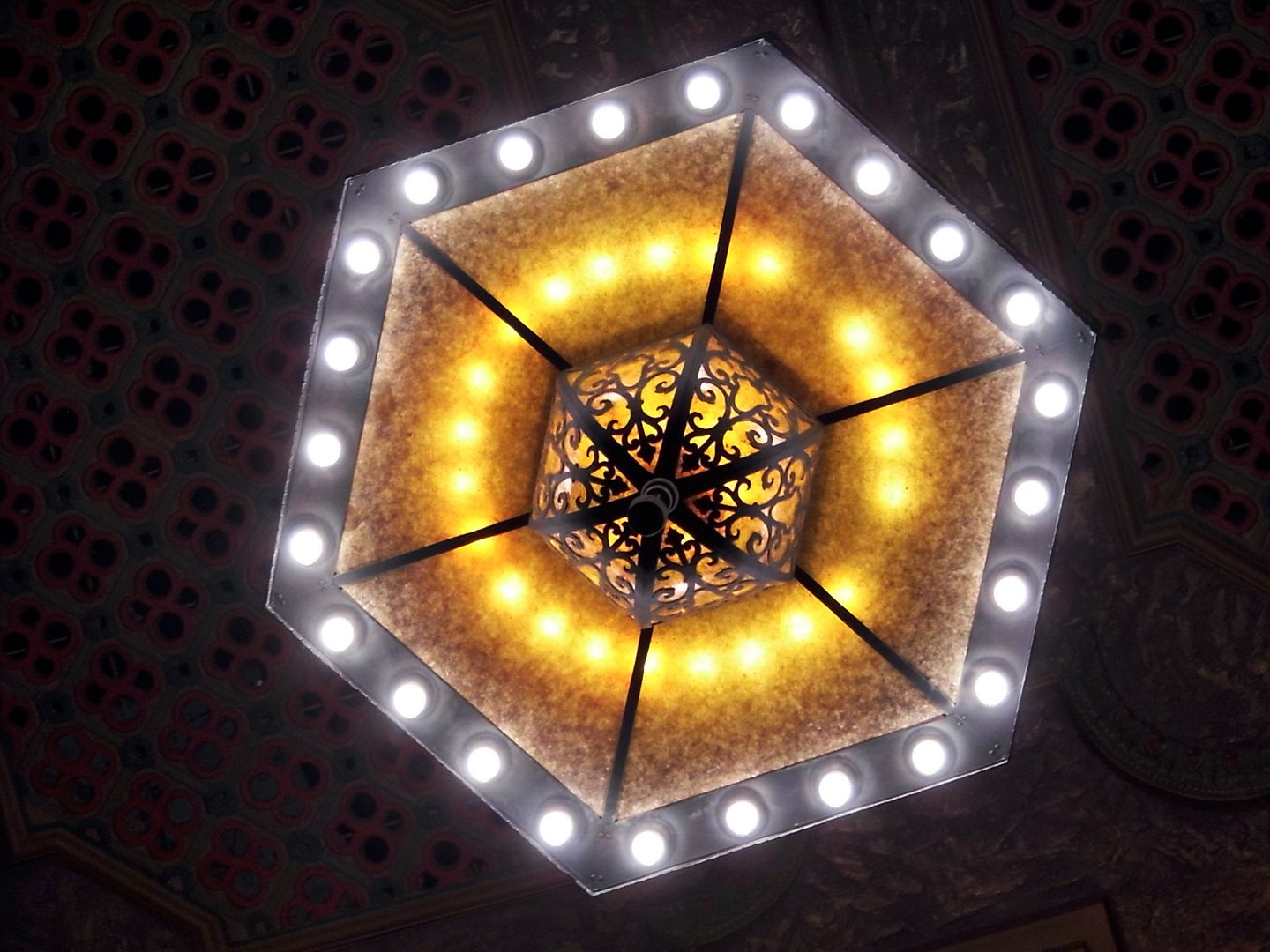
Hanging from the ceiling above are historic light fixtures that were restored and rewired by Gibson and Gibson Antique Lighting of Chula Vista. Unfortunately, "usherettes" dressed as Spanish cavaliers in boleros and sashes are no longer in the theatre's employ and strolling the aisles!


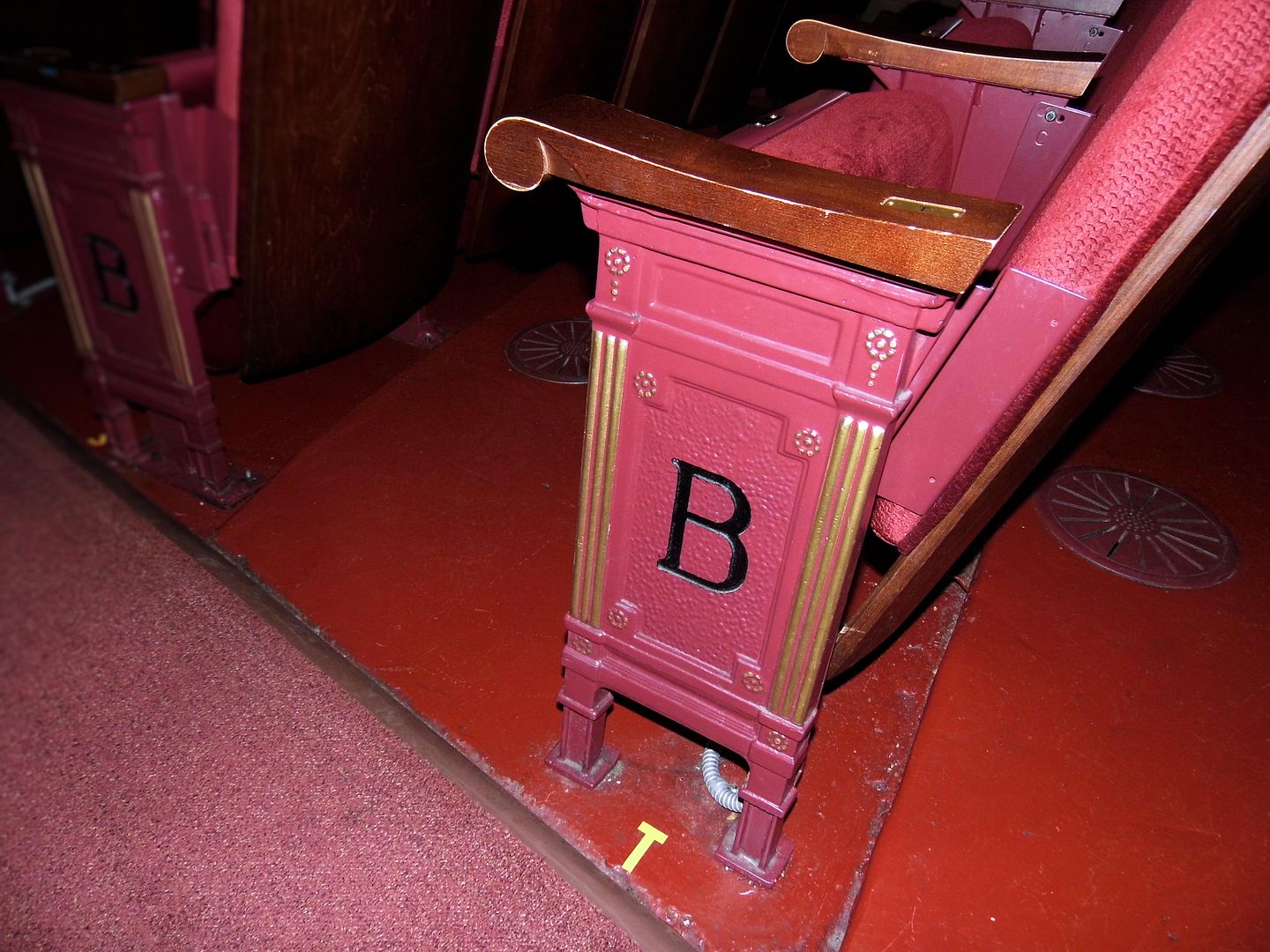
Between the orchestra section and the single balcony, the Balboa has downsized its seating capacity from 1,513 (a hat tip to the date of the Pacific Ocean "discovery") to 1,339.


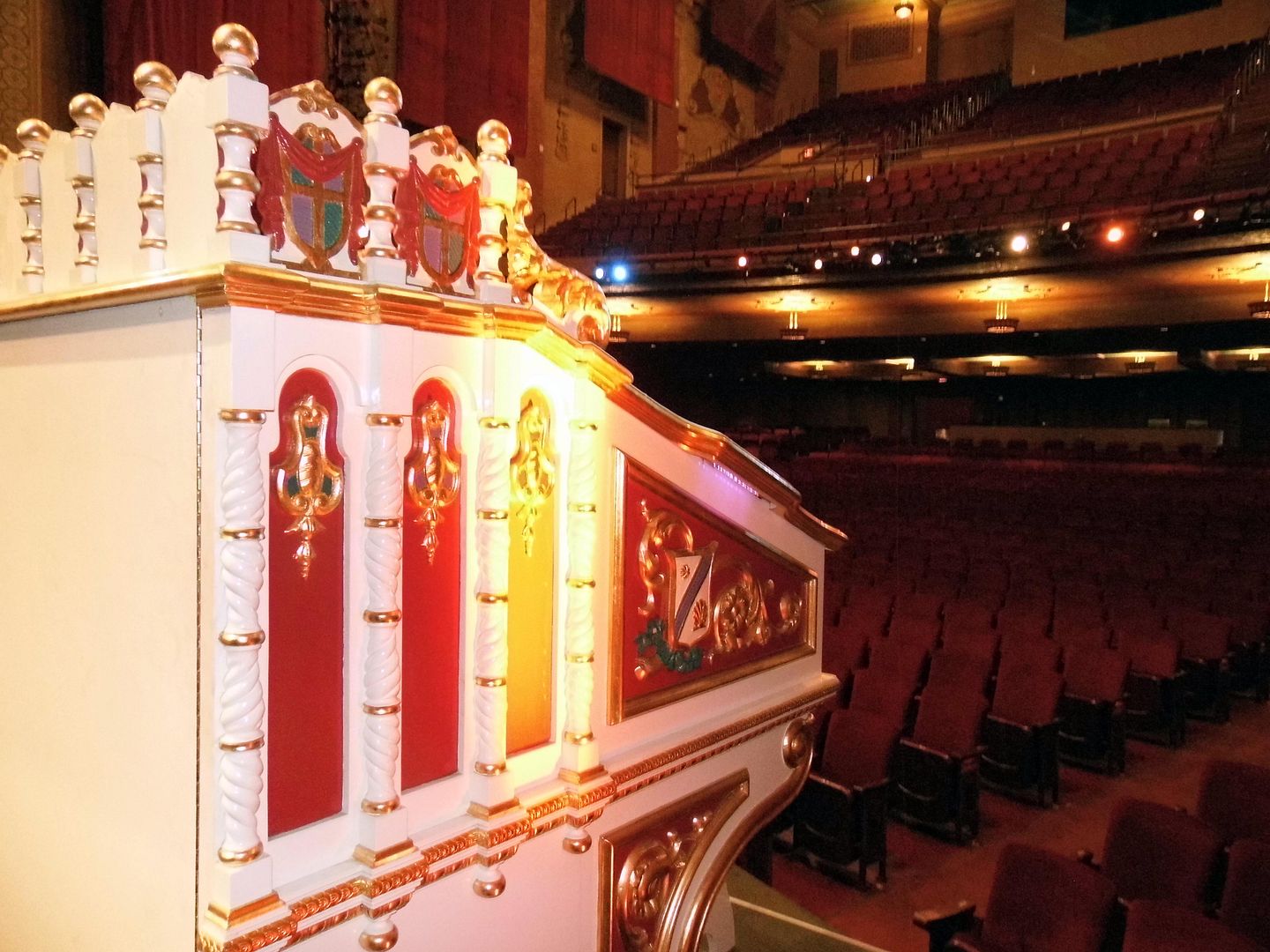
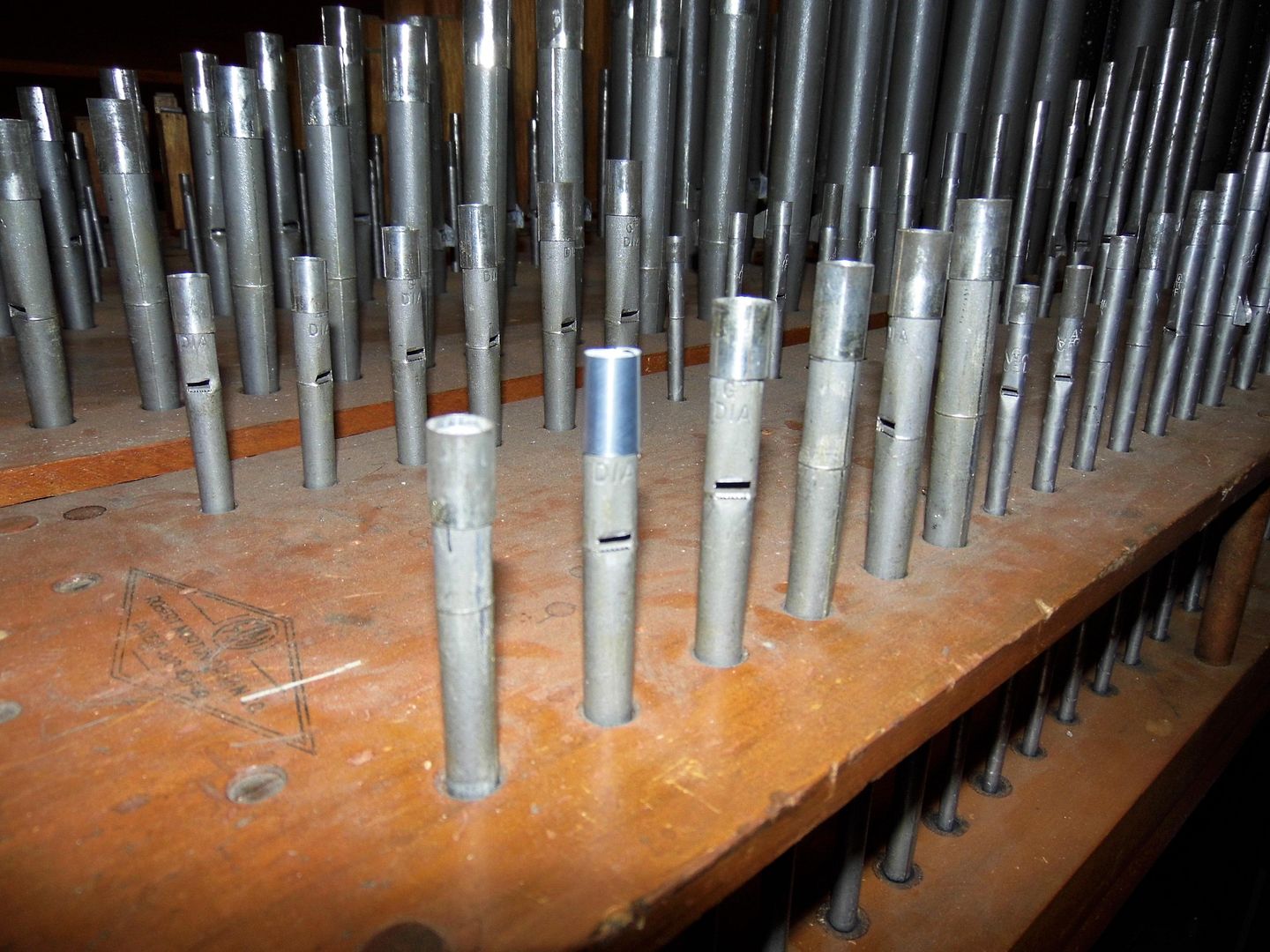
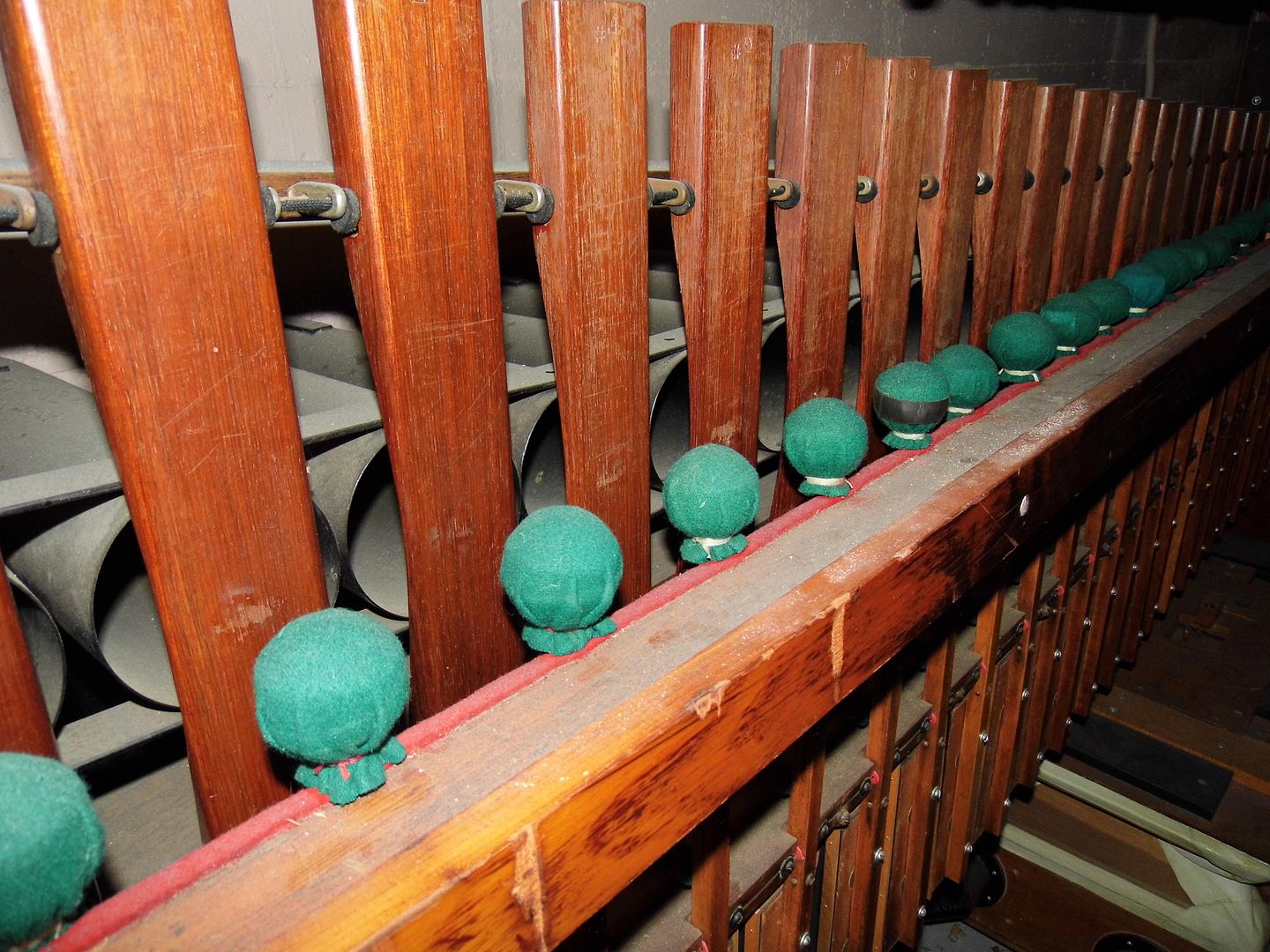
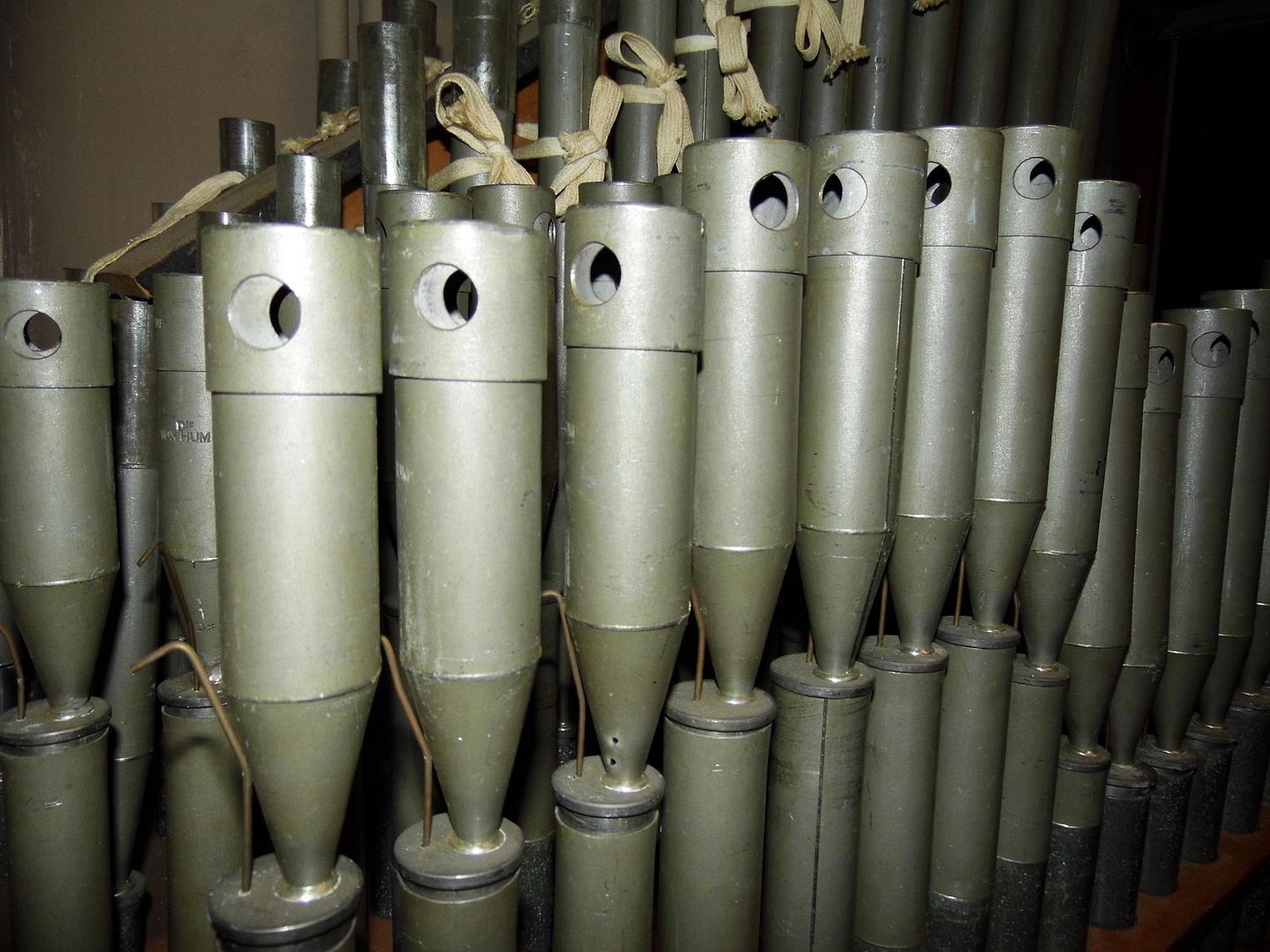
The original 426-pipe theatre organ (built by Robert Morgan in Van Nuys in 1922) was moved to the Fox Theatre (now Copley Symphony Hall) in 1929. Maker Robert Morton was second only to Wurlitzer in terms of volume of theatre organs—and the original's replacement is one of only four remaining "Wonder" models by the Morton Organ Company, now residing at the Balboa. Perhaps the first Wonder Morton to have been built, this Wonder Morton Organ's console contains more ornate carvings than the others in existence.


The 4-manual, 23-rank organ was originally placed in the Loew’s Valencia Theatre on Jamaica Avenue in Queens (now The Tabernacle of Prayer for All People). At some point (probably after the church conversion in 1977), it moved to Pennsylvania.


It then made its way all the way out to San Diego for a five-year rebuild by W.A. Shoberg and Company of Ramona. In September 2009, the rebuilt Wonder Organ debuted at the Balboa Theatre.


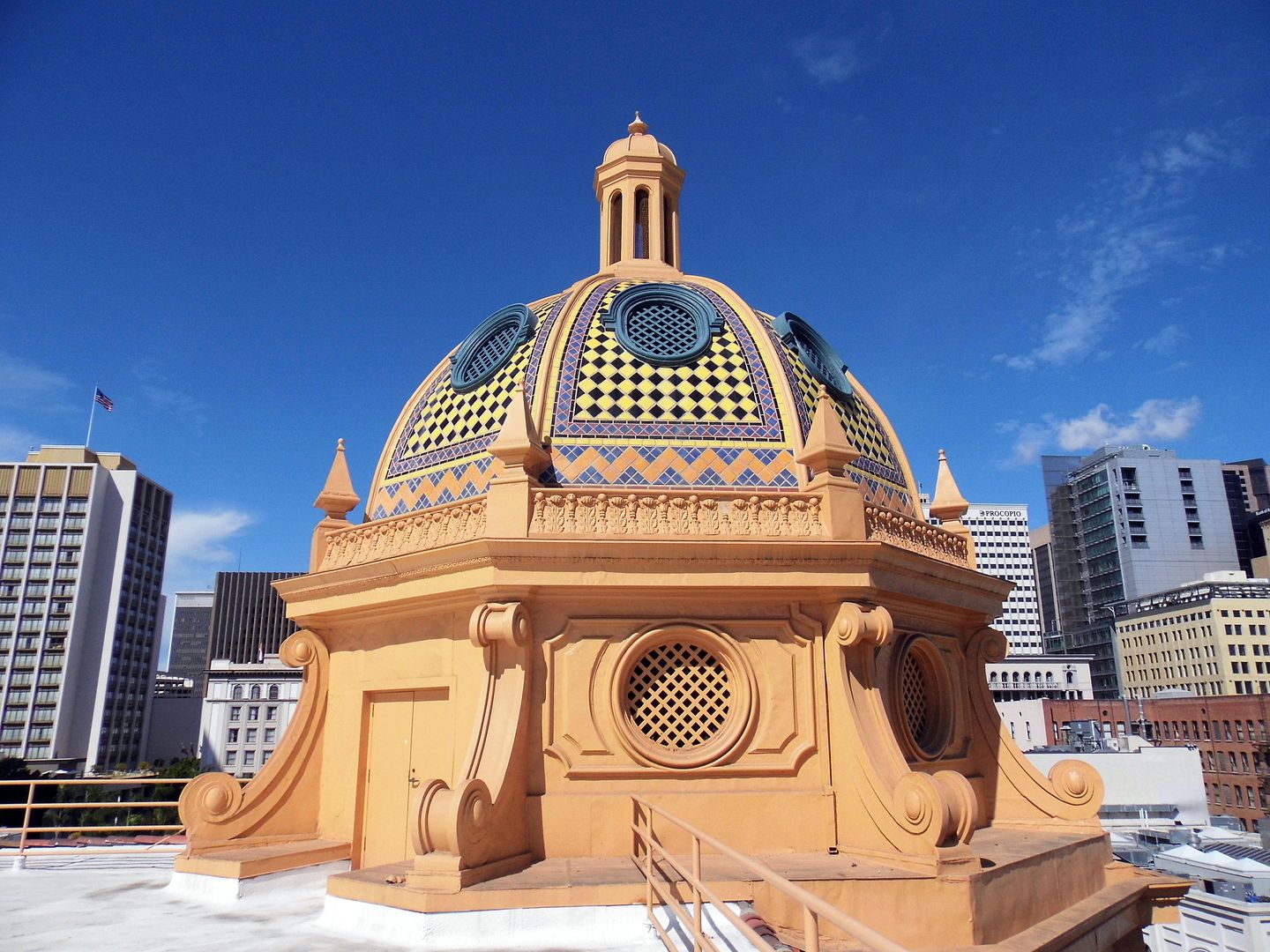
You've got to walk through the pipes a few levels up to get to the ladder that climbs up to the roof, timing it just right so they're not blasting sound while you're up there...


...which I was lucky enough to do thanks to being in the right place at the right time in March (and knowing the right people).


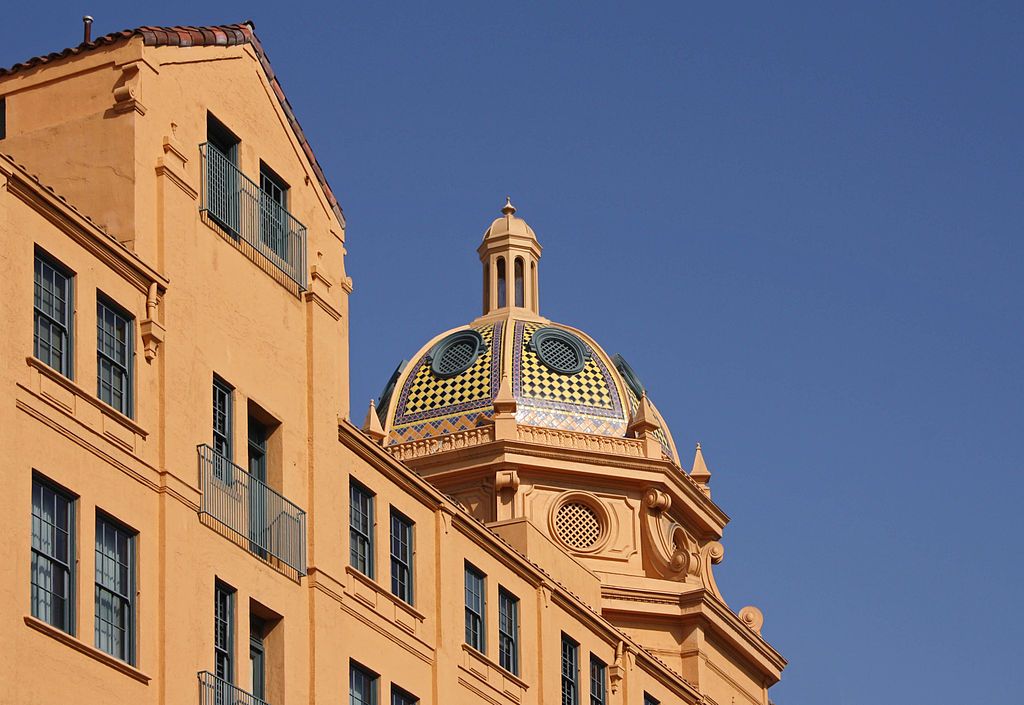
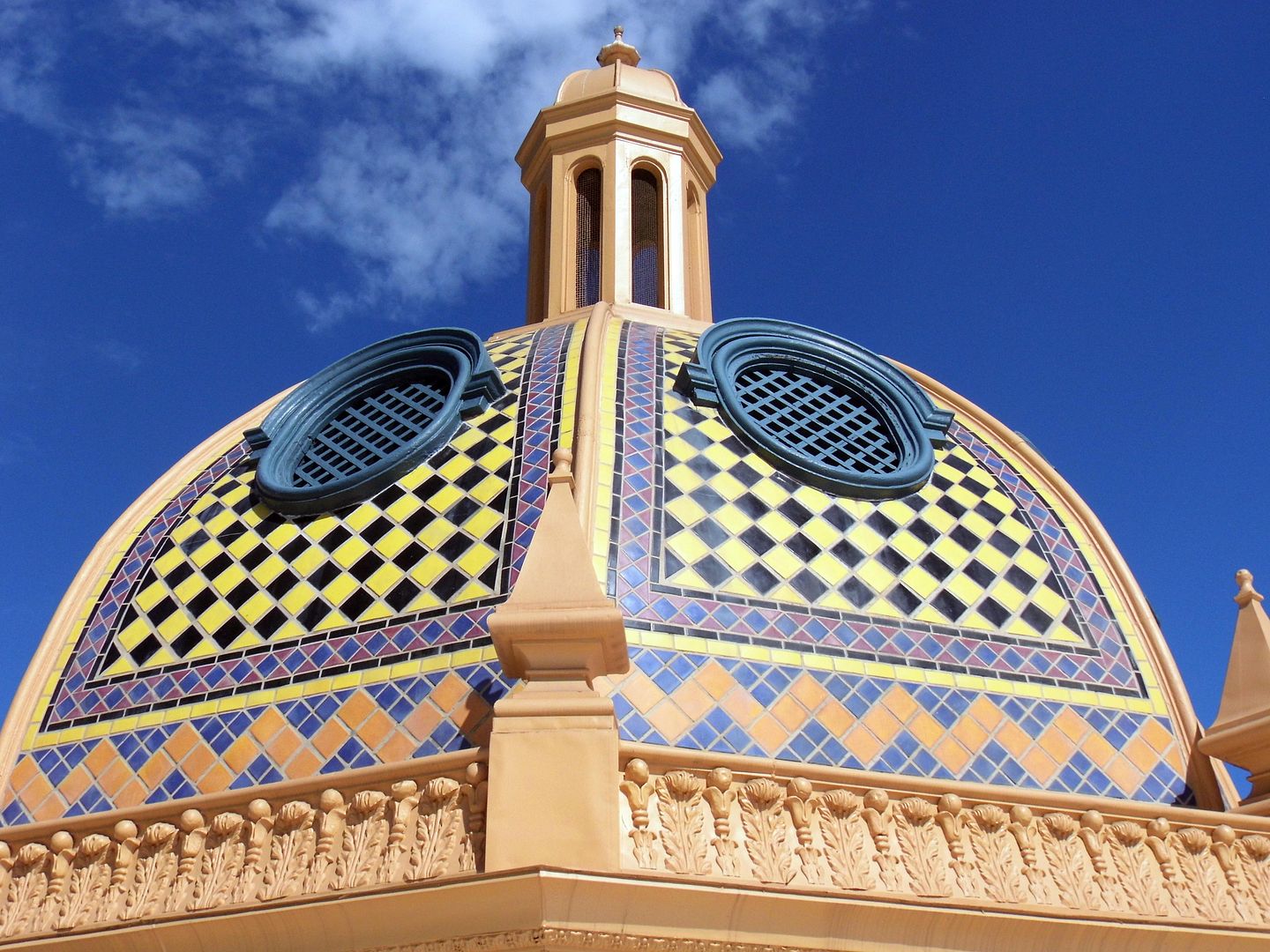
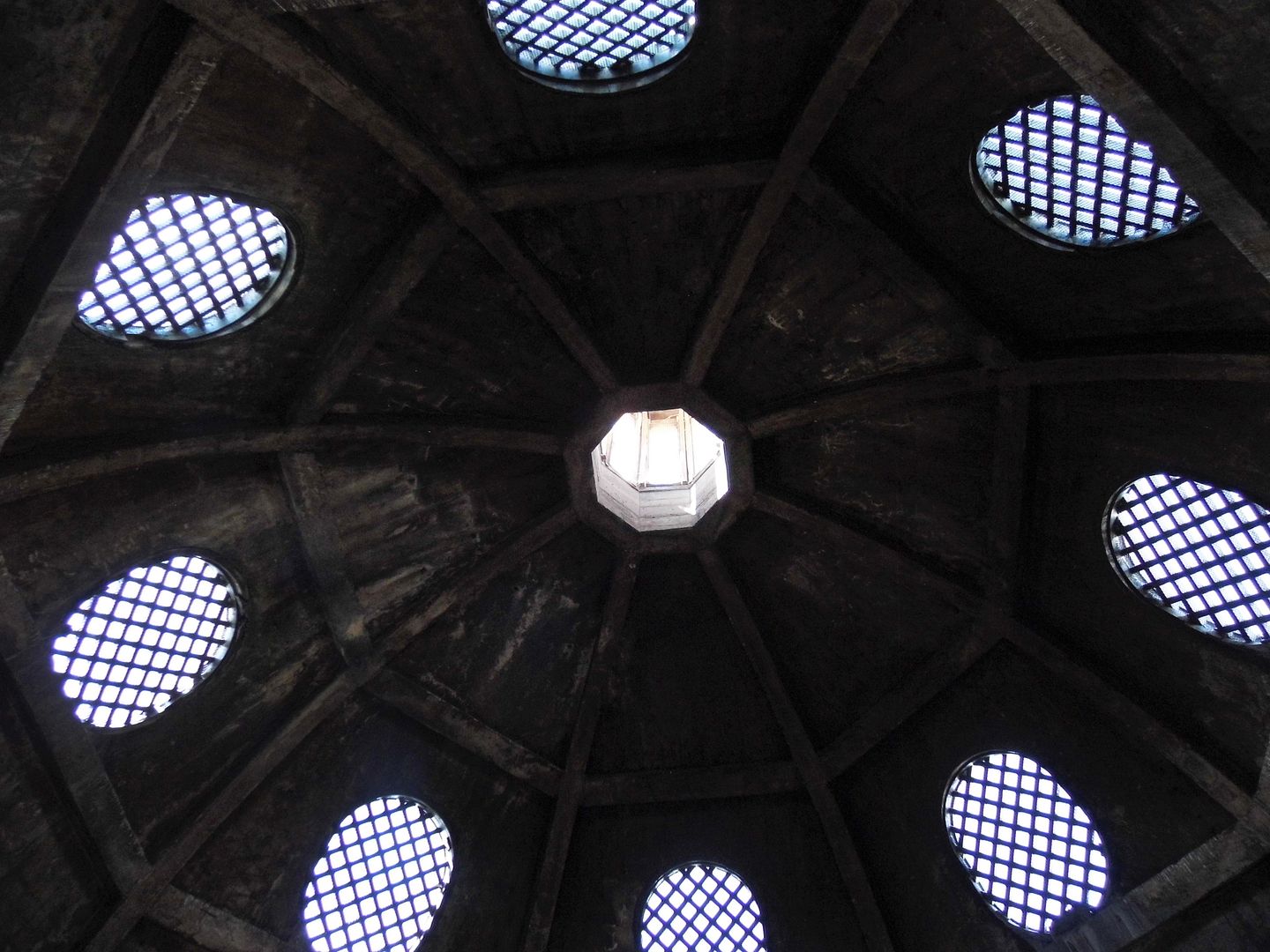
Inside that tile-domed, octagonal tower—whose motif is similar to the dome of the California Tower in Balboa Park—there's a new exhaust fan that just replaced a rebuilt one circa 2004 about three weeks ago.


During "normal times," the Balboa Theatre is home to a number of local cultural institutions—including La Jolla Music Society, California Ballet Company and San Diego Ballet, San Diego Gay Men's Chorus, San Diego Opera, and the annual Mainly Mozart festival.

All that's on pause right now.

Designated a national landmark in 1996, the Balboa Theatre celebrated its 95th birthday a little over a year ago. It's survived every effort to tear it down and reuse it for some other purpose so far. It was steadfast during the 1973 Horton Plaza Redevelopment Project; and it's remaining strong through this year's $330-million redevelopment of Horton Plaza from a shopping mall into a tech office campus.

It wasn't easy to save the Balboa Theatre. It was never, in fact, easy. To read just a slice of the saga as reported in the San Diego Reader in 1987, click here.

But hopefully people now understand why it's important—and how it contributes to Downtown San Diego, even as the area that surrounds it changes with the times.

Related Posts:
San Diego's Abandoned 'Cathedral of the Motion Picture'... On Its 'Boulevard of Broken Dreams'

May 10, 2020

Resurrected, But Not Immortal

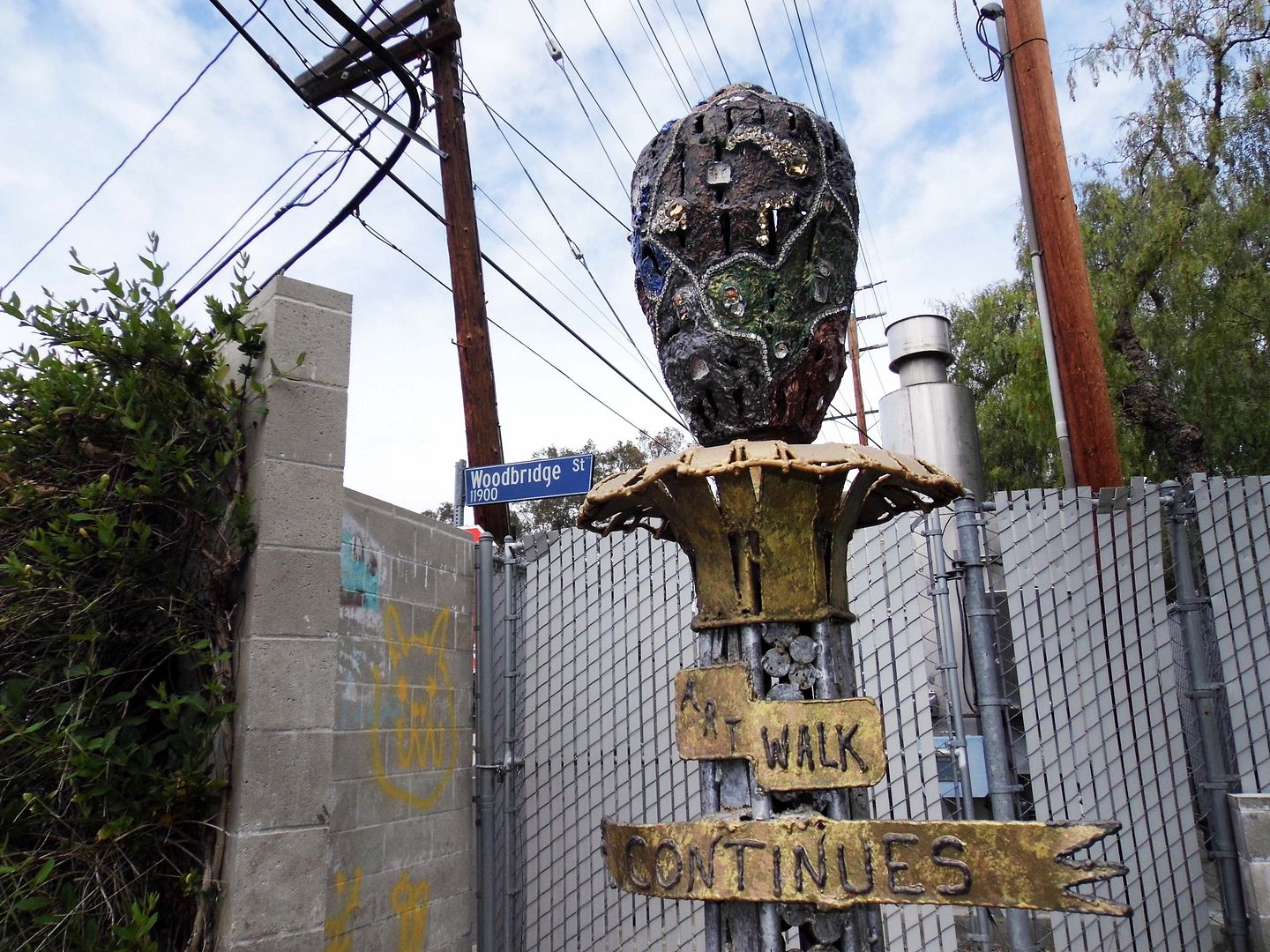
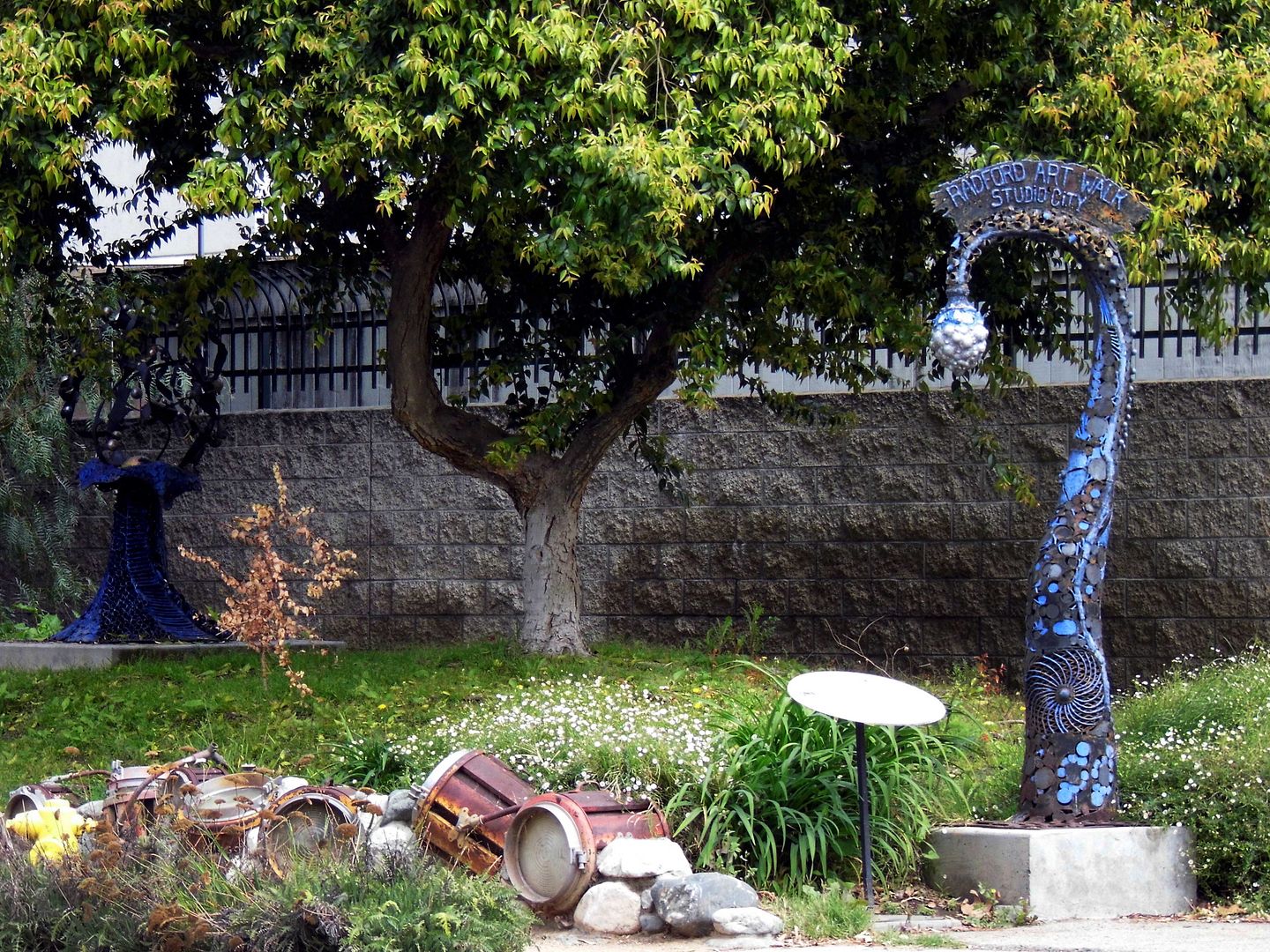
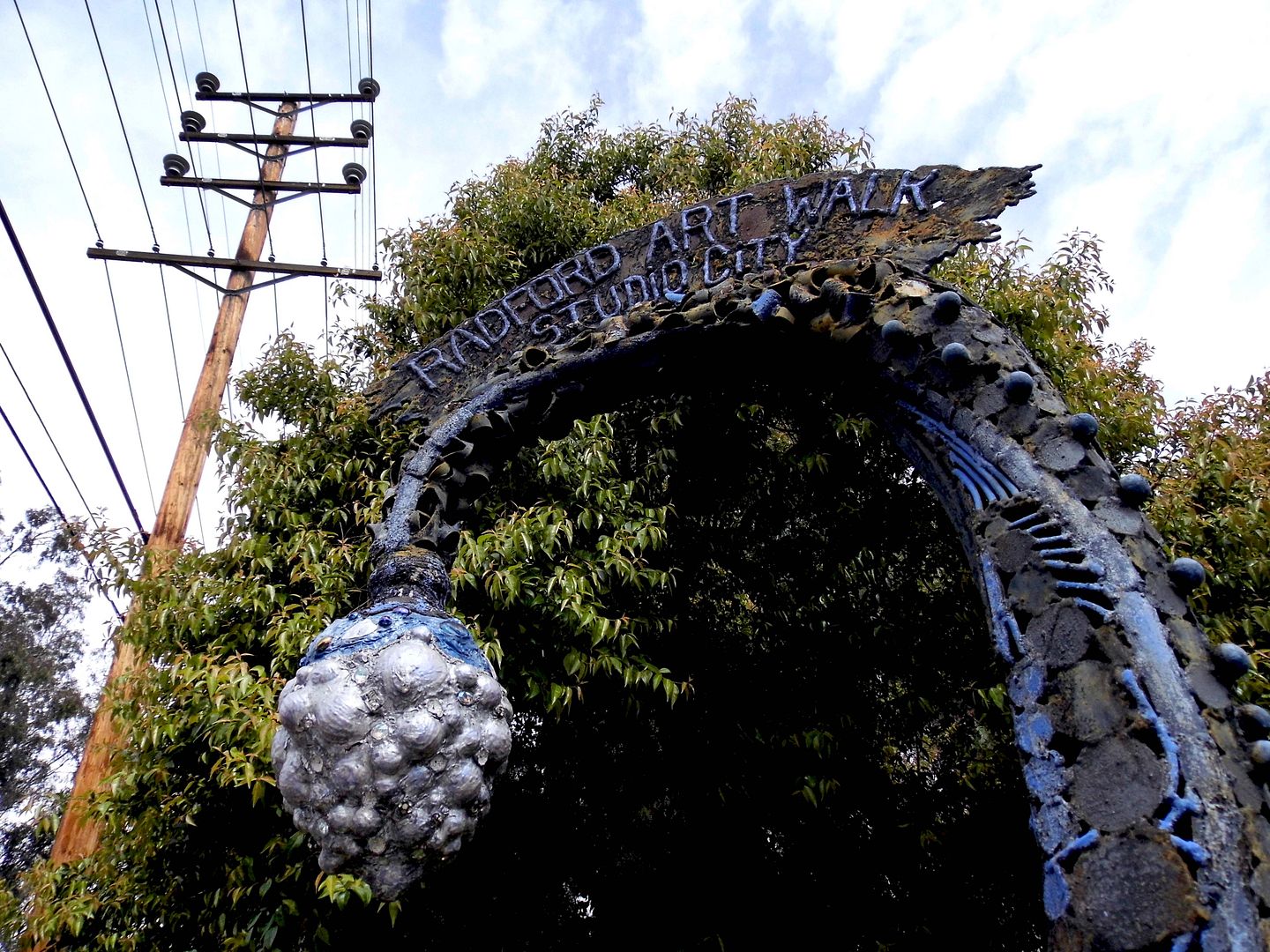
Lined up along the east side of Radford Avenue—just outside the CBS Studio Center gate—there's a series of sculptures by Studio City’s own assemblage artist Karl Johnson (1945-2015).


Installed in 2012 as part of a collaboration with the Studio City Beautification Association, they’re part of the Radford Art Walk. Although it extends for just 0.25 miles, each of the 15 sculptures is so intriguing that they command plenty of time to explore them.


I discovered it completely by accident, while poking around the LA River...


...first spotting the "Welcoming Lamp," which lit my way to the rest of it.


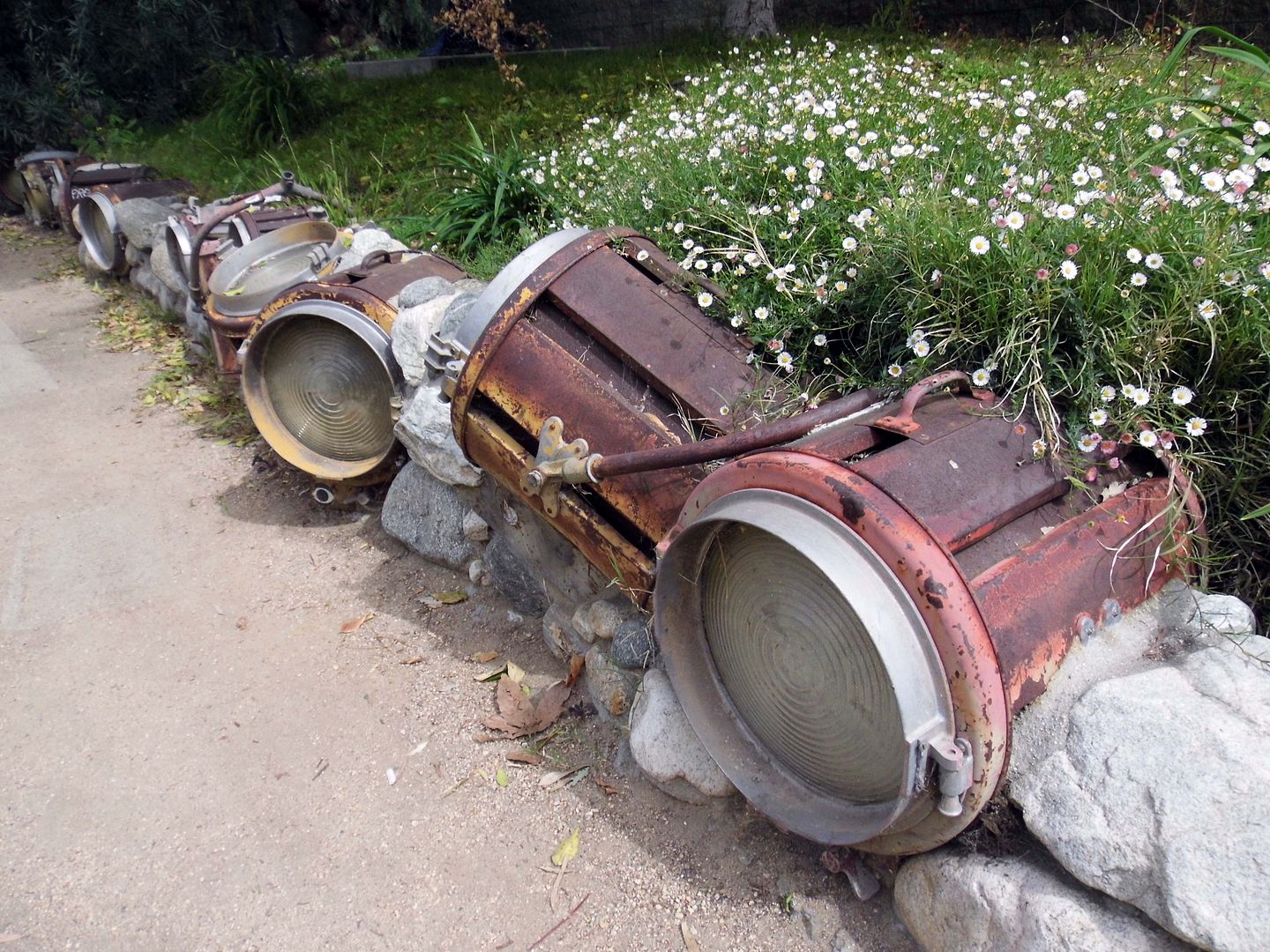
I then stumbled upon the retaining wall made of local rocks and, thrillingly...


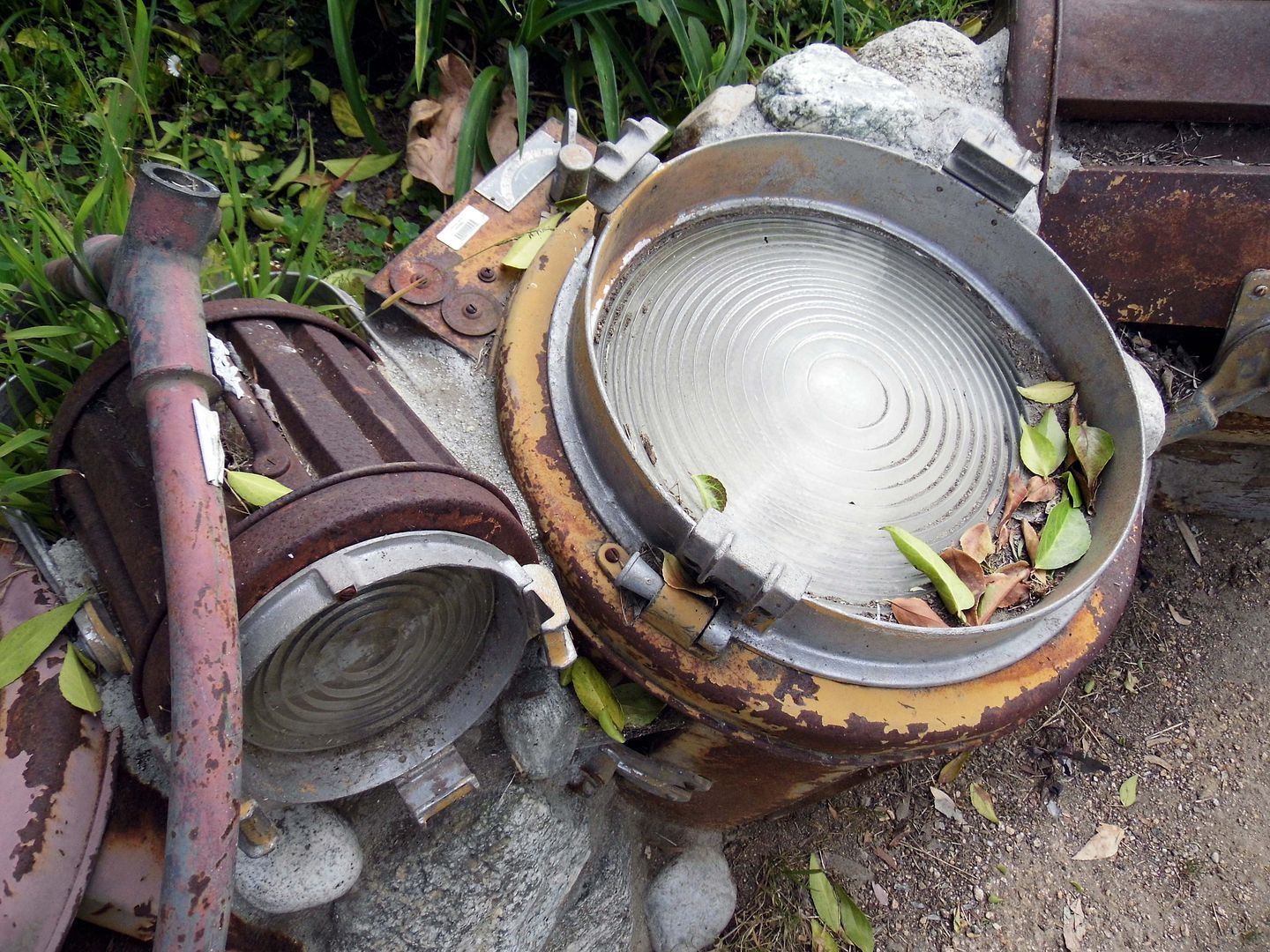
...a surplus of old Mole-Richardson Co. studio lights from the CBS Studio Center's soundstages.


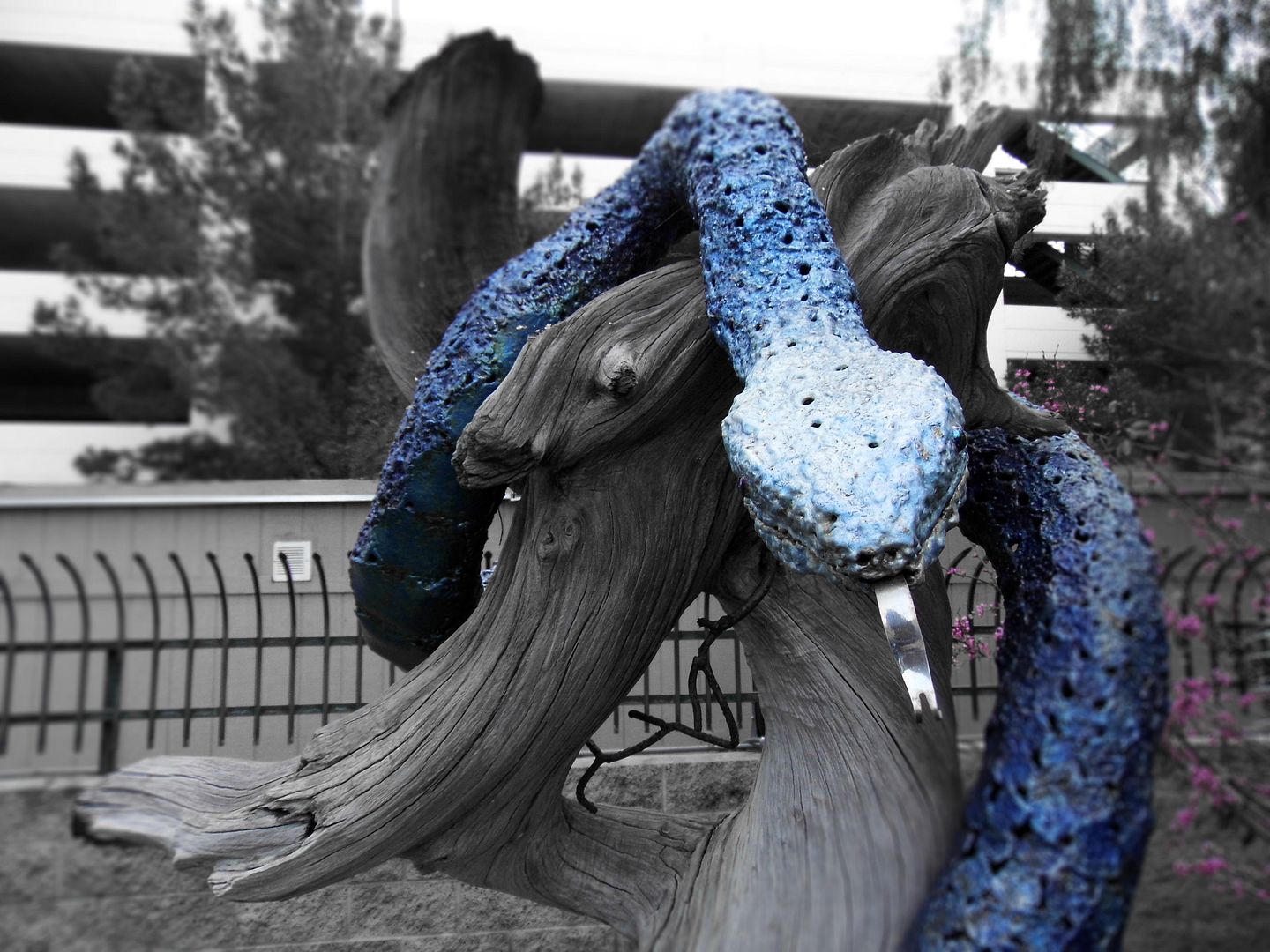
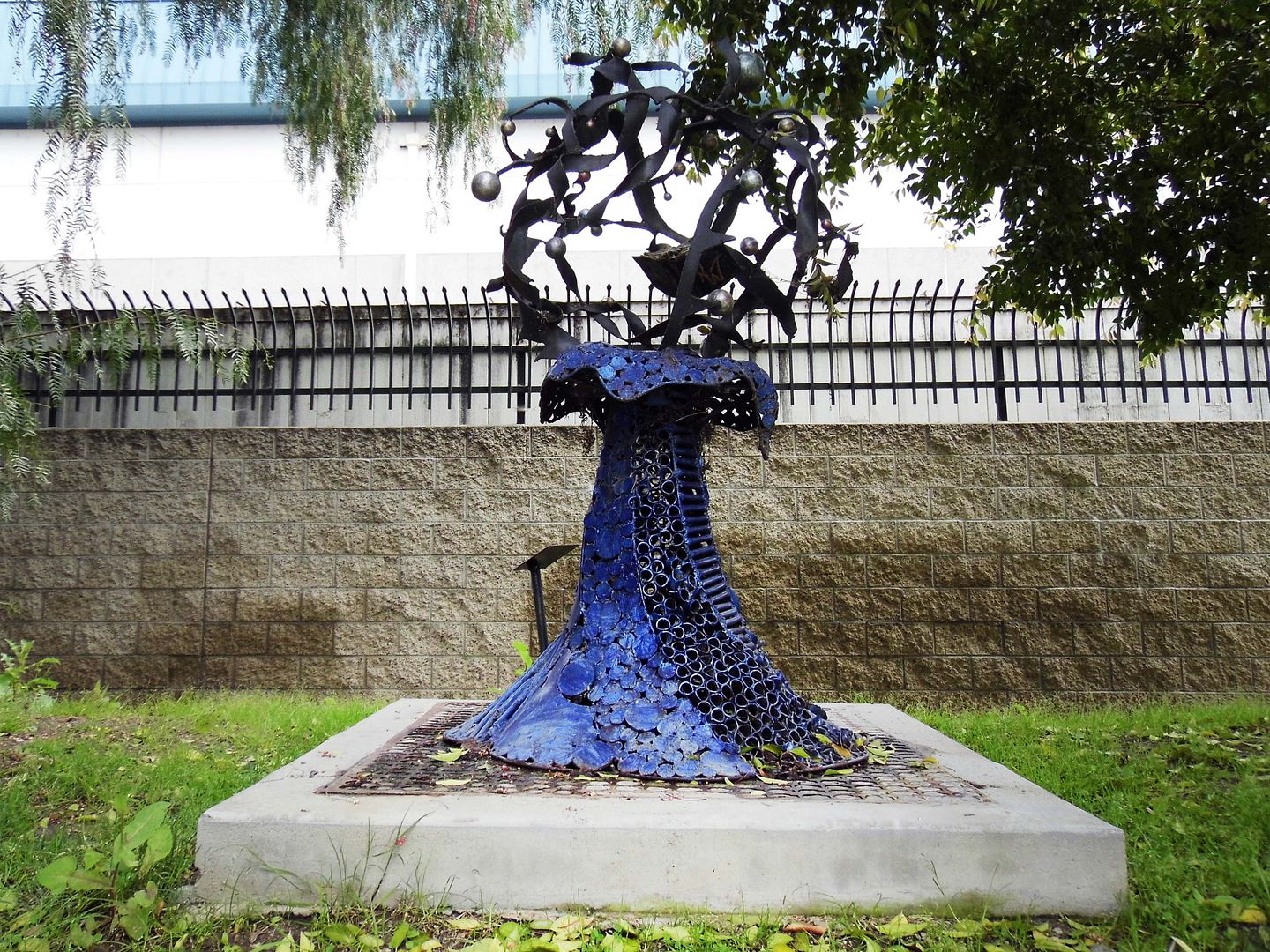
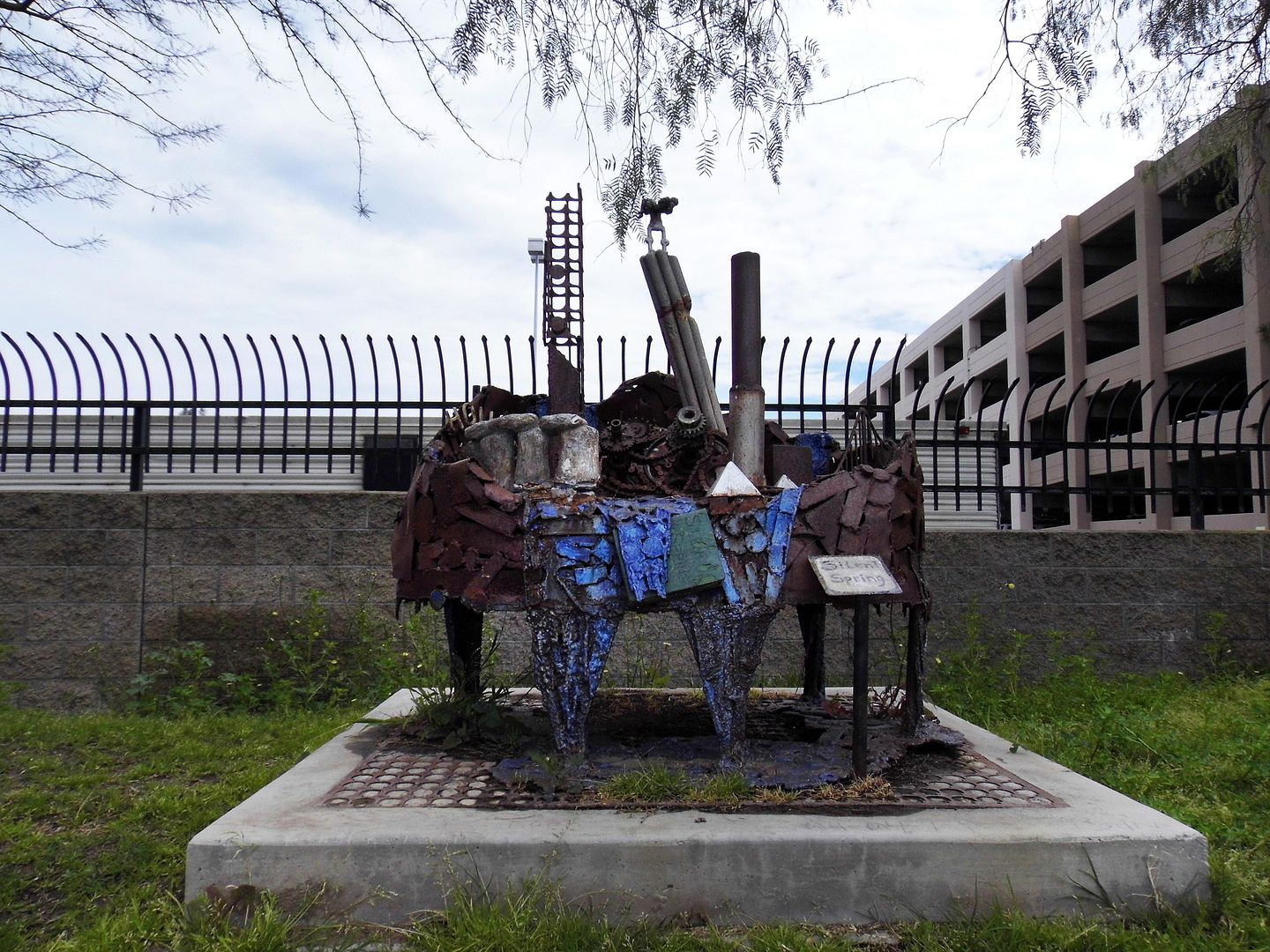
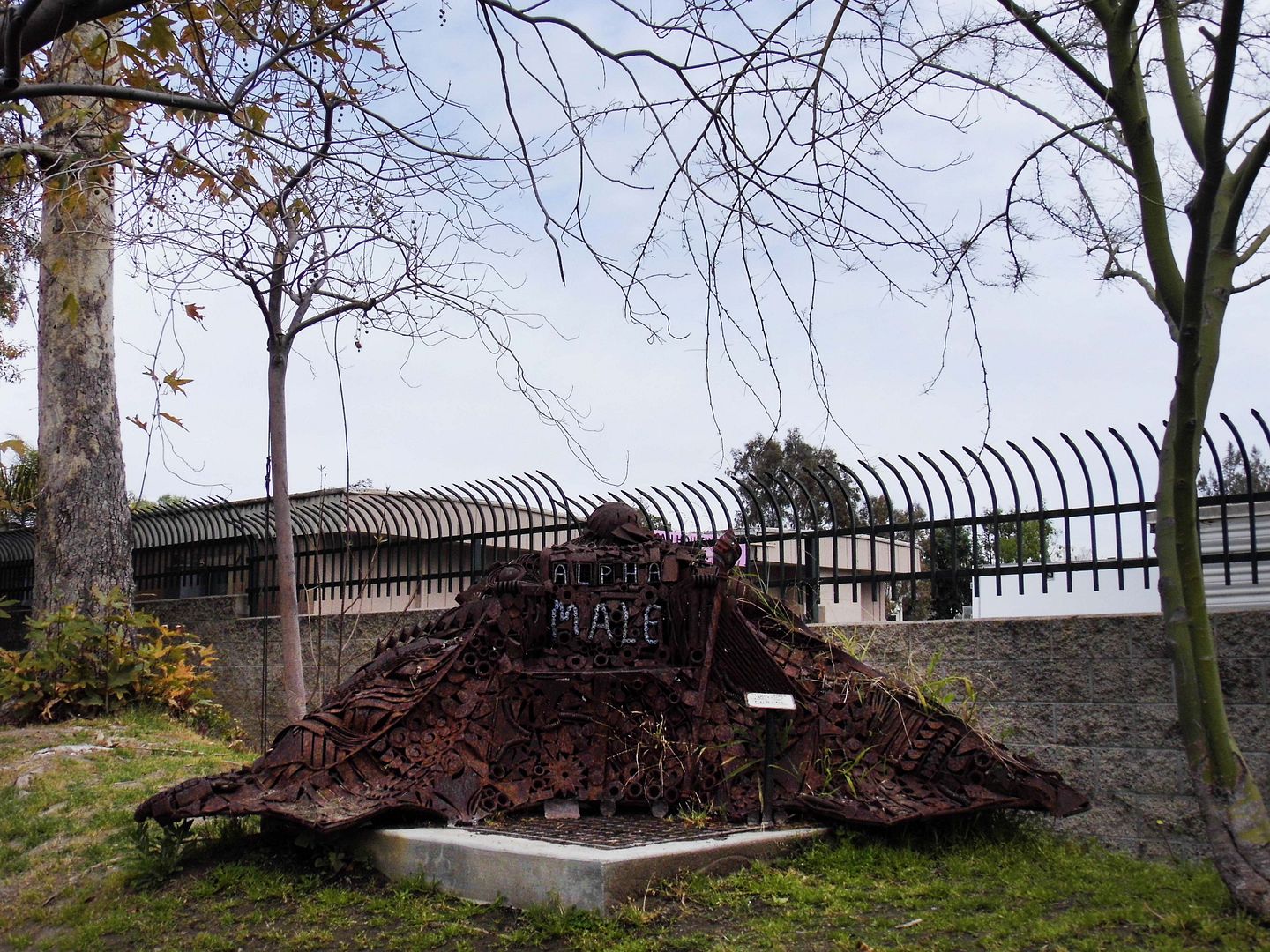
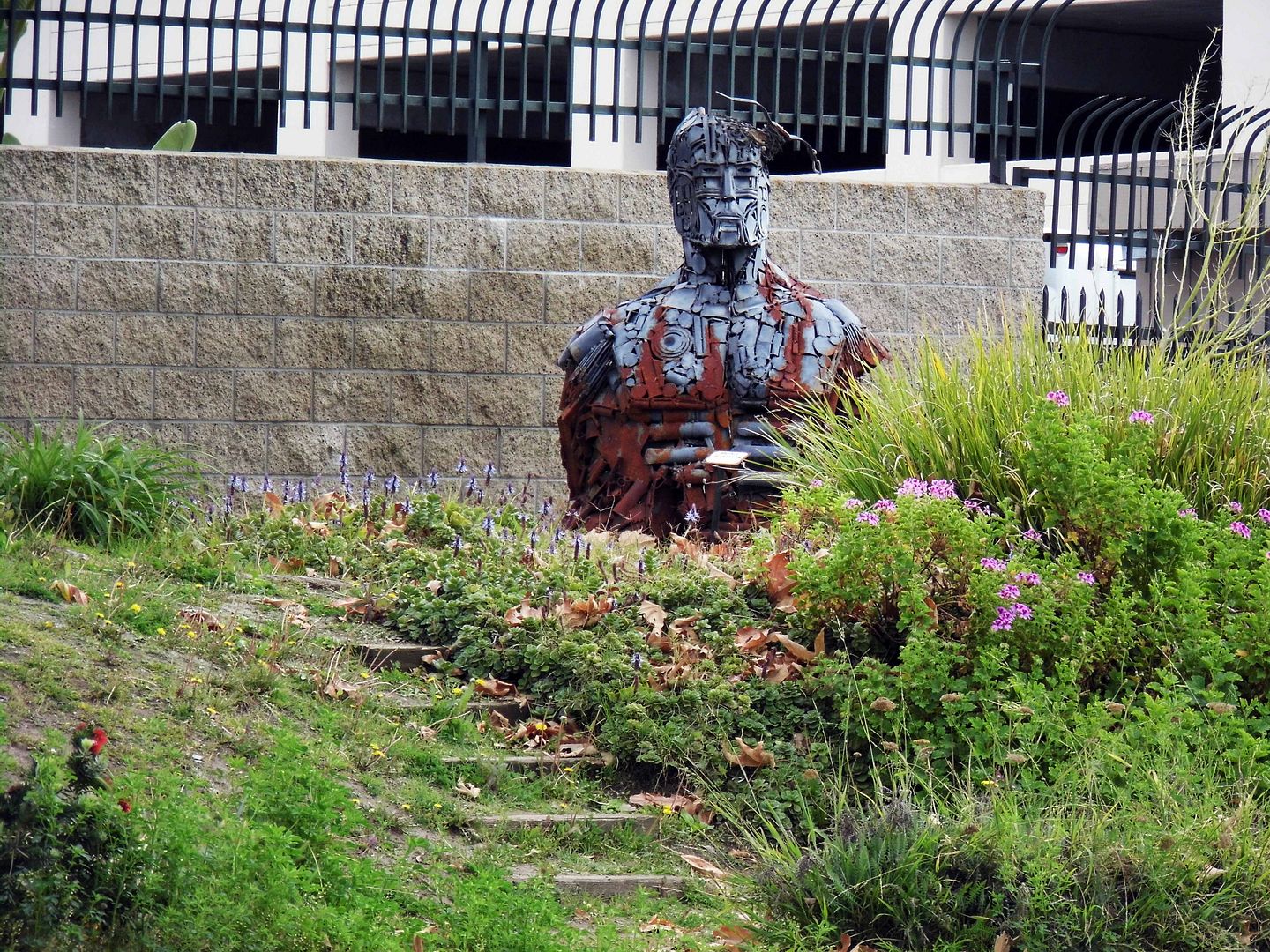
Beyond the somewhat overgrown California natives and other Mediterranean plantings, there are the mixed-media sculptures hiding in plain sight...


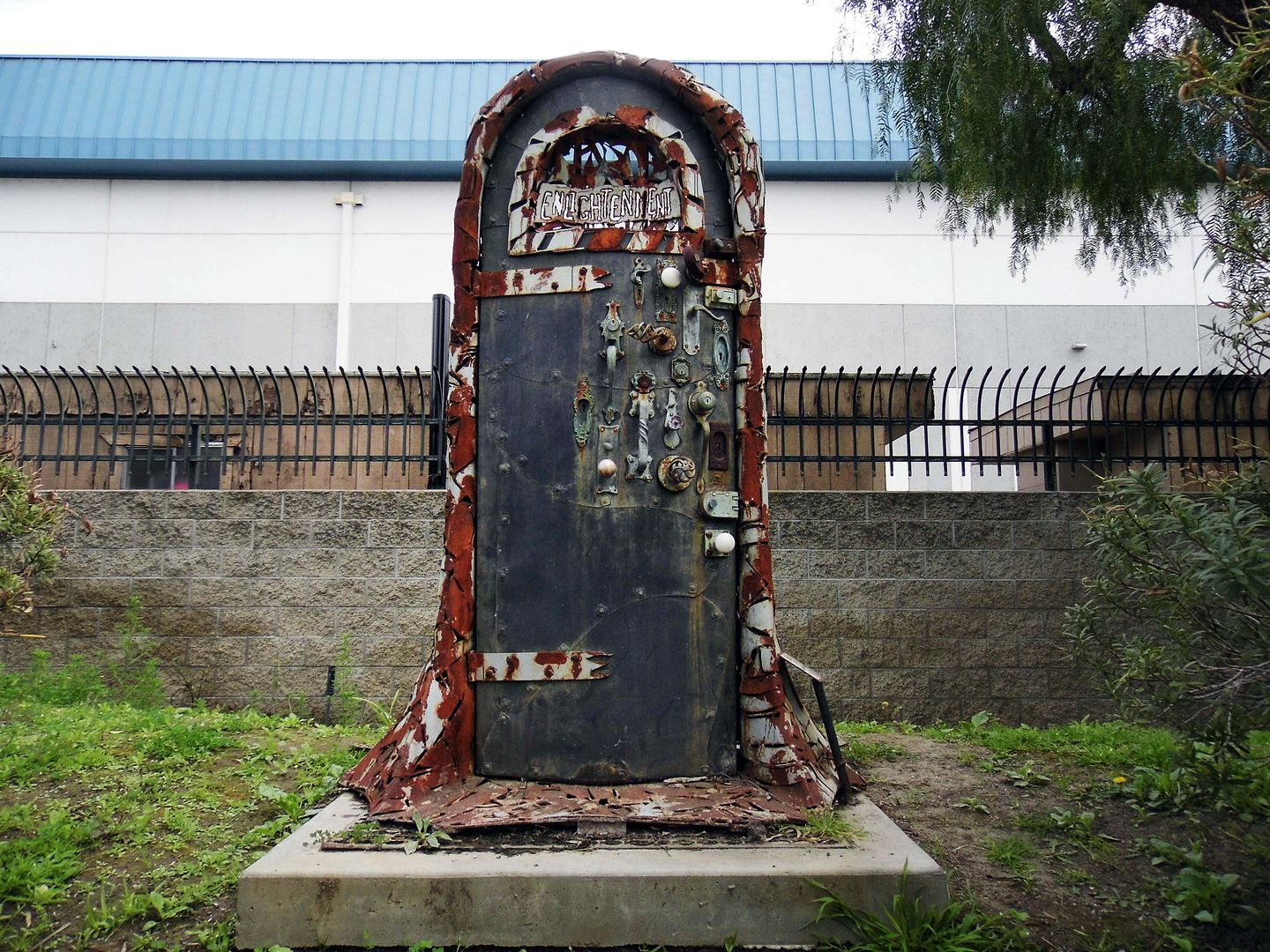
...like the "Door to Enlightenment," representing ignorance as a prison...


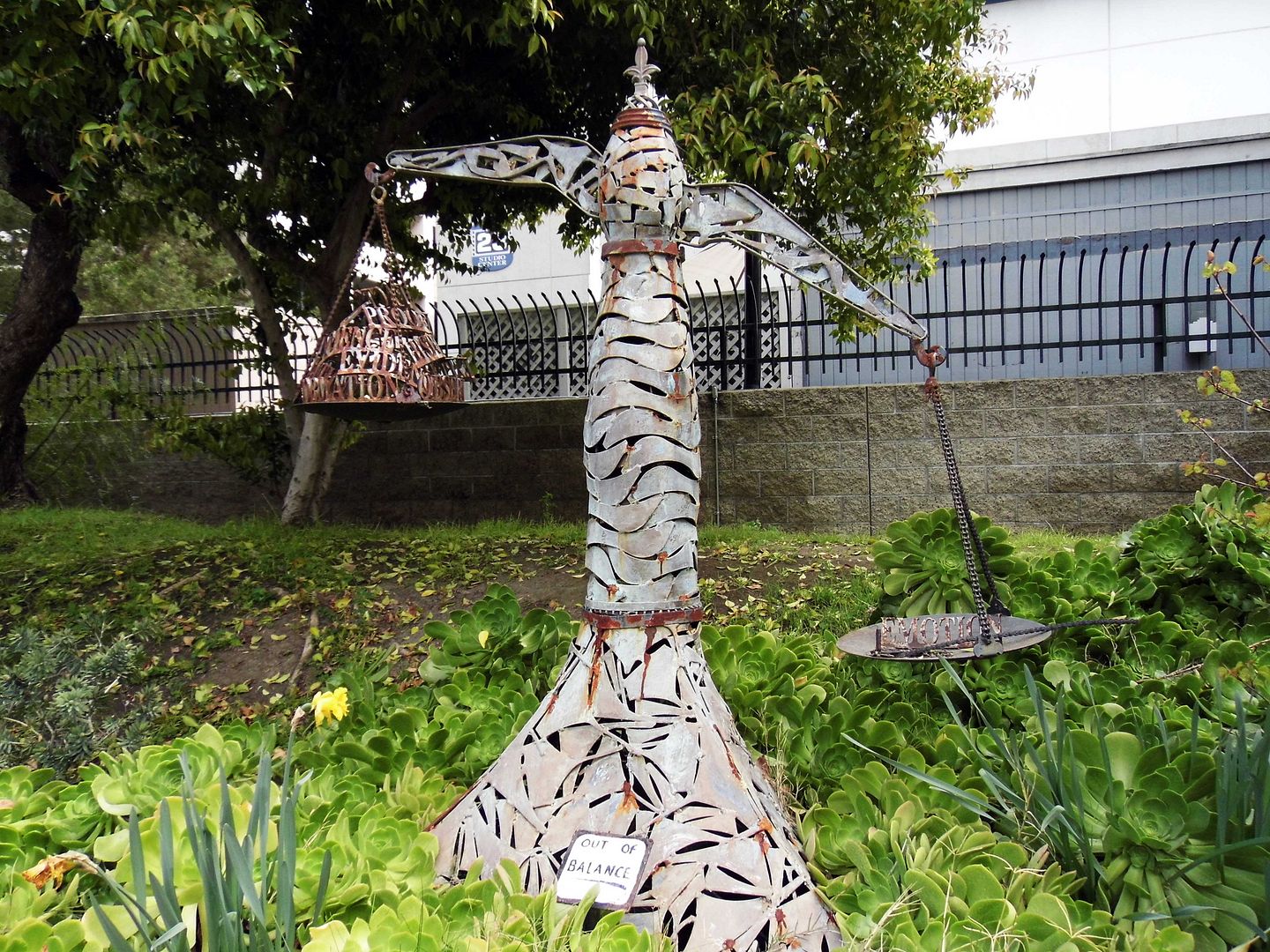
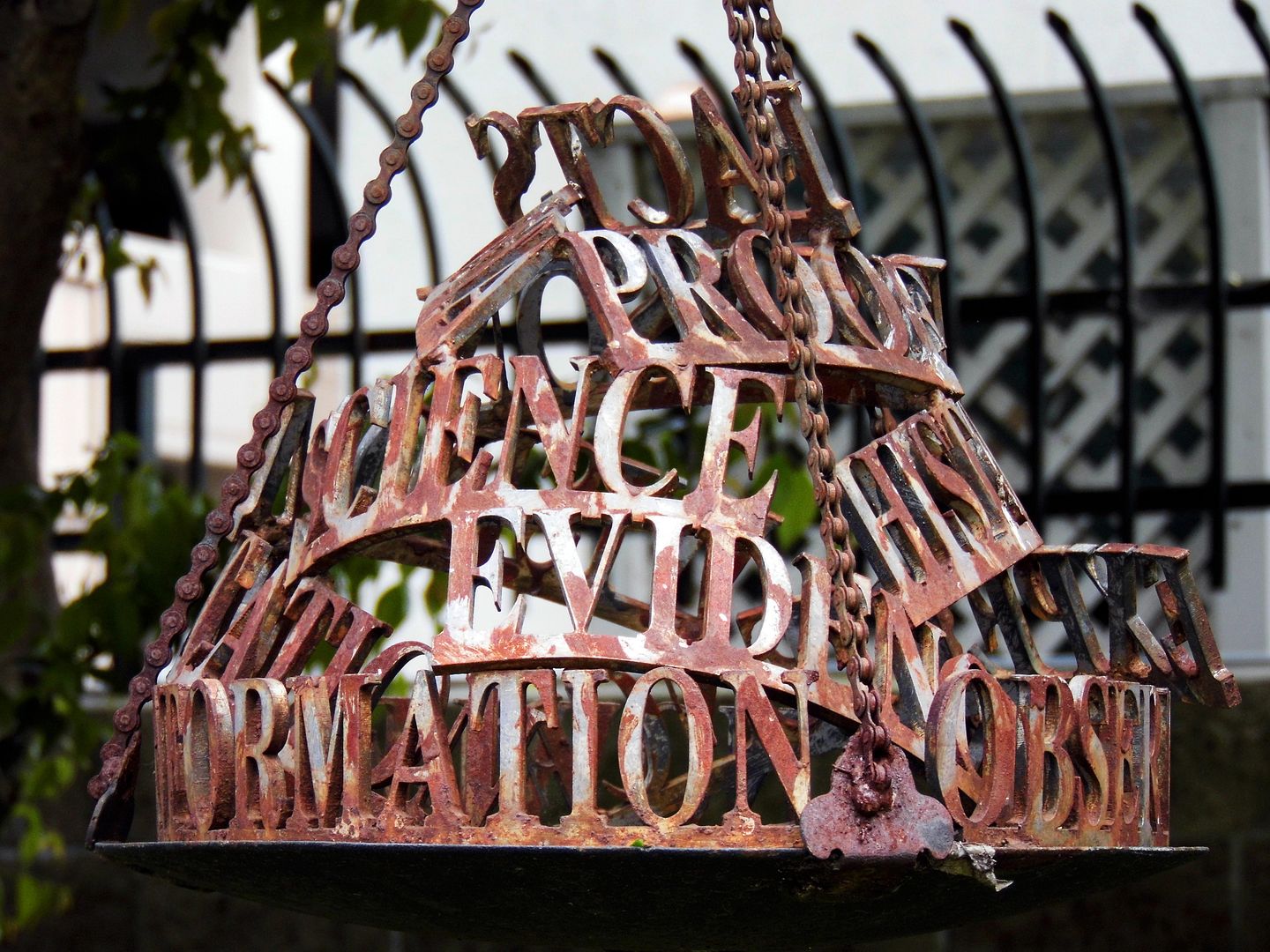
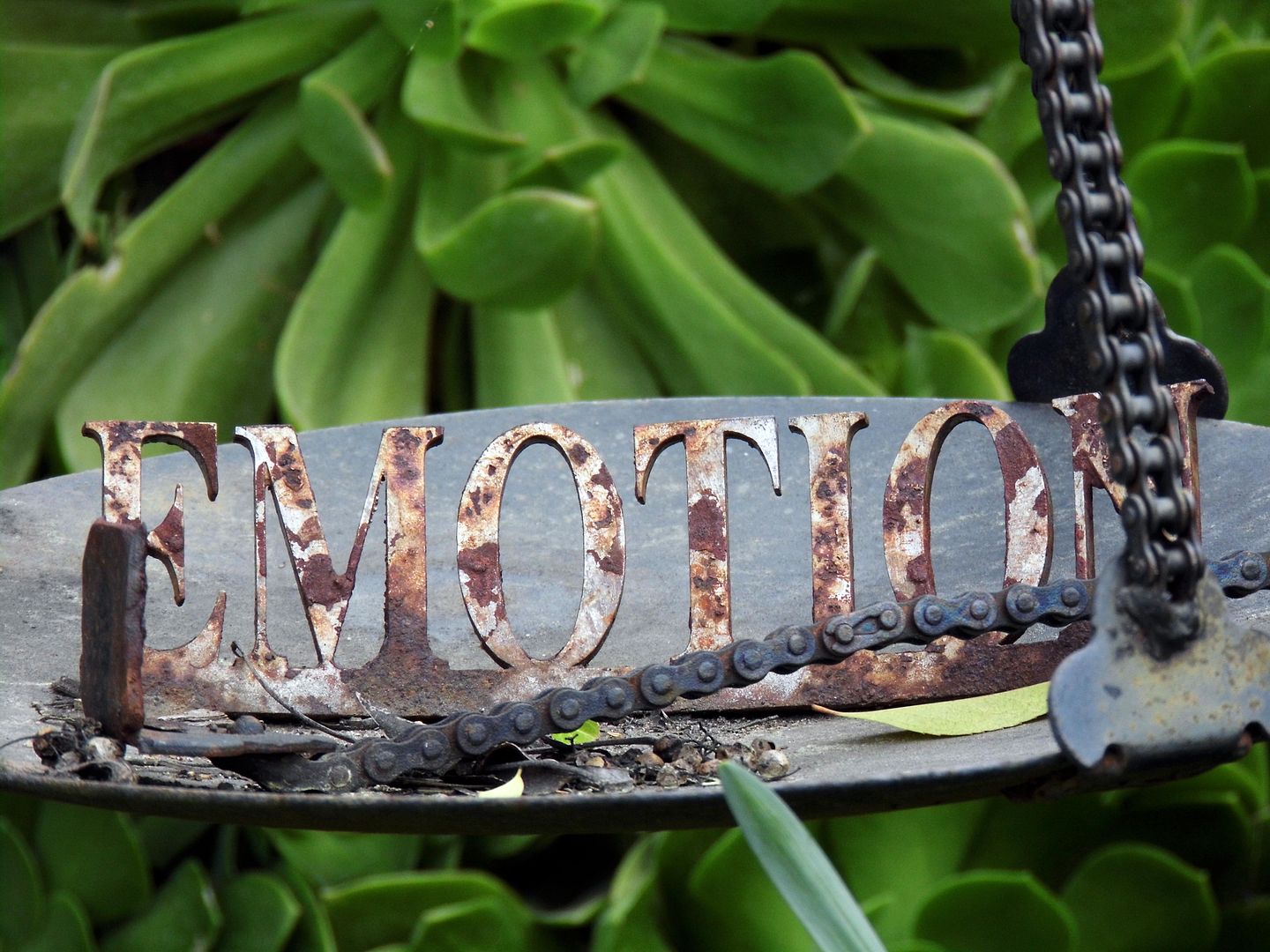
...or the scales in "Out of Balance"...


...which show how emotion usually outweighs reason and rationality.


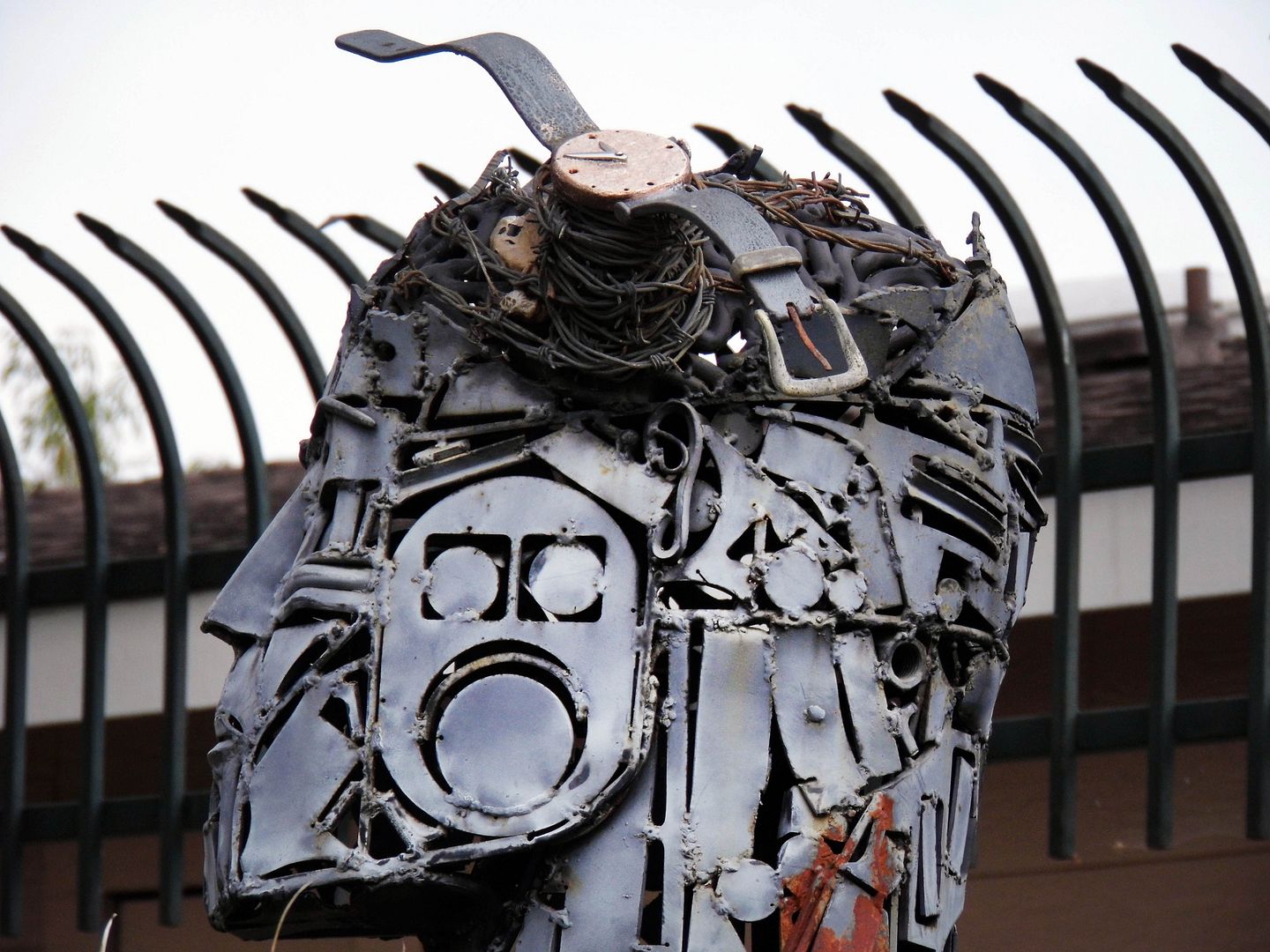
Johnson fabricated all these "resurrected" art pieces out of recycled and salvaged stone, welded steel, mosaic, wood, and more reclaimed materials.


They're are open for viewing 24/7, rain or shine, free of charge.


But does anyone know about them? Or remember they're here?


Situated near where Radford Avenue ends at the Tujunga Wash (a tributary of the LA River), not many cars drive by. And only a few locals pass on foot, maybe with their dogs.


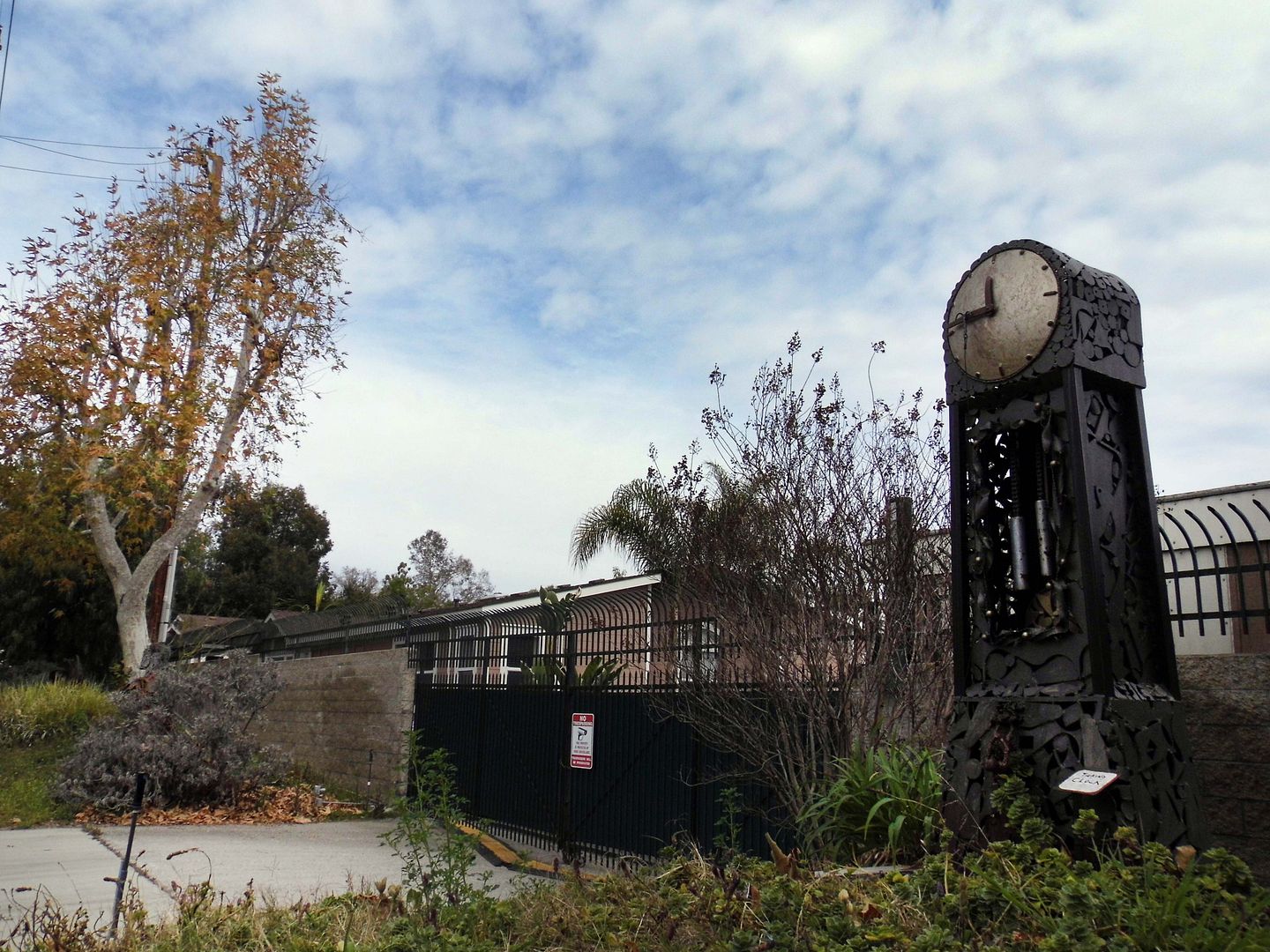
Just as the "Ticking Clock" sculpture reminds us of the relentless tug of war with time...


...and how we must face our own mortality as we literally disintegrate before our very eyes, increasingly burdened by our past...


...so too does the Radford Art Walk suffer from the passage of days, weeks, months, years.


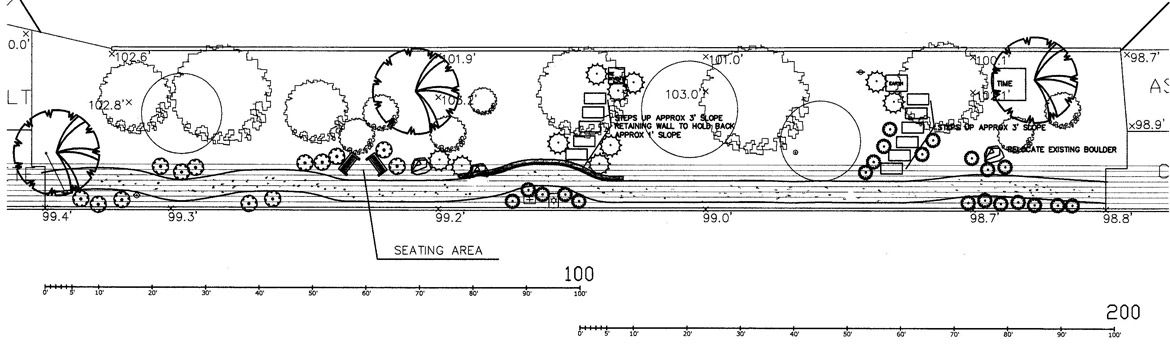
Drawing: Studio City Beautification (via RadfordArtWalk.org)

Weeds grow and are not mown. The berm becomes unclimbable. The wooden stair slats sink or maybe submerge into the earth. And seating either goes missing or was never installed in the first place.

It's been less than 10 years since the Radford Art Walk was celebrated for beautifying Studio City. And yet its legacy feels a bit... anticlimactic.

After all, Karl Johnson's own Studio City house and front yard—the crown jewel of the artist's oeuvre—were unceremoniously dismantled upon his passing in 2015. (Unfortunately, I didn't know to go see it before it was summarily erased.)

Without him around to maintain these public works—or to advocate on their behalf—I worry what'll happen to them when they get in the way of some new urban plan (like, say, with the River).

I'm glad I found them when I did. But they make me sad.

I guess that's OK.

Related Posts:
Walking in the Footsteps of Mary Tyler Moore, Newhart, and Gilligan at CBS Radford