
For all the times I've visited Death Valley National Park—starting way back in 2008—I don't think I've ever seen any wildflowers there.
I remember hearing about wildflower blooms there during the springtime, but Death Valley isn't the kind of place that you can just decide to visit on a whim. It takes some planning ahead to get a room for the night, and some significant driving to get there from Los Angeles.
I missed the "superbloom" that occurred in 2016, having just started a new job and still bouncing back financially from years of unemployment. I've regretted that for 10 years.
Now, there's a once-in-a-decade bloom happening in Death Valley again—and this time, I was prepared. All the way back in January of this year, I started booking hotels in anticipation of a very good wildflower bloom about the occur. I wasn't sure when it would hit, so just to be safe I reserved a room for every weekend in March, and the first weekend in April.
Usually wildflower season hits Death Valley later in the spring, following the burst of color that occurs annually—to varying degrees every year—in Anza-Borrego and the Antelope Valley. But this year, the desert environs much farther north of LA caught up to the Southern California floral explosion timing-wise.
And on the first weekend of March 2026, I'm pretty sure I got pretty close to the peak of the best wildflower bloom that Death Valley has had in a decade.
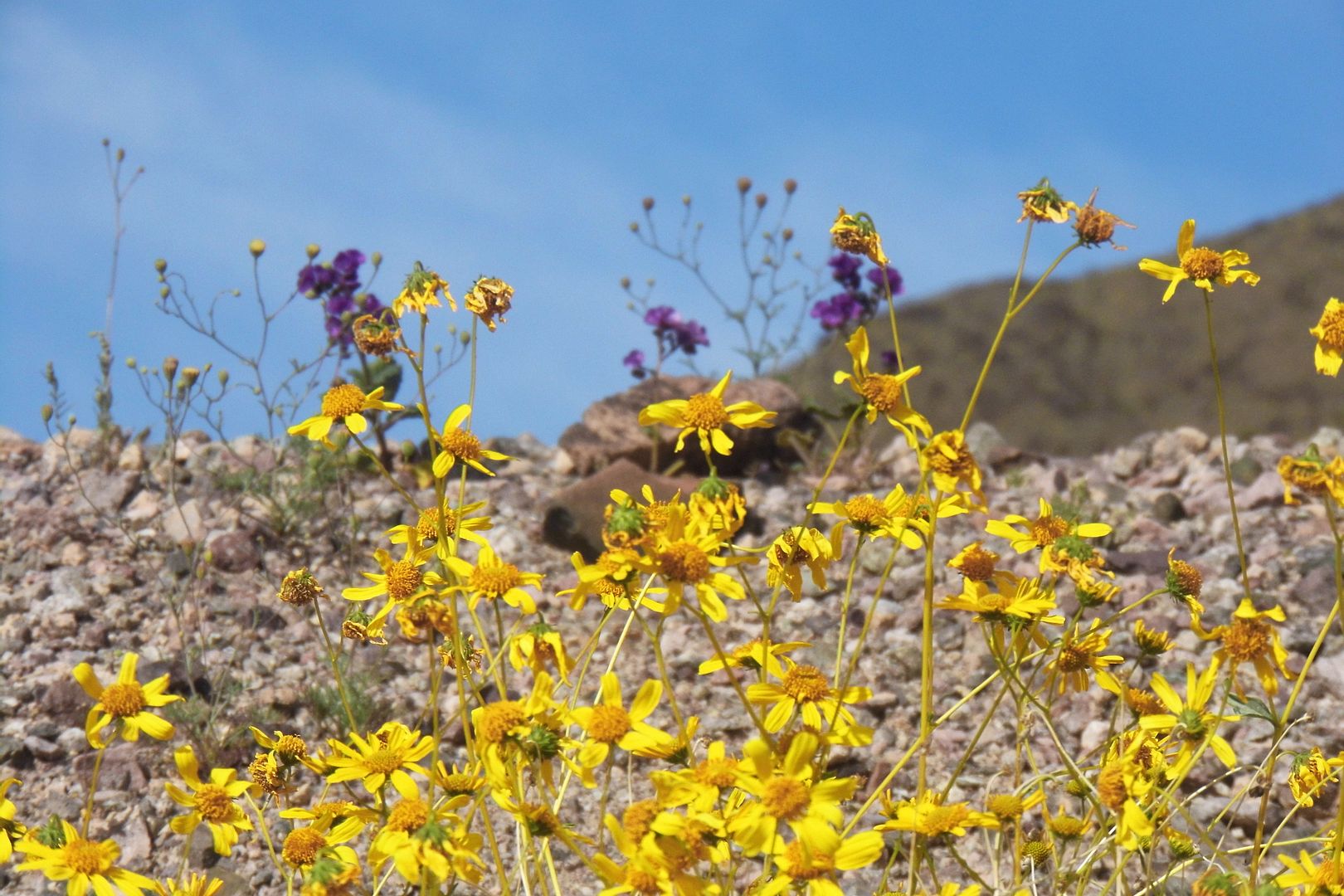
I had a plan based on some reports on the news and social media—namely, to stick to the lower elevations at the southern end of the park. But it's always fun for me to forge my own path, too.
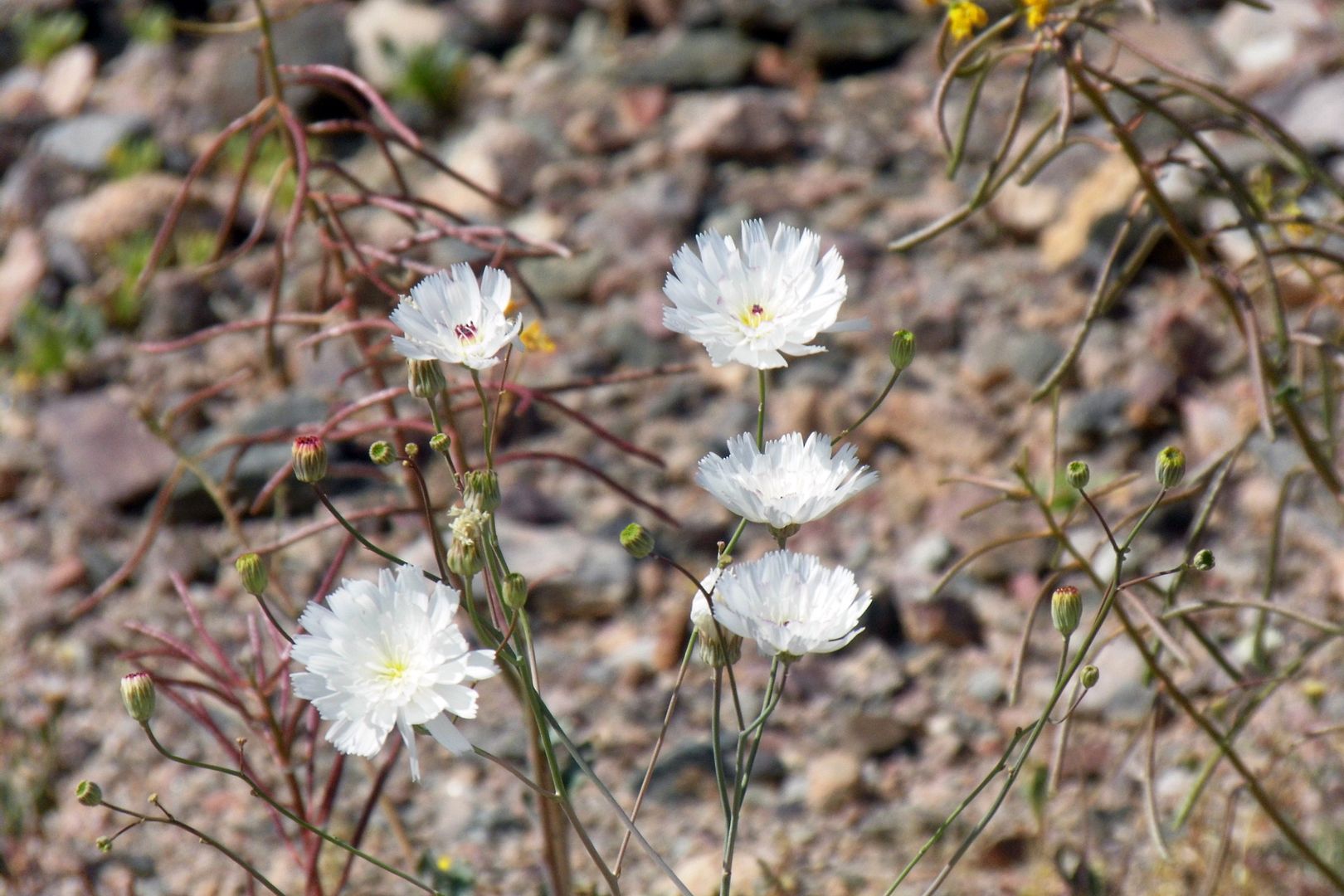
From LA, I drove out to Baker and then up to Shoshone, entering the park along Highway 178, a.k.a. Jubilee Pass Road—quite literally, the road less traveled.
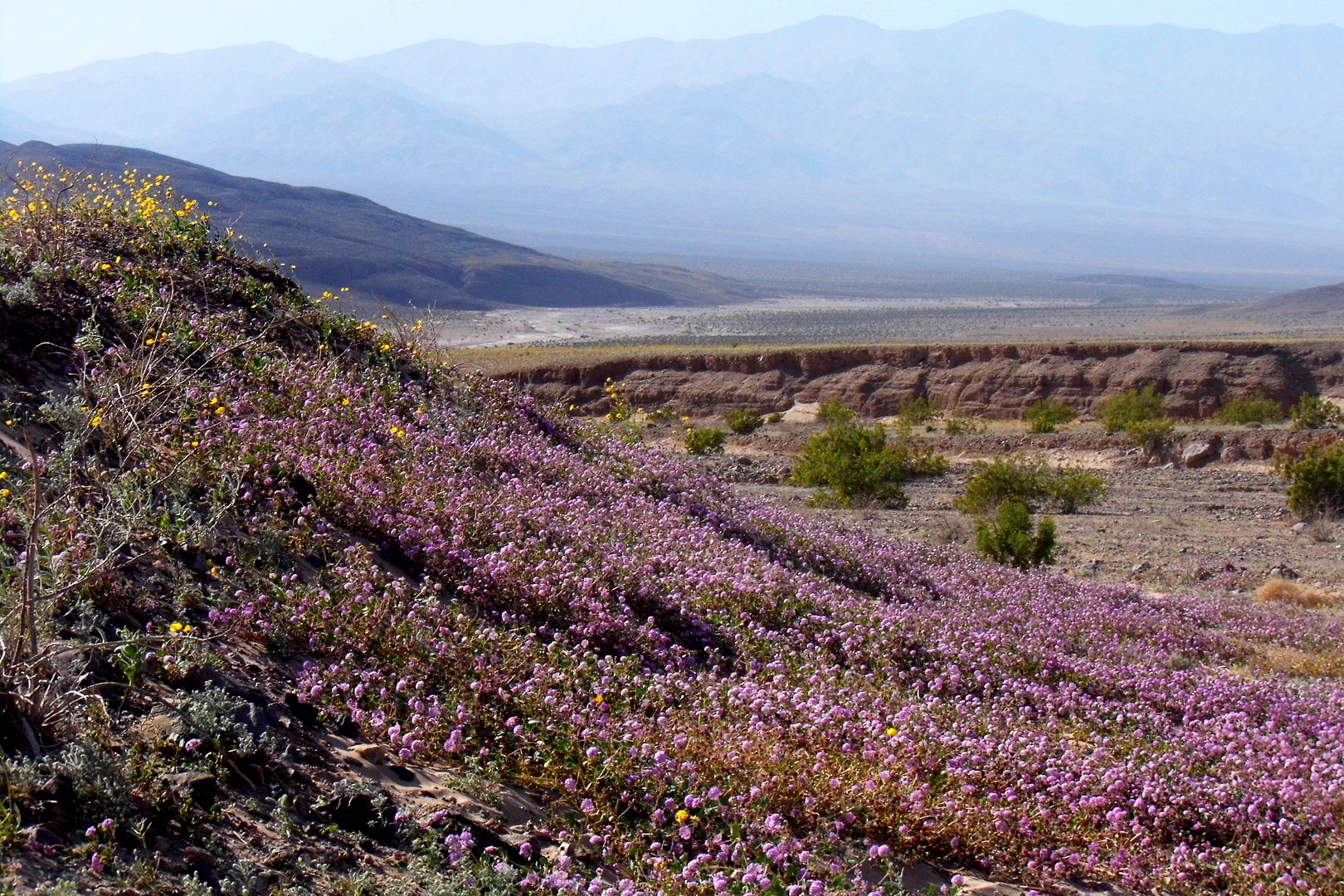
The sand drifts along the side of the road were fully anchored by thriving patches of desert sand verbena...
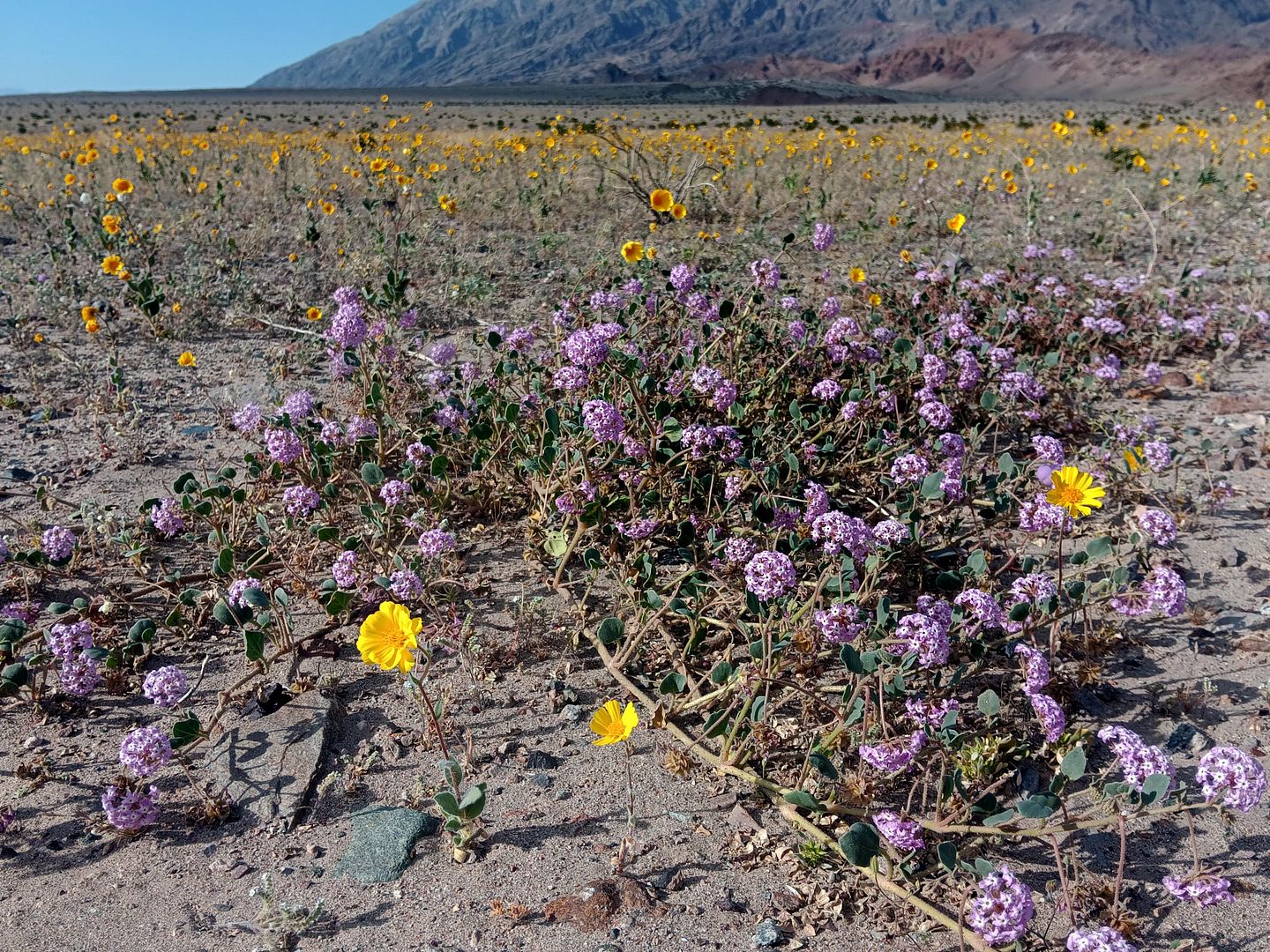
...whose lavender clusters helped make the desert gold sunflowers look even more vibrantly yellow.
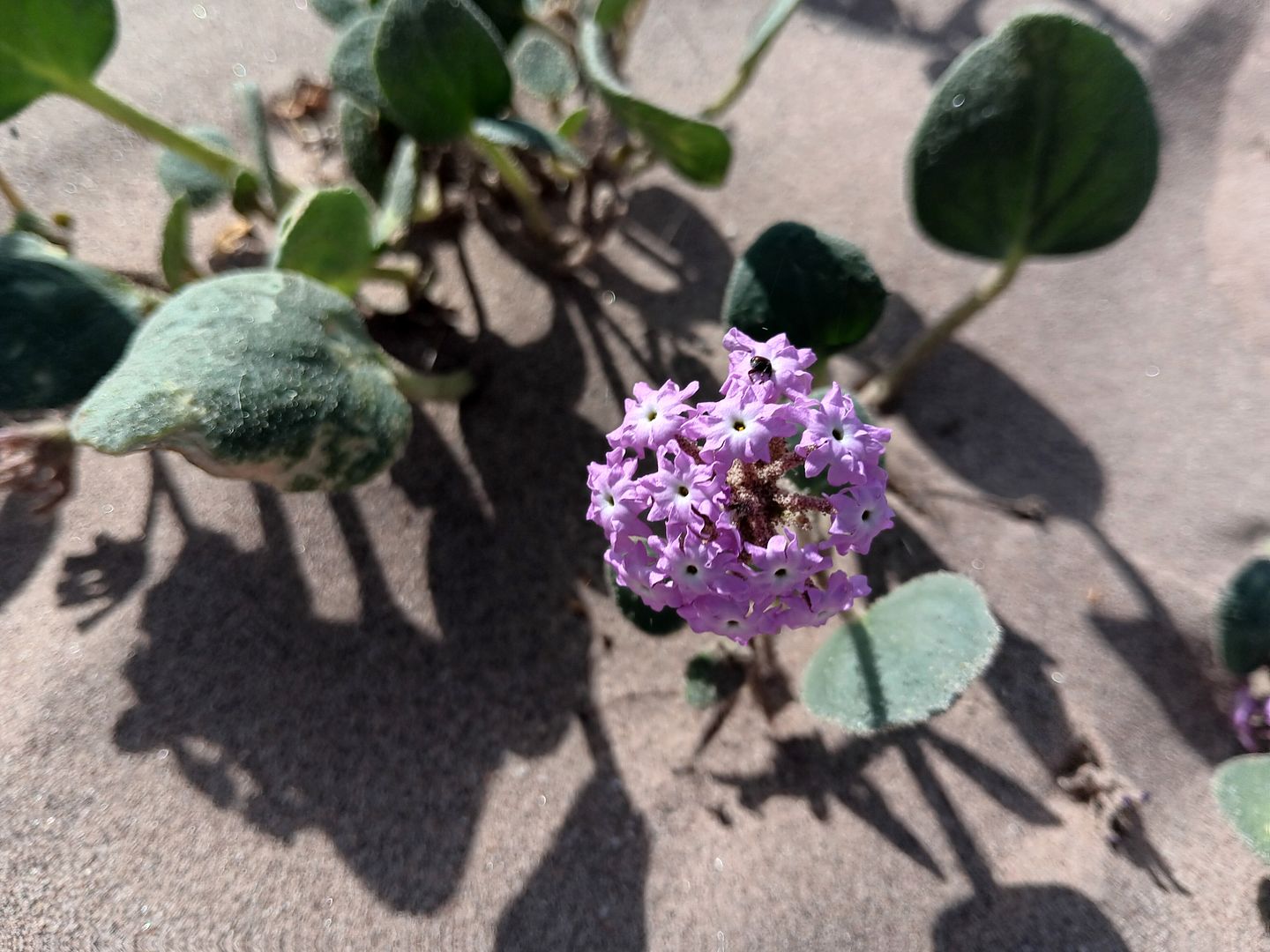
These "dune flowers" are just one of the California native annuals that could grow on Death Valley's sandy terrain—but they need just the right conditions (namely, a wet winter like the one we just had).
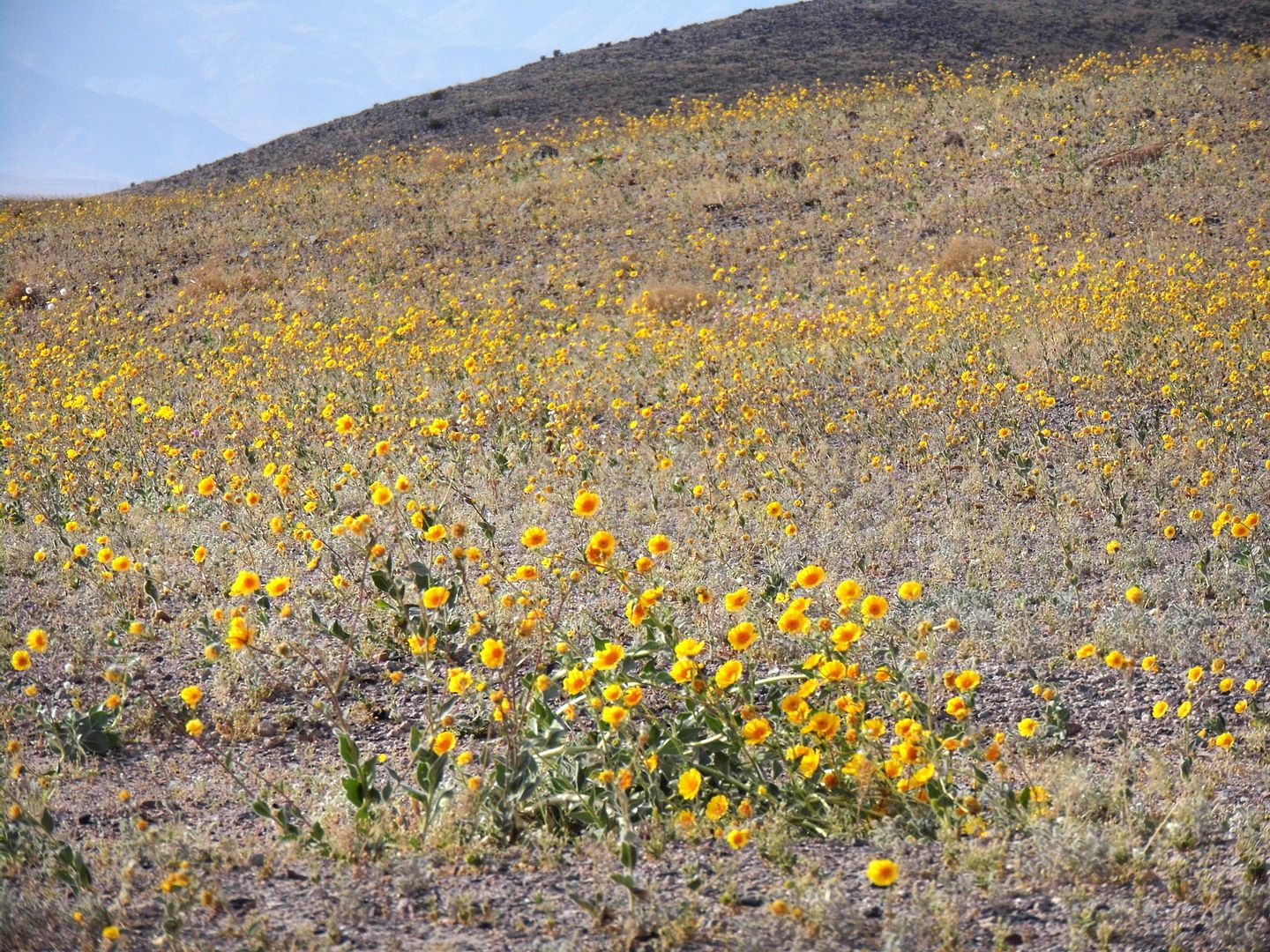
At Ashford Junction, Jubilee Pass turns into Badwater Road—and soon thereafter, I spotted the first real impressive display of my journey thus far, at the entrance to the Ashford Mill Ruins.
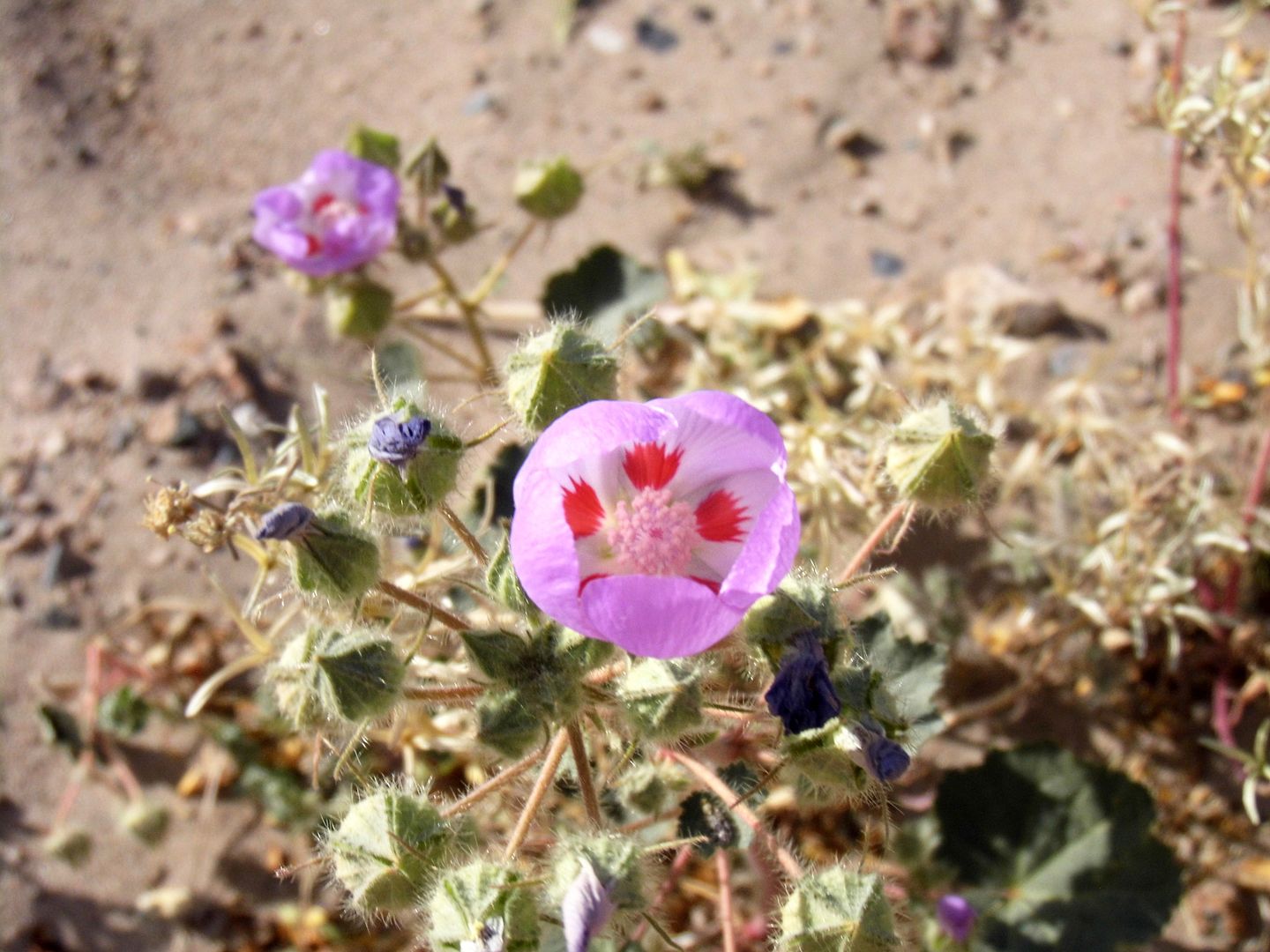
Gold ore was once processed here in 1914—but now, all that's left is a shell of an office building and a few desert five spot plants blowing in the wind.
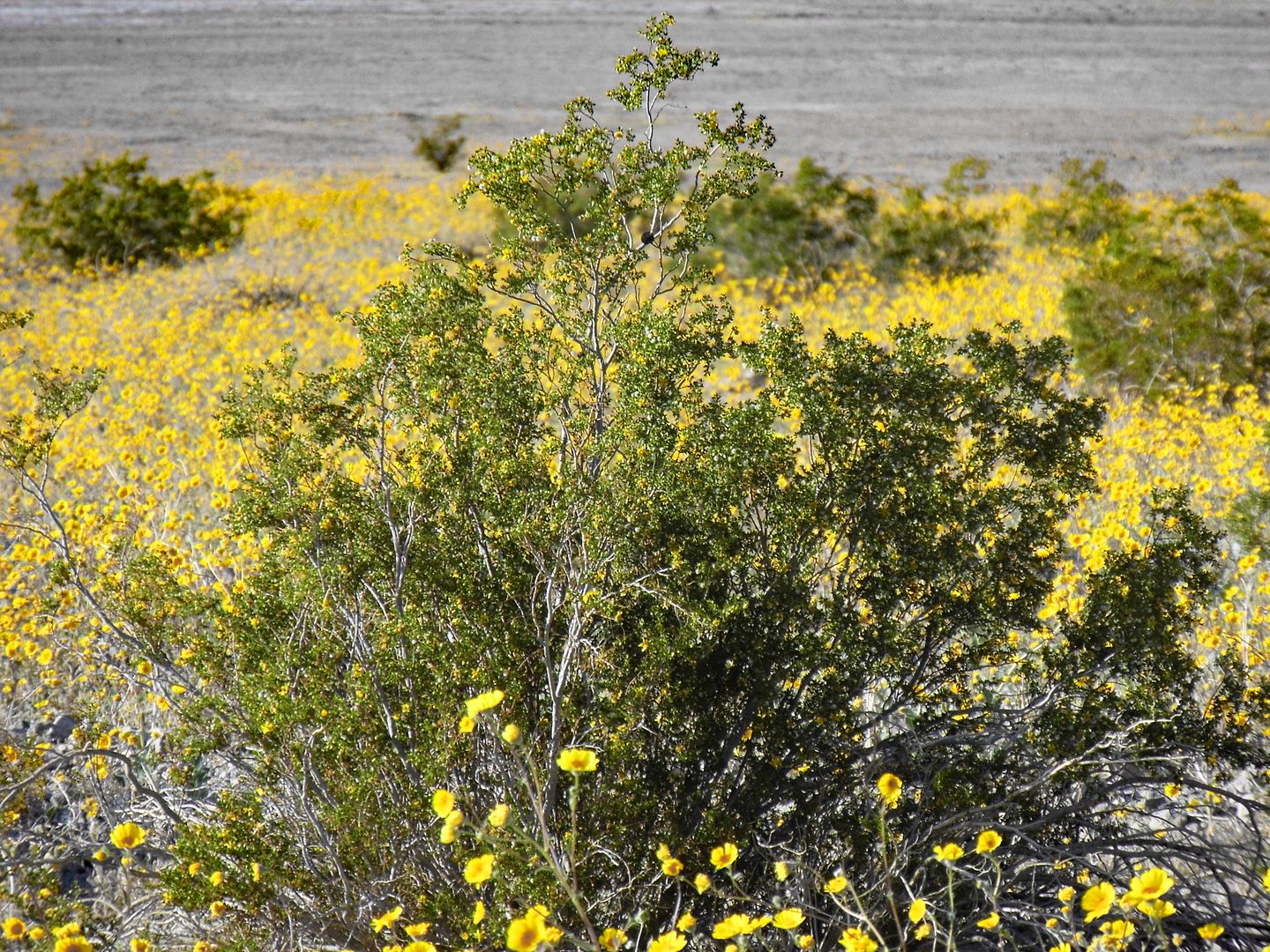
Probably the most popular place to go for wildflowers in the park right now is Badwater Road—on either side of Badwater Basin, the lowest point in all of North America.
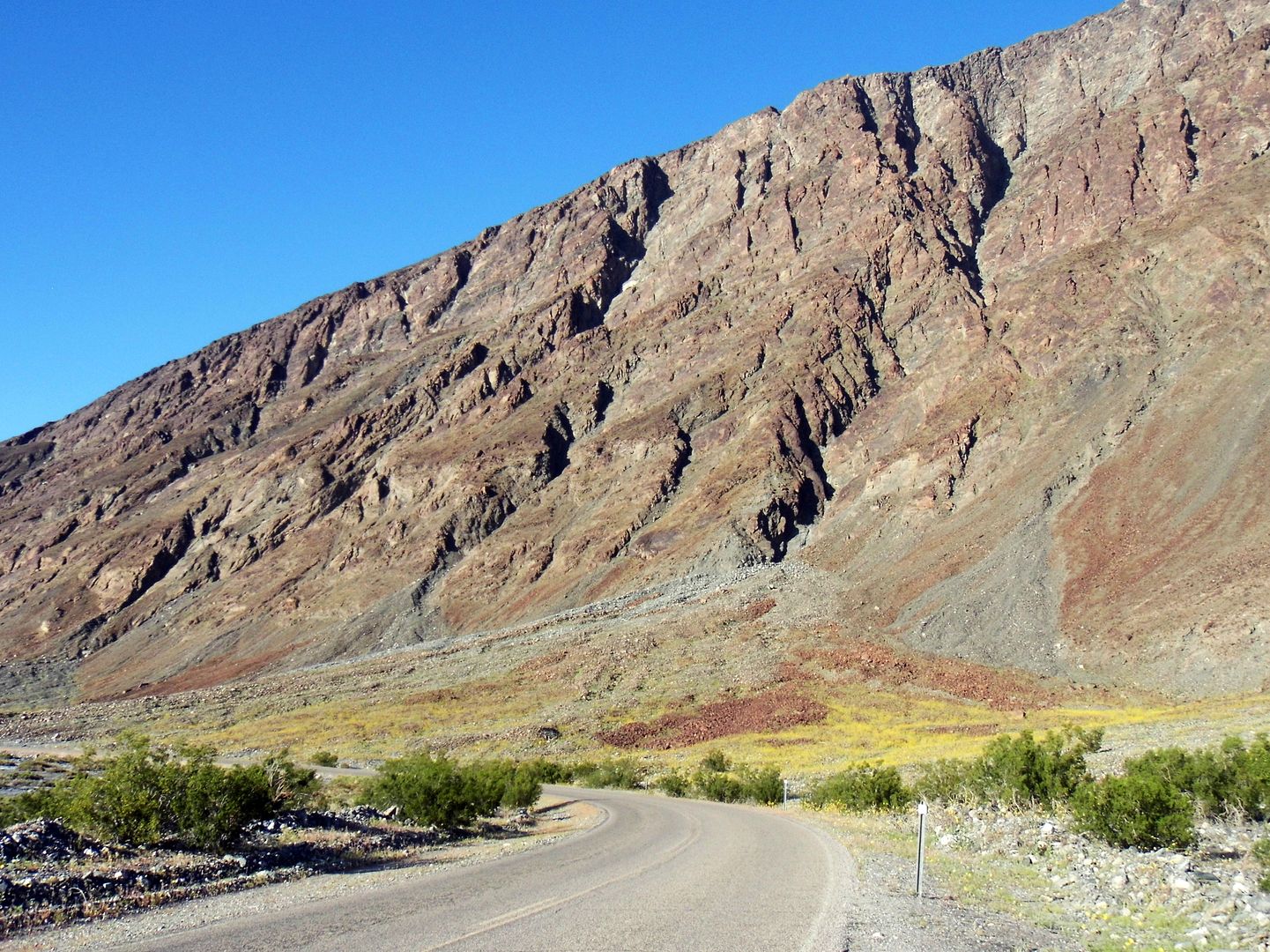
Death Valley has really rolled out the yellow carpet here—although as the flower bloom starts climbing up the hills, it could be a sign that it's going to start to fade in the lower areas.
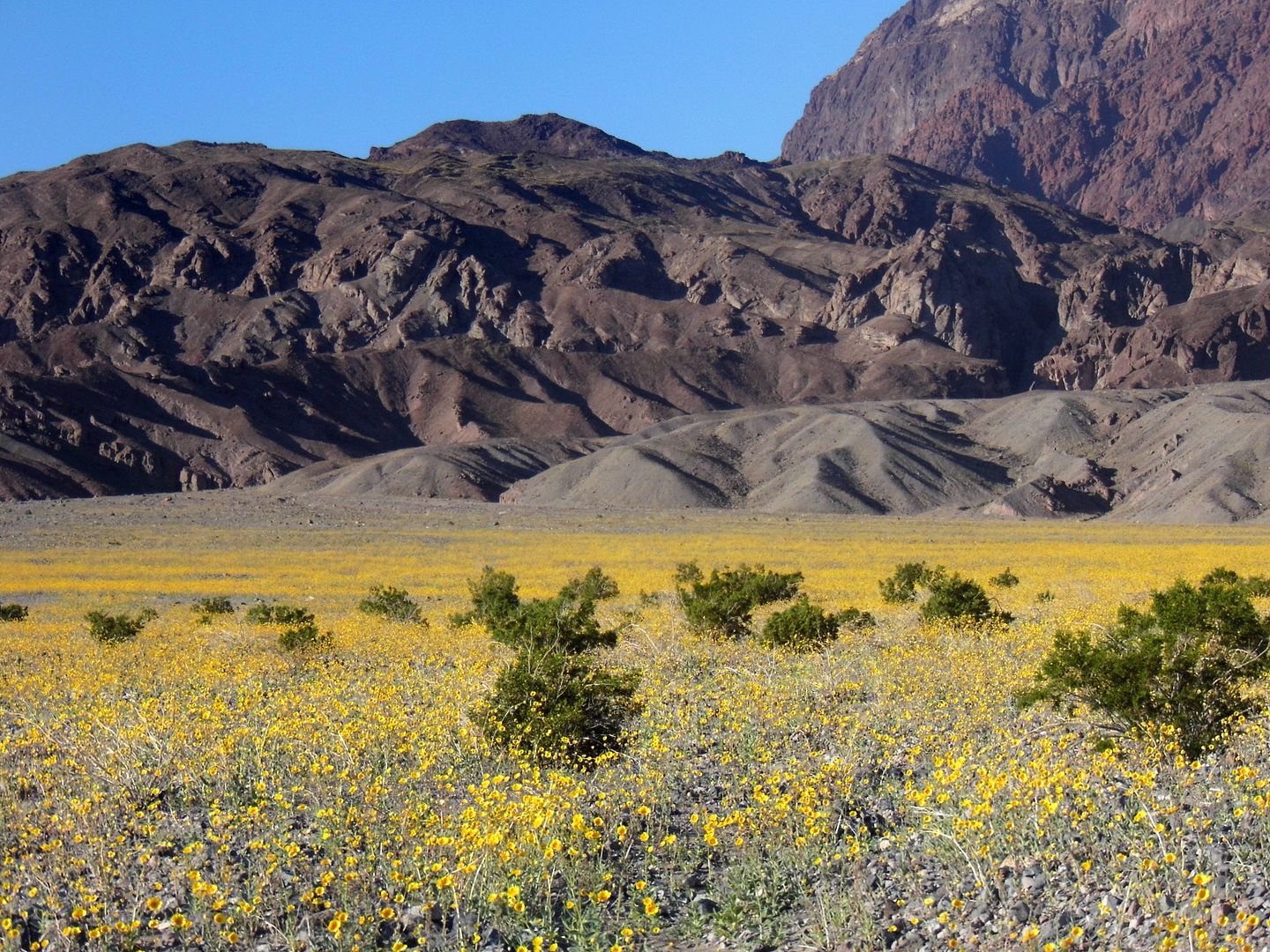
But for now, the Black Mountains east of Badwater Road are mostly bare...
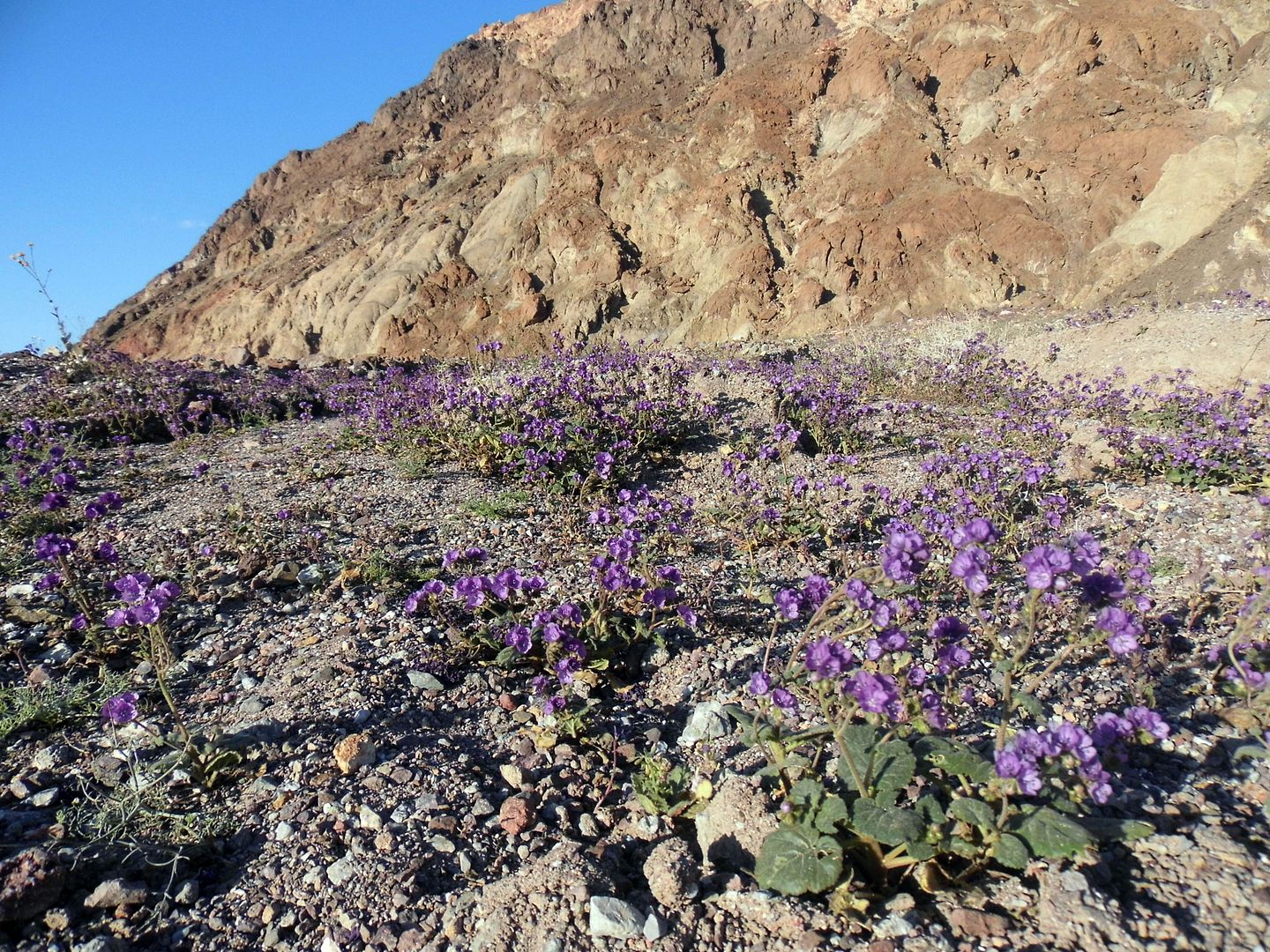
And at the marker for Mile 24 on Badwater Road, there's a great outcropping of Caltha-leaved phacelia (Phacelia calthifolia)...
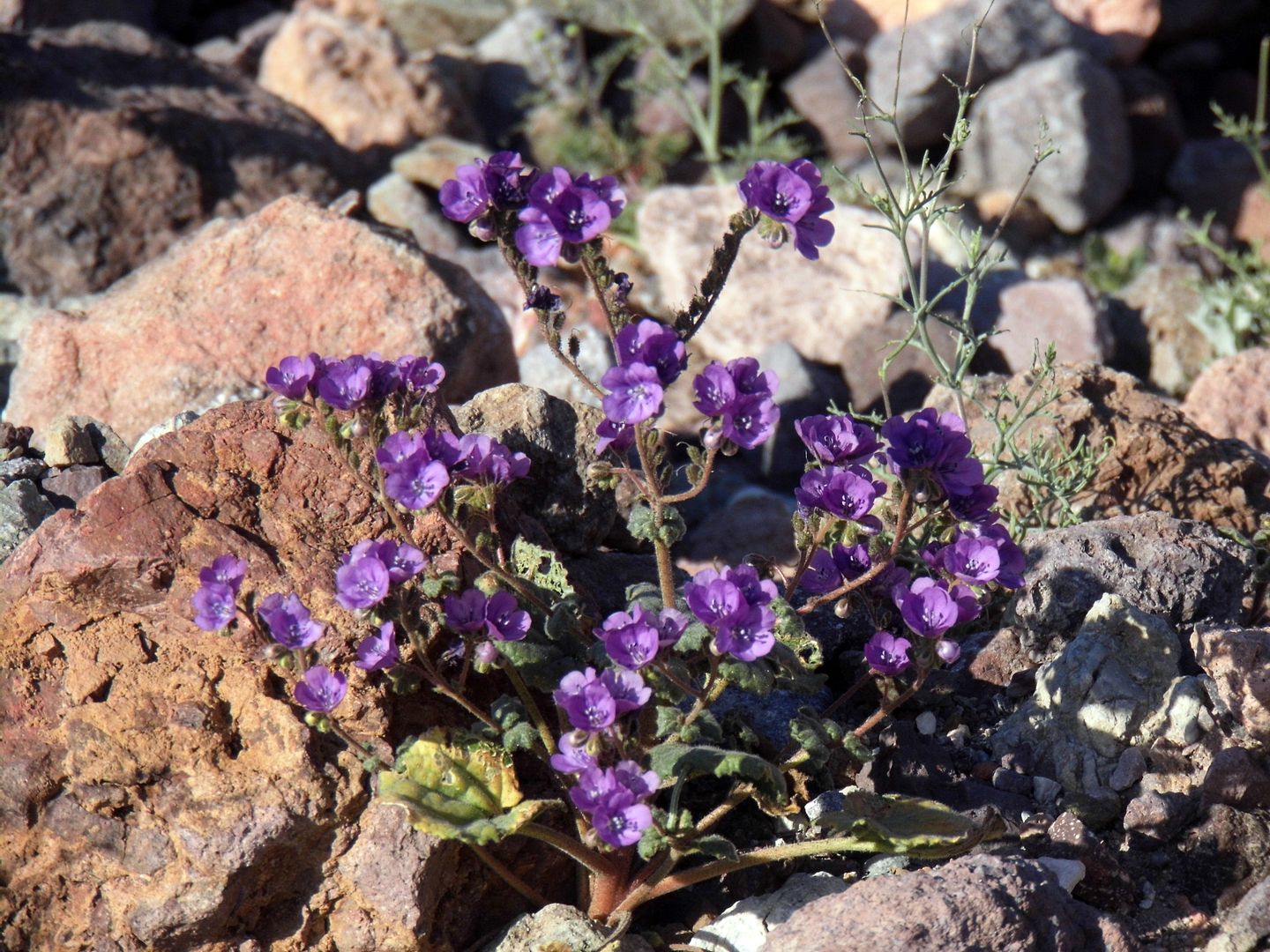
...which isn't the most common type of purple-colored phacelia in Death Valley, so that felt like a nice find.
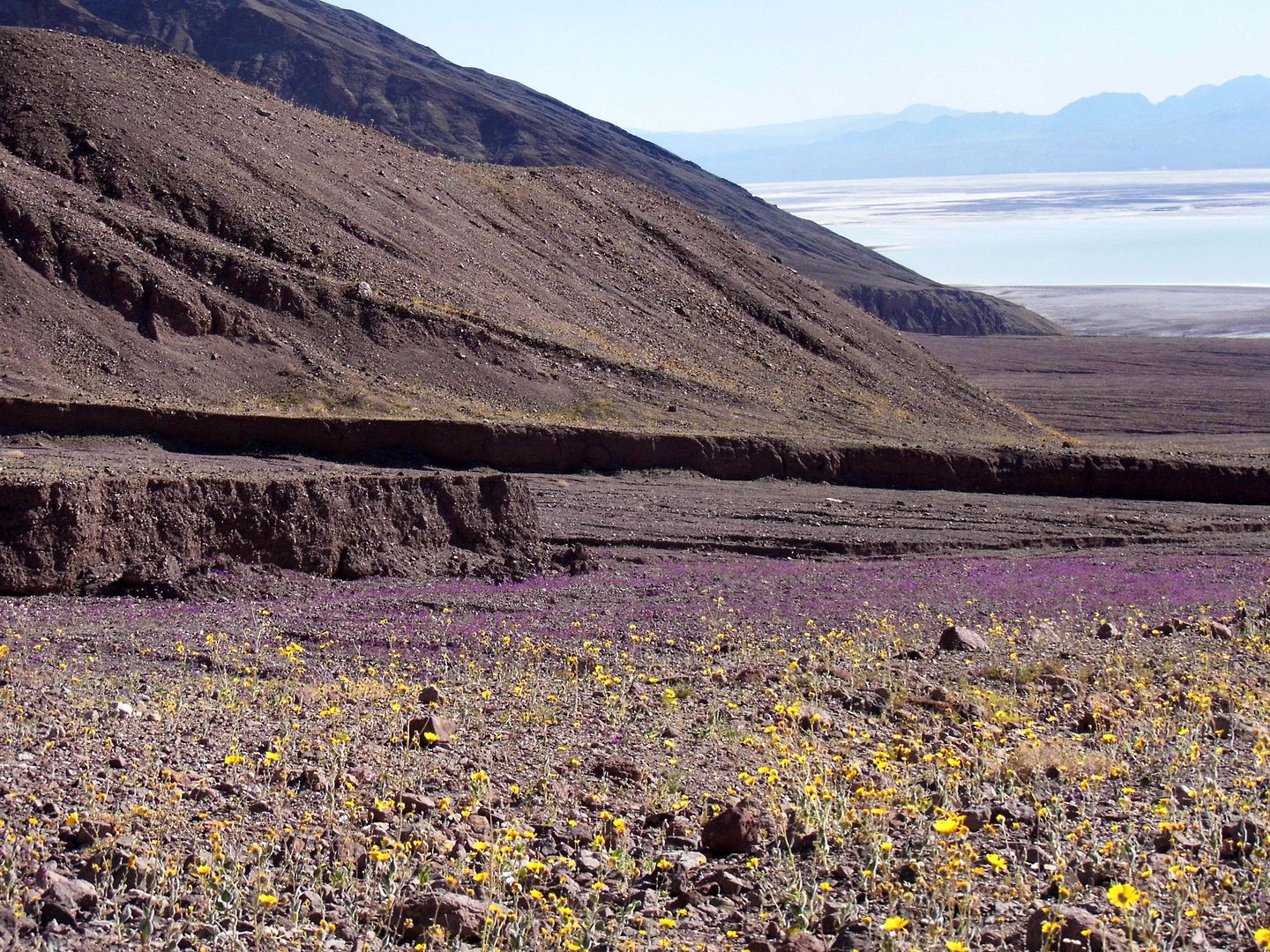
My first couple of days in the valley, it wasn't as deathly hot as it's generally known for—so I took a little walk up the Natural Bridge trail and got a great overhead view of the carpets, which look even more impressive from that perspective than at eye level.
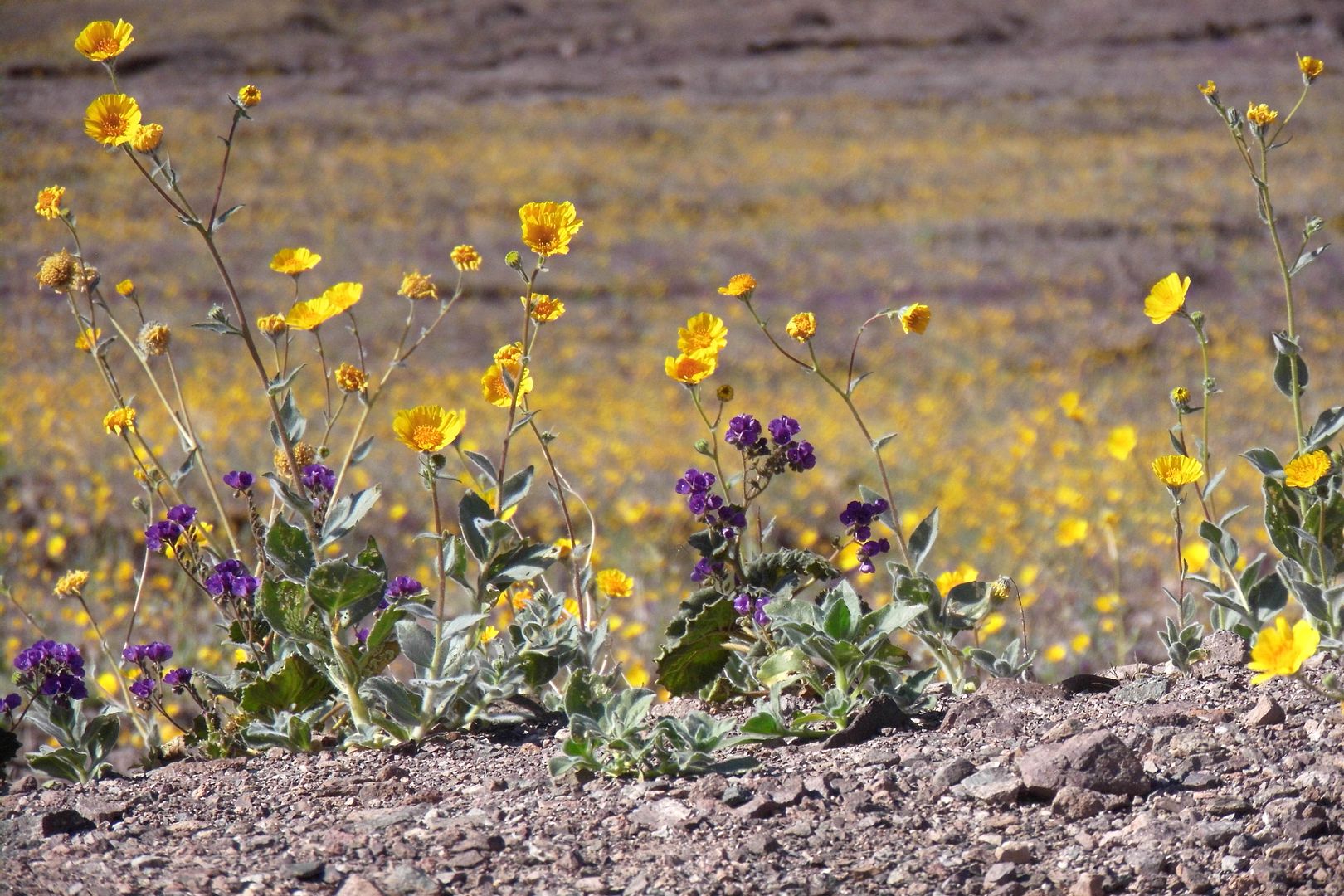
Of course, there are lots of photos in the news that are making Death Valley look like it's been completely overtaken by wildflowers—but that's not exactly what's happening. It's a very good year for wildflowers, and probably some of the best that Death Valley will ever see, but some camera tricks make it look better than maybe it actually is. (I know, because I struggled to get those shots as well.)
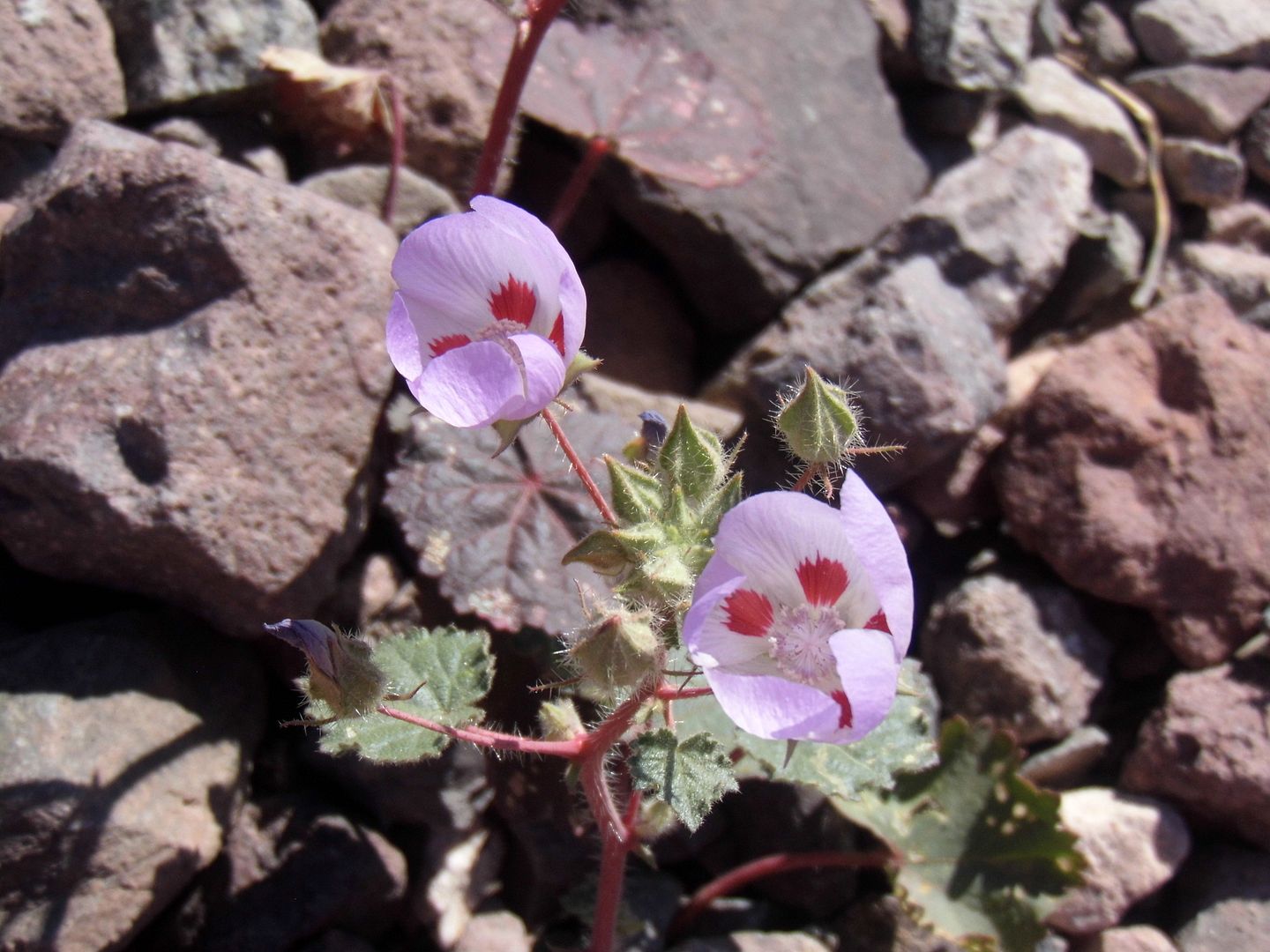
That, of course, didn't detract from my experience in the least. I love visiting Death Valley, and I love discovering its treasures—many of which are not obvious.
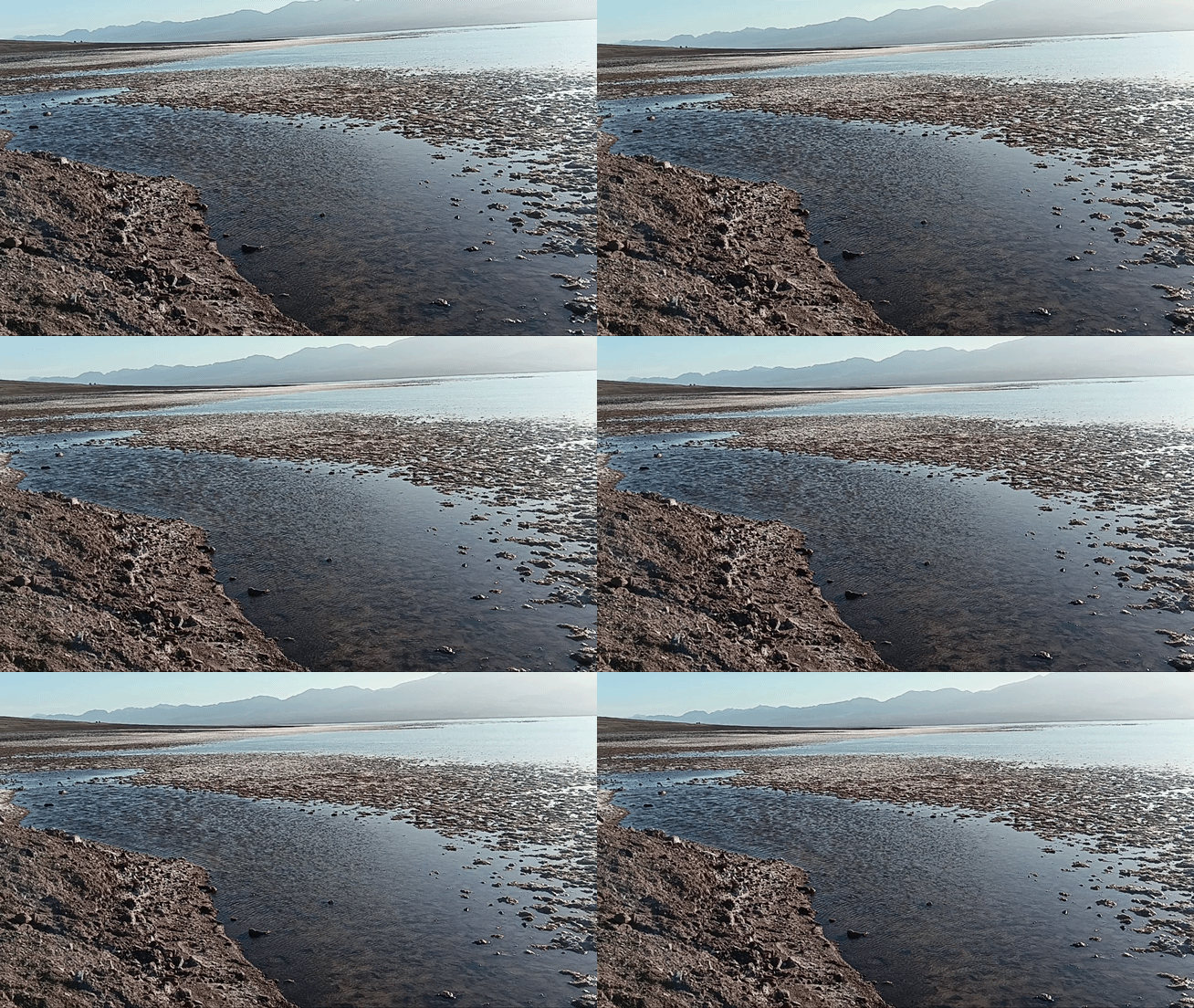
One of the areas that made the biggest impression on me during that first trip nearly 20 years ago was Badwater—which, contrary to its name, had no water in it. But the wet winter has also brought back the occasional Lake Manly, first formed during the Ice Age.
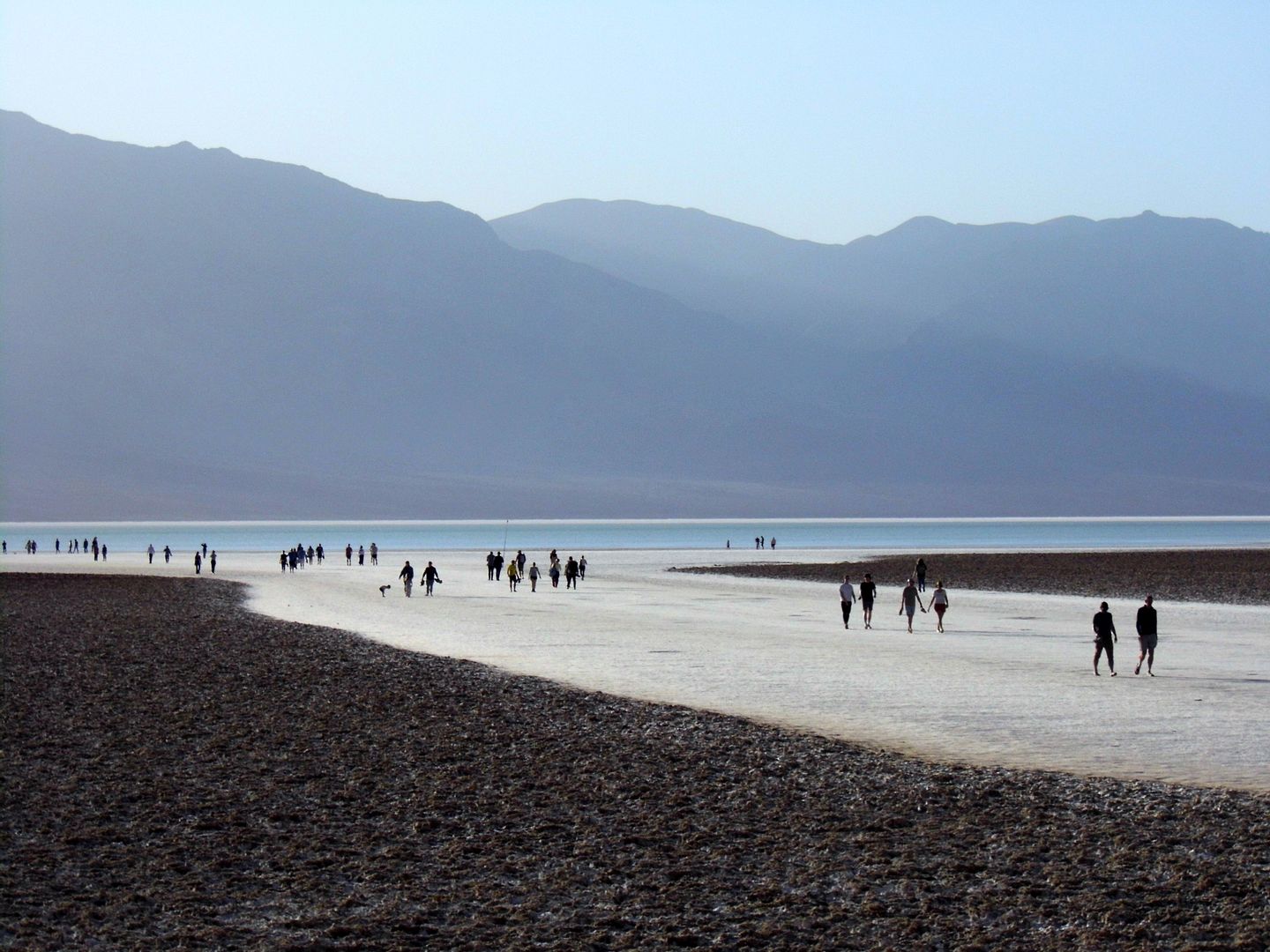
It's a very odd sight in the middle of the desert—and visitors couldn't resist walking out onto the salt fla (which is normally dry) and dipping their toes into the water.
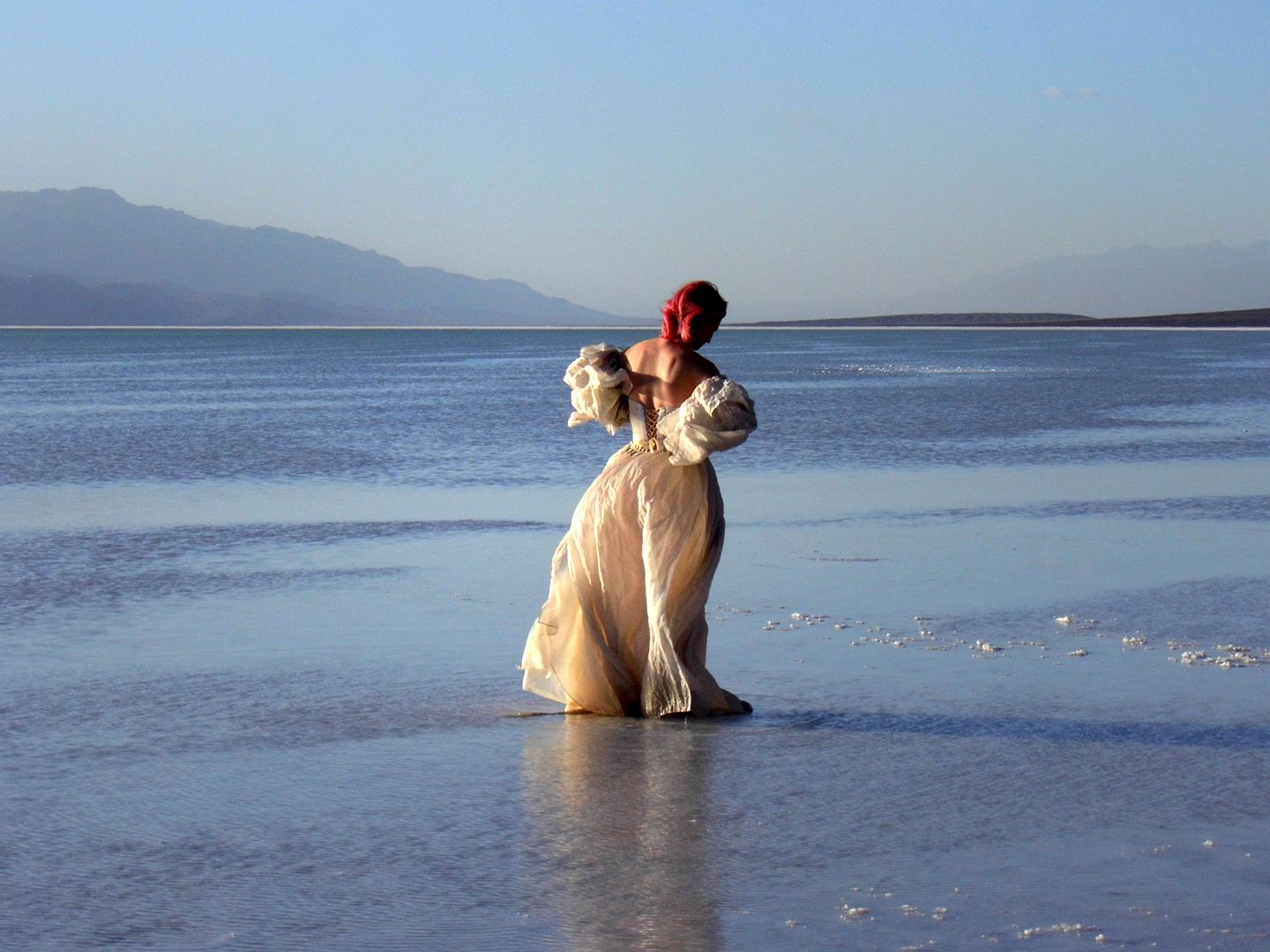
The "lake" isn't deep enough for boating currently (although it was open for kayaking in early 2024)—but it's cold and salty and exciting and provides essential habitat in this complex ecosystem.
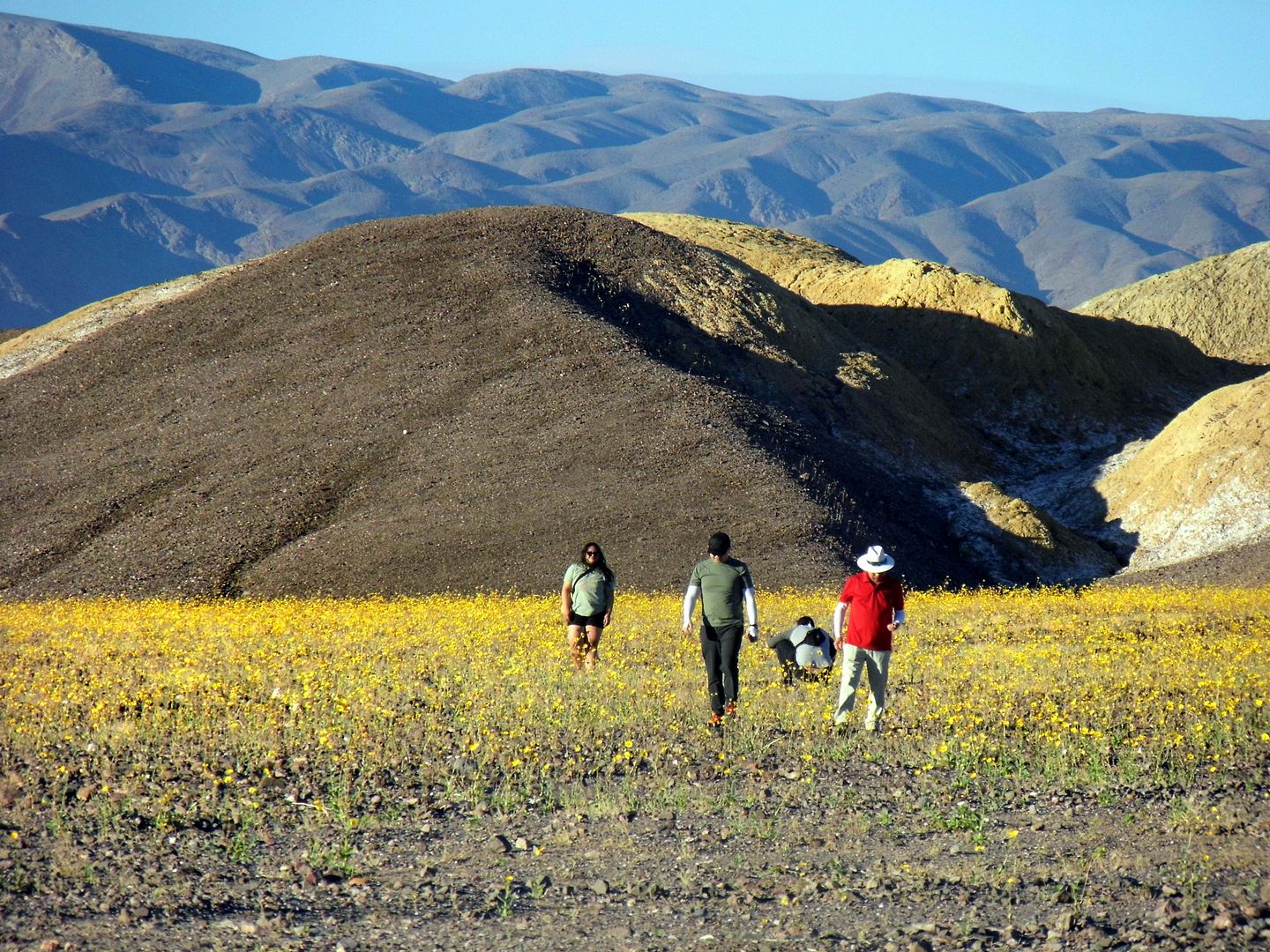
Other popular areas to visit in the park right now, and for good reason, include the fields in front of the Harmony Borax Works site...
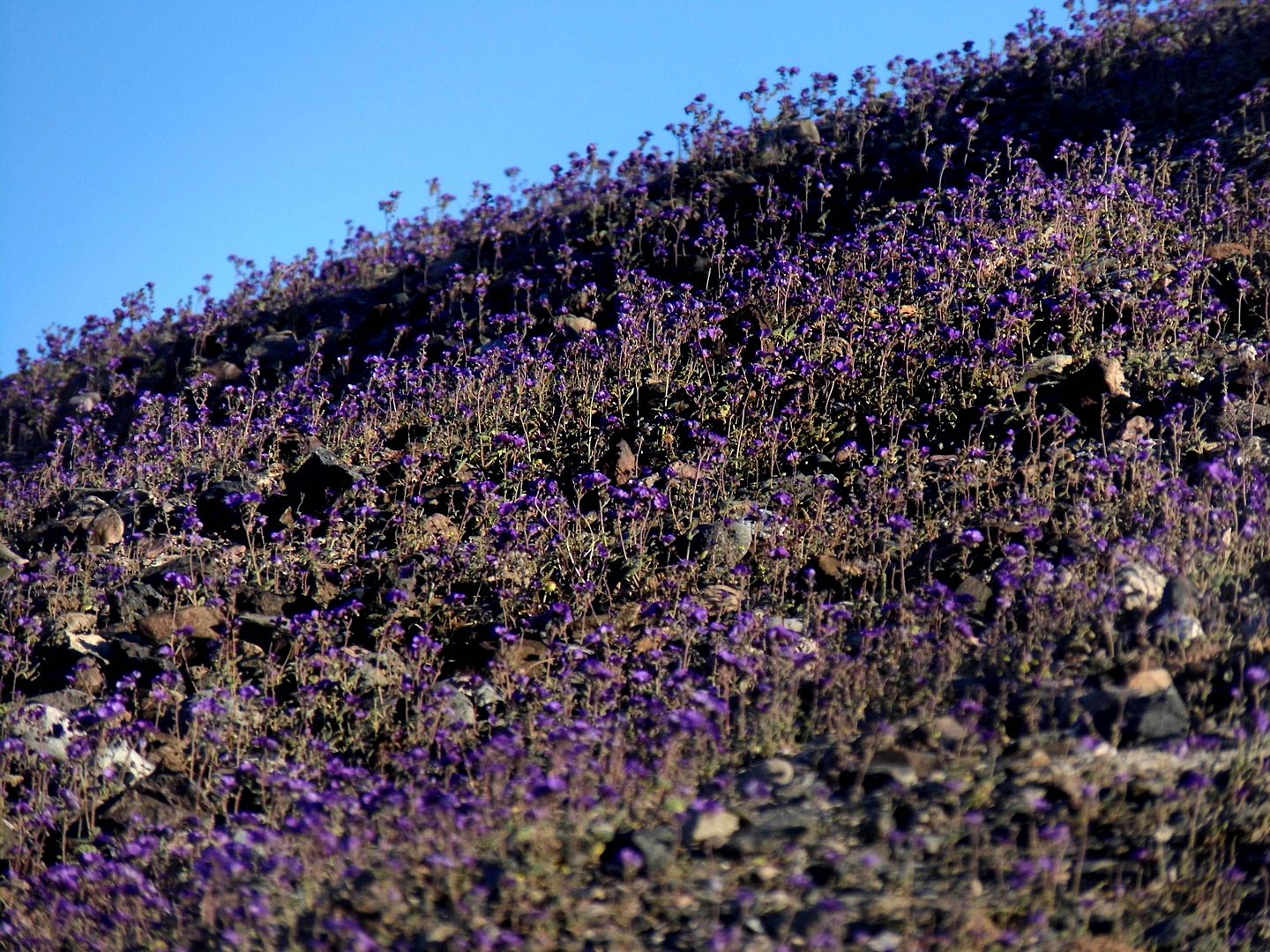
...and the purple hillsides that rise up from behind the interpretive trail.
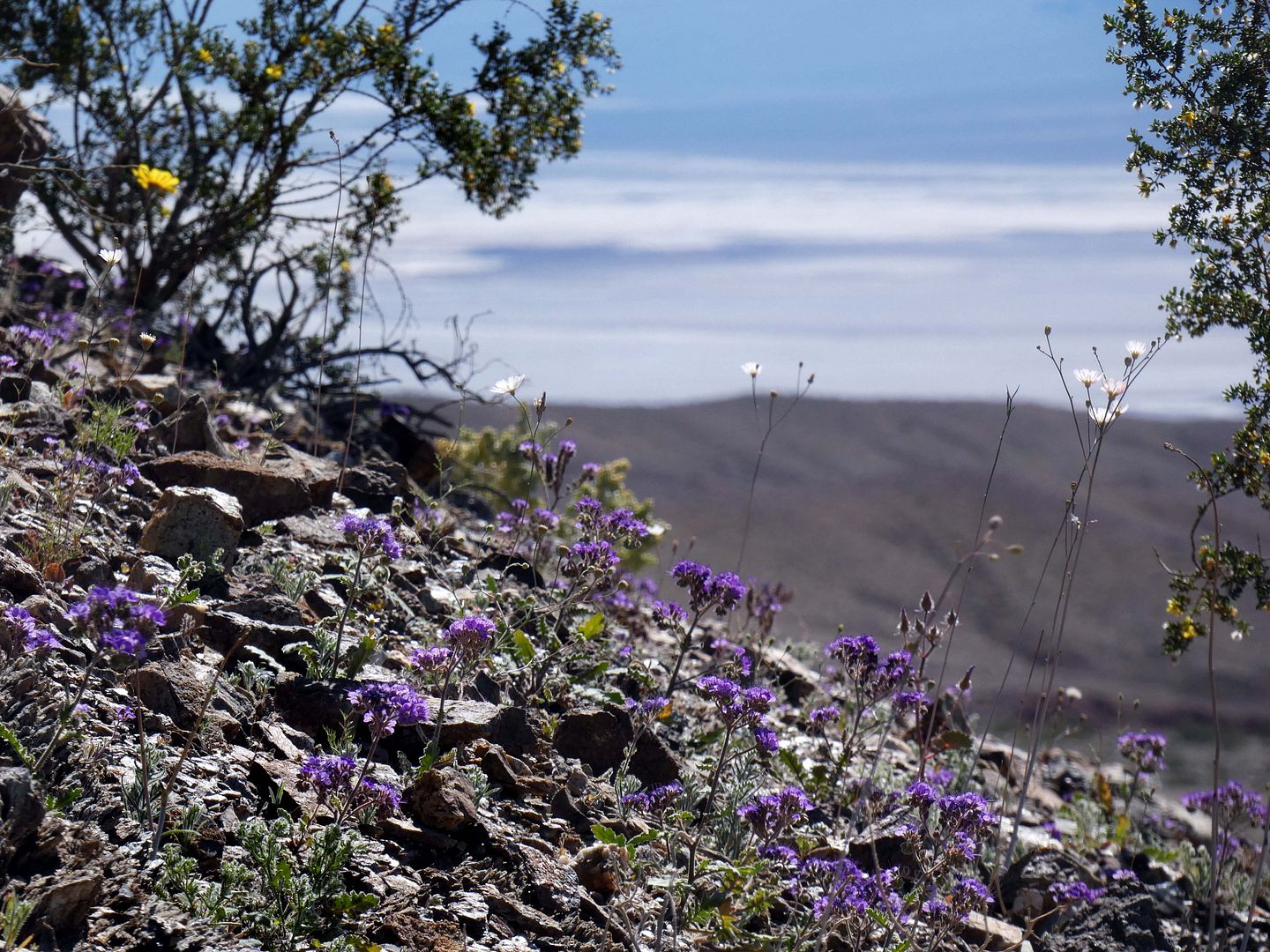
Although the park wasn't as crowded as I've experienced elsewhere, and traffic jams were kept to a minimum, I decided to go off on my own and see what else I could find deeper into the park.
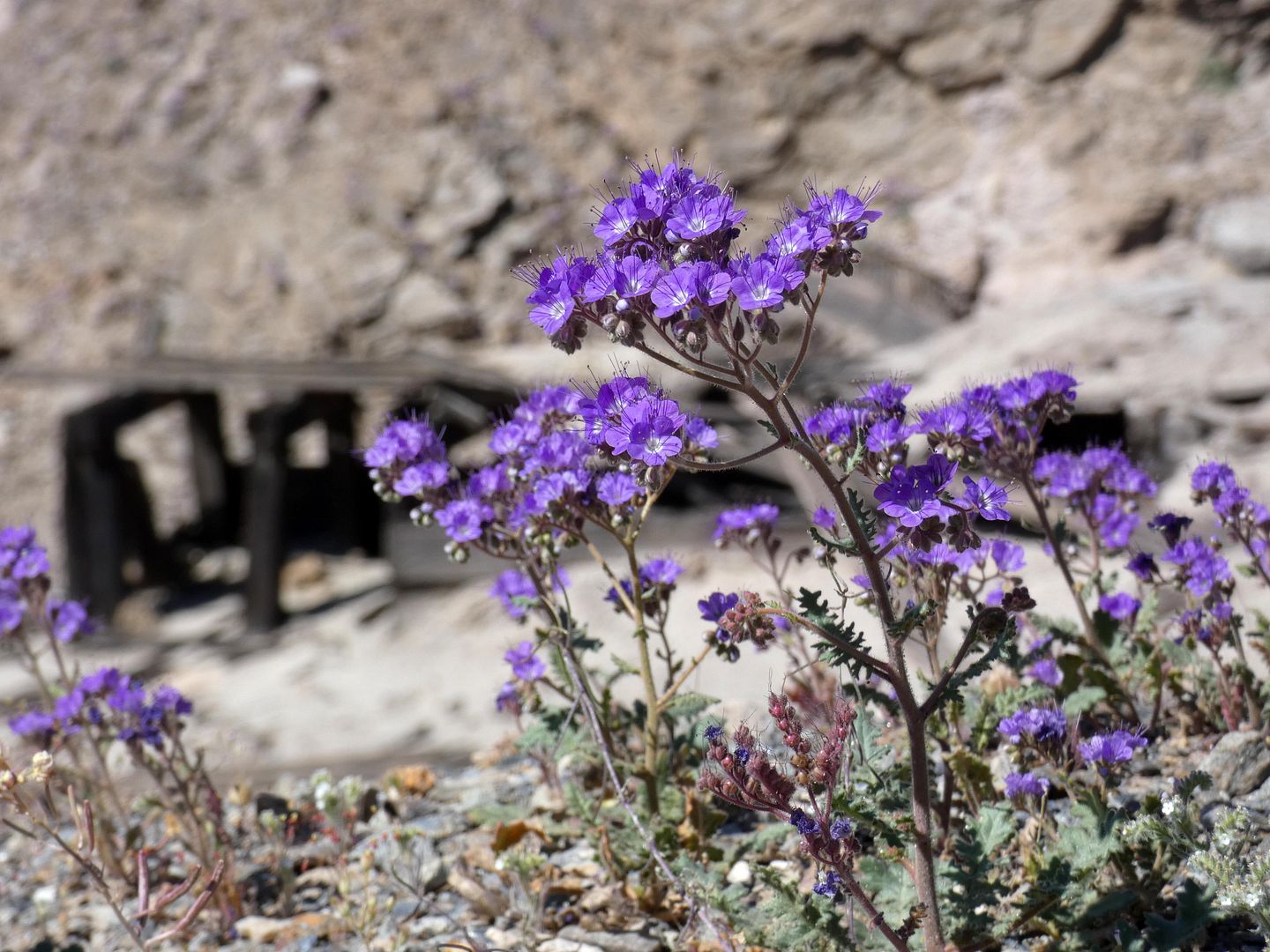
At Keane Wonder Mine, the purple of Death Valley phacelia (Phacelia vallis-mortae) brings a new level of beauty to the ruins, which are accessible via a hiking trail...
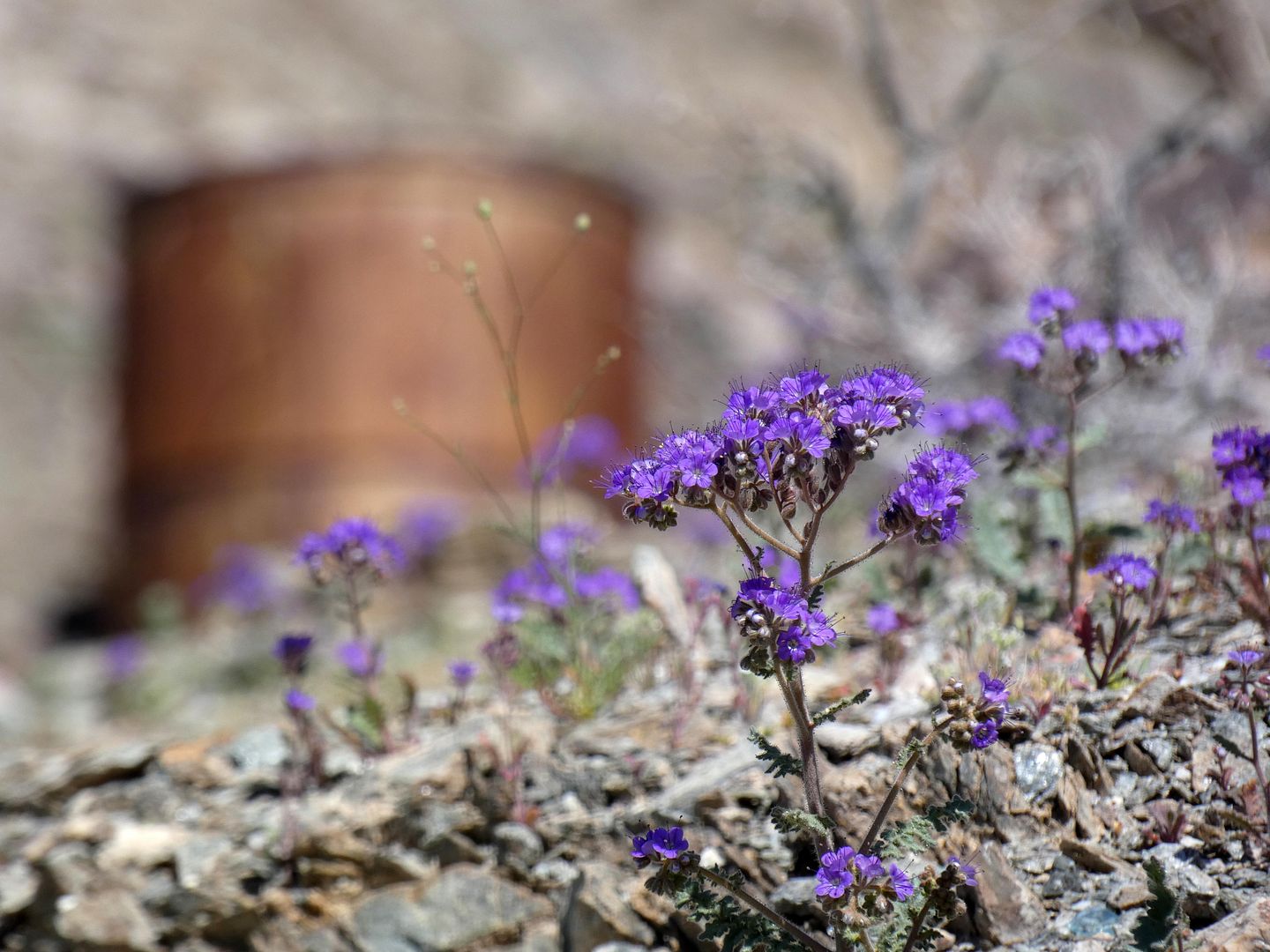
...but with only flowers on my mind, I kept my visit short...
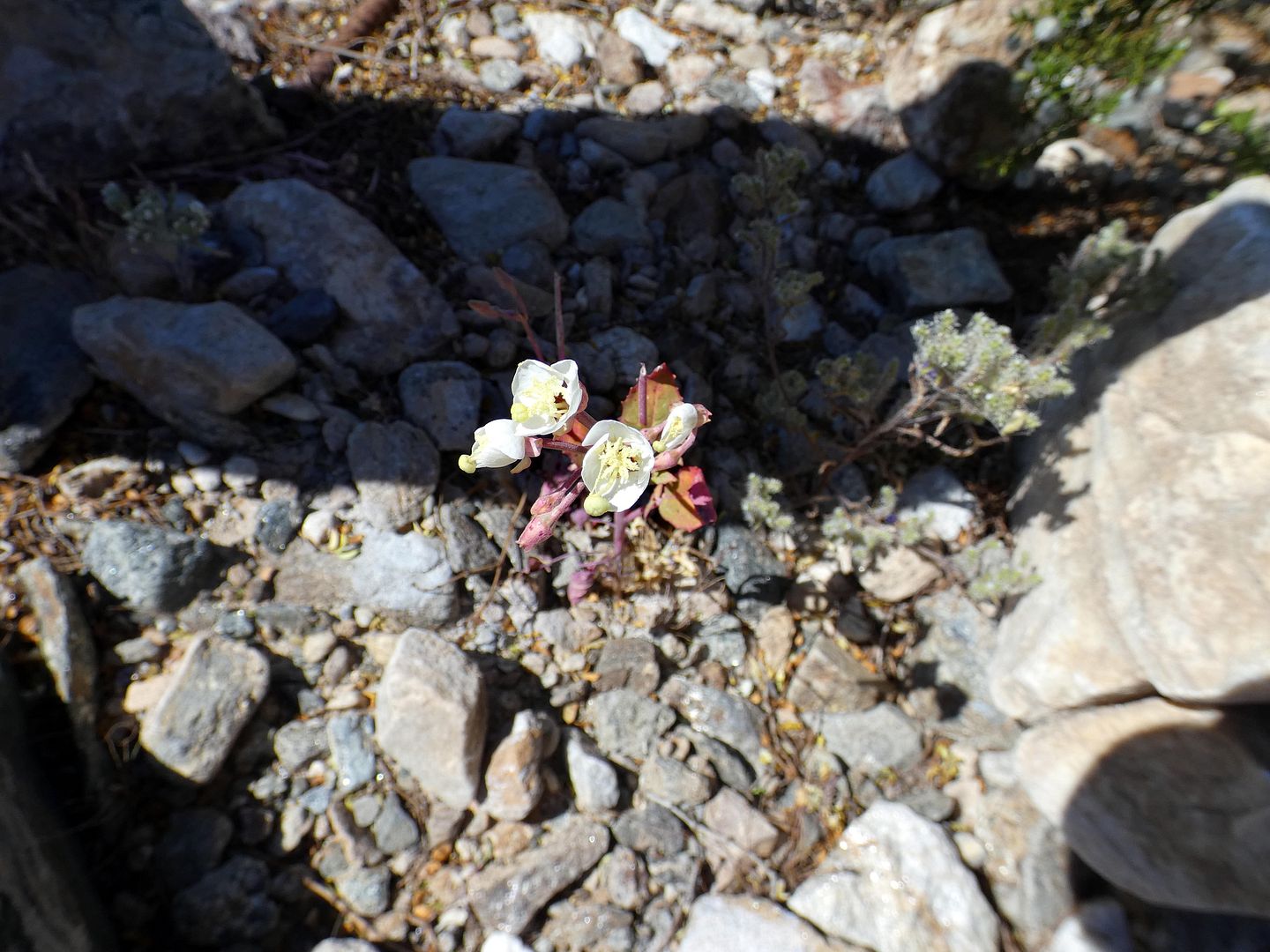
...staying just long enough to spot some brown-eyed primrose, wildflowers that were far more common in Death Valley earlier this spring but have mostly disappeared by now.
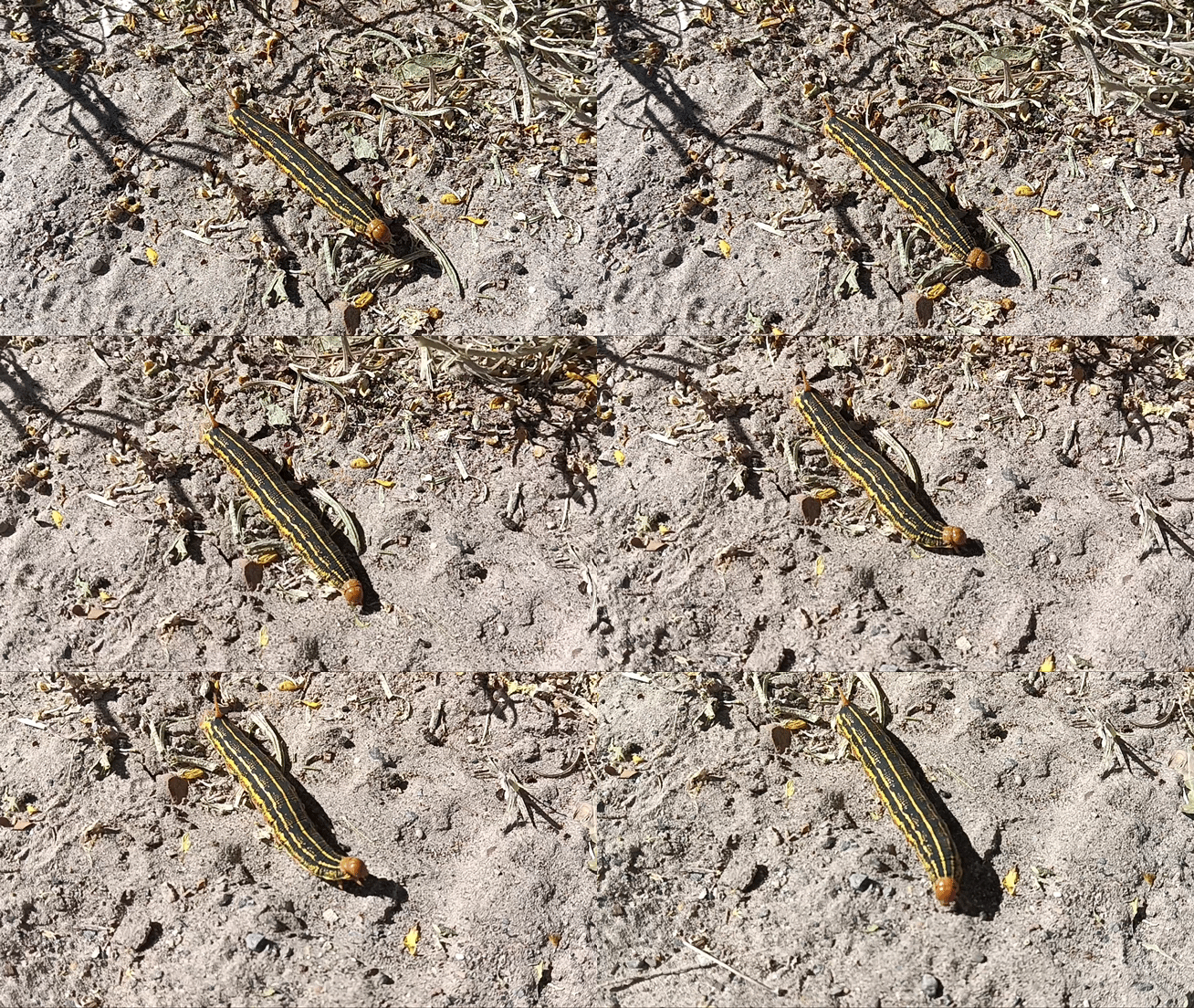
Any wildflower bloom—including a superbloom—is a bit of a moving target. It can feel like you're chasing it—and one super hot day can turn a colorful field into burnt toast. Seeing the superbloom is also a race against time when it comes to the ravenous caterpillars of the white-lined sphinx moth (Hyles lineata), which feast upon the flowers. (Fortunately, the adult moths are also pollinators.)
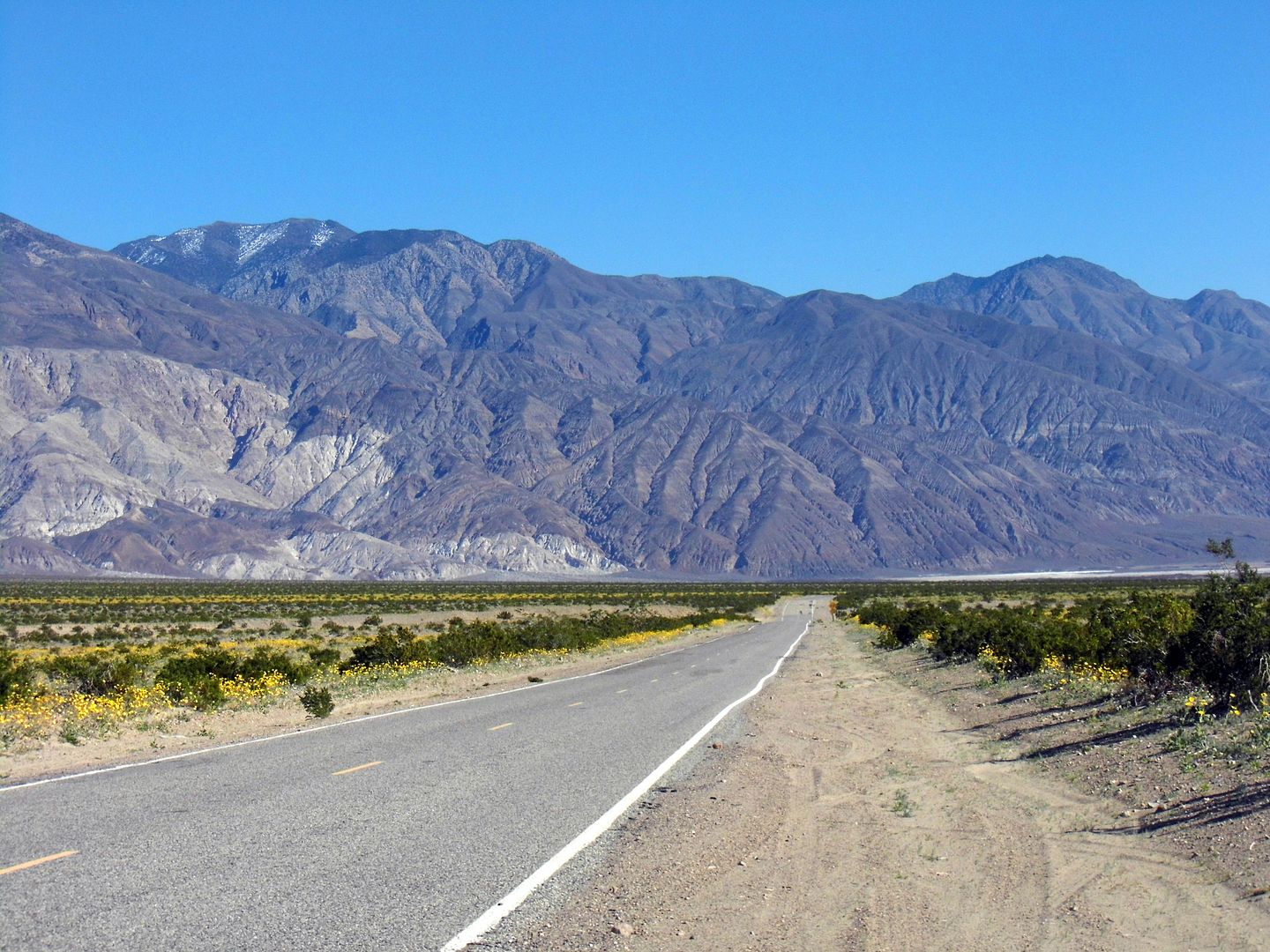
I'd about given up on seeing any more fields of flowers when I was heading out of the park and back home to LA on Sunday—but to my delight, Panamint Valley Road between Panamint Springs and Trona had one of the most vibrant tableaus of my entire weekend.
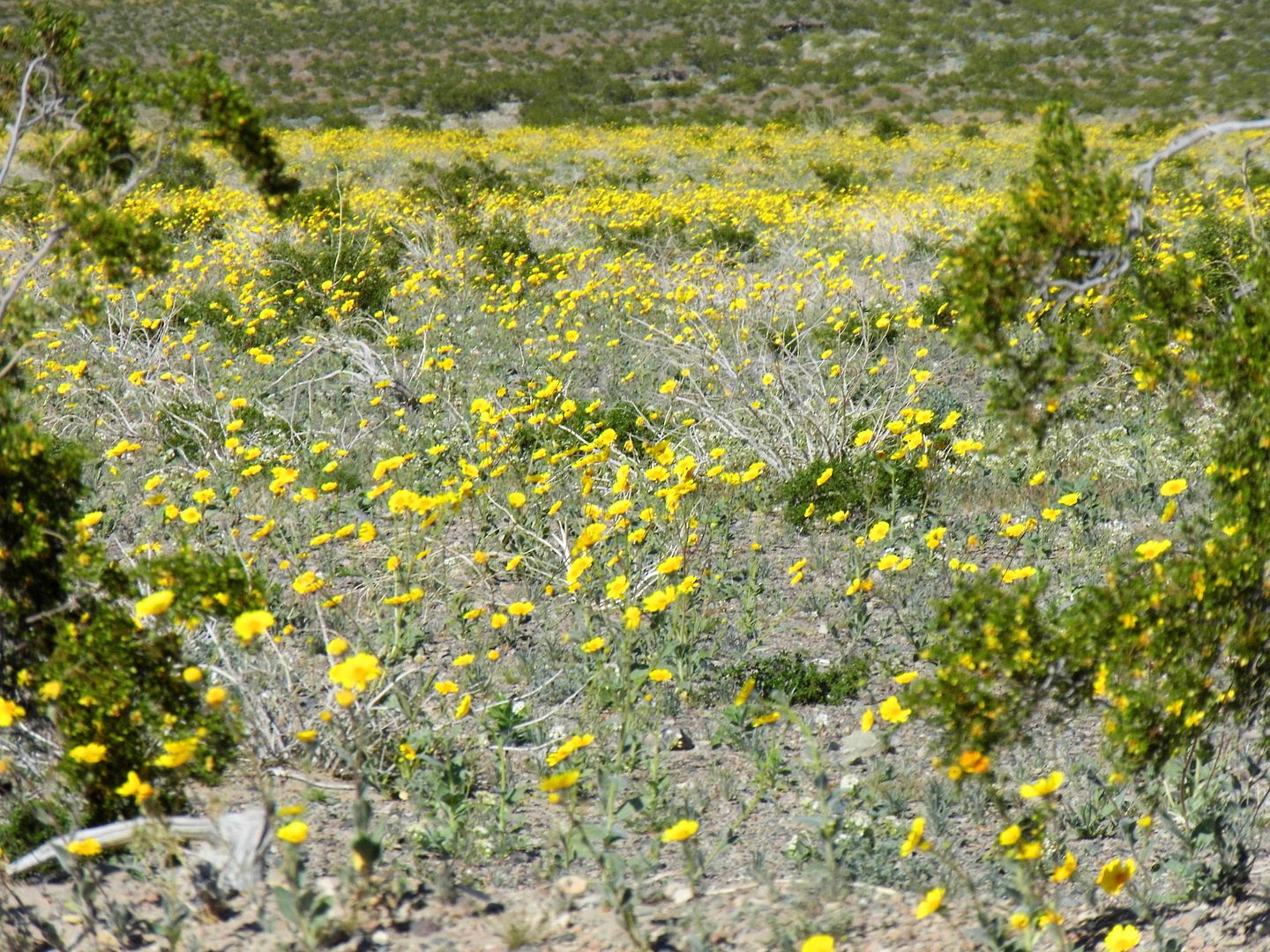
And seeing Death Valley under a blanket of yellow petals helped me end my trip on a high note. Just perfect.
Now, this is an extremely good bloom—by Death Valley standards. But the distribution of plants isn't exactly dense. That's because the terrain is generally unforgiving and not known for growing anything at all—namely, rocky hillsides, gravelly alluvial fans, and inhospitable bajadas.
So the fact that anything has managed to sprout there is pretty darn impressive.
And it may not be another 10 years before Death Valley will look like this again!
Related Posts:

Magnificent! My Pops would have enjoyed your post . . and even more going to visit the desert blooming like that! Thank you for this - and all your other wonderful posts! 💙
ReplyDelete